India hosts first-ever Global South seminar on Public Financial Management (PFM) in New Delhi and engages with partner countries with intent to conceive a PFM forum
The Office of the Controller General of Accounts of India (CGA), Ministry of Finance, in collaboration with the Ministry of External Affairs (MEA), convened a high-level Seminar on sharing India’s Public Financial Management (PFM) Experience for countries of the Global South in New Delhi, today. The event brought together heads of Missions, senior diplomats, and PFM experts from many partner countries of the Global South, including Guyana, Cuba, Mauritius, Maldives, Timor-Leste, Fiji, etc, many of whom are currently working with India through development cooperation channels or Digital Public Infrastructure (DPI) partnerships.
The seminar was conceived as a platform for knowledge exchange, technical dialogue and collaborative exploration of public finance reform pathways across developing economies. Participants engaged deeply throughout the day — asking technical questions, seeking clarifications on India’s digital and treasury systems, and offering their own country experiences in treasury reform, fund flow management, audit frameworks, and public expenditure control. Their active participation highlighted the growing convergence of challenges across the Global South and the strong interest in India’s scalable, digital-first solutions.
In her keynote address, Secretary, Department of Economic Affairs, Smt. Anuradha Thakur, outlined India’s macro-fiscal reforms over the last decade. She emphasised that setting up a robust implementation mechanism, through public finance management practices was as important as having an enabling policy environment. India’s public finance management practices have digital public financial management as its cornerstone. This has enabled substantial fiscal savings, allowing more room for growth-enhancing capital expenditure while maintaining fiscal discipline.
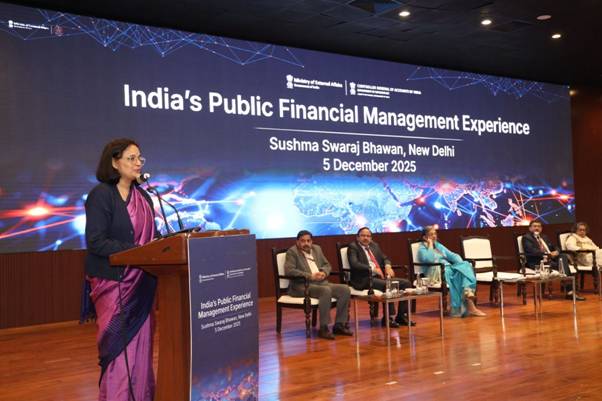
She talked about some of the building blocks of India’s digital public financial management, specifically the Public Financial Management System (PFMS)- India’s unified platform for monitoring fund flows from the Union Government to states, agencies, and beneficiaries on real-time basis. The Secretary also emphasised the institutional role of the Civil Accounts Organisation in managing the PFMS platform.
She mentioned that the integration of PFMS with the Digital Payments & Direct Benefit Transfer (DBT) has ensured that subsidies and welfare benefits reach directly to the population thereby minimizing leakages and duplication. These combined with the Digital tools for revenue generation such as e-invoicing, e-way bills and faceless assessments have widened the tax base and reduced evasion. These measures combined have strengthened revenue flows and helped improve fiscal balance without increasing tax rates.
The Secretary summarised the learnings of India’s fiscal consolidation experience, that (a) rules-based fiscal policy builds discipline and credibility; (b) regular, mandatory disclosures reduce information asymmetries aiding efficient decision making; and (c) Federal Coordination Mechanisms Improve Compliance and alignment of fiscal goals between the federal government and its federating units.
In his address, Secretary (Economic Relations), Shri Sudhakar Dalela, commended India’s internationally recognised achievements in Digital Public Infrastructure (DPI) — including identity systems, instant payments, and secure data-sharing layers—that have strengthened accountability and enhanced last-mile governance outcomes. Shri Dalela noted that India is already sharing these digital public goods and PFM tools with countries across Africa, Latin America and Asia through MoUs, pilot implementations, technical missions and capacity-building programmes.
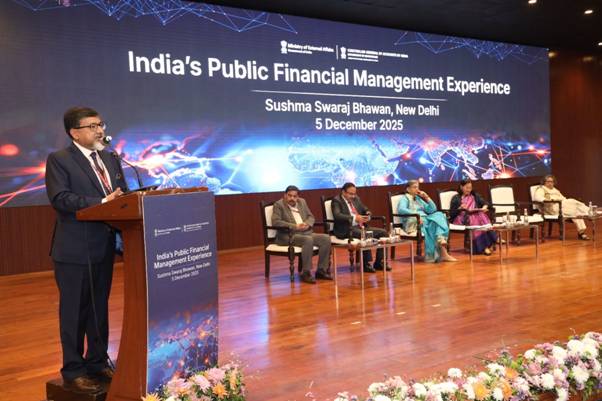
Highlighting the role of MEA’s Development Partnership Administration (DPA), Shri Dalela underlined the government’s commitment to long-term, customised partnerships and appreciated the active engagement of participating Missions and expressed confidence that India and the Global South would continue to deepen mutual learning on PFM and DPI implementation.
Earlier, in her opening address, Controller General of Accounts of India, Smt. TCA Kalyani, highlighted India’s long-standing ethos of custodial integrity in public finance and the pivotal role of treasury discipline in governance. Smt. Kalyani emphasised that India’s PFM modernisation is anchored in the principle of “Koshpoorvah Sarvarambhah”—the requirement that every government action must begin with a strong, accountable treasury.
Smt. Kalyani showcased how systems such as the Public Financial Management System (PFMS) have transformed India’s fund routing architecture, by enabling real-time visibility, automated reconciliation, and citizen-verified delivery and also shared India’s experience in rolling out the Direct Benefit Transfer (DBT) ecosystem, the Single Nodal Agency and Central Nodal Agency models, and liquidity consolidation practices that have strengthened fiduciary control. Smt. Kalyani reaffirmed India’s readiness to support partner countries in designing customised PFM solutions rooted in transparency, trust and efficiency.
The seminar featured detailed presentations by technical experts on varied topics, such as FRBM reforms (by Shri. Sunil Chaudhari, Director, DEA), GST implementation (by Shri. Sanjay Mangal, Chief Commissioner), Government e-Marketplace (by Shri. Mihir Kumar, CEO, GeM), the Digital PFM Ecosystem (by Shri. H. Atheli, Jt. CGA), India Stack foundational DPIs (Shri. Nand Kumarum, CEO, NeGD), Direct Benefit Transfer (by Shri. Saurabh Tiwari, AS, DBT Mission), and external audit practices (by Shri. K.S. Subramanian, Dy. C&AG).
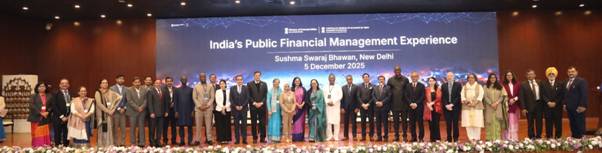
Delegates from participating countries engaged actively—seeking clarifications on reconciliation frameworks, digital treasury models, payment verification systems, and procurement transparency mechanisms. Many Missions also shared their domestic PFM challenges, lessons from reform programmes, and interest in adopting aspects of India’s digital architecture.
In line with the objectives outlined in the official communication to participating Missions, the seminar also served as a precursor to India’s proposal to establish a Public Financial Management Forum/Alliance for the Global South. The proposed platform aims to institutionalise continued dialogue, capacity-sharing and co-creation of PFM reform pathways — spanning treasury reform, liquidity management, DPI-enabled PFM tools, citizen-centric benefit delivery, and institutional accountability frameworks.
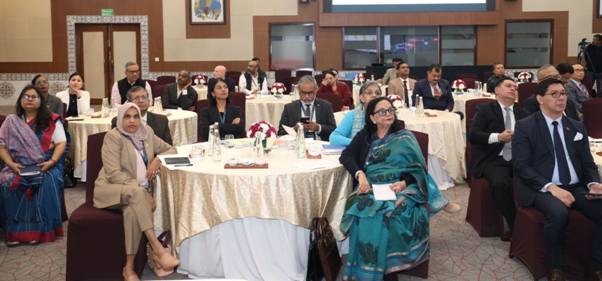
The seminar concluded with a shared commitment to strengthening public finance systems across the Global South through digital innovation, institutional reform, and sustained partnership with India.
****
NB/KMN