NITI Aayog Releases Study Reports on Scenarios Towards Viksit Bharat and Net Zero
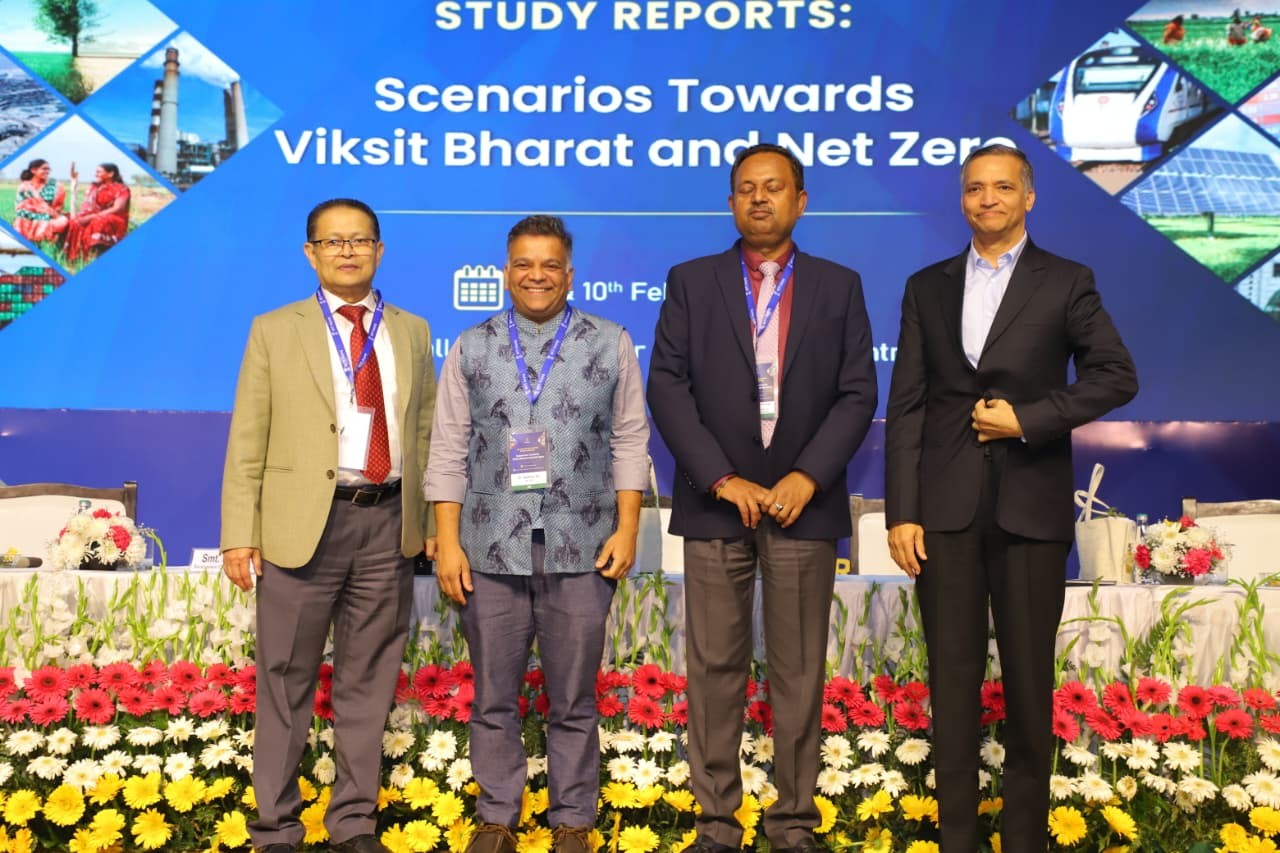
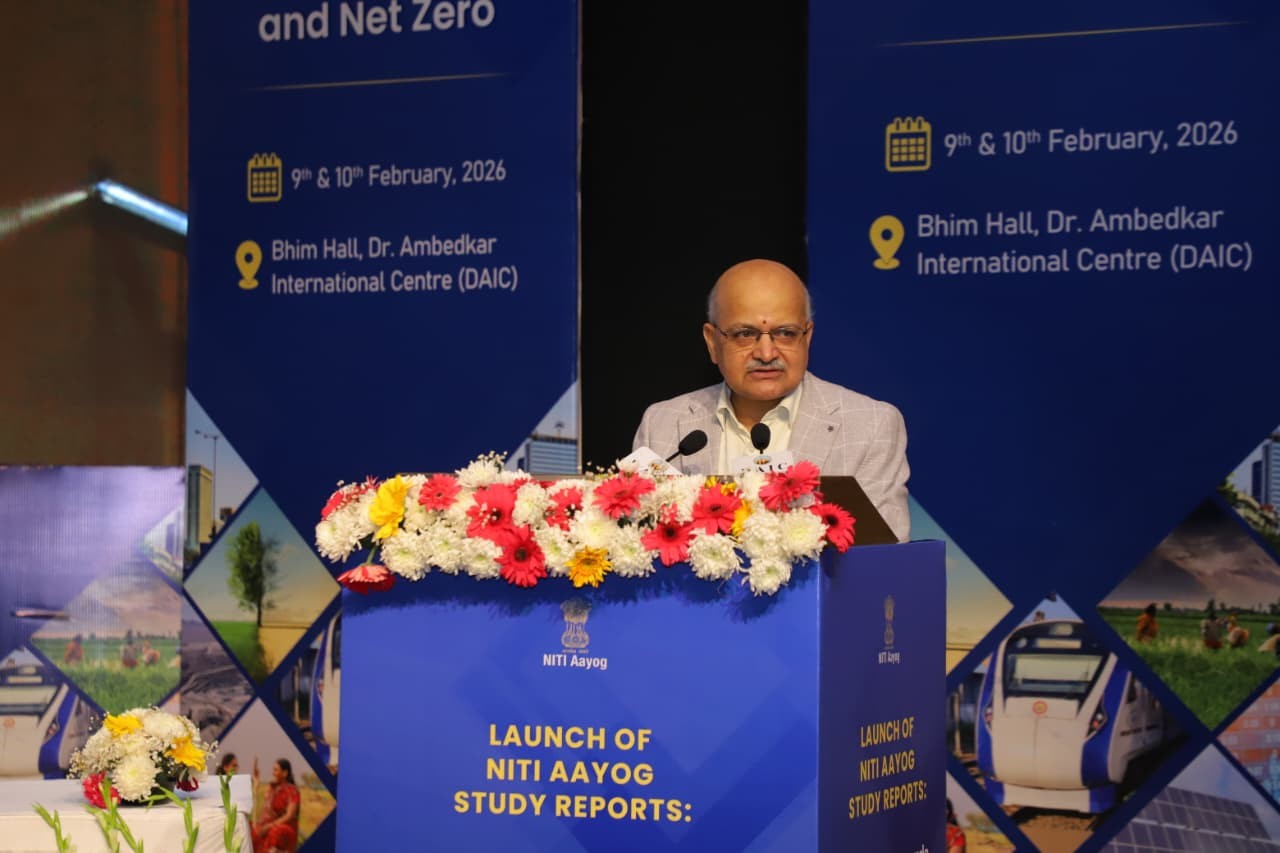
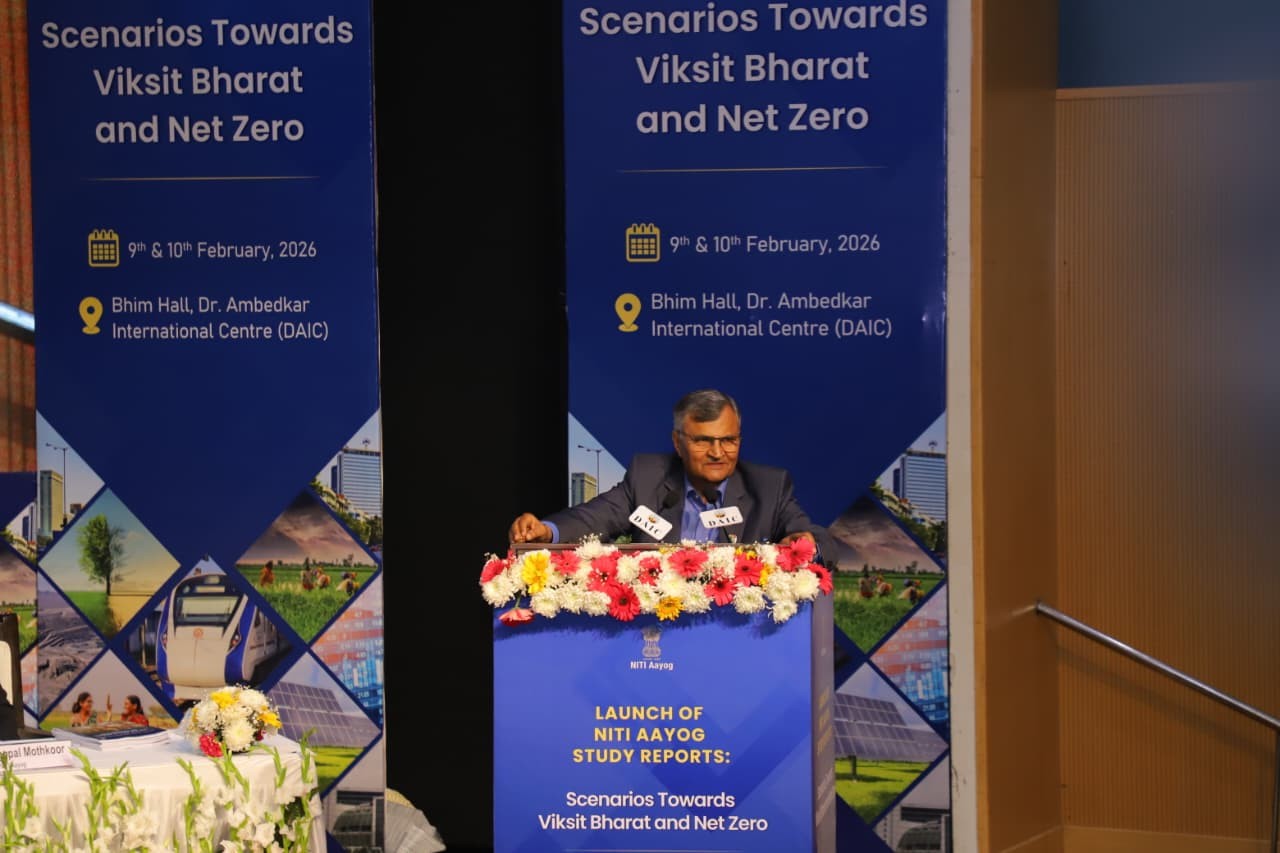
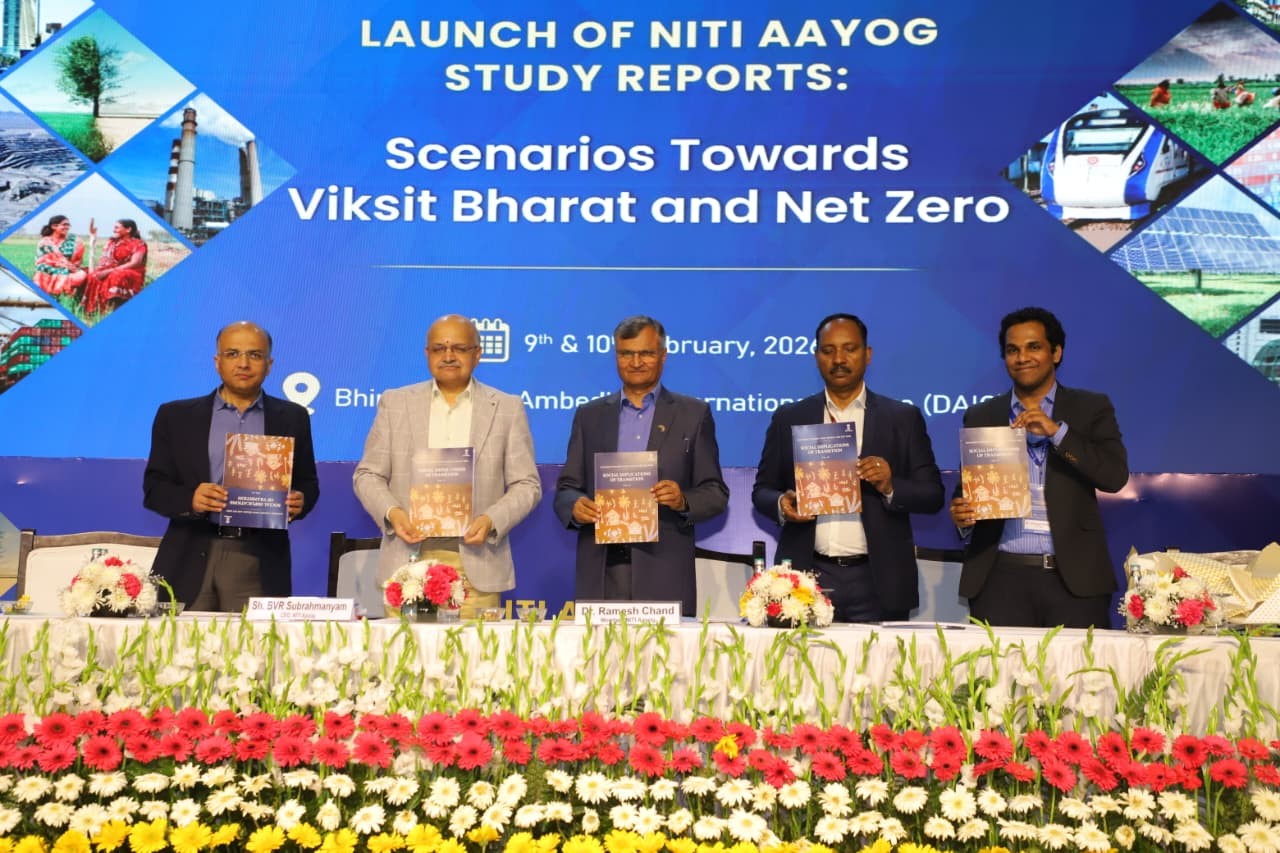
NITI Aayog is releasing eleven study reports on Scenarios towards Viksit Bharat and Net Zero on the 9th and 10th of February 2026. The final set of four reports were released on the afternoon of 10th February 2026 at an event held at the Ambedkar International Centre, New Delhi.
The reports were released in the presence of Dr. Ramesh Chand, Member, NITI Aayog; Sh. B.V.R. Subrahmanyam, CEO, NITI Aayog; Dr. Mangi Lal Jat, Secretary, Department of Agricultural Research and Education, and Director General, Indian Council of Agricultural Research (ICAR), with a virtual address by Dr. V. K. Paul, Member, NITI Aayog.
The following reports were released:
- Scenarios Towards Viksit Bharat and Net Zero - Sectoral Insights: Buildings (Vol. 5)
This report highlights that roughly 86% of the building floor space that will exist in 2070 is yet to be built. By focusing on passive design, super-efficient appliances, and low-carbon materials, India can avoid locking in high energy demand and heat stress. This is critical as air-conditioner ownership is projected to jump from 10% today to 80% by 2070.
- Scenarios Towards Viksit Bharat and Net Zero - Sectoral Insights: Agriculture (Vol. 6)
The transition strategy in this report emphasises ‘strategic sequencing’, where the primary focus is on resource efficiency such as micro-irrigation and fertiliser optimisation to directly boost farmer incomes and soil health before transitioning to large-scale energy substitution.
- Scenarios Towards Viksit Bharat and Net Zero - Sectoral Insights: Waste (Vol. 8)
This report focuses on bridging structural gaps in the waste sector, through universal collection, 100% door-to-door segregation, and the large-scale adoption of bio-methanation. The report also highlights how by adopting waste-to-energy solutions, waste can be transformed into a resource such as Bio-CNG, compost, and treated wastewater, that contributes to soil health and circular urban economies.
- Scenarios Towards Viksit Bharat and Net Zero- Social Implications of Transition (Vol. 11)
This report emphasises that the net-zero journey is a human-centric development project, not just a technical one. It highlights that the transition will reshape critical areas such as land use, employment, and migration patterns. The report also underscores the health benefits of the transition, such as reduced air pollution, and the necessity of building climate-ready health systems.
Following the release, a panel discussion was held on “Climate Transition and Social Implications Across Sectors”. The session was moderated by Sh. Madhav Pai, CEO, World Resources Institute (WRI) India. The panelists included Sh. Ashish Kumar Singh, Chief Mentor, Lodha Foundation; Smt. Uma Mahadevan, Development Commissioner, Government of Karnataka; Sh. Ajay Kumar Rastogi, Chairman, Taskforce on Sustainable Just Transition, Government of Jharkhand; and Dr. Shahidur Rashid, Director-South Asia, International Food Policy Research Institute (IFPRI).
In his address, Dr. Ramesh Chand, Member, NITI Aayog, shared “The relationship between climate change and agriculture is unique, as there is a two-way relationship between agriculture and climate change. Agriculture not only is a source of emissions but is also affected by emissions, and emissions from agriculture are invisible but emissions from other sectors are seen. We should keep in mind the vulnerability of the agriculture sector to climate change while mapping out path to Net Zero.”
Dr. V. K. Paul, Member, NITI Aayog, in his virtual address, said “While the aggregate requirements of the transition on land and water appear manageable, these demands have to be examined in the context of competing uses and socio-spatial dimensions. Climate change compounds these challenges with 40% of our districts facing high climate risks and impending implications for human health. The path to Net Zero is fundamentally a path to a more just, resilient, and prosperous India for our present and future generations.”
Sh. B.V.R. Subrahmanyam, CEO, NITI Aayog, observed “There is going to be a huge jump in space that we occupy. Buildings – office, commercial and residential – have to grow at a magnitude we have not seen in the past. Being a tropical country, cooling load will also go up with air conditioning ownership reaching almost 85%. There are solutions available – more efficient appliances, better building materials, better design. Buildings for 2070 need to be built with Net Zero goals in mind from the outset.”
Dr. Mangi Lal Jat, Secretary, Department of Agricultural Research and Education and Director General, ICAR, stated “Agriculture is both a source and a sink for emissions. Net Zero can contribute to the livelihoods of farmers through carbon credits and payments for ecosystem services, areas that are now booming in India. This report will help all stakeholders build resilience.”
The eleven reports being released by NITI Aayog detail the findings of India’s first government-led, multi-sectoral, integrated study to assess development scenarios that deliver on the Hon’ble Prime Minister’s vision Viksit Bharat 2047 while simultaneously reducing net green-house gas (GHG) emissions to zero by 2070.
NITI Aayog’s study entails a scenario-based analytic modelling exercise that integrates economic growth, India’s development priorities, and climate commitments. The study has been informed by ten inter-ministerial working groups that examined long-term transition scenarios across key domains like macroeconomic aspects of the transition; sectoral low carbon transition in power, transport, industry, buildings, and agriculture; financing for climate action; critical minerals; R&D and manufacturing; and the social implications of the transition. NITI Aayog undertook this comprehensive assessment to inform long-term policy planning.
The full reports can be accessed at:
Scenarios Towards Viksit Bharat and Net Zero- Sectoral Insights Buildings (Vol. 5) - https://niti.gov.in/sites/default/files/2026-02/Scenarios-Towards-Viksit-Bharat-and-Net-Zero-Sectoral-Insights-Buildings.pdf
Scenarios Towards Viksit Bharat and Net Zero- Sectoral Insights Agriculture (Vol. 6) - https://niti.gov.in/sites/default/files/2026-02/Scenarios-Towards-Viksit-Bharat-and-Net-Zero-Sectoral-Insights-Agriculture.pdf
Scenarios Towards Viksit Bharat and Net Zero- Sectoral Insights Waste (Vol. 8) - https://niti.gov.in/sites/default/files/2026-02/Scenarios-Towards-Viksit-Bharat-and-Net-Zero-Sectoral-Insights-Waste.pdf
Scenarios Towards Viksit Bharat and Net Zero- Social Implications of Energy Transition (Vol. 11) - https://niti.gov.in/sites/default/files/2026-02/Scenarios-Towards-Viksit-Bharat-and-Net-Zero-Social-Implications-of-Energy-Transition.pdf
***
MJPS/SR