Secretary, DoWR, RD & GR Chairs 86th Governing Body Meeting at National Institute of Hydrology in Roorkee
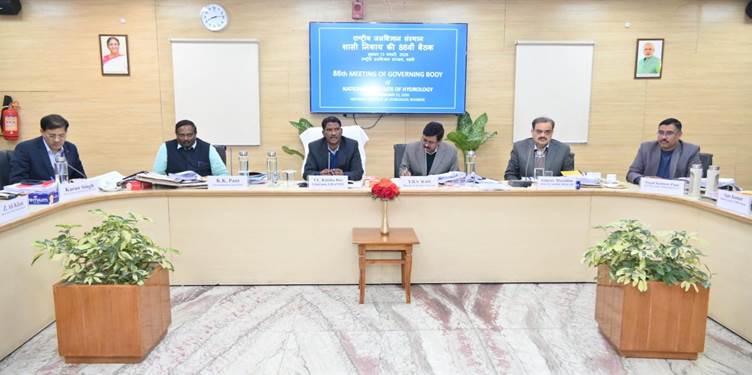
The 86th Meeting of the Governing Body (GB) of the National Institute of Hydrology (NIH) was convened at NIH Roorkee to review the Institute’s progress and strategic direction. The meeting was chaired by the Secretary, Department of Water Resources, River Development & Ganga Rejuvenation (DoWR, RD & GR), Ministry of Jal Shakti, Shri V. L. Kantha Rao. The deliberations underscored NIH’s expanding role as a premier research organization addressing critical water challenges, including climate change impacts and sustainable water resource management.
Scaling Research and Impact
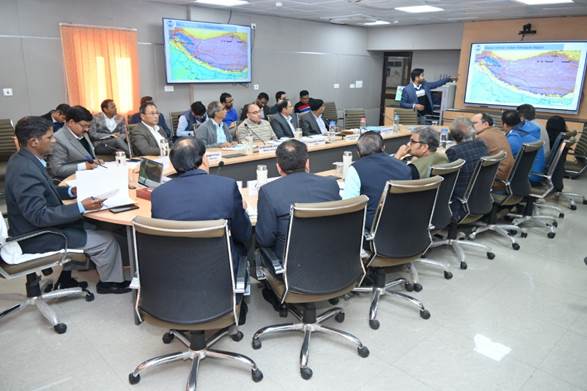
During 2024–25, NIH successfully managed 111 R&D studies and 28 international and national sponsored projects. In line with governmental priorities on studies of national importance, the Institute has initiated comprehensive assessments in the Luni River basin and extensive monitoring of Western Himalayan glaciers, including the Gangotri, Triloki, and Khatling systems. A major project sponsored by the National Mission for Clean Ganga (NMCG) is also underway to assess Environmental Flows for the Chambal, Sone, Damodar, and Tons rivers.
The Institute continues to advance digital water management through the development of NIH-WISDOM, a web-based decision-support tool for groundwater recharge estimation and management. Demonstrating its strong commitment to capacity building and technology transfer, NIH conducted 76 training workshops, benefitting over 1,845 personnel from diverse sectors. The Institute also hosted the International Ground Water Conference (IGWC-2025) and a high-level workshop on the National Adaptation Plan (NAP) in association with the Ministry of Environment, Forest and Climate Change (MoEF&CC).
Addressing Regional and Emerging Challenges
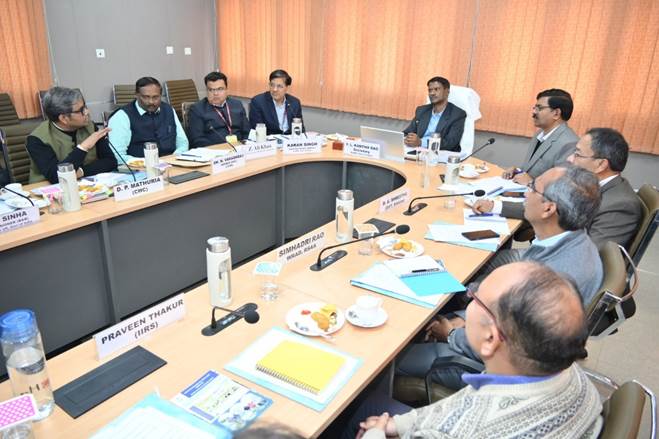
The Governing Body reviewed progress on specialized studies, including:
- Andaman & Nicobar Islands: Researching the technology of historical "Japanese wells" and developing efficient rainwater harvesting for island ecosystems.
- Water Quality: Investigating the causes of higher nitrate concentrations in groundwater across various locations.
- Wetland Conservation: Assessing the impact of climate change on vital wetlands, including Rewalsar, Badrish, and Wular lakes.
The Institute has proposed a Budget Estimate of ₹6,800.00 lakh for 2026–27 to support its expanding research programmes and laboratory infrastructure. The Governing Body reaffirmed NIH’s commitment to evolving into an internationally recognised institution delivering science-based solutions for the common man and strengthening national water security in alignment with the vision of the Department of Water Resources, RD & GR, Ministry of Jal Shakti.
*****
ND