Global Industry Leaders Chart AI’s Next Phase, From Personal Intelligence to Industrial-Scale Impact
As part of the India AI Impact Summit 2026, keynote addresses by Alexander Wang, Chief AI Officer, Meta; Roy Jakobs, CEO, Philips; Martin Schroeter, Chairman and CEO, Kyndryl; and Olivier Blum, Global CEO, Schneider Electric, explored how artificial intelligence is moving from breakthrough innovation to real-world transformation across society, healthcare, infrastructure, and energy systems.
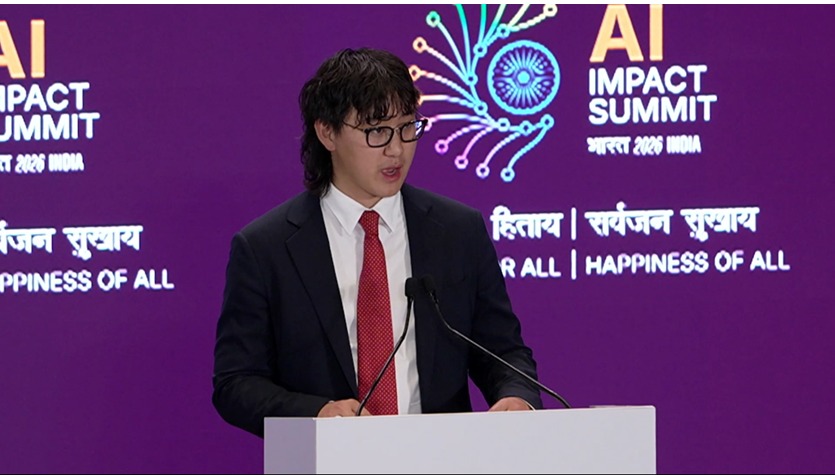
Alexander Wang, Chief AI Officer, Meta, highlighted AI’s growing integration into everyday life and India’s central role in shaping its trajectory. Emphasising the company’s vision for “personal superintelligence,” he said, “Our vision is personal superintelligence, AI that knows you, your goals, your interests, and helps you with whatever you’re focused on doing. It serves you, whoever you are, wherever you are.” Underscoring the importance of responsible deployment, he added, “Given how intimately your personal AI will know you, people aren’t going to hire us for the job if we’re not doing it responsibly. Trust, transparency and governance must move as fast as the models themselves.”
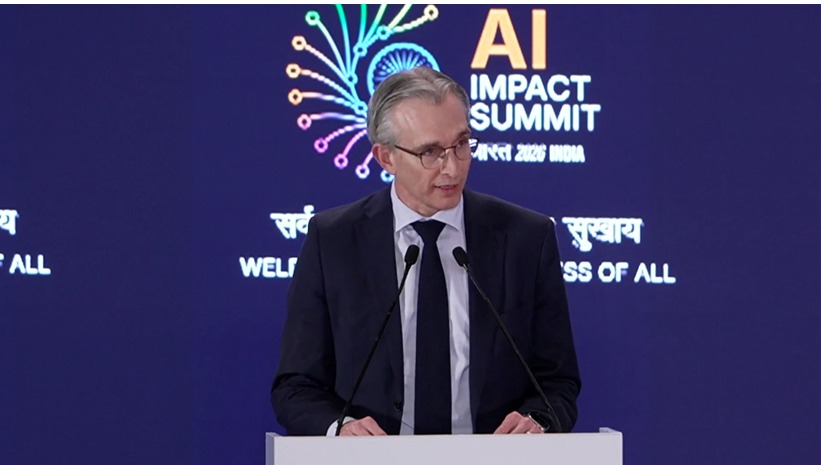
Roy Jakobs, CEO, Philips, positioned healthcare as the sector where AI could have the greatest human impact. Highlighting how AI is already easing pressure on overburdened systems, he stated, “AI is not about replacing clinicians; it is about giving time back to them, time to think, time to connect, time to care.” He further noted, “When we look back a decade from now, AI in healthcare will not be remembered for what was optimised on a screen, but for the billions of lives it helped improve.”
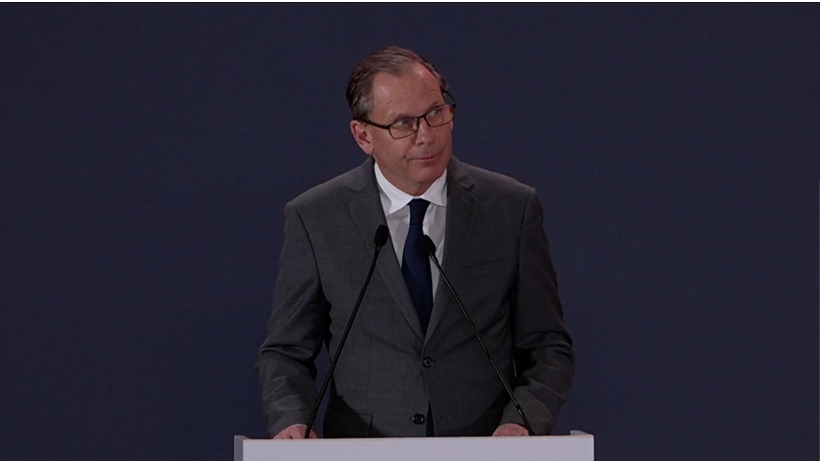
Martin Schroeter, Chairman and CEO, Kyndryl, focused on the urgent need to industrialise AI responsibly at scale. Drawing attention to the gap between experimentation and enterprise adoption, he remarked, “The innovation is real. The challenge is readiness. AI today is not yet industrialised, infrastructure, data, operations and people must be prepared to support it at scale.” Stressing trust and governance, he added, “The future of AI will not be decided in research labs or boardrooms. It will be decided by how reliably and responsibly it is embedded into the systems society depends on every day.”
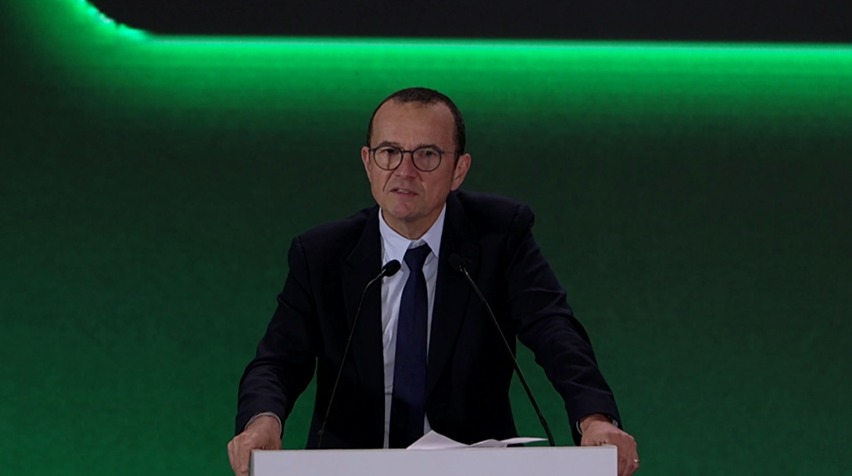
Olivier Blum, Global CEO, Schneider Electric, underscored the deep interlinkages between AI and the global energy transition. Warning of rising energy demand driven by compute-intensive AI systems, he said, “AI means more compute, and more compute means more energy. We cannot underestimate the pressure this will put on global energy systems.” At the same time, he pointed to AI’s transformative potential for efficiency, stating, “For the first time in our history, we can truly connect the physical and digital worlds, making energy systems intelligent and unlocking 10 to 30 percent efficiency gains across applications.”
The four leaders articulated a common imperative, that AI’s next chapter will be defined not merely by model breakthroughs, but by its integration into healthcare systems, critical infrastructure, energy networks, and daily life. From personal superintelligence and predictive healthcare to resilient digital backbones and intelligent energy systems, the keynotes reinforced that the true measure of AI will lie in its ability to scale responsibly, strengthen institutions, and deliver tangible outcomes for people, economies and the planet.
*****
Mahesh Kumar / Pawan Faujdar/ Navin Sreejith/ Allen Roy Joseph/ Ritu Raj