TRAI Hosts ‘Responsible AI in Telecom’ Session at India AI Impact Summit 2026, Focuses on Digital Resilience, Governance and Network Transformation
The Telecom Regulatory Authority of India (TRAI) today organized a session at the India AI Impact Summit 2026 on the theme “Responsible AI in Telecom” at the Sushma Swaraj Bhawan, New Delhi. The session brought together senior representatives from telecom service providers, global technology companies, industry associations, and government institutions to deliberate on policy and operational approaches for deployment of Artificial Intelligence (AI) in telecom networks and consumer-facing applications. The session formed part of the broader summit program and included participation from international industry bodies and global stakeholders. The program served as a platform for deliberations around governance priorities, including trust, accountability, and safety, alongside innovative pathways for scaling AI responsibly in network operations, consumer protection, and service delivery. The discussions recognized the growing convergence of AI and telecommunications as a foundational layer shaping network design, operations, and customer experience.
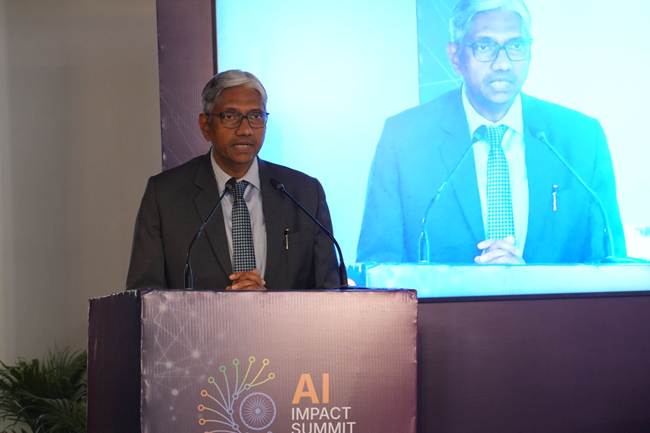
The session commenced with the inaugural and welcome address by Shri Anil Kumar Lahoti, Chairman, TRAI. In his opening remarks, Shri Lahoti highlighted, “Artificial intelligence is no longer a peripheral technology for telecom; it is becoming integral to how networks are designed, managed, and experienced. As AI systems increasingly influence decisions at a population scale, trust becomes fundamental to their rollout. Efficiency gains must be accompanied by transparency, accountability, human oversight, and clearly defined guardrails that ensure fairness and unbiased outcomes. Our collective responsibility is to ensure that AI in telecom remains inclusive, resilient, secure, and aligned with the public interest.”
He further noted that telecom networks constitute a central pillar of India’s AI infrastructure, and given the scale of India’s telecom subscriber base, AI-driven automation is becoming indispensable. AI is already being deployed to optimize network performance, predict faults, enhance energy efficiency, improve customer experience, and combat fraud and spam communications. Strengthened enforcement and AI-driven filtering mechanisms have enabled action against spam-linked connections, and efforts are underway to implement digital consent frameworks for verifiable consumer consent in commercial communications. He reiterated TRAI’s commitment to a risk-based regulatory approach and regulatory sandbox-based testing to enable innovation while safeguarding consumer rights and public interest.
The program featured two focused panel discussions addressing imperative dimensions of AI integration in telecom—the first examining how networks must evolve to responsibly incorporate AI capabilities, and the second exploring the critical question of sustaining customer trust in AI-driven telecom operations. Together, the panels underscored the dual priority of strengthening network intelligence while ensuring consumer confidence in AI-enabled ecosystems.
The first panel discussion, titled “Preparing Telecom Networks for the AI Era," was chaired by Shri Ritu Ranjan Mittar, Member, TRAI. The panel comprised Mr. Magnus Ewerbring, CTO, Ericsson; Mr. Vinesh Sukumar, VP PM, Qualcomm; Mr. Pasi Toivanen, SVP Strategic Government & Industry Initiatives, Nokia; and Mr. Shantigram Jagannath, Sr. VP and Head NMS, Tejas. The discussion focused on AI adoption in telecom networks and improving transparency and explainability in AI-driven systems. It also highlighted the need to embed responsibility by design, ensure environmental sustainability, and strengthen security and safety in AI deployment. Participants deliberated on how intelligent automation and AI-native architectures are transforming network management across expanding 5G ecosystems.
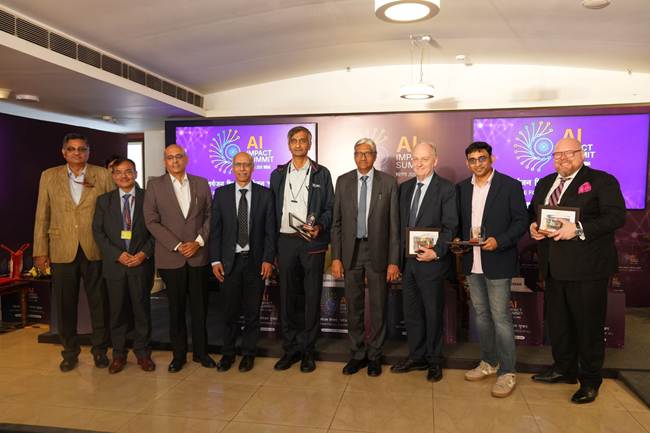
The second panel discussion, titled “Building Customer Trust through AI-driven Operations," was chaired by Dr. M. P. Tangirala, Member, TRAI. The panel included Mr. Julian Gorman, Head of APAC, GSMA; Dr. Rajkumar Upadhyay, CEO & Chairman (Board), C-DOT; Mr. Mathan Babu Kasilingam, CTSO & Data Privacy Officer, Vodafone India Ltd.; and Mr. Syed Tausif Abbas, Sr. DDG & Head, TEC, DoT. The deliberations examined accountability in automated network decisions, transparency in AI-driven customer engagement, mechanisms for responsible AI in spam prevention, ethical governance frameworks for telecom service providers, and the need for standards to develop a comprehensive AI incident database for analyzing AI-related failures, particularly in telecommunications and critical digital infrastructure. The panel also discussed scaling AI responsibly in emerging 5G and future 6G environments, especially for fraud detection and customer-facing analytics.
The sessions witnessed participation from senior industry representatives, policymakers, and technology experts, who shared perspectives on strengthening consumer trust while enabling innovation in AI-enabled telecom systems. The discussions reinforced the importance of collaborative approaches to ensure that AI deployment in telecom remains balanced and secure. Participants noted that trusted AI adoption will require continued coordination between regulators, industry, and technology stakeholders.
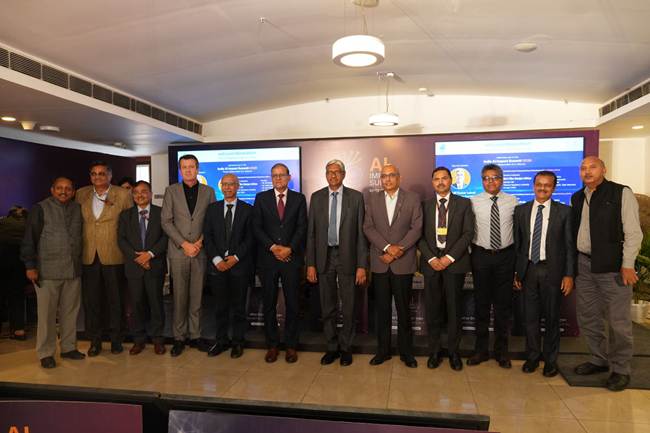
The deliberations from this session will contribute to the broader objectives of the India AI Impact Summit 2026, supporting India’s vision of responsible, inclusive, and development-oriented AI adoption in the telecom sector.
For further information or clarifications, please contact Shri Sameer Gupta, Advisor (Networks, Spectrum, and Licensing (NSL), TRAI, at adv-nsl1@trai.gov.in.
For official updates, follow TRAI on:
X (formerly Twitter) - @TRAI
Facebook - @TRAI
Instagram - @trai.official_
LinkedIn - @trai-official
YouTube - @TelecomRegulatoryAuthorityofIndia
Website - trai.gov.in
****
MI/RG