Ministry of Tribal Affairs Convenes National Review Meeting with Line Ministries and State Tribal Welfare Departments on DA-JGUA, PM-JANMAN, and Article 275(1) Programmes
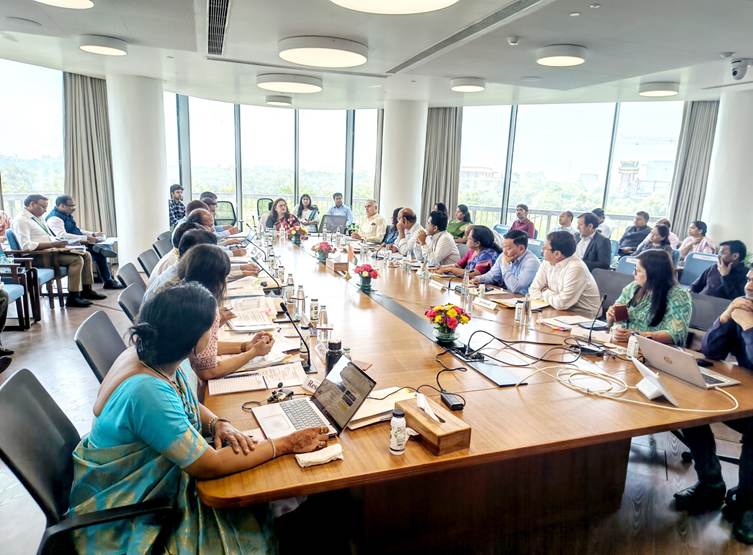
The Ministry of Tribal Affairs (MoTA), Government of India, convened a national review meeting with senior officials from Central Line Ministries and Principal Secretaries of State Tribal Welfare Departments to assess the progress of key tribal development initiatives: the Dharti Aaba Janjatiya Gram Utkarsh Abhiyan (DA-JGUA), Pradhan Mantri Janjati Adivasi Maha Nyaya Abhiyan (PM-JANMAN), and programmes under the Proviso to Article 275(1) of the Constitution of India. The meeting was chaired by the Secretary, Tribal Affairs.
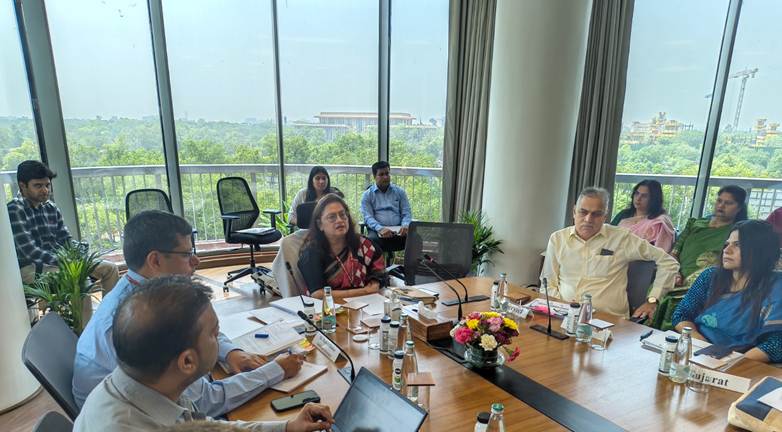
These flagship initiatives are anchored in the vision of Hon’ble Prime Minister Shri Narendra Modi for Viksit Bharat 2047, with PM-JANMAN dedicated to the comprehensive development of 75 Particularly Vulnerable Tribal Groups (PVTGs) and DA-JGUA aimed at saturation-based, holistic development of tribal communities across the country. Together, these programmes embody the Government’s commitment to inclusive growth, last-mile delivery, and empowerment of tribal citizens.
Third-Year Delivery Imperative under DA-JGUA
The meeting assumes particular significance as DA-JGUA enters its third year of implementation, identified by the Ministry as a critical phase for accelerating on-ground delivery. With the planning and mobilization stages largely complete, the focus has now shifted to saturation of basic infrastructure and essential services across all DA-JGUA villages.
Addressing the participants, Secretary, Tribal Affairs, Smt. Ranjana Chopra emphasized that saturation of entitlements, including housing, drinking water, healthcare, education, livelihoods, and road connectivity, is a non-negotiable obligation rather than an aspirational goal. She stated that partial or delayed delivery would be treated as a deviation from the scheme’s intent, and that performance assessment will now be anchored in measurable outcomes rather than expenditure alone.
Quarterly Targets and Data Accountability
MoTA has established sector-wise quarterly targets for all Line Ministries for FY 2026–27. Shri Manish Thakur, Additional Secretary, MoTA, urged ministries to promptly communicate these targets to their respective State departments, designate DA-JGUA nodal officers at the Joint Secretary level, and ensure monthly sharing of updated physical and financial progress data.
Line Ministries were further encouraged to convene independent convergence review meetings with State Tribal Welfare Departments, thereby strengthening accountability mechanisms beyond MoTA-led review platforms.
Strengthening Centre–State Convergence
Highlighting the convergence-based architecture of DA-JGUA, Shri Thakur noted that the initiative integrates multiple Central sector schemes within the same tribal habitations. States were urged to actively exercise co-ownership of the programme and ensure accountability at the district level, particularly among District Collectors, District Magistrates, and ITDA Project Officers, for field-level verification and progress tracking.
Rollout of New Strategic Initiatives
The Secretary announced a series of new initiatives to be implemented under a standardized framework. These include:
- Integrated Conservation, Agro-Technology and Value-Added Bioresource Enterprise for Sustainable Tribal Livelihoods (in collaboration with CSIR-NBRI)
- Capacity Building of Tribal Healers (with ICMR)
- Tribal Health Observatory under Project DRISTI
- Disease Elimination Missions targeting Malaria, Leprosy, and Tuberculosis in tribal districts
- Establishment of Tribal Multipurpose Marketing Centres (TMMCs) under DA-JGUA
- Development of Tribal Freedom Fighter Model Villages (TFFMVs)
- Tribal Eco-Tourism Pilot Project (TEPP) and Tribal Homestay Development
- Tribal Solar Helper Programme
Institutionalization of Adi Karmayogi Abhiyan
Special emphasis was placed on the Adi Karmayogi Abhiyan (AKA), aimed at strengthening last-mile service delivery. The current phase focuses on mapping Adi Sewa Kendras (ASKs), village-level facilitation centres for grievance redressal and entitlement access, and registration of Adi Karmayogi Volunteers (AKVs), local tribal youth serving as grassroots facilitators.
States were requested to actively support these efforts and ensure weekly monitoring of progress at the district level.
Review of PM-JANMAN and Article 275(1)
The meeting reviewed the implementation progress under Pradhan Mantri Janjati Adivasi Maha Nyaya Abhiyan (PM-JANMAN), the dedicated programme for Particularly Vulnerable Tribal Groups (PVTGs), along with the utilisation of funds under Article 275(1). It was acknowledged that PVTG habitations, owing to their geographic remoteness and historical under-service, require customised and targeted delivery mechanisms beyond conventional programme approaches.
In this context, the Ministry emphasized the ongoing rollout of a comprehensive household-level survey covering PVTG households across 18 States and 1 Union Territory. The survey aims to identify critical gaps in individual-level entitlements and basic infrastructure, and to assess opportunities for improving service delivery in key sectors such as health, education, livelihoods, and access to entitlements.
The survey is being carried out by the State Tribal Welfare Departments (TWDs), with the National e-Governance Division (NeGD) serving as the technical partner. During the review meeting, it was noted that approximately 2 lakh household entries have been completed within 20 days of the launch of the Survey Setu Tribal App, against a target of around 12 lakh entries to be achieved by the end of June 2026.
The Ministry of Tribal Affairs (MoTA) reiterated its commitment to robust monitoring and data-driven interventions to ensure that PM-JANMAN delivers targeted and impactful outcomes for PVTG communities, in alignment with the vision of Hon’ble Prime Minister Shri Narendra Modi for a Viksit Bharat and Sabka Saath Sabka Vikas.
Concluding the meeting, the Secretary reaffirmed MoTA’s commitment to holistic and multi-sectoral tribal development in alignment with the Hon’ble Prime Minister’s vision of Viksit Bharat 2047. She invited suggestions from stakeholders to further strengthen delivery frameworks and emphasized the Ministry’s role as a collaborative, responsive, and accountable partner in implementation.
***
RN