IICA Hosts National Conference on “Redefining India’s Restructuring Ecosystem” to Mark a Decade of IBC and Celebrates Convocation of PGIP 6th Batch
The Indian Institute of Corporate Affairs (IICA), under the Ministry of Corporate Affairs, Govt of India, in partnership with the Association of Insolvency Professional Entities (AIPE), successfully hosted the National Conference on “Redefining India’s Restructuring Ecosystem: A Decade of Learning – Directions for the Future” recently at the Pradhan Mantri Sangrahalaya Auditorium, Teen Murti Marg, New Delhi. The event also featured the Convocation Ceremony of the 6th Batch of the Post Graduate Insolvency Programme (PGIP), IICA’s flagship academic initiative for developing a highly skilled cadre of insolvency professionals.
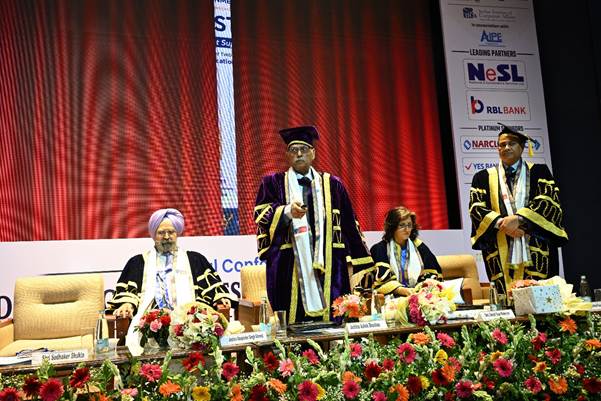
Justice Ashok Bhushan, Chairperson, National Company Law Appellate Tribunal (NCLAT), Chief Guest of the event, delivered the Convocation Address and reflected on the remarkable journey of the Insolvency and Bankruptcy Code (IBC) over the past decade. He observed that the IBC is no longer young, with its foundational questions having been authoritatively settled through a decade of landmark jurisprudence. Describing the period from 2016 to 2021 as the “era of establishment” and the current phase as the “era of refinement,” he noted that the Insolvency and Bankruptcy Code (Amendment) Act, 2026 reflects the maturity of a legislation that continues to evolve through practical experience and judicial guidance.
. 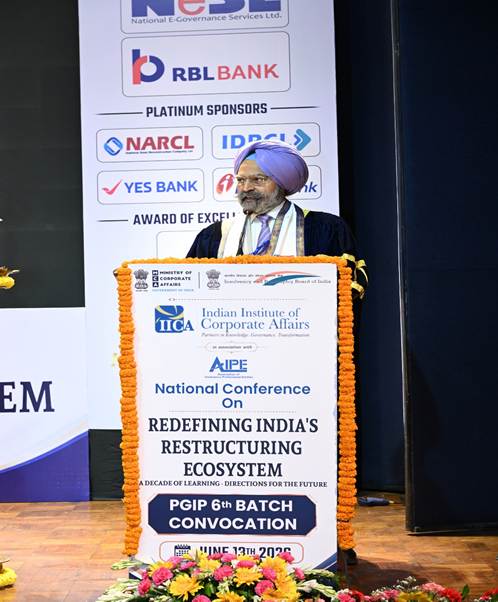
Justice Anupinder Singh Grewal, President, National Company Law Tribunal (NCLT), delivered the Keynote Address and traced the jurisprudential evolution of the IBC from its foundational pronouncements before the Hon’ble Supreme Court of India to the increasingly complex multi-party insolvency matters being adjudicated today. He emphasized the need for sustained judicial and institutional coordination to ensure timely and value-maximising resolution outcomes.
He also highlighted the importance of adopting the UNCITRAL Model Law on Cross-Border Insolvency to strengthen India's position as a trusted global restructuring destination.
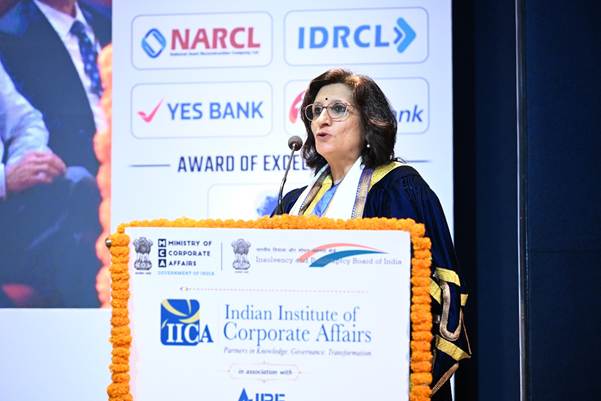
Smt. Deepti Gaur Mukerjee, IAS, Secretary, Ministry of Corporate Affairs, delivered the Special Address and described the Insolvency and Bankruptcy Code as a “behavioural revolution” in India’s financial and corporate ecosystem. Highlighting the transformative impact of the Code, she noted that nearly ₹4 lakh crore has been recovered through resolution processes, with creditors realizing approximately 170 per cent of liquidation value. She further observed that more than 32,000 cases have been settled before formal admission, preserving credit worth nearly ₹14 lakh crore, demonstrating the far-reaching behavioural changes brought about by the Code. Referring to the IBC (Amendment) Act, 2026, she described it as a landmark generational reform that will further strengthen India’s insolvency and restructuring framework.
Welcoming the distinguished guests and participants, Shri Gyaneshwar Kumar Singh, Director General & CEO, IICA, highlighted the significance of the Post Graduate Insolvency Programme, offered through IICA’s Centre for Insolvency and Bankruptcy under the leadership of Shri Sudhaker Shukla. He noted that the two-year full-time residential programme, designed and approved by the Insolvency and Bankruptcy Board of India (IBBI), enables graduates to register as Insolvency Professionals in lieu of the conventional ten-year experience requirement. Across seven batches, the programme has built an alumni network of 239 professionals, many of whom are actively handling insolvency assignments as registered Insolvency Professionals.
Drawing upon his association with the Insolvency and Bankruptcy Code as former Joint Secretary (Insolvency), Member of the IBBI Governing Board and Member Secretary of the Insolvency Law Committee, Shri Singh observed that “a reform is only as strong as the people who carry it.” He reaffirmed the Government’s commitment to strengthening India’s insolvency framework through progressive reforms in areas such as cross-border insolvency, pre-packaged resolutions and digital enablement in pursuit of the vision of Viksit Bharat
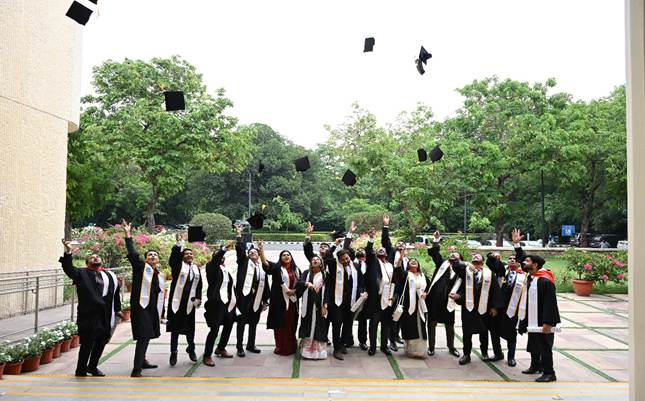
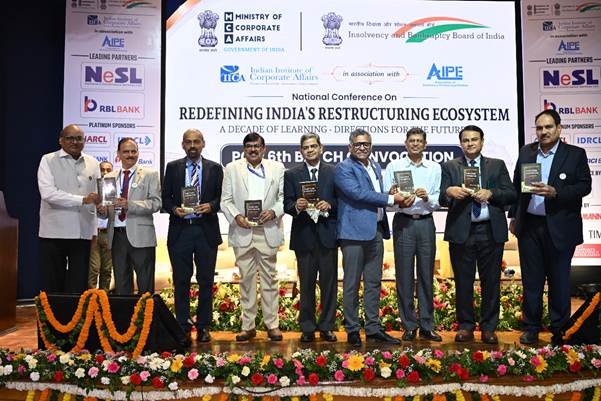
A major highlight of the event was the Convocation Ceremony of the 6th Batch of the Post Graduate Insolvency Programme (PGIP), IICA's flagship programme for developing insolvency professionals. A total of 40 students were conferred degrees and certificates by the distinguished dignitaries present on the dais, marking the successful completion of the programme by a new cohort of professionals equipped to contribute to India's evolving insolvency and restructuring ecosystem.
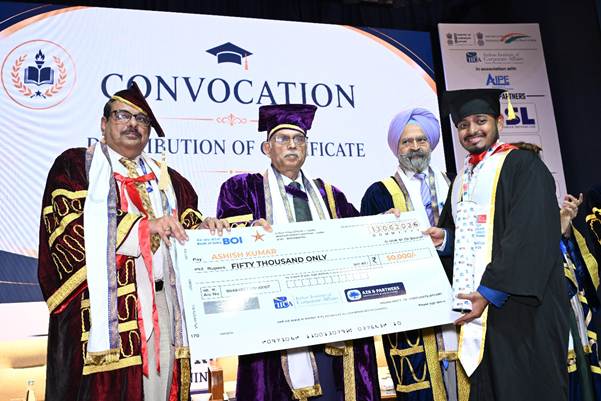
Recognising academic excellence, the Institute honoured the meritorious students of the graduating batch. Mr. Ashish Kumar secured the First Position and was awarded a cash prize of ₹50,000; Mr. Arun Kumar secured the Second Position and received a cash prize of ₹30,000; and Ms. K Geetha Vaishnavi secured the Third Position and was awarded a cash prize of ₹20,000. The awards were sponsored by AZB & Partners in recognition of academic excellence and professional merit. The awardees were felicitated for their outstanding academic performance, dedication, and commitment to professional excellence throughout the programme.
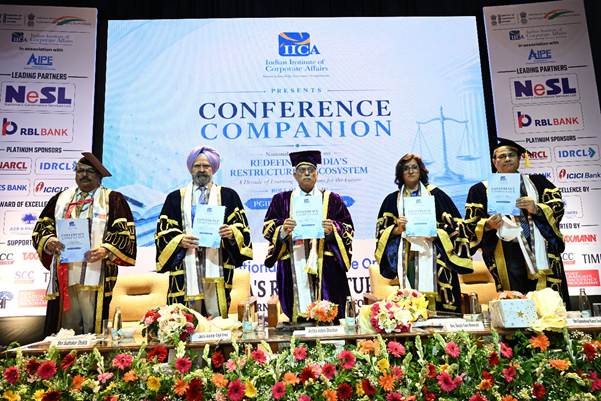
The National Conference Souvenir, documenting the evolution, jurisprudence and impact of the IBC over its first decade, was formally released. The PM Vidya Lakshmi merit-cum-means scholarship for PGIP students was announced, ensuring that talent rather than financial means determines access to premier insolvency education. The One Nation One Subscription (ONOS) platform was also extended to IICA, providing faculty, researchers and students seamless access to leading global academic journals, legal databases and knowledge resources.
These initiatives further strengthen IICA’s position as a premier institution for research, capacity building and knowledge dissemination in the fields of Insolvency and Bankruptcy, Corporate Governance, Corporate Social Responsibility (CSR), Financial Management, Business and Human Rights (BHR), Environmental, Social and Governance (ESG), and other areas of Corporate Affairs.
Following the Convocation Ceremony, the National Conference proceeded with a series of highly engaging technical sessions and panel discussions featuring eminent experts, policymakers, regulators, judicial authorities, insolvency professionals, academicians and industry leaders from India and abroad. Conducted in a hybrid mode, the Conference witnessed enthusiastic participation from delegates attending both in person and virtually, enabling broader engagement and knowledge exchange across the insolvency and restructuring ecosystem.
The Conference featured four high-impact thematic panel discussions addressing critical dimensions of India's evolving insolvency framework.
Renowned panellists from India and overseas shared global perspectives, international best practices and practical insights on insolvency law, restructuring frameworks, distressed asset markets, cross-border insolvency and technology-driven reforms.
The deliberations highlighted the growing maturity of India's insolvency regime and underscored the importance of aligning domestic reforms with global standards to support economic growth, investor confidence and ease of doing business.
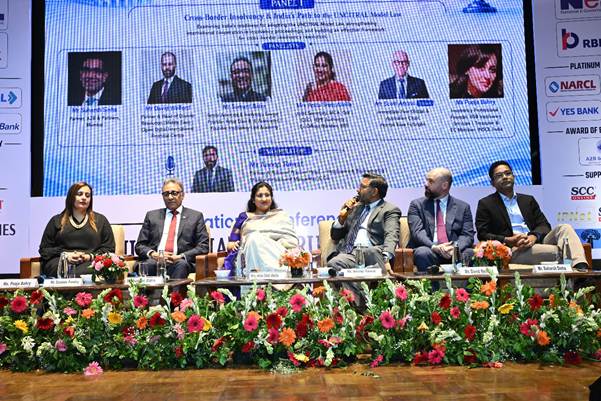
The first panel examined India's preparedness for adopting the UNCITRAL Model Law on Cross-Border Insolvency. Discussions focused on recognition and relief mechanisms, inter-jurisdictional cooperation, judicial readiness and regulatory preparedness required to position India as a credible participant in international insolvency proceedings.
Experts observed that the enabling provisions introduced through the IBC (Amendment) Act, 2026 mark a significant step towards establishing a modern cross-border insolvency framework aligned with global best practices.
The second panel deliberated on the newly introduced Creditor-Initiated Insolvency Resolution Process (CIIRP) and its potential to facilitate faster and more efficient resolution of stressed assets. The discussion also explored reforms required to strengthen pre-packaged insolvency mechanisms and examined the growing role of mediation, arbitration and other Alternative Dispute Resolution (ADR) mechanisms in reducing litigation, preserving value and improving stakeholder outcomes.
The third panel focused on the evolution of India's distressed asset market and the growing role of Asset Reconstruction Companies (ARCs), Alternative Investment Funds (AIFs) and institutional investors in enterprise turnaround and value creation. Participants discussed regulatory and market reforms needed to deepen the secondary market for stressed assets and facilitate rescue financing. The discussion highlighted emerging evidence demonstrating the IBC's success in preserving enterprise value and supporting business revival.
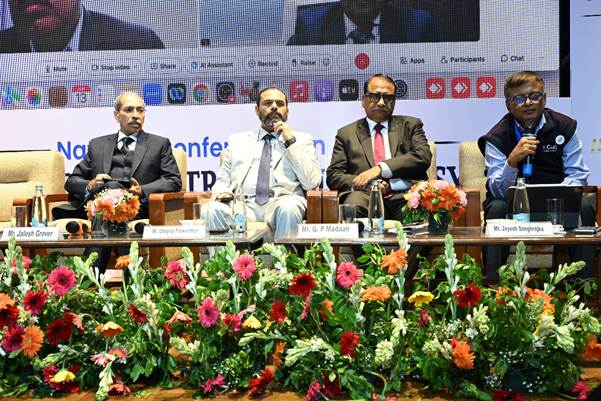
The final panel explored future-oriented reforms, including the development of early warning systems, financial health monitoring tools and resolvability frameworks for large enterprises. Experts also discussed the transformative potential of technology, artificial intelligence and integrated digital platforms in improving transparency, efficiency and timeliness across India's insolvency ecosystem.
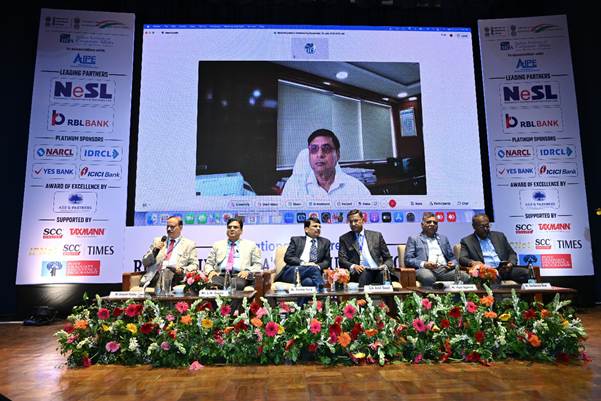
The Conference concluded with a Vote of Thanks proposed by Shri Sudhaker Shukla, Former Whole-Time Member, IBBI and Head, Centre for Insolvency and Bankruptcy, IICA, who expressed gratitude to the distinguished speakers, panellists, delegates, partners and participants for their valuable contributions.
The Conference reaffirmed the collective commitment of stakeholders towards strengthening India's insolvency and restructuring framework and charting a forward-looking roadmap for the next phase of reforms.
***
NB/ONP