Under the Swachh Bharat Mission–Urban 2.0, with a focused thrust on achieving the Lakshya Zero Dumpsite, scientific remediation of legacy waste is being undertaken across States and Urban Local Bodies in a structured and time-bound manner.
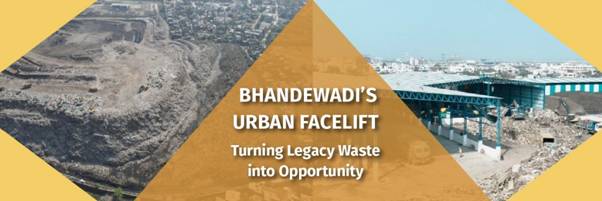
Cities are increasingly adopting bio-mining and advanced processing technologies, while continuous monitoring and systematic clearance of legacy dumpsites are strengthening the transition towards environmentally sustainable urban ecosystems. Nagpur stands out as a leading example of scientifically transforming a legacy dumpsite into a sustainable waste management system.
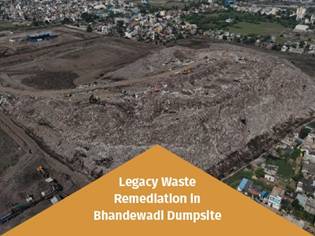
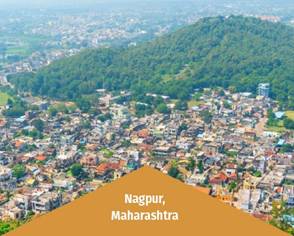
Nagpur, a major urban and economic centre in Central India, has emerged as one of the rapidly expanding cities in the region. With accelerated urbanisation and a population exceeding 30 lakh, the city has witnessed a consistent increase in municipal solid waste generation from households, markets, institutions, commercial establishments, and public spaces. Over time, a significant proportion of this waste was directed to the Bhandewadi dumping yard, which gradually developed into a major legacy waste site, thereby posing considerable environmental and operational challenges for the city administration.
Recognising the urgent need to shift from open dumping to scientific waste management, the Nagpur Municipal Corporation (NMC) undertook a landmark initiative to scientifically remediate the Bhandewadi dumpsite and convert it into a sustainable waste processing ecosystem aligned with principles of circular economy and environmental protection.
The increasing dependence on landfill disposal further intensified the need for a structured and long-term scientific intervention to ensure environmentally safe waste management practices for the city.
Through systematic excavation, segregation and processing of legacy waste, more than 10 lakh metric tons of accumulated waste was successfully treated. This intervention not only eliminated a major environmental burden but also enabled the reclamation of acres of valuable land, previously locked under waste deposits.
Following remediation, the site was transformed into a modern integrated Municipal Solid Waste Processing Facility. The facility now operates with multiple scientific systems including Material Recovery Facilities (MRFs), composting units, RDF generation systems, leachate treatment infrastructure, and advanced environmental monitoring mechanisms. This integrated approach ensures that waste is no longer viewed as a liability but as a resource that can be scientifically processed and recovered.
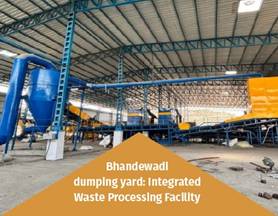
To strengthen operational efficiency and environmental compliance, Nagpur introduced a range of technological innovations at the facility. Advanced systems such as trommels, ballistic separators, composting units, SCADA monitoring, CCTV surveillance and dust control measures have improved waste processing, enabled real-time monitoring and ensured environmental safety.
The transformation of Bhandewadi has also delivered significant environmental benefits for the city. There has been a marked reduction in landfill dependency, improved air, water and soil quality, and enhanced public health conditions in surrounding areas. The shift towards scientific recycling and resource recovery has further strengthened Nagpur’s transition towards a sustainable urban environment.
In parallel, the city has expanded its waste management infrastructure through additional projects such as composting plants, modular waste processing units, Material Recovery Facilities and Construction & Demolition (C&D) waste processing systems. These initiatives collectively enhance the city’s capacity for decentralised and efficient waste management.
The key achievements of this transformation are significant. Over 10 lakh metric tons of legacy waste has been processed, approximately 55 acres of land has been reclaimed, and a robust integrated waste processing infrastructure has been established. The initiative has also strengthened circular economy practices through scientific segregation, recycling and sustainable resource recovery.
The remediation of the Bhandewadi dumpsite serves as a compelling example of how scientific planning, technological innovation, and sustained implementation can fundamentally transform urban waste management systems. It illustrates the shift from legacy waste burdens towards structured, sustainable, and future-ready infrastructure.
****
SK