Rural Prosperity
When Swachhata Becomes Shared Faith
From Ancient Traditions to Modern Pilgrimages, How Cleanliness Is Becoming a Collective Habit
Posted On: 29 SEP 2026 5:37PM
Swachhata in Ancient India: A Practice Rooted in Everyday Life
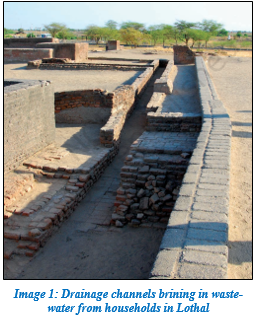
India’s association with cleanliness is older than the modern sanitation movement. The archaeological record of the Indus Valley reveals sophisticated sanitation systems. Cities like Lothal, in present-day Gujarat, followed planned layouts with extensive drainage networks. Many homes had private toilets connected to drains. The system also included inspection points and structures for managing solid waste. The Vedic tradition placed utmost importance on clean bodies and clean surroundings. Clean water, fresh air, and healthy surroundings were linked with spiritual practice. Ancient instructions also advised people to avoid defecating near rivers and other water bodies. The same connection appears in Buddhist traditions. Buddhist monks were instructed not to defecate or urinate in water. They were also expected to clean toilet areas for the next person. Archaeological findings support this tradition of organised sanitation. A Gupta-period monastery in Bihar had a dedicated toilet chamber.
These examples show an important idea. Swachhata has always been linked with conduct, discipline, and community life in India.
From Sanitation Infrastructure to Social Behaviour Change
Centuries later, however, sanitation has emerged as a challenge in modern-day India. This challenge is as much about having adequate sanitation systems as about building habits to ensure their use and sustained maintenance. The Swachh Bharat Mission (SBM) was launched on 2 October 2014 to address this challenge. It became one of India’s largest government-led sanitation movements. The Mission has two components: Swachh Bharat Mission-Grameen (SBM-G) and Swachh Bharat Mission-Urban (SBM-U). SBM-G focuses on rural sanitation, toilet access and usage, and solid and liquid waste management. SBM-U focuses on urban sanitation, waste management, public spaces, and cleanliness infrastructure.
On one hand, the decade since 2014 has seen construction of extensive sanitation infrastructure across the country - from toilets to waste disposal and management systems. On the other hand, this journey has tackled the much more difficult task of bringing about and sustaining behavioural change to make Swachhata part of routine behaviour. That is the larger transformation taking place under SBM.
While permanent villages and cities have now institutionalized waste management, this behavioral shift faces its ultimate test during massive religious gatherings, where millions assemble in compressed timeframes.
Maha Kumbh: A Massive Gathering Becomes a Swachhata Movement
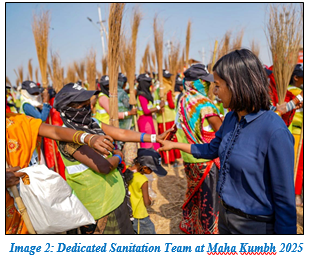
Few gatherings demonstrate this transition as clearly as Maha Kumbh 2025. The scale itself presented a major sanitation challenge. Millions of devotees gathered at Prayagraj, Uttar Pradesh. The response to this challenge combined provision of adequate sanitation infrastructure with awareness generation and public participation. More than 28,000 toilets and 20,000 community urinals were established across the fairgrounds. The waste system included 20,000 trash bins for source segregation. But infrastructure was only one part of the story. The fairgrounds were designated as plastic-free zones. Awareness campaigns were organized to encourage devotees to avoid plastic waste. Public participation was actively encouraged in ensuring swachhata. A Swachhata Rath Yatra moved through Prayagraj. This was a public procession that promoted cleanliness and raised public awareness about avoiding littering, using dustbins, and refraining from using single-use plastic. Street plays and musical performances explained waste segregation and disposal. Public address systems carried cleanliness messages across the ghats.
The approach also created space for community-led action. Women from 28 districts of Uttar Pradesh, along with artisans from several neighbouring states, produced sustainable products. These products included leaf plates, kulhads, jute bags and cloth bags. Around 60 crore eco-friendly products were produced and sold at 300 locations. The message was not only about removing waste. It was about involving people in preventing waste. That is the essence of behaviour change.
Maha Kumbh 2025 also showed how robust public cleanliness systems can reinforce public behaviour. After major bathing dates, rapid sanitation teams restored the fairgrounds. They cleaned toilets and removed waste left behind by pilgrims. Disinfection and fogging were also undertaken.
Kanwar Yatra: When the Route Itself Becomes a Swachhata Space
If the river banks of Prayagraj tested massive demographic coordination, the linear routes of the Kanwar Yatra presented a different logistical puzzle. Millions of devotees travel along common routes during the pilgrimage. This creates pressure on roads, ghats, resting places and public facilities. In Delhi, a special cleanliness campaign was undertaken during the Yatra. Additional sanitation workers were deployed along major routes and resting points. Round-the-clock sweeping and waste collection were arranged. Temporary toilets were also provided. Special attention was given to wet and dry waste segregation. Single-use plastic was also discouraged. The campaign also addressed women pilgrims. Delhi introduced two special pink Kanwar camps for women managed by female volunteers. The camps included clean toilets and bathing facilities. This connected sanitation with dignity and convenience. More than 5 lakh devotees were also provided steel Ganga-water containers and jute bags as eco-friendly alternatives to plastic products.
Amarnath Yatra: From Faith to Responsible Action
Moving from dusty highways to the fragile ecosystem of the Kashmir Himalayas, the Amarnath Yatra elevates this responsibility further. More than four lakh pilgrims undertook the Yatra in 2025. The yatra has been aligned with SBM-U 2.0. The focus includes scientific waste management and plastic-free practices. The goal is a zero-landfill and eco-friendly Yatra. Swachhata Executives and other volunteers appointed by the state government supported the effort. They worked across lodgement centres, langar sites, and Yatra camps. They promoted segregation and discouraged single-use plastic. They also spread messages about sanitation and hygiene. The scale of operations was significant. Around 11.67 metric tonnes of waste were generated daily. Yet, 100% of this waste was processed. There were 1,016 twin-bin stations along the Yatra route for both wet and dry waste. Separate bins were placed near female toilets for sanitary waste. Around 1,300 SafaiMitras worked at strategic locations. They supported round-the-clock cleanliness along the route.
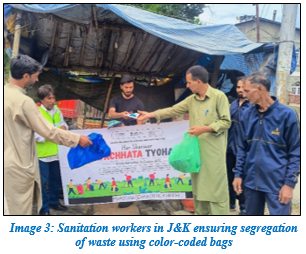
Awareness efforts were made interactive. Activities included ‘Plastic Lao, Thela Lejao’ and ‘Bin It, Win It’. These activities connected communication with participation. The IEC campaign also used signage and street plays. A Green Pledge campaign brought together more than 70,000 devotees. Participants committed themselves to Swachhata and sustainable practices. Social media reinforced the messageas pilgrims shared selfies and successful sanitation stories. Here, the change becomes especially visible.
Here, the pilgrim is no longer only a user of sanitation facilities. The pilgrim becomes a participant in maintaining them. Faith becomes connected with responsibility.
When Religious Practice Itself Becomes Part of Waste Management
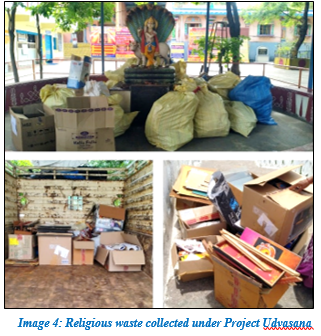
The movement is also reaching religious spaces outside major pilgrimages. A striking example comes from Hyderabad. The Greater Hyderabad Municipal Corporation launched Project Udvasana. The project focuses on religious and sacred waste. Such material can include flowers, garlands, religious books, and damaged idols. The project provides dedicated collection and scientific processing. It began as a pilot at the ISKCON Temple in Jubilee Hills. Seven participants initially deposited 66 kilograms of religious material. The second phase collected 443 kilograms. The third phase expanded to six major temples. It involved 124 devotees. The collection reached 753.59 kilograms during this phase. The material was segregated, documented, and recycled. It was sent to an authorised agency for further processing. The initiative promotes source-level segregation and sustainable waste management. This is an important extension of the Swachhata journey. The focus is no longer only on cleaning public spaces. It is also on changing how religious waste is handled.
When Cleanliness Becomes Part of the Journey
India’s sanitation journey has travelled a long distance. Ancient settlements developed sophisticated systems for water and sanitation. Religious traditions connected cleanliness with personal and spiritual discipline. Modern India then faced the challenge of universal sanitation access. The Swachh Bharat Mission created a massive sanitation infrastructure. But infrastructure alone could not complete the journey. The next step was to make Swachhata a habit. That required communication, participation, and repeated public action. Today, that effort is visible beyond campaign days. It is visible on pilgrimage routes and at religious gatherings. It is visible in public spaces, temples, and festival sites. That is when Swachhata moves beyond a campaign. It becomes a habit, and when a habit becomes collective, it becomes a culture.
References
Ministry of Jal Shakti
https://www.pib.gov.in/PressReleasePage.aspx?PRID=2091806®=48&lang=2
https://swachhbharatmission.ddws.gov.in/sites/default/files/Studies-and-surveys/Swachhata-Sanskriti-Draft-G2-Small-Review-Copy.pdf
Ministry of Education
http://ncert.nic.in/textbook/pdf/fees106.pdf
Government of Uttar Pradesh
https://x.com/MahaKumbh_2025?lang=en
Government of Jammu & Kashmir
https://swachh.jk.gov.in/clean-beginnings-strengthening-sanitation-for-shri-amarnath-ji-yatra-2025-at-yatri-niwas-jammu/
Government of Telangana
https://x.com/GHMCOnline/media
PIB Backgrounders
https://www.pib.gov.in/PressReleasePage.aspx?PRID=2090918®=48&lang=2
https://www.pib.gov.in/PressNoteDetails.aspx?NoteId=160036&ModuleId=3®=3&lang=1
https://www.pib.gov.in/PressNoteDetails.aspx?NoteId=153694&ModuleId=3®=48&lang=2
When Swachhata Becomes Shared Faith
*****
PIB Research
(Features ID: 160231)
आगंतुक पटल : 129
Provide suggestions / comments