Office of Principal Scientific Advisor to GoI
Technology Advisory Group (TAG) of Empowered Technology Group (ETG) meets to discuss A Strategic Roadmap for India’s Telecom Sector and establishing a dedicated “Communication Technology Task Force”
प्रविष्टि तिथि:
10 JUL 2026 8:26PM by PIB Delhi
The Technology Advisory Group (TAG) constituted by the Empowered Technology Group (ETG) convened its fourth meeting on 10 July 2026 under the chairmanship of Prof. Ajay Kumar Sood, Principal Scientific Adviser (PSA) to the Government of India. The meeting focused on identifying priority technology domains for the telecom sector and assessing the need for a dedicated national R&D intervention. It also deliberated on strategies to strengthen India's innovation-to-commercialisation ecosystem by enhancing capabilities in standards development, intellectual property creation, advanced manufacturing, and resilient strategic supply chains.
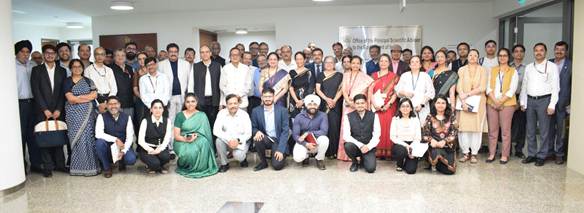
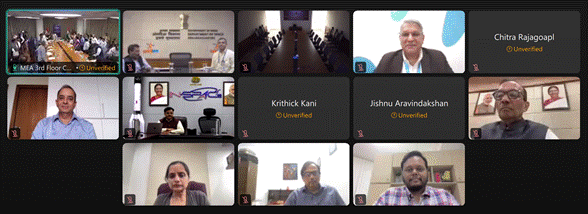
The meeting brought together TAG and ETG members, senior government officials, leading academicians, industry representatives, and telecom startups to deliberate on India's current telecom landscape and the strategic priorities for building a future-ready telecom ecosystem.
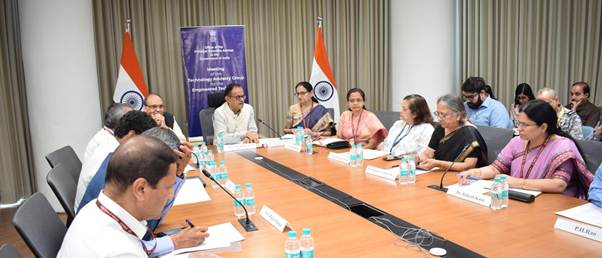
In his opening remarks, Prof. Sood highlighted that telecom technologies form the foundation of India's digital economy, enabling digital public infrastructure, artificial intelligence, cloud computing, industrial automation, and critical infrastructure. While noting India's emergence as one of the world's largest telecom markets, he emphasised the need to build indigenous capabilities across the telecom value chain by strengthening research, standards, intellectual property, manufacturing, and commercialisation. He further invited participants to deliberate on priority technology areas and the institutional mechanisms required to accelerate innovation and reduce critical technological dependencies.
Shri Amit Agarwal, Secretary, Department of Telecommunications (DoT), highlighted India's vision for an integrated, future-ready, and fast-moving telecom sector that extends beyond traditional telecom services to encompass data centres, non-terrestrial networks, space-based communications, and AI-native networks. Emphasising an ecosystem-led approach, he underscored the need to align and build upon ongoing national initiatives while creating institutional mechanisms that can support long-term technology development. He also informed about DoT’s Digital Bharat Nidhi scheme which provides a unique opportunity to support research, innovation, and early deployment of indigenous technologies.
Dr Parag Agrawal, Deputy Director General, Telecom Technology Development Fund (TTDF) emphasised the need to leverage India's strong market potential to develop indigenous capabilities in strategic areas such as 5G-Advanced/6G, AI-native networks, Open RAN, satellite communications, cloud-native networks, and telecom semiconductors. He also highlighted the importance of enhancing India's participation in global standardisation efforts and establishing advanced telecom testbeds to support research, innovation, validation, and the deployment of next-generation technologies.
Key speakers included Prof. R K Ganti, Professor, IIT Madras; Dr Kiran Kuchi, Prof. IIT Hyderabad and Founder, Wisig Networks; Mr Satish Jamadagni, Chairman, Telecommunications Standards Development Society, India (TSDSI); Mr Tushar Sharma, EVP, Axiro Semiconductor Pvt Limited; Dr P. K. Jain, Director, Program Management, INSPACe; Shri Sanjay Nayak, Co-founder Tejas Networks; Dr Pavan Goenka, Chairman, INSPACe; Dr Renu Swarup, Former Secretary, Department of Biotechnology; Dr V Ramagopal Rao, Vice-Chancellor, BITS Pilani; Ms Debjani Ghosh, Distinguished Fellow, NITI Aayog; Ms Vibha Mehra, Country Manager, Nokia India; Ms Ambika Khurana, Chief Regulatory & Corporate Affairs Officer, Vodafone Idea Limited; Prof. Rajat Moona, Director, IIT Gandhinagar; Dr Vibhav Sanzgiri, Executive Director of Research & Development (R&D) and Chief R&D Officer, Hindustan Unilever Limited (HUL); Dr. Rashmi Urdhwareshe, Independent Director, Sterling Tools Ltd; and Shri A Robert J Ravi, Chairman and Managing Director, BSNL. They highlighted the role of academia in facilitating advancement in India's telecom ecosystem; called for focused investments in 6G technologies and a unified, mission-mode approach to address the issues; and emphasised development of indigenous standards and Indian SEPs to bolster the country's global technology leadership. They also advocated for a dedicated ecosystem to strengthen market access, product linked-incentives, domestic chip design, product development, and long-term technological sovereignty; discussed the strategic opportunities offered by Non-Terrestrial Networks (NTN); presented the need to scale India's telecom industry through stronger market access; need for trusted data intelligence into analytics, AI and zero trust architecture.
Further, the deliberations of the ETG and TAG members, along with key stakeholder interventions, highlighted the need for early and sustained participation of India in global standards, mission-oriented development of next-generation communication technologies, and creation of robust testbeds to accelerate technology validation and commercialisation. Policy and funding frameworks should support indigenous design, development, and manufacturing by facilitating market access, aligning government procurement with domestic innovation, and product-linked incentive mechanisms to enable the transition of technologies from laboratory to market. The discussions further stressed the importance of strengthening critical supply chains, and leveraging India's skilled workforce, manufacturing capabilities, and large domestic market to transform the country from an import-dependent telecom ecosystem into an export-oriented innovation hub.
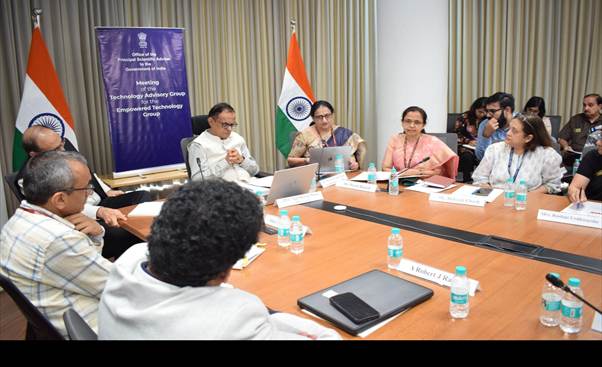
In her concluding remarks, Dr (Mrs) Parvinder Maini, Scientific Secretary, OPSA, summarised the key outcomes of the deliberations. She observed that a broad consensus had emerged on the need to strengthen India's strategic autonomy across the telecom technology value chain and build capabilities in strategic layers of the telecom technology stack. She emphasized accelerating technology translation from research to deployment, strengthening leadership in global standards, SEPs, and trusted indigenous telecom products. She further highlighted the need to bridge the critical gap between laboratory innovation and market adoption through structured support for prototyping, field validation, interoperability testing, certification, and commercialization, alongside greater private sector participation. She underscored the importance of a whole-of-government and whole-of-ecosystem approach, complemented by calibrated global partnerships, to enhance India's competitiveness in next-generation communication technologies. She also highlighted the proposed “Communication Technology Task Force” as a dynamic mechanism to guide national priorities and strengthen ecosystem-wide coordination.
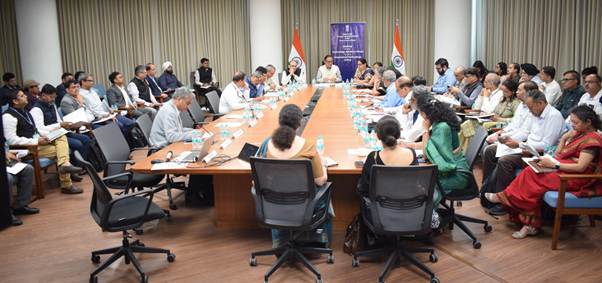
In his final remarks, Shri. Agarwal reiterated the views and emphasised the need to bridge the gap between innovation and impact, transitioning to collaborative consortiums, and having transparent and trustworthy mechanisms to iterate and refine products. He highlighted unwavering policy clarity and decisive government procurement support to be two important pillars. He also positioned the ETG as a trusted, neutral mechanism for technology assessment and strategic guidance in frontier communication technologies.
In his closing remarks, Prof. Sood thanked all participants for their valuable insights and constructive recommendations. He emphasised that the deliberations had provided a strong foundation for defining India's long-term telecom strategy and requested continued engagement from academia, industry, startups, and government in advancing a coordinated national roadmap for next-generation communication technologies.
****
MJPS/SS/ST
(रिलीज़ आईडी: 2283465)
आगंतुक पटल : 1675