Ministry of Education
NIT Raipur, INAE Launch National Engineering Conclave to Advance Innovation and Self-Reliance
Finance Minister O. P. Choudhary urges young engineers to embrace challenges, identify emerging opportunities and develop technology-driven solutions
Two-day MEET 2026 brings together 270 participants from 180 teams for multidisciplinary research, project development and innovation
प्रविष्टि तिथि:
26 OCT 2026 6:12PM by PIB Raipur
National Institute of Technology (NIT) Raipur, in association with the Indian National Academy of Engineering (INAE), on Monday inaugurated the two-day INAE Youth Conclave 2026-cum-National Conference on Multidisciplinary Engineering and Emerging Technology (MEET 2026), bringing together young innovators, researchers and experts to advance interdisciplinary research, technological innovation and sustainable self-reliance. Organised under the theme “Youth Engineering for India’s Sustainable Self-Reliance” (YEISS 2026), the conference seeks to nurture engineering talent and contribute to the vision of Viksit Bharat 2047.
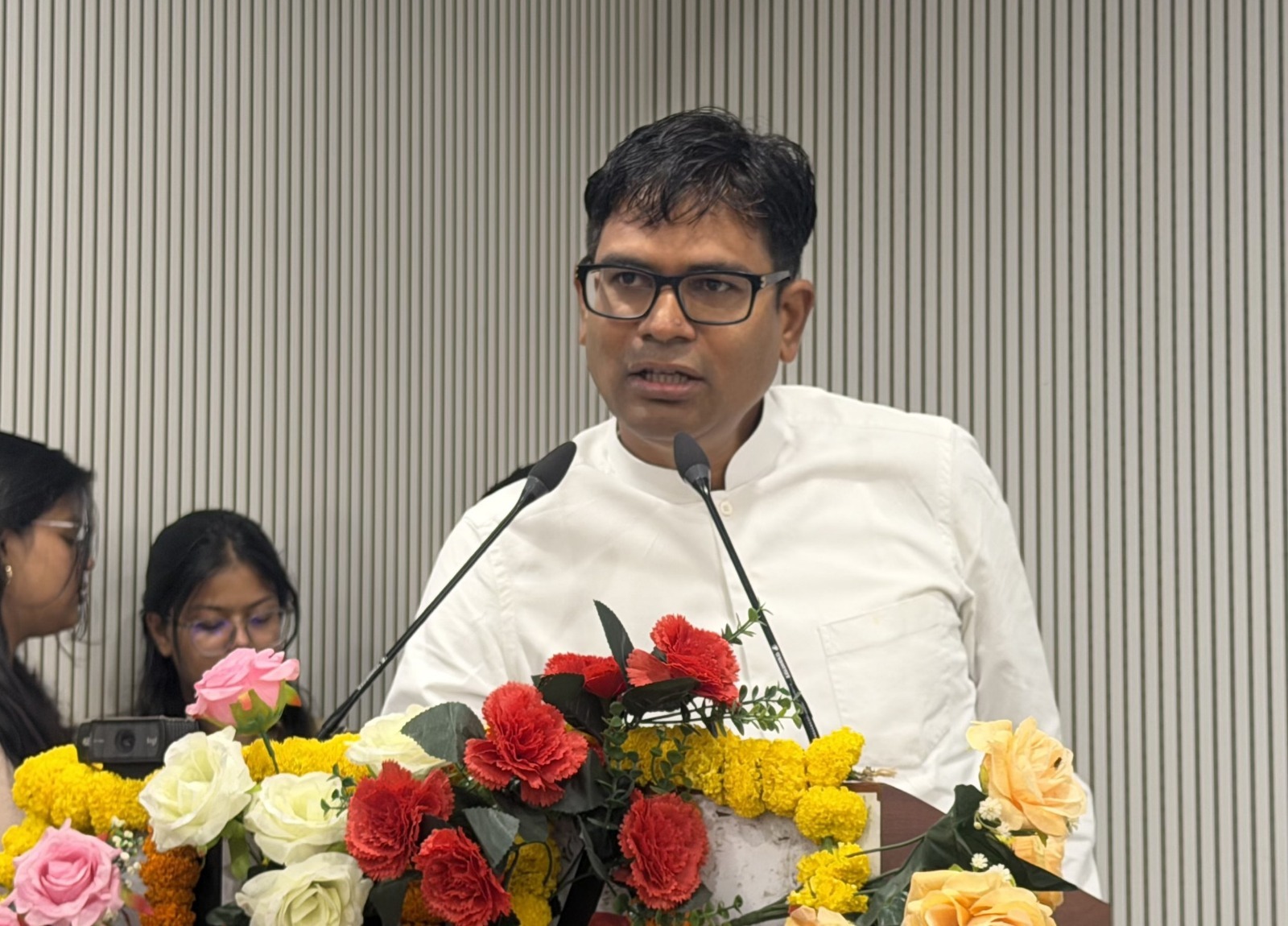
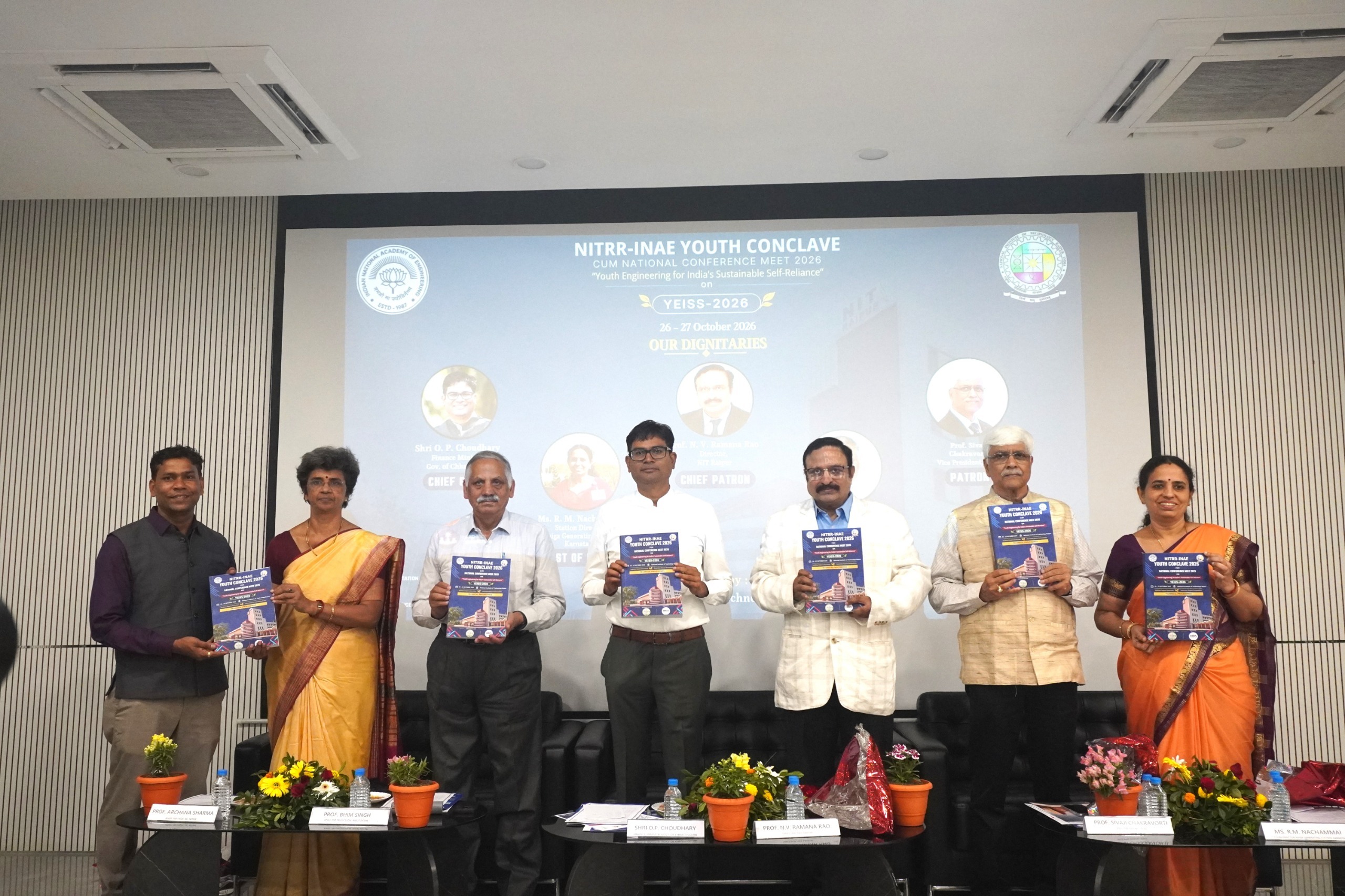
Chhattisgarh Finance Minister Shri O. P. Choudhary attended the inaugural ceremony as the Chief Guest. NIT Raipur Director Professor N. V. Ramana Rao was the Chief Patron, while Indian National Academy of Engineering Vice President Professor Sivaji Chakravorti was the Patron. Professor Bhim Singh, Anusandhan National Research Foundation Prime Minister Professor at Netaji Subhas University of Technology, Delhi, and Ms. R. M. Nachammai, Station Director of Kaiga Generating Station, Karnataka, were the Guests of Honour. Professor Archana Sharma, Anusandhan National Research Foundation Prime Minister Professor at NIT Raipur, and Professor N. V. Swamy Naidu, Head of the Department of Mechanical Engineering, were the Co-Patrons. Dr. Sanjeev Kumar, Assistant Professor in the Department of Mechanical Engineering, chaired the event. Deans, heads of departments, faculty members, staff and students attended the programme.
Delivering the keynote address, Chief Guest Shri O. P. Choudhary highlighted the increasing dependence of everyday life and the global economy on technology. Drawing on his experience in public administration and finance, he observed that even minor technological disruptions could have far-reaching consequences, underscoring the need for technological resilience and continuous innovation. Referring to the growth of major corporations such as Reliance, he encouraged students to identify unmet needs, recognise emerging opportunities and take initiative rather than be constrained by their existing skill sets.
Reflecting on his professional journey from civil service to finance, Shri Choudhary urged young people to work hard, embrace challenges, make effective use of available resources and recognise the value of learning throughout the pursuit of ambitious goals. He emphasised the importance of initiative, adaptability and a forward-looking approach in translating ideas into meaningful outcomes.
Addressing the gathering, Dr. Sanjeev Kumar emphasised the need to connect engineering knowledge with practical implementation and societal requirements. He outlined the four principal components of the conclave: hackathon, project idea and development, thesis presentation, and multidisciplinary research paper presentation. He said approximately 270 participants representing 180 teams had registered for the event. Emphasising the importance of socially relevant innovation, he observed that engineering achieves its true value when ideas are translated into practical solutions that improve people's lives.
Professor N. V. Ramana Rao welcomed the participants and highlighted the growing role of Artificial Intelligence (AI) in multidisciplinary engineering. He noted that AI was transforming areas such as mechanical, aerospace and civil engineering, digital twins, healthcare, biotechnology and quantum simulations for drug discovery. He urged students to look beyond immediate outcomes, accept constructive criticism and pursue innovation with perseverance and a long-term perspective.
Professor Sivaji Chakravorti outlined the history, objectives and activities of the Indian National Academy of Engineering, including its flagship initiatives, awards, distinguished membership and membership criteria. He underscored the Academy's commitment to mentoring young students and strengthening their professional capabilities so that they could contribute to engineering excellence and technological advancement.
Professor Archana Sharma stressed the importance of multidisciplinary research and innovative approaches to addressing challenges in food security, environmental protection, healthcare and energy efficiency. Encouraging students to learn from experienced researchers and industry experts, she called for practical, evidence-based solutions to pressing societal problems. She also highlighted the role of the Anusandhan National Research Foundation (ANRF) in strengthening India's research and innovation ecosystem.
Ms. R. M. Nachammai said the conclave offered more than a platform for exchanging ideas, creating opportunities for collaboration and professional networking in support of a self-reliant and developed India. Emphasising the importance of character, curiosity and innovation, she encouraged participants to treat failures as valuable learning experiences. She urged the young engineers to “Dream boldly, innovate bravely, and create confidently.”
Professor Bhim Singh highlighted the transformative potential of emerging technologies in energy, healthcare, education and space exploration. He called upon young engineers to keep pace with technological advancements and channel their knowledge and capabilities into innovative solutions that address national priorities and deliver tangible societal benefits.
Professor N. V. Swamy Naidu delivered the vote of thanks, expressing gratitude to the dignitaries, representatives of the Indian National Academy of Engineering, faculty members, organisers, participants and supporting teams for their contributions to the successful inauguration.
The organising team includes Dr. Jitendra Kumar Rout, Dr. Ashish Kumar Dash, Dr. Madhukrishna Priyadarshani, Dr. Shashi Kant Verma and Dr. Saurav Raj as Organising Secretaries, under the leadership of Dr. Sanjeev Kumar, Chairperson.
The conclave will feature expert lectures, technical sessions, hackathon activities, project demonstrations, thesis presentations and multidisciplinary research paper presentations. Bringing together school students, undergraduate and postgraduate students, doctoral researchers and eminent experts, the event provides a platform for knowledge exchange, interdisciplinary collaboration and practical problem-solving.
Through MEET 2026, NIT Raipur and the Indian National Academy of Engineering seek to strengthen engagement with young engineering talent, promote research-led innovation and contribute to India's emergence as a technologically advanced, sustainable and self-reliant nation by 2047.
******
RDJ/BKT
(रिलीज़ आईडी: 2328625)
आगंतुक पटल : 7
इस विज्ञप्ति को इन भाषाओं में पढ़ें:
Hindi_Cg