Ministry of Agriculture &
Farmers Welfare
CIPMC Organizes Human Resource Development Programme on IPM in Gangtok
Posted On:
12 MAR 2025 4:25PM by PIB Gangtok
The Central Integrated Pest Management Centre (CIPMC) organized a Human Resource Development Programme on Integrated Pest Management (IPM) at Samdong Gauthaley, Gangtok. Pest management under organic cultivation is always a challenge. Non-chemical practices are often found less effective if not used properly and timely.
To promote non-chemical pest management of crop insect pests, diseases, and nematodes, implementing Integrated Pest Management techniques is crucial. It is the only pathway towards sustainable organic farming.
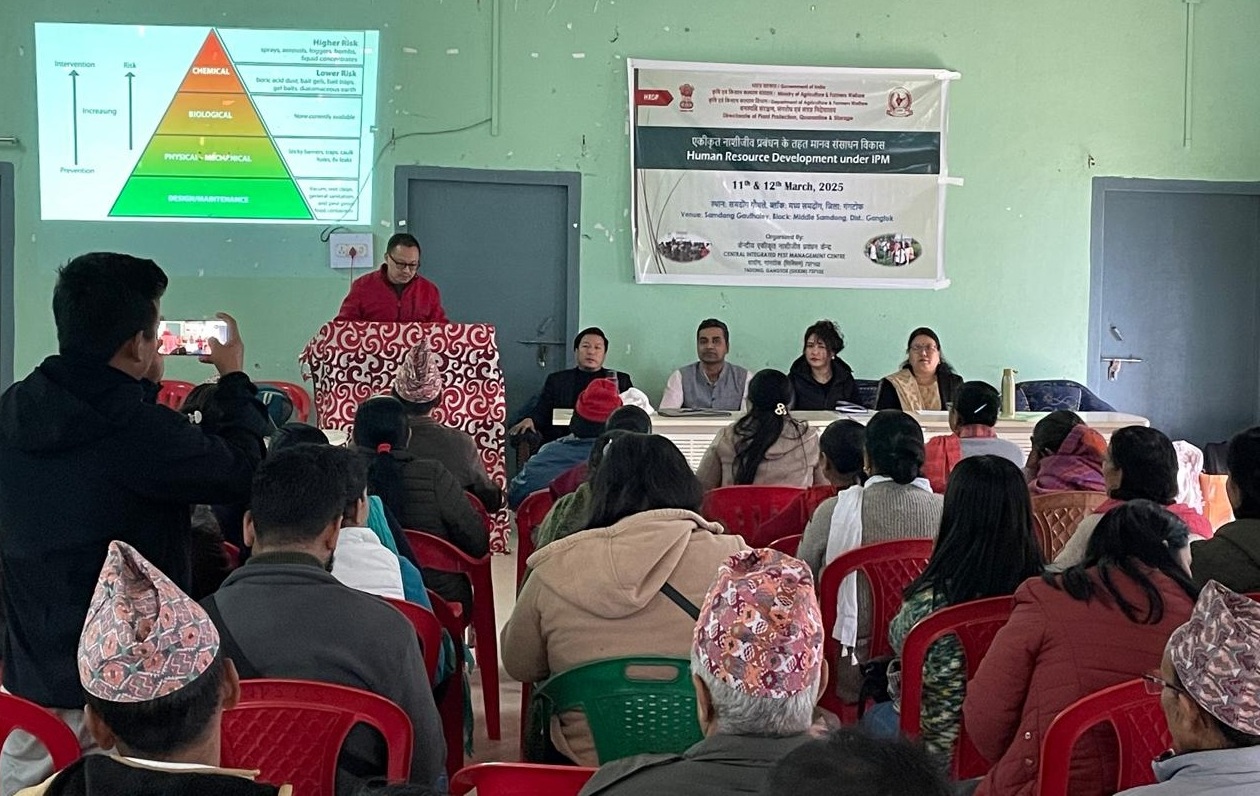
Over 50 progressive farmers and state department officials participated in a two-day Human Resource Development programme on Integrated Pest Management. The event was held at NHPC Hall, Samdong Gauthaley, Middle Samdong, Gangtok, on March 11-12, 2025. The Central IPM Centre, Gangtok, organized the programme.
The programme focused on awareness development among marginal farmers on Integrated Pest Management practices for field crops in Sikkim. Including officials from state departments of Agriculture and Horticulture ensured wide coverage of these practices.
Dr. A. Chakraborty, Deputy Director (E), Head of Office, CIPMC, Gangtok, welcomed all participants. He defined IPM as a philosophy that utilizes all suitable pest management techniques and methods to keep pest populations under economic injury level. Dr. Chakraborty emphasized the importance of cultural, mechanical, behavioral, biological, and bio-pesticidal management strategies. These strategies are environmentally sound and compatible with farmers' needs.
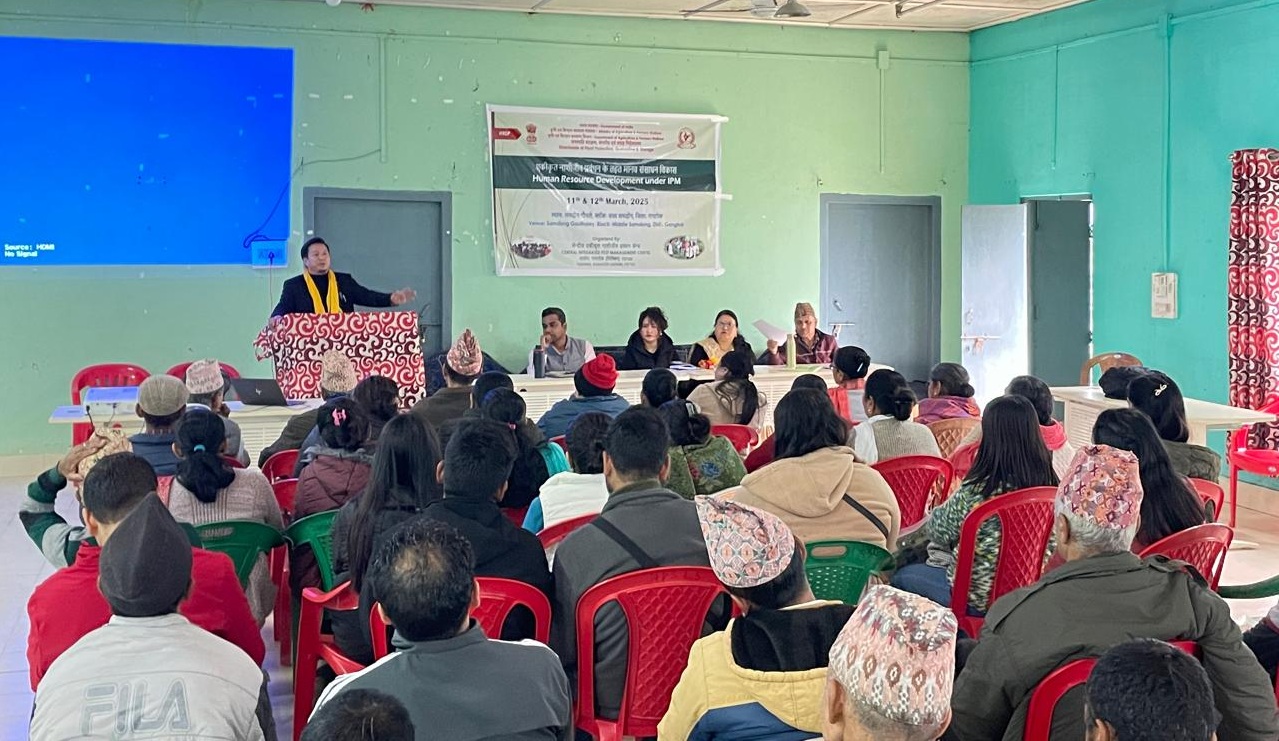
Dr. Chakraborty also urged the need for large-scale crop pest surveillance through the AI-based National Pest Surveillance System (NPSS) in the state.
Dr. Roshna Gazmer, Deputy Director, IPM Division, Department of Agriculture, Government of Sikkim, emphasized non-chemical pest management techniques. She discussed majorly grown spices in Sikkim and recommended bio-fungicidal seed treatment to combat plant diseases.
Shri R. Lepcha, APPO, discussed prevalent crop pests and recommended IPM practices for better crop production. Smt. P. Tamang, Assistant Plant Protection Officer, demonstrated techniques using pest-specific pheromone traps. These traps are used for monitoring and managing major insect pests.
During the programme, the importance of seed treatment with bio-pesticides was discussed. This treatment protects crops from soil-borne fungal diseases. A hands-on demonstration was also provided as part of the 'Nation-wide Seed Treatment Campaign.' This campaign was initiated by the Plant Protection Division of the Ministry of Agriculture, Co-operation & Farmers' Welfare, Government of India.
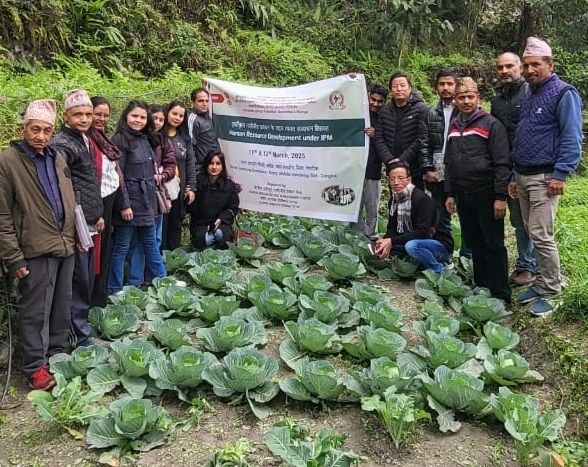
Participants from local villages and state officials were encouraged to adopt indigenous and non-chemical strategies. These strategies help manage harmful pests responsibly and further disseminate IPM concepts among the farming community.
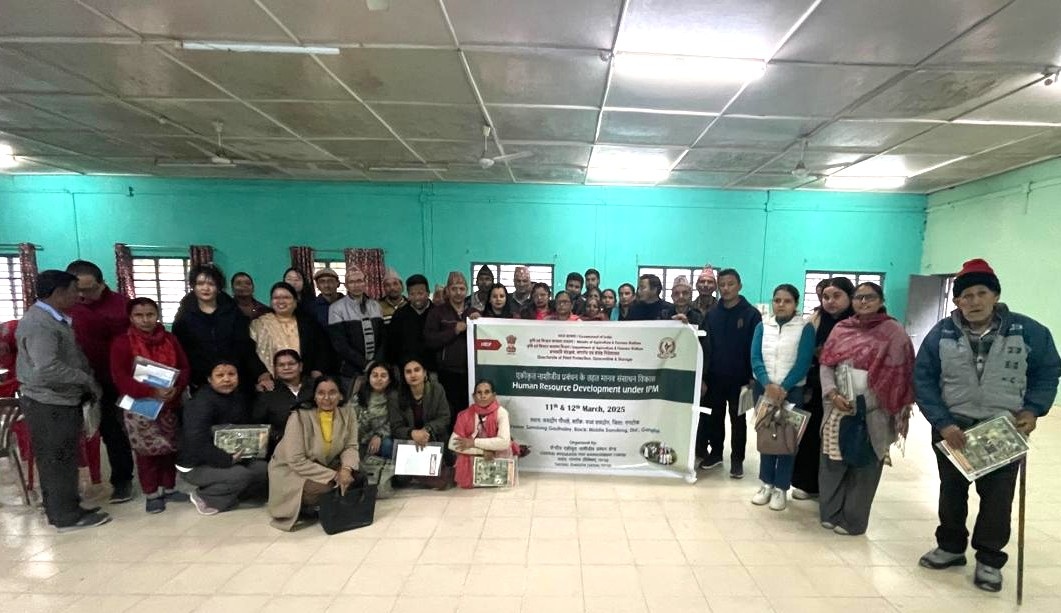
Related literature with pictorial references was distributed among participants as a ready-reckoner.
On the second day, a field demonstration programme exposed participants to hands-on training. They learned about seed treatment and the application of the NPSS mobile app. This app is used for crop pest identification and pest surveillance/reporting from the field.
*******
MPS/TWB
(Release ID: 2111120)
Visitor Counter : 171