Ministry of Jal Shakti
CWPRS Leads National Dialogue on Dam Safety and Rehabilitation
Posted On:
29 OCT 2025 8:04PM by PIB Mumbai
Pune, 29 October 2025
The Central Water and Power Research Station (CWPRS), Pune, under the Department of Water Resources, River Development & Ganga Rejuvenation, Ministry of Jal Shakti hosted a one-day Stakeholder Workshop on “Role of CWPRS in Dam Safety and Rehabilitation – Building Strategic Partnerships” today (29 Oct), in hybrid mode. The event brought together dam owners, regulatory authorities, scientists, consultants and professionals from across the country to deliberate on collaborative strategies for ensuring the safety, resilience and sustainability of India’s dams.

India, with over 6,000 major dams, ranks third globally. Many of these structures, constructed decades ago, form the backbone of the nation’s irrigation, hydropower and flood-control systems. With more than half now over 50 years old, the issues of aging, distress, sedimentation, seismic vulnerability and climate variability have made dam safety a national priority.
Against this backdrop, the workshop provided a much-needed platform for dialogue among policymakers, researchers and engineers—focusing on how research, innovation and institutional collaboration can strengthen India’s dam safety regime under the Dam Safety Act, 2021, the National Dam Safety Authority (NDSA) and the ongoing Dam Rehabilitation and Improvement Project (DRIP).
N9C5.jpeg)
Addressing the gathering online, Shri V. L. Kantha Rao, IAS, Secretary (DoWR, RD & GR), Ministry of Jal Shakti, the Chief Guest for the event, emphasized the critical importance of systematic assessment and continuous monitoring of dams by the States, which are the primary custodians of these vital structures. He noted that while notable progress has been made under the Dam Safety Act, 2021, the pace of assessments remains slow and called for concerted efforts to expedite the evaluation of about 5,000 pending dams by December 2026. The Secretary underscored that CWPRS, with its multidisciplinary expertise, should play a key role in handholding and guiding State governments, private consultants and agencies involved in dam safety assessments. He suggested that CWPRS, in consultation with the National Dam Safety Authority (NDSA) could develop Standard Operating Procedures (SOPs) aligned with the 17 regulations issued by NDSA, drawing upon its extensive experience and technical capabilities. These SOPs, he said, would serve as a valuable framework to help States ensure uniformity, compliance and quality in their dam assessment practices.
He further highlighted the need for regular workshops and interactive forums to strengthen engagement between CWPRS, NDSA and stakeholders, fostering shared learning and consistency in implementation across States. “We must accelerate dam assessments across the country through better planning, stronger partnerships and consistent technical support from CWPRS and NDSA,” he urged.
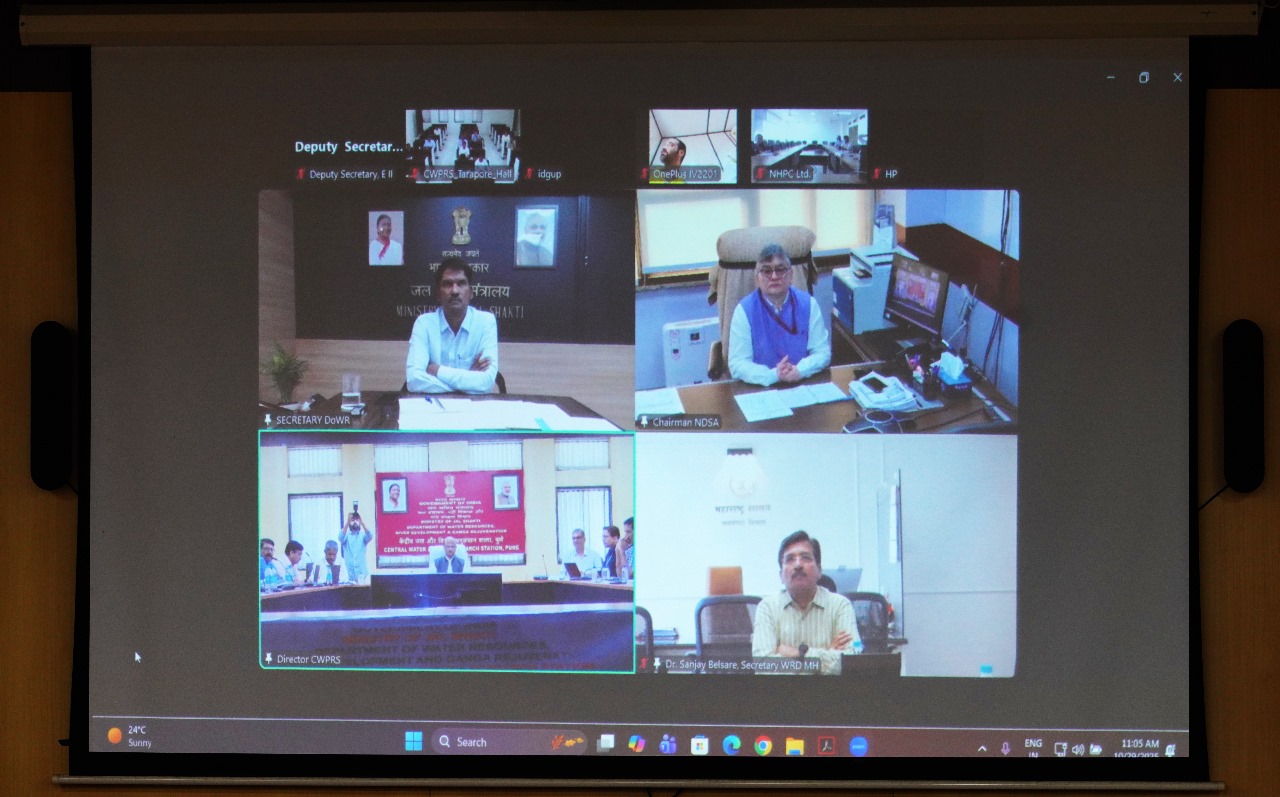
Earlier, Dr. Prabhat Chandra, Director, CWPRS, welcomed the dignitaries and participants, highlighting CWPRS’s century-long contribution to science-based solutions in water resources. Established in 1916, the institute has completed over 6,400 studies, including more than 100 dam safety and rehabilitation projects under DRIP in recent years.
He stated that CWPRS serves as a single-window centre for dam assessment and rehabilitation, integrating hydraulics, geotechnics, structures and instrumentation to develop practical, research-backed solutions. The institute’s work spans seepage control, foundation stability, seismic safety and instrumentation for major projects such as Sardar Sarovar, Hirakud, Almatti, Baglihar and Bhira.
Dr. Prabhat Chandra also underlined CWPRS’s growing research focus on climate change impacts, Glacial Lake Outburst Flood (GLOF) studies, Artificial Intelligence and Machine Learning applications, salinity ingress and rubber dams—reflecting its efforts to align traditional hydraulic expertise with modern technology. He noted that the recently inaugurated Dam Rehabilitation Centre symbolizes this integrated approach, combining diagnostics, modelling and field validation under one roof. “Our strength lies in translating research into reliable solutions that ensure safety, sustainability and performance,” he concluded.

Shri Anil Jain, Chairman, NDSA, highlighted the Dam Safety Act, 2021, which clearly defines the responsibilities of dam-owning States for safety assessments and reporting through the DHARMA portal. He emphasized that effective implementation hinges on collaboration between States, NDSA and technical institutions like CWPRS, which serves as a key national resource in grounding the provisions of the Act through its hydraulic, geotechnical and structural expertise—supporting States and stakeholders in ensuring the safety and resilience of India’s dams.
Shri Sanjay Belsare, Secretary, Water Resources Department, Government of Maharashtra state emphasized upon having strategic partnership with CWPRS for the necessary maintenance of large number of dams in the state.
A Technical Memorandum titled “Mitigating Seepage Risks: The Role of Borehole Geophysical Logging and Dye Tracer Studies in Seepage Detection” and a Booklet highlighting CWPRS’s expertise and state-of-the-art facilities were released by the Chief Guest during the inaugural session. Short technical videos showcasing CWPRS’s advancements in dam instrumentation and health monitoring were also unveiled.
Dr Selva Balan, Additional Director, CWPRS delivered the vote of thanks.
The workshop, attended by about 500 participants, brought together a wide cross-section of stakeholders including dam owners, regulatory authorities, scientists, consultants and professionals including State government representatives, central institutions such as CSMRS and NIRM, private firms and agencies engaged in dam safety. The event also featured an exhibition on dam safety and rehabilitation, inaugurated by Dr. Prabhat Chandra, Director, CWPRS, showcasing the extensive facilities and capabilities across various domains of dam assessment, monitoring and rehabilitation.
The workshop concluded with an interactive session that captured the perspectives of dam owners, engineers and researchers on strengthening collaboration, advancing research and fostering technology adoption. The deliberations reaffirmed that safe dams mean a safer nation and that CWPRS, guided by its enduring motto “Service Through Research,” will continue to anchor India’s mission to ensure the safety, resilience and longevity of its dams.
* * *
PIB Pune | Harshal Akude/Darshana Rane
Follow us on social media: @PIBMumbai
  /PIBMumbai
  /pibmumbai
  pibmumbai[at]gmail[dot]com
  /PIBMumbai
  /pibmumbai
(Release ID: 2183955)
Visitor Counter : 426