PIB Backgrounder
A Glowing Recognition
Deepavali Added to UNESCO’s Intangible Cultural Heritage List
Posted On:
10 DEC 2025 1:58PM by PIB Delhi
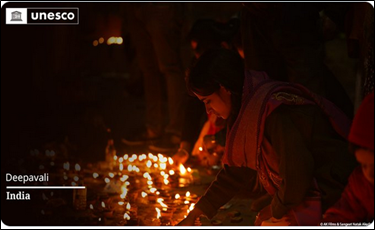
Deepavali, the festival of lights, has been inscribed on UNESCO’s List of the Intangible Cultural Heritage of Humanity, announced at the 20th UNESCO Intergovernmental Committee session at New Delhi's Red Fort from December 8-13, 2025.[1] It is the 16th Indian element on this list. The inscription was adopted in the presence of delegates from 194 Member States, international experts, and representatives of UNESCO’s global network. The Festival of Lights is a living tradition carried forward by communities, continuously recreated across generations, supporting social cohesion and contributing to development.
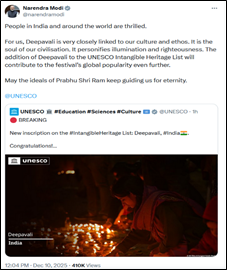
PM Narendra Modi welcomed UNESCO’s recognition of Deepavali, stating that Deepavali is deeply linked to India’s culture and ethos, and represents the very soul of our civilisation.
To include an element on UNESCO’s Representative List of ICH, states must submit a nomination dossier for evaluation. Each country can nominate one element every two years. India nominated the ‘Deepavali’ Festival for the 2024–25 cycle.
Deepavali, for India, is far more than an annual festival; it is a living tradition woven into the emotional and cultural fabric of millions. Every year, as lamps begin to glow across cities, villages, and distant diasporic homes, Deepavali rekindles a familiar sense of joy, renewal, and connection. It invites people to pause, remember, and come together to remind the world why this festival rightfully deserves a place among humanity’s treasured cultural traditions.
For the Safeguarding of Intangible Cultural Heritage, UNESCO adopted the 2003 Convention on 17th October 2003, during its 32nd General Conference in Paris. The Convention responded to global concerns that living cultural traditions, oral practices, performing arts, social customs, rituals, knowledge systems, and craftsmanship were increasingly threatened by globalisation, social change, and limited resources and need to be protected.
|
It is a moment of immense pride for India to witness Deepavali—our festival of lights—getting inscribed on the UNESCO List of Intangible Cultural Heritage of Humanity here at IGC 20.COM. This honour belongs to every home that has ever lit a ‘diya’ and kept alive the spirit of renewal and hope. Today’s inscription is a global acknowledgement that this message resonates beyond borders and speaks to humanity’s shared yearning for harmony. This inscription is not only recognition; it is a responsibility. In a divided and uncertain world, the simple yet resolute significance of Deepavali may continue to endure: the lamp may be one, but its light belongs to all.
-Gajendra Singh Shekhawat, Union Minister of Culture & Tourism
|
The Ministry of Culture welcomed the decision, noting that the inscription will further promote global awareness about India’s intangible cultural heritage and reinforce efforts to safeguard community-based traditions for future generations.


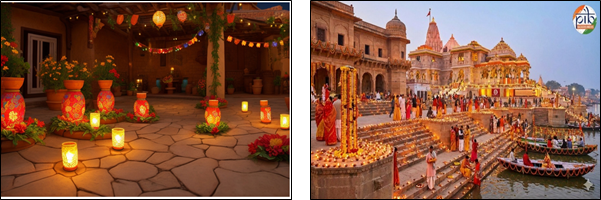
Deepavali, also known as Diwali, is celebrated on Kartik Amaavasya, which typically falls in October or November. The fundamental philosophy of Deepavali encompasses the celebration of prosperity, renewal, and abundance for all individuals. Its inclusive character fosters mutual respect and promotes unity within diversity among various individuals and communities; consequently, no aspect of the festival contravenes the principles of social cohesion and respect for cultural plurality. Residences, thoroughfares, and temples are illuminated with numerous oil lamps, emanating a warm golden glow that represents light overcoming darkness and righteousness triumphing over evil. Markets are bustling with vibrant fabrics and intricate handicrafts that sparkle beneath the illumination, enhancing the festive atmosphere. As evening descends, the sky is illuminated by a spectacular display of fireworks.
|
Popular Legends of Deepavali
|
- In the Ramayana, it signifies the return of Lord Rama, Sita, and Lakshmana to Ayodhya after 14 years of exile and their victory over Ravana, celebrated with lamps lighting their path. In the Mahabharata, it marks the return of the Pandavas after their exile.[2]
- Naraka Chaturdashi recalls Lord Krishna’s victory over Narakasura, symbolising the end of evil. [3]
- Goddess Lakshmi is believed to visit illuminated homes on Deepavali night.
- Lord Mahavira, the 24th Tirthankar, attained Nirvana on Deepavali at Pavapuri. His disciples, in tears, begged him not to leave. Mahavira urged them to light the lamp within and conquer darkness. Jain devotees celebrate this festival with enthusiasm as Nirvana Day.[4]
- According to Hindu mythology, the demon Tripurasura, sons of Tarakasura, gained a boon that they could only be killed by a single arrow. They wreaked havoc until Lord Shiva, as Tripurantaka, destroyed them with one arrow. This victory is commemorated as Deepavali or Dev Deepavali, with devotees bathing in the Ganges, lighting diyas, and offering prayers to Lord Shiva.
- King Bali’s Return: In Maharashtra, Deepavali marks the visit of King Bali, symbolising justice and generosity.[5]
- Kali Puja: In Bengal, Odisha and Assam, Deepavali coincides with the worship of Goddess Kali for protection and inner strength.
- Govardhan/Annakut: Some regions commemorate Krishna lifting the Govardhan Hill, a reminder of humility and gratitude.
|
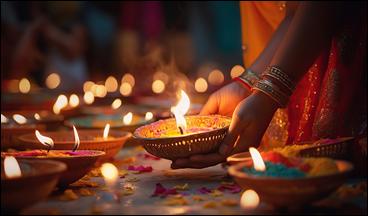
Along with lighting diyas, Deepavali involves diverse practices such as making beautiful rangoli, preparing sweets, decorating homes, performing rituals, exchanging gifts, and holding community gatherings. It celebrates harvest, culture, and mythology, with regional variations reflecting its diversity. The festival signifies renewal, new beginnings, and social unity through hope, prosperity, and community participation. Deepavali is celebrated over five days, each with its own charm and meaning.
The festival begins with Dhanteras, a day of auspicious beginnings when families buy new metalware or essentials that symbolise prosperity. The next morning marks Naraka Chaturdashi, observed with rituals and lighting lamps to dispel negativity and welcome positive energy.
The third day is the highlight of Deepavali- the sacred Lakshmi-Ganesha Puja. Homes come alive with vibrant rangolis, the aroma of delicious sweets, and the warm glow of countless lamps.
On the fourth day, families and friends visit one another, exchange gifts, and reconnect, strengthening their bonds and shared happiness. The celebrations conclude with Bhai Dooj, a heartfelt tribute to the bond between brothers and sisters, observed with prayers, blessings, and meaningful rituals.[6]
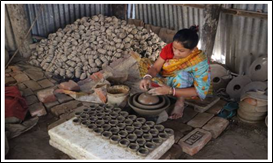
Deepavali supports livelihoods and traditional skills nationwide. Rural communities celebrate with rituals that honour nature and mark agricultural cycles. Artisans—potters, lantern makers, decorators, florists, sweet-makers, jewellers, textile artisans, and small businesses—see increased economic activity during the festival. Their work is vital to India’s economy.
Deepavali also reinforces values of charity, generosity and food security; many communities engage in food distribution, donations and special gatherings for the elderly, visually impaired, prison inmates and individuals with special needs.
In recent years, environmental stewardship has increasingly shaped the narrative around Deepavali celebrations. Government interventions, such as the development of “green crackers” by CSIR-NEERI and national campaigns like Swachh Diwali and Shubh Diwali, have encouraged eco-friendly festivities while preserving the festival's cultural spirit. Rituals associated with cleaning homes, markets and public spaces promote hygiene and a healthy lifestyle, while the coming together of families and friends enhances social, and emotional well-being.
Deepavali’s cultural ecosystem contributes meaningfully to several Sustainable Development Goals (SDGs), including poverty alleviation through livelihood support, gender equality through inclusive participation and craft traditions, well-being through communal bonding and hygienic practices, and quality education through cultural transmission.
The nomination process for Deepavali on UNESCO’s List of the Intangible Cultural Heritage of Humanity highlights an inclusive, community-driven approach. The Sangeet Natak Akademi, under the Ministry of Culture, formed a diverse expert committee of scholars, practitioners, artists, writers, and specialists nationwide. Extensive consultations involved communities from all over India, from the Himalayas to coasts, and from cities to remote villages, including diaspora, indigenous groups, transgender communities, and others such as artisans, farmers, and religious groups. Testimonials in various formats captured personal experiences and the cultural importance of Deepavali, affirming community consent and showcasing its diversity and resilience as a living tradition.
The inscription of Deepavali on the UNESCO Intangible Cultural Heritage List is a tribute to the millions who celebrate it with devotion, to the artisans who keep its traditions alive, and to the timeless principles it represents. It tells the world that India’s cultural heritage is not merely remembered, it is lived, loved, and passed forward.
References
https://www.incredibleindia.gov.in/en/festivals-and-events/diwali
https://utsav.gov.in/major-festival/diwali
https://magazines.odisha.gov.in/Orissareview/2013/nov/engpdf/19-20.pdf
https://www.tamilnadutourism.tn.gov.in/events/deepavali
https://maharashtratourism.gov.in/festivals/diwali/
https://utsavapp.in/gyan/g/dev-deepavali-history-significance--rituals
Click here to see in PDF
****
PIB Research
(Release ID: 2201375)
Visitor Counter : 15099