Ministry of Science & Technology
Department of Scientific and Industrial Research (DSIR)- Year Ender 2025
World's First Port Road developed using CSIR-CRRI's Steel Slag Technology
Introduction of MSS+ Technology for 200+ km Road Construction in UP in 8 Segments
20-Minute Pothole Repair Technology “ECOFIX”, demonstrated in Delhi and set to aid Pothole Repairs in NE, Karnataka, Maharashtra, Tamil Nadu and USA
CSIR-CRRI launched India's First Road Trial using End-of-Life Plastic Technical Textiles
CSIR-NBRI developed World's First Genetically Modified (GM) Cotton Resistant to Pink Bollworm
Development of World’s First DNA Test to Detect Illegal Shahtoosh in Pashmina Shawls
Rapid Test Kit developed for Sickle Cell Anaemia Detection
CSIR-AMPRI developed indigenous SODAR to boost India’s Weather Forecasting
First 3D-Printed Rural House in India at CSIR-CBRI to support PMAY-G
India's First Climate-Resilient Buildings unveiled at four locations
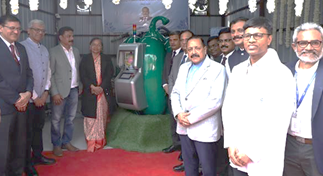
CSIR-NIIST developed India’s First Automated Biomedical Waste Treatment Rig set-up in AIIMS, New Delhi
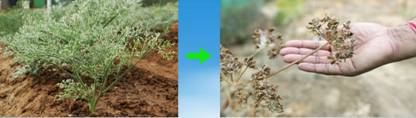
First Flowering of Heeng (Ferula assa-foetida) achieved in Himachal Pradesh
CSIR Winners of Rashtriya Vigyan Puraskar-2025 in three Disciplines
Posted On:
16 DEC 2025 5:56PM by PIB Delhi
Significant Scientific & Technical Attainments during the year
World's First Port Road developed using CSIR-CRRI's Steel Slag Technology
World’s first steel slag road inside a private port at Hazira, Gujarat, has been developed based on CSIR-CRRI’s steel slag road technology. Industrial steel slag waste has been used to build durable, cost-effective, and eco-friendly road, aligning with India’s waste-to-wealth and green infrastructure missions.
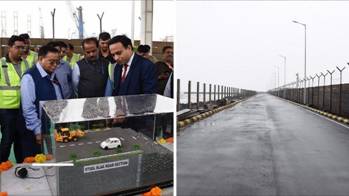
CSIR-CRRI Introduced MSS+ Technology for Sustainable Road Construction in Uttar Pradesh
CSIR-CRRI’s developed eco-friendly MSS+ (Modified Mix Seal Surfacing Plus) technology is being utilized by the Uttar Pradesh Rural Road Development Authority (UPRRDA) for the construction of green roads in the state. The technology has been adopted for construction of more than 200 kilometres of road under the Pradhan Mantri Gram Sadak Yojana (PMGSY) in Uttar Pradesh. The technology enables all-weather construction without heating aggregate and bitumen and the roads built showed superior quality compared to conventional hot mix roads.
CSIR-CRRI’s 20-Minute Pothole Repair Technology “ECOFIX”, demonstrated in Delhi and set to aid Assam PWD, Karnataka and Amaravati in Pothole Repairs
CSIR-CRRI demonstrated its indigenous technology “ECOFIX”, developed using iron and steel slag to repair potholes in 20 minutes, on Delhi Secretariat Road. The Ecofix technology can be used in water-filled potholes and allows immediate road use after application. The State Government of Karnataka has signed a tripartite MoA with CSIR-CRRI and M/s Ramuka Global Services to adopt ‘Ecofix’ technology for pothole repairs in all the roads of Karnataka. The PWD Assam has also successfully tested ‘Ecofix’ and plans to use it for pothole repair in Guwahati. The technology has been used for eco-friendly, pothole-free roads in Amaravati. Internationally, ECOFIX has also been adopted in the USA and Oman. The Border Roads Organization's (BRO) Project Dantak, and CSIR-CRRI, conducted workshop in Thimphu, Bhutan to introduce eco-friendly road construction technologies of CSIR-CRRI that included REJUPAVE, Steel Slag roads and Ecofix.
CSIR-CRRI launched India's First Road Trial using End-of-Life Plastic Technical Textiles
CSIR-CRRI, in collaboration with BPCL and NHAI, has developed end-of-life plastic-based Geocell road on DND-Faridabad-KMP Expressway. The technology uses multilayered waste plastic, traditionally excluded from IRC norms, in subbase layer for durability. The trial used approx. 30 tonnes of end-of-life plastic, promoting circular economy in infrastructure.
CSIR-CRRI's Rejupave technology successfully used by BRO for high-altitude road developments in Bhutan
CSIR-CRRI developed Rejupave technology was successfully used by BRO in Bhutan’s high-altitude regions. The technology allows road construction at lower temperatures, overcoming the challenges of extreme cold. It was demonstrated on the Chalela Pass and Funtsholing-Thimphu roads in Bhutan. This innovation ensures durable, environment-friendly roads in difficult terrains.
CSIR-NCL’s Green Paracetamol Process: A Breakthrough in Continuous, Sustainable Pharma Manufacturing
CSIR–National Chemical Laboratory (CSIR-NCL), Pune, has developed a first-of-its-kind continuous manufacturing process for paracetamol that is cheaper, safer, and significantly more environment-friendly than the conventional batch method. The innovation replaces the use of regulated and hazardous acetic anhydride with readily available acetic acid, while ensuring consistent quality, lower solvent use, reduced effluents, and a compact plant footprint. The technology has successfully progressed from lab to pilot scale in partnership with Texol Engineering and has now been commercialised with Satya Deeptha Pharmaceuticals Limited through a state-of-the-art manufacturing facility in Karnataka with an annual capacity of 2,800 tonnes. This breakthrough strengthens India’s pharmaceutical self-reliance, advances the goals of Make in India and Import Substitution, and offers a scalable model for greener production of other essential medicines.
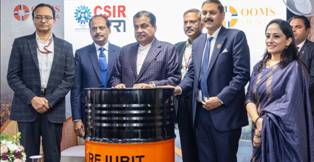
CSIR-CRRI Unveiled Rejubit for Sustainable Road Recycling
Shri Nitin Gadkari, Hon’ble Minister of Road Transport and Highways launched CSIR- Central Road Research Institute’s (CSIR-CRRI) Rejubit, an indigenous rejuvenating agent that restores and recycles old bitumen roads, cutting relaying costs by 66% and reducing imports. The agent enables road recycling at one-third the cost of imported additives, reducing dependency on new raw materials, lowering India's 45 lakh-ton annual bitumen import burden.
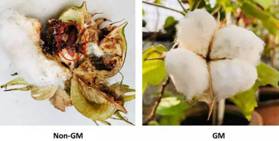
Development of World's First Genetically Modified (GM) Cotton Resistant to Pink Bollworm
CSIR - National Botanical Research Institute (CSIR-NBRI), Lucknow has developed the world's first genetically modified (GM) cotton that is totally resistant to the Pink Bollworm (PBW), a devastating pest affecting cotton crop in India, Africa and Asia. CSIR-NBRI's innovation protects the livelihoods of farmers while establishing a new benchmark for pest resistance globally.
CSIR-CCMB developed World’s First DNA Test to Detect Illegal Shahtoosh in Pashmina Shawls
CSIR-CCMB has developed a unique, non-destructive DNA test to identify shahtoosh using hair shaft microfibres. The test helps distinguish legal pashmina wool from illegal shahtoosh wool. Technique uses mitochondrial DNA and works even on heavily processed shawls. Wool samples for testing have started arriving from global locations, including museums in Berlin and Hyderabad. CSIR-CCMB plans to open a testing centre in Srinagar with CSIR-IIIM to support Kashmir’s weavers.
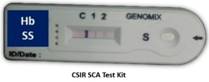
CSIR-CCMB Developed Rapid Test for Sickle Cell Anaemia:
-
- CSIR-CCMB has developed an accurate, rapid, and affordable first-of-its-kind molecular test for screening sickle cell anaemia (SCA). The test enables early and precise diagnosis, crucial for effective management of the condition. This innovation is a significant step towards combating the disease, particularly in underserved regions where SCA prevalence is high, at a cost of less than Rs 100, which is noteworthy.
- Tribal healthcare: CSIR-CCMB screened over 20 Lakh Tribals for Sickle Cell Anaemia: Under CSIR’s Sickle Cell Anaemia Mission, over 20 lakh tribal individuals have been screened through initiatives in screening, drug development, and genome-based solutions. The CSIR-CCMB developed SCA detection kit works with a single drop of dried blood and is to be launched in India in 2026. The CSIR SCA Mission supports the National SCA Mission to eliminate sickle cell anaemia from India by 2047.
- CSIR-CCMB, Tata Steel Foundation, and NHM Jharkhand signed an MoU to implement a large-scale sickle cell anaemia screening initiative. A testing hub is to be established at the district hospital, Khasmahal, East Singhbhum with the infrastructure for large-scale screening across the Kolhan region of Jharkhand. Screening will use the DBS-PCR method, an affordable and rapid molecular test developed by CSIR-CCMB’s Atal Tinkering Lab.
CSIR-AMPRI developed indigenous SODAR to boost India’s Weather Forecasting
CSIR-AMPRI, Bhopal developed an indigenous SODAR (Sound Detection and Ranging) system. The technology enhances monitoring of lower-atmosphere wind profiles, temperature, and turbulence in the Atmospheric Boundary Layer. The SODAR system was installed at India Meteorological Department (IMD), New Delhi and an MoU has been signed with IMD to share SODAR data for forecasting and research.
India’s First 3D-Concrete Printed Rural House in India at CSIR-CBRI
Hon’ble Minister, Dr. Chandra Sekhar Pemmasani inaugurated India’s first 3D concrete-printed rural house developed by CSIR-CBRI in Roorkee. The innovation marks a major leap in affordable, sustainable, and disaster-resilient rural housing.
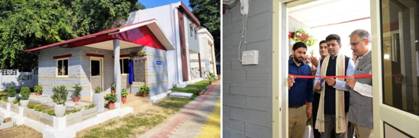
CSIR-CBRI unveiled India's First Climate-Resilient Building
CSIR-CBRI in Roorkee unveiled a climate-resilient building (CRBs), the first of its kind in India, designed to minimise environmental impact while enhancing thermal comfort. Built using CSIR-CBRI's in-house technologies, the structure emits 40 to 60% less carbon dioxide than conventional buildings. The building was handed over to Bal Vidya Mandir, where it will serve as a testing ground for data monitoring and acquisition. Prototype CRBs were also unveiled in Leh and Chennai, as part of a mission-mode project to develop region-specific sustainable infrastructure.
Launch of CSIR-NIIST developed India’s First Automated Biomedical Waste Treatment Rig in AIIMS, New Delhi
Dr. Jitendra Singh, Hon’ble Minister of S&T launched “Sṛjanam,” India’s first indigenous automated biomedical waste treatment plant, at AIIMS New Delhi. Developed by CSIR - National Institute for Interdisciplinary Science and Technology (CSIR-NIIST), the rig can disinfect biomedical waste without incineration, handling 400 kg daily while reducing environmental impact. The initiative supports India’s “waste to wealth” vision and strengthens healthcare waste disposal, addressing CPCB’s 743-tonne daily biomedical waste challenge.
CSIR-IHBT achieved First Flowering of Heeng (Ferula assa-foetida) in Himachal Pradesh
Heeng has flowered in India for first time in CSIR-IHBT, boosting indigenous cultivation. CSIR-IHBT had introduced Heeng seeds from Iran and Afghanistan through ICAR-NBPGR, in India's cold desert regions, in October 2020. On its flowering in 5 years of plantation, research is ongoing to study the continuous seed production cycle, floral biology and breeding behaviour, to ensure long-term adaptation.
CSIR-CIMFR Achieved Milestone with First Trial Blast of Dozer Push Mining Method in India
CSIR-Central Institute of Mining and Fuel Research (CSIR-CIMFR) has successfully conducted the first trial blast for the Dozer Push Mining Method, integrating advanced digital technologies, for the first time in India. The technology developed by CSIR-CIMFR, aimed to enhance safety and operational efficiency in mining processes. The trial was conducted at the PEKB (Parsa East and Kanta Basan) Coal Mine operated by M/s Adani Enterprises Limited in the Udaipur block of Ambikapur, Chhattisgarh. The successful trial was conducted by Adani Natural Resources, one of India’s leading private mining companies.
CSIR-CDRI unveiled Breakthrough in Triple Negative Breast Cancer Treatment
CSIR’s Central Drug Research Institute (CSIR-CDRI) researchers identified the enzyme ACSL4 as a key factor in triple negative breast cancer (TNBC) metastasis, offering a novel therapeutic target for this aggressive cancer subtype. The study involved experiments on TNBC cell lines, mouse models, and human tissue samples in partnership with KGMU, Lucknow, and IISER Pune, providing insights into ACSL4's role in cancer progression.
CSIR-CDRI developed Novel Parasite Vaccine for Malaria
CSIR-Central Drug Research Institute (CDRI) has developed a novel whole parasite vaccine that targets all molecules of the malaria-causing parasite, showing 100% efficacy in preclinical trials. The vaccine works by deleting two genes (SCD and SCOT1) from the parasite, allowing it to infect the liver but preventing it from entering the bloodstream, thus preventing malaria. After successful animal trials, CSIR-CDRI plans to conduct clinical trials using the human malaria parasite Plasmodium falciparum and hopes to address the World Health Organization's need for a vaccine that prevents over 90% of infections.
CSIR-NCL Enhanced Oxygen Generation System in MiG-29
CSIR - National Chemical Laboratory (CSIR-NCL), Pune, successfully rejuvenated the zeolite material in the On-Board Oxygen Generation System (OBOGS) of MiG-29 fighter jets, ensuring a continuous oxygen supply for pilots. CSIR-NCL team optimized the process to counteract moisture-induced degradation of zeolite, which previously led to sub-optimal oxygen generation. CSIR-NCL has also successfully developed indigenous zeolite materials, reducing dependence on foreign sources for MiG-29 oxygen systems.
CSIR-NAL, DRDO & ISRO collaborated to build Advanced Continuous Trisonic Wind Tunnel
CSIR - National Aerospace Laboratories (CSIR-NAL), DRDO, and ISRO are collaborating to develop a state-of-the-art Continuous Trisonic Wind Tunnel (CTWT), one of the most advanced globally. The facility will feature two tunnels: a 2.5m x 2.5m Continuous Type Wind Tunnel (Mach 0.1–1.8) and a 1.75m x 1.75m Blowdown Type Wind Tunnel (Mach 1.6–4). The project will reduce reliance on foreign wind tunnels, enhancing national security and cutting costs. Expected to be completed by 2031, this facility marks a major step forward for India's aerospace capabilities, supporting critical defense and space research.
CSIR-CCMB established India’s First Zoo Bio Bank at Darjeeling Zoo
India’s first bio bank in a zoo is now operational at Padmaja Naidu Himalayan Zoological Park, Darjeeling, in collaboration with CSIR- Centre for Cellular and Molecular Biology (CSIR-CCMB). The facility collects and preserves cell, tissue, and reproductive samples from endangered and deceased animals at -196°C using cryogenic storage. The initiative aims to maintain genetic diversity and could potentially aid in reviving species nearing extinction.
CSIR-NCL and UK’s CPI launched ‘Living Laboratory’ to Lead Pharma Sustainability
CSIR-NCL and the UK’s Centre for Process Innovation (CPI) launched ‘Living Laboratory’ in Pune to decarbonize pharmaceutical manufacturing. The initiative promotes solvent-free and continuous manufacturing to reduce emissions and hazardous waste. Major pharma companies, including Sun Pharma and Aarti Industries, have partnered in this sustainability effort. This Indo-UK collaboration supports India’s pharma industry in meeting global sustainability and regulatory standards.
CSIR-NAL transferred NALSUN-NG™ technology to Boost Solar Water Heating Efficiency
CSIR-NAL transferred NALSUN-NG™ technology to M/s Supreme Solar for large-scale solar water heater applications. NALSUN-NG™ is a water-based, non-toxic solar absorber coating with high sunlight-to-heat conversion efficiency. It helps save up to 2,000 kWh electricity and cut 1–2 tons of CO₂ per household yearly. M/s Supreme Solar has established a 4 meter-long spray pyrolysis system initially and this first-of-its-kind roll-to-roll coating facility in India is getting expanded to satisfy both domestic and international demands.
CSIR-CLRI has developed Climate-Adaptive 'Cool Leather' using Waste and Smart Materials
CSIR-CLRI and Egypt's DRC create heat-regulating leather for hot climates. Leather is embedded with phase change materials for thermal adaptability. Smart leather combines sustainability with next-gen material science innovation. The technology finds potential application in fashion, automotive, furniture, and protective gear.
CSIR-CEERI to lead ANRF’s MAHA-EV mission to boost electric mobility R&D
CSIR-CEERI has been selected among 7 high-impact e-Nodes under Anusandhan National Research Foundation - ANRF’s MAHA-EV initiative supporting national sustainability and next-gen mobility goals. Mission target research areas of Tropical EV batteries, power electronics, and EV charging infrastructure.
CSIR-NAL’s HAP Prototype Cleared Key Test for Border Patrol
High-Altitude Platform (HAP), indigenously developed by CSIR-NAL, successfully completed pre-monsoon test flights with certified autopilot system. The system achieved 24,000 ft altitude with improved energy efficiency under cloud cover. The developed prototype can patrol borders, support meteorology, and crowd monitoring. Indian Air Force (IAF) has issued interest for such high-altitude systems. Civilian applications of HAP include 5G relay and monsoon cloud studies.
CSIR-CIMAP Developed New Variety to Conserve Endangered Ayurvedic Herb
CSIR-CIMAP has developed ‘CIM-Rhoi Gold’, a high-yielding variety of endangered herb Prishniparni (Uraria picta). The herb is used in key ayurvedic medicines like chyawanprash and dashmularishta. The developed new variety has high Rhoifolin content (1.0–1.5%) with strong medicinal properties. The initiative helps conserve medicinal heritage and boost commercial cultivation.
CSIR-CIMFR Assessed Mizoram Rockfall Zones
Geotechnical experts from CSIR-CIMFR have assessed Aizawl’s high-risk rockfall areas post recent fatalities near Pukpui Falls. The joint inspection covered rockfall-prone stretches like Ngaizel, Melthum, and Hlimen near Aizawl. The assessment aimed to develop preventive strategies with support from disaster management and geology teams.
CSIR-CIMAP developed PsoriaCIM Cream for Psoriasis Treatment
CSIR-CIMAP has developed PsoriaCIM, a lavender-based herbal cream for psoriasis. The cream shows effectiveness equal to 0.1% mometasone, a standard steroid treatment and avoids steroid side effects using phytomolecules from lavender oil. Preclinical trials confirmed safety, efficacy, and significant PASI score reduction.
CSIR-NGRI collaborative study on Kachchh Mineral to Help Date Events on Mars
CSIR-NGRI researchers in collaboration with the Physical Research Laboratory, IIT Gandhinagar and IIT Kharagpur, are exploring the use of the mineral jarosite found in Kachchh, Gujarat and on Mars for luminescence dating. By measuring the light emitted from jarosite samples, the aim is to establish a timeline of Martian geological events, such as water presence and volcanic activity. This method could provide a more precise dating technique than current crater-counting methods, enhancing our understanding of Mars's history.
CSIR-NEERI and IIT-H Identified Critical Pollution Zones in Telangana Stretch of Godavari
The study conducted by CSIR-NEERI and IIT-H revealed alarming pollution in Godavari river. Industrial effluents and sewage raise Biochemical Oxygen Demand beyond safe limits. CSIR-NEERI has initiated 3-year study to develop rejuvenation plan, under Jal Shakti Ministry.
CSIR-CDRI developed Targeted Nanoparticle System to Boost Breast Cancer Treatment
CSIR-CDRI has developed targeted nanoparticle system to boost breast cancer treatment with enhanced drug efficacy while minimizing toxicity to healthy cells. The system uses double-shell magnetic nanoparticles to deliver chemotherapy precisely, targeting ‘Doxorubicin’, a common chemotherapy drug, improving its effectiveness. It provides a safer and more efficient treatment process for breast cancer patients.
CSIR-CLRI developed Silk-Collagen Gel to Accelerate Wound Healing
CSIR-CLRI has developed Photo-activated Silk fibroin and Collagen-like protein Hydrogel (PASCH) to enhance wound healing. PASCH is a combination of silk fibroin from silkworm cocoons and lab-made collagen-like protein (CLP-BS). It utilizes visible blue light and riboflavin (Vitamin B2), forming a stable gel without harmful chemicals, forming a porous, flexible gel that promotes cell movement and tissue repair while reducing inflammation. It has been designed for diabetic wounds and burn injuries.
CSIR-NPL’s Trademark and GPS independent IST through indigenous Atomic Clocks
-
- Trademark in the name of CSIR
CSIR has successfully obtained a Trademark for “Indian Standard Time (IST)” in its name, establishing official recognition and ownership of nation’s time standard.
-
- GPS denied situations could also be managed by India through this
As India is set to adopt Indian Standard Time (IST) for all legal, digital, and administrative activities nationwide, CSIR-NPL and ISRO are in process to install five atomic clock-based Regional Reference Labs in Ahmedabad, Bengaluru, Bhubaneswar, Faridabad, and Guwahati. The initiative will enhance digital security, accuracy, and efficiency across sectors and will end reliance on foreign time sources.
Wildlife DNA Biobank for endangered species
Delhi Zoo, with the support of CSIR-CCMB, is setting up a Biobank to preserve DNA for endangered species like Asiatic Lion, Bengal Tiger, and Indian Rhinoceros. CCMB-LaCONES is providing training and technical support to zoo staff nationwide.
CSIR-IICT developed eco-friendly fodder and fuel from crop residue
The technology converts rice straw into nutritious cattle fodder using delignification process, reduces methane emissions and enhances fodder palatability from 20% to 60%. Pilot plant generates 140 kg of Compressed Bio-Gas per tonne of rice straw and also produces Fermented Organic Manure as a valuable by-product.
CSIR-CSMCRI distributed 60 Tonnes of Kappaphycus seed to support farmers, a commitment under Viksit Bharat @2047
CSIR-CSMCRI distributed 60 tonnes of Kappaphycus alvarezii seed to beneficiaries at Mandapam’s Marine Algal Research Station during a project closure event that helps to revive red seaweed farming and empower women cultivators along Tamil Nadu’s coast. A total of 278 tonnes of fresh, quality seed have been produced and distributed to beneficiaries through the seed bank, established near Umayalpuram.
CSIR-CFTRI and McDonald’s India launched Protein-Enriched Veg Slice
CSIR-CFTRI and McDonald’s have co-developed 100% veg ‘Protein Plus Slice’ to boost protein in fast food. The ‘Protein Plus Slice’ is made from soy and pea; no onion, garlic, artificial colors or flavors and is supported by FSSAI’s ‘Eat Right India’ initiative for safe, nutritious food choices.
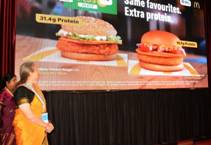
CSIR–CFTRI’s Millet Bun Power McDonald’s India Menu
McDonald’s India introduced a Millet Bun Burger using CSIR–CFTRI’s indigenous food technology. Hon’ble S&T Minister, Dr Jitendra Singh hailed it as proof of “Videshi turning Swadeshi.” Marks a milestone in India’s Millet Mission inspired by Hon’ble PM global push, promoting taste, nutrition, and support for local millet farmers.
CSIR-IIIM produced India's First Bio-Authenticated Honey: CSIR-IIIM’s Pulwama field station in Kashmir produced India’s first bio-authenticated lavender honey derived from Lavandula angustifolia, a premium lavender species widely cultivated in Kashmir Valley.
CSIR-CCMB advanced Wildlife Crime Detection with Universal Primer Technology
The Universal Primer Technology (UPT), developed at CSIR-CCMB based on DNA forensics has been used to solve wildlife crimes by identifying species from tiny, degraded biological samples. UPT is patented in 12 countries and now a is global gold standard in wildlife crime detection. CSIR-CCMB also traces geographic origin of trafficked animals using microsatellite and mitochondrial DNA.
CSIR-CCMB-AIC Advanced Indigenous mRNA Vaccine for Chikungunya
Atal Incubation Centre (AIC) at CSIR-CCMB is set to initiate large-scale trials of indigenously developed mRNA-based Chikungunya vaccine. Lab studies have shown strong antibody response and promising virus load reduction in animals.
CSIR-NAL Developed NJ-100: Indigenous Small Gas Turbine Engine for UAVs and Cruise Missiles
NJ-100, developed by CSIR-NAL, delivers 100 kgf thrust and are tailored for tactical UAVs and loitering munitions. The Small Gas Turbine Engine is designed for high thrust-to-weight ratio, compactness, and fuel efficiency. The new NJ-100 has been developed upon successful trials of earlier NJ-5 engine in flight-tested UAV models. It supports strategic autonomy by enabling modular, customizable propulsion solutions.
CSIR-CSIO to establish India’s First Opto-Microelectronic Research Centre in Chandigarh under India Semiconductor Mission
Foundation stone for CSIR-CSIO’s Opto-Microelectronic Research Centre was laid on 5th August 2025. The centre aims to boost indigenous capabilities in semiconductor packaging. The initial phase to focus on mini-display assembly for smart devices, their testing, and packaging; with the long-term goal to develop fully indigenous head-up display technology.
CSIR-NGRI’s Ground Penetrating Radar deployed for search and rescue in Uttarkashi Flood
CSIR-NGRI deployed its advanced Ground Penetrating Radar (GPR) technology to detect possible human presence beneath layers of mud and debris in the Uttarkashi flash flood. The technology helped in identifying 20 priority sites at depth of 2.5-3 meters, guiding focused rescue operations in the region. The operation supported NDRF, Army, and SDRF rescue efforts.
CSIR-CIMAP developed AI-based Solution for Adulteration Detection
CSIR-CIMAP has developed an AI-based solution for adulteration detection in medicinal plants such as turmeric, ashwagandha and basil. The machine learning-guided technique combines AI with high-resolution mass spectrometry for unique chemical fingerprinting. The method boasts over 98% accuracy in identifying a plant's geographical origin, variety, plant parts, and adulteration in samples. The technology can be used by regulators, industry, and exporters to ensure product integrity.
CSIR-CCMB developed Smart Agents to Combat Aggressive Breast Cancer
CSIR-CCMB, in collaboration with IISER Kolkata, has developed metal-based anti-cancer agents capable of specifically targeting and destroying aggressive, treatment-resistant breast cancer cells. These agents function through two distinct mechanisms, including ferroptosis, a unique cell-death pathway. This breakthrough offers a promising alternative for treating triple-negative breast cancer, one of the most challenging and advanced cancer types, and holds potential for cancers that no longer respond to conventional therapies.
CSIR-NML Technology Powered New E-Waste Recycling Plant in Vizag
A new e-waste recycling plant was inaugurated at the Andhra Pradesh MedTech Zone (AMTZ) Campus in Visakhapatnam, utilizing CSIR-NML’s indigenous e-waste recycling technology. The facility enables the recovery of valuable metals and saleable products, promoting zero-waste principles and sustainable development.
CSIR-CGCRI created Electrospun Bioactive Glass (eBG) for tissue regeneration
CSIR-CGCRI has developed electrospun bioactive glass (eBG) for advanced tissue regeneration, offering a breakthrough in wound care. The eBG dressing has demonstrated the ability to heal large diabetic foot ulcers within a week, with scar-free recovery observed in preclinical trials on stray animals. This low-cost, indigenous technology provides an affordable alternative to expensive pharmaceutical dressings, and clinical trials with pharmaceutical partners are currently underway to enable human application.
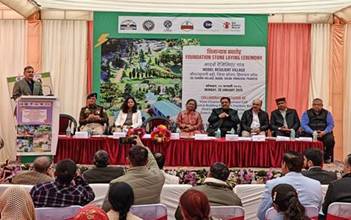
Model Resilient Village development based on CSIR Technologies in Himachal Pradesh
Project on development of Model Resilient Village was initiated in Sil/Sunani, Baddi, Himachal Pradesh, to rebuild infrastructure in the landslide-prone Solan region. The project is a joint effort by CSIR, Himachal Pradesh Government, Bal Raksha Bharat, and Zee Entertainment, focusing on housing, education, healthcare, and livelihoods. The first phase of the Model Resilient Village has been formally handed over to the District Magistrate (DM), Solan. CSIR-CBRI provided comprehensive technological support, including field investigations, geotechnical studies, and ground-movement analysis, to enable evidence-based resilience measures for the community. Notably, implementation partner Bal Raksha Bharat has been honoured as a Winner (Sanrakshak category) at the BVokal Collaborative Social Responsibility (CSR) Awards 2025 on 12 September 2025, underscoring the initiative’s collaborative impact.
CSIR-CIMFR Controlled Blasting Technology enabled Navi Mumbai International Airport (NMIA) construction
CSIR-CIMFR guided the levelling of the 92-meter-high Ulwe Hill and diversion of the Ulwe River for NMIA. Super-controlled blasting removed 62 million cubic meters of rock while safeguarding nearby villages and high-tension lines.
CSIR-NGRI decoded Ancient Earthquakes using Quartz “Clocks” in Sand Dikes
CSIR-NGRI researchers date ancient earthquakes using luminescence signals in quartz grains from sand dikes. Optically Stimulated Luminescence (OSL) provided precise timing of past seismic activity. The study validated on sand dikes from North-Eastern India, revealed ages of historic earthquakes.
CSIR-CBRI Developed Solar AC-cum-Water Heater for High-Altitude Regions
CSIR-CBRI designed a hybrid solar system that heats water and cools rooms, ideal for extreme altitudes. The system achieves up to 70% energy savings and costs around Rs 75,000, 40% less than similar technologies. The system has been successfully deployed in Kalpa, HP, and Leh (12,000 ft), operating efficiently up to -40°C.
CSIR-NEIST developed India’s first indigenous Decaffeinated Black Tea
CSIR-NEIST, Jorhat developed India’s first indigenous decaffeination process for black tea, removing over 95% caffeine. The technology was transferred to M/s Jalan Investments Pvt. Ltd. (Assam) and M/s Gangwal Healthcare Pvt. Ltd. (Mumbai) during CSIR’s 84th Foundation Day in New Delhi in gracious presence of Hon’ble Minister S&T, Dr. Jitendra Singh. Assam will host India’s first decaffeinated black tea factory at Dibrugarh’s South Jalan Nagar Tea Estate.
CSIR-IGIB Unveiled India’s First Indigenous CRISPR Gene Therapy for Sickle Cell Disease
CSIR-IGIB developed BIRSA 101, India’s first indigenous CRISPR-based therapy for Sickle Cell Disease. The breakthrough offers affordable gene editing solutions for underserved tribal populations. Technology was transferred to Serum Institute of India (SII) enabling large-scale, low-cost clinical deployment.
Major International and National Events, Programs and Launches
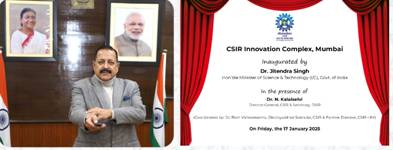
India’s first of its kind ‘CSIR Innovation Complex’ Inaugurated in Mumbai
Dr. Jitendra Singh, Hon’ble Minister S&T (IC), inaugurated India’s first CSIR Innovation Complex in Mumbai virtually, marking a significant step towards strengthening India's startup ecosystem. The complex aims to boost industry collaboration, tech transfer, and employment generation, with 6 MoUs signed between CSIR and institutes like IIT Bombay and NRDC. The facility includes 24 incubation labs and office spaces designed to support startups, MSMEs, and deep-tech companies, fostering innovation across various sectors.
Dr. Jitendra Singh, Union Minister of S&T inaugurated the Incubation & Innovation Complex (IICON) at CSIR-NEIST
Dr. Jitendra Singh, Hon’ble Minister S&T (IC), inaugurated the Incubation & Innovation Complex (IICON) at CSIR- North East Institute of Science and Technology (CSIR-NEIST), in Jorhat, Assam, marking a significant step towards fostering innovation and entrepreneurship in Northeast India. The IICON facility offers 27 advanced technologies to support entrepreneurs and farmers, reducing business risks and helping refine production strategies.
Dr Jitendra Singh, Union Minister of S&T Inaugurated ICG 2025 Organised by CSIR-CGCRI
Dr. Jitendra Singh, Hon’ble Minister S&T (IC), inaugurated the XXVII International Congress on Glass (ICG) 2025 at Biswa Bangla Convention Centre, Kolkata, emphasizing India's technology-driven growth since 2014. Organized by CSIR-CGCRI, the event featured 550+ delegates, including 150 international participants and ICG President Hiroyuki Inoue. Hon’ble Minister highlighted India’s scientific autonomy and stressed glass’s role in space, atomic energy, optics, and defense, calling it a transformative material with immense commercial potential.
CSIR-TKDL Expands Global Access to The Intellectual Property Office of the Philippines
The Intellectual Property Office of the Philippines (IPOPHL) has gained exclusive access to CSIR’s Traditional Knowledge Digital Library (TKDL) after an agreement signed on 20 January 2025, coinciding with the 25th anniversary of CSIR-TKDL, attended by Indian and Philippine dignitaries. The agreement allows IPOPHL to assess patent applications involving Indian traditional medicine, preventing erroneous patent grants. IPOPHL joins 16 other national patent offices with TKDL access, strengthening global intellectual property protection for India’s traditional knowledge.
CSIR-IIIM organized National Startup Festival in Jammu
CSIR-IIIM hosted the National Startup Festival in Jammu, inaugurated by Dr. Jitendra Singh, Hon’ble Minister of S&T highlighting the region’s startup growth. Over 50 startups from across India participated, with a special focus on empowering local youth, women, and farmers.
India's First Green Stevia Processing Plant based on CSIR-IHBT’s Technology inaugurated in Una, HP
A unique green stevia processing plant established by RJ Saints, based on CSIR-IHBT’s technology, was inaugurated in Una, Himachal Pradesh. The plant processes dried Stevia leaves into steviol glycoside powders, offering a natural, low-calorie sweetener suitable for diabetics.
Hon’ble Minister Dr. Jitendra Singh reviewed Microbial and Biotech Advancements at CSIR-IMTECH & CSIR-IHBT
Dr. Jitendra Singh, Hon’ble Minister of S&T reviewed Microbe Repository of CSIR- Institute of Microbial Technology (CSIR-IMTech) and emphasized microbial technology’s role in biotechnology and industrial advancements. CSIR-IMTECH’s Microbial Type Culture Collection (MTCC) holds over 14,000 microbial strains, supporting research, healthcare, and regulatory bodies. Virtually inaugurating CSIR-IHBT’s new research facilities, Hon’ble Minister also launched an EMBO workshop, an Industry-Farmer-Academia meet, and a Tulip Garden in Palampur.
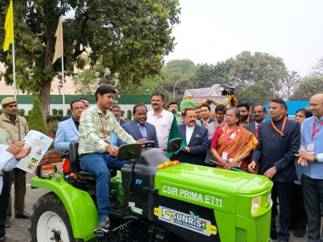
Flag off CSIR-CMERI's E-Tractor & E-Tiller Roadshow
Dr. Jitendra Singh, Hon’ble Minister of Science & Technology, flagged off the road show of CSIR-CMERI's E-Tractor & E-Tiller on National Science Day 2025 at Vigyan Bhavan, New Delhi. The E-Tractor & E-Tiller roadshow embarks on its journey from Delhi to Jammu to Trivandrum, engaging stakeholders at 12 key locations across India.
CSIR Advisory Board Meeting held
The CSIR Advisory Board meeting was held on 22 March 2025 under the chairmanship of Prof. Ashok Jhunjhunwala. The CSIR Advisory Board, comprising eminent scientists, industry leaders, and policymakers, provides strategic guidance to align CSIR’s research with national priorities. Discussions focused on technology development, innovation commercialization, inter-institutional collaboration, and enhancing human resource strategies. The Board appreciated recent CSIR achievements and emphasized aligning future efforts with emerging national and global trends.
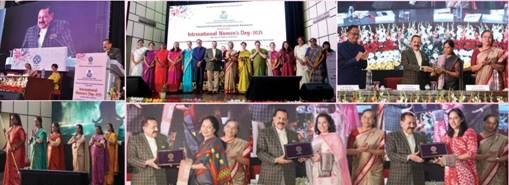
CSIR celebrated International Women’s Day
CSIR celebrated International Women’s Day on 8 March 2025, in the gracious presence of Dr Jitendra Singh, Hon’ble Minister S&T. The event included success story talks by women entrepreneurs of CSIR technologies (CSIR-CMERI’s e-Tractor, CSIR-IICT’s AGR Technology and CSIR-IIIM’s Lavender Products) and also showcased a skit by CSIR women employees on ‘CSIR Technologies developed for & by Women’. Smt Kalpana Kalahasti, Associate Project Director of Chandrayaan-3 Mission was felicitated during the event.
CSIR-CSMCRI’s Centre for Integrated Salt Technologies and Advanced Research Station (CI-STARS) inaugurated for World-Class Experimental Salt Works
The state-of-the-art Experimental Salt Works facility, Centre for Integrated Salt Technologies and Advanced Research Station (CI-STARS) was inaugurated at CSIR-CSMCRI in Bhavnagar. Spread across more than 168 acres, this world-class facility is designed to optimize salt production through innovative and advanced technologies. It serves as a platform for demonstrating new techniques aimed at enhancing salt yield, managing resources efficiently, and mitigating climate impact. The facility incorporates cutting-edge tools for precision-controlled brine flow, effective rainwater management, recovery of minerals, and maximizing the use of solar energy. First batch of Salt harvested from this facility will be distributed to CSIR employees, as announced by the Lab during their Foundation day celebrations.
CSIR-IHBT Palampur Inaugurated Biochar Unit
Hon’ble Textile Minister, Shri Giriraj Singh inaugurated the Biochar and Compost Booster Unit at CSIR-IHBT to support rural bio-economy and sustainable technology.
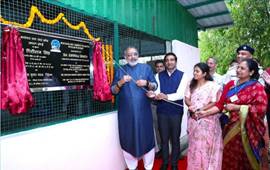
Hon’ble Minister S&T Launched National Biobank in CSIR-IGIB to Propel Personalized Medicine in India
Dr Jitendra Singh, Hon’ble Minister S&T, inaugurated the National Biobank with genomic, clinical, and lifestyle data from 10,000 Indians in CSIR-IGIB. The Biobank supports India's push toward personalized, gene-based diagnosis and treatment strategies and will aid early diagnosis and better targeting of diseases like cancer, diabetes, and rare disorders. The Biobank forms core of CSIR’s Phenome India study tracking health across geography and ethnicities.
CSIR Launched Hon’ble PM’s call of ‘One Day as a Scientist’ for School Students
Dr Jitendra Singh, Hon’ble Minister S&T inaugurated CSIR’s ‘One Day As a Scientist’ (ODAS) program, to ignite scientific curiosity among school students by offering them a firsthand experience in a research laboratory. The week long program witnessed around 14,000 students experiencing real-world science in 37 CSIR labs across India. The ODAS initiative under CSIR–Jigyasa is inspired by Hon’ble PM’s vision in Mann Ki Baat, encouraging students to experience a scientist’s life firsthand.
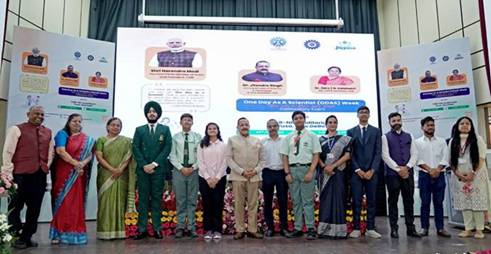
CSIR-CGCRI celebrated 75 Years with Focus on Industry Partnerships
Hon’ble S&T Minister, Dr. Jitendra Singh graced the Platinum Jubilee celebration of CSIR-CGCRI, lauding the institute’s scientific leadership & role in India’s progress. The Platinum Jubilee celebrations of CSIR-CGCRI, marked 75 years of contributions of the laboratory to the nation in the field of glass and ceramic science.
Hon’ble Minister S&T, Dr. Jitendra Singh inaugurated Lavender Festival 2025
Lavender Festival 2025, inaugurated by Hon’ble S&T Minister, Dr. Jitendra Singh on 1 June at Bhaderwah, J&K, showcased how CSIR-IIIM’s lavender farming transformed the area into a thriving rural startup hub, with 50 distillation units supplying multiple states and inspiring delegations from HP, Uttarakhand, and the Northeast.
CSIR labs organised Startup Conclaves – 2025 in Hyderabad, Jammu and Lucknow
- Hon’ble Minister S&T, Dr Jitendra Singh inaugurated the Start-up Conclave Hyderabad 2025 (SCH-2025) organised by CSIR labs, viz. CSIR-IICT, CSIR-NGRI and CSIR-CCMB on April 22 and 23, at CSIR-IICT in Hyderabad. The conclave aimed to cultivate a robust start-up ecosystem, nurture innovation and entrepreneurship. The Conclave's theme "Catalyzing Innovation, Connecting Ecosystems" encapsulated the transformative role of startups in the present knowledge-driven economy.
- Hon'ble Chief Minister of Maharashtra, Shri Devendra Fadnavis and Hon’ble Minister S&T, Dr Jitendra Singh inaugurated the CSIR Start-up Conclave in Mumbai, jointly organised by CSIR labs, viz. CSIR-NIO, CSIR-NCL and CSIR-NEERI during 21-22 May 2025. The conclave spotlighted innovations in marine robotics, marine biomanufacturing and environmental science & engineering. With a dynamic Shark Tank-style pitching, innovation showcases, and deep engagement from startups, funders, and policymakers, the conclave set the stage for transformative tech-led entrepreneurship.
- Hon’ble CM, UP, Yogi Aadityanath and Hon’ble Minister S&T, Dr Jitendra Singh inaugurated CSIR Start-up Conclave in Lucknow organised by CSIR labs, viz. CSIR-NBRI, CSIR-IITR, CSIR-CIMAP and CSIR-CDRI on 14 September 2025. The conclave aimed to cultivate a robust start-up ecosystem, nurture innovation and entrepreneurship. At the two-day conclave, research institutions, startups, and policymakers joined forces to demonstrate how herbal formulations are moving from laboratories to the marketplace and helping in accelerating India’s bid to become a global hub for herbal healthcare innovation.
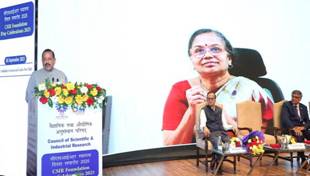
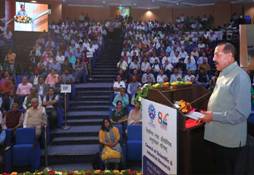
CSIR celebrated 84th Foundation Day
- CSIR celebrated its 84th Foundation Day on 26 September 2025 in the gracious presence of Dr. Jitendra Singh, Hon’ble Minister, S&T and Vice-President, CSIR, as Chief Guest. The event was also graced by Prof. A. K. Sood, PSA to the GoI, and other distinguished dignitaries. Dr. Sethuraman Panchanathan, Former Director, U.S. National Science Foundation, delivered the Foundation Day Address. The CSIR Technology Transfer Commitments 2030 was released during the occasion.
- As part of the celebrations, CSIR curated a Model Super Store and Exhibition at Dilli Haat, INA, New Delhi from 24–26 September 2025, showcasing a wide range of market-ready products developed using CSIR technologies. The Super Store was inaugurated by Hon’ble Dr. Jitendra Singh on 24 September 2025, offering the public an opportunity to experience and purchase products bringing science closer to everyday life.
CSIR-IHBT supports NDMC’s local tulip cultivation drive in Delhi
New Delhi Municipal Council (NDMC) is set to plant over 50,000 indigenously grown tulips this winter season, out of which 21,000 tulip bulbs are developed by CSIR-IHBT, Palampur. The initiative aims to reduce dependence on imported bulbs and promote local propagation.
Hon’ble Minister S&T inaugurated Innovation Centre at CSIR-NIIST during institute’s Golden Jubilee celebrations
Dr. Jitendra Singh, Hon’ble Minister S&T, inaugurated CSIR–NIIST Innovation Centre and Golden Jubilee Building and called for innovation-driven economy with greater private sector participation during institute’s Golden Jubilee celebrations. CSIR–NIIST also launched Vidyut Swasthya, a pedal-assisted system converting human energy to electricity.
CSIR-IIIM Launched North India’s First BioNEST Incubator at Kathua
Dr. Jitendra Singh, Hon’ble Minister S&T, inaugurated CSIR-IIIM’s BioNEST Incubator at Industrial Biotechnology Park, Ghatti, Kathua. The incubator will nurture startups in biotechnology, agriculture, healthcare, and allied innovation sectors. The facility supports 25 startups annually with advanced R&D infrastructure and mentorship programs.
CSIR–ISRO Space Meet 2025 held in Bengaluru to strengthen India's preparedness for Human Spaceflight Programme
CSIR and ISRO organised the Space Meet 2025 to advance human spaceflight research. CSIR-NAL led the event, highlighting aerospace technologies supporting India’s crewed missions. Indian astronauts shared experiences on microgravity training, mission readiness and human-centric research. Global experts from ESA and JAXA enriched discussions on physiology and collaborative space science. The event reinforced multi-agency collaboration towards India’s long-term space ambitions.
MoUs Signing, Collaborations and ToTs
CSIR-NAL Partnered with Tata Elxsi to Drive Advanced Air Mobility Innovation
CSIR-National Aerospace Laboratories (CSIR-NAL) and Tata Elxsi signed an MoU to collaborate on UAVs, Urban Air Mobility (UAM), and eVTOL aircraft innovation. The partnership leverages CSIR-NAL's aeronautical expertise and Tata Elxsi's strengths in AI/ML, electrification, sensor fusion, and certification processes. Key technologies include aerodynamic design, autonomous systems, and secure communications, supporting both manned and unmanned.
CSIR-SERC Transferred Security Booth Technology to MSME
As part of CSIR's "100 Days, 100 Technologies" initiative, CSIR-Structural Engineering Research Centre (CSIR-SERC) has transferred a high-velocity multi-hit resistant movable protective booth technology to Sehgal Doors. The security booth features modular steel fiber-reinforced cementitious composite panels, providing NIJ level-III protection against 7.62 AP projectiles. Designed for quick assembly, easy repair, and mobility, the booth ensures enhanced security for critical facilities nationwide.
CSIR-NAL & BEL Partnered for Aerospace and Defence Innovation
CSIR-NAL signed an MoU with BEL to collaborate on Unified Air Space Management and Sensor Development for Loitering Munition and High-Altitude Platform Stations during Aero India 2025. The partnership aims to enhance indigenous aerospace and defence capabilities through advanced research and development. The MoU is expected to drive innovations benefiting both military and civilian aerospace applications.
CSIR-NGRI & CSIR-NIO Collaborated with Russia's Pacific Oceanological Institute
CSIR's National Institute of Oceanography (CSIR-NIO) and National Geophysical Research Institute (CSIR-NGRI) signed an MoU with Russia's V.I. Il'Ichev Pacific Oceanological Institute for marine sciences and technology collaboration. The partnership emphasizes sustainable development, combating ocean pollution, addressing climate change, and advancing marine resource exploration through integrated sampling and advanced geological techniques. The collaboration will enhance capacity building and skill development by sharing expertise for mutual economic and scientific interests.
CSIR-CMERI Collaborated with Chennai’s Civic Agencies to replace Manual Drain Cleaning with an Efficient Mechanical System
CSIR-CMERI is collaborating with Chennai’s civic agencies to replace manual drain cleaning with an efficient mechanical system. The institute has developed a patented drain cleaning machine capable of handling sewer blockages up to 300mm in diameter and 100m in length. The new system aims to enhance safety, efficiency, and affordability in urban sanitation, addressing the long-standing issue of manual scavenging.
CSIR-NAL signed Technology Transfer Agreement for commercial manufacture of HANSA-3(NG) trainer aircrafts
CSIR-NAL has signed a Technology Transfer Agreement for the commercial manufacture of HANSA-3 (NG) trainer airplanes in India in the gracious presence of Union Ministers, Dr Jitendra Singh, Hon’ble Minister of States for Science and Technology and Shri K Rammohan Naidu, Hon’ble Minister for Civil Aviation. The licensing of CSIR’s indigenously designed, developed and manufacturing technology of HANSA-3(NG) two-seater trainer aircraft has been granted to M/s Pioneer Clean Amps Pvt. Ltd. This would be the first time that an indigenously developed aircraft would be manufactured in India. CSIR-NAL has received Letters of Intent (LOI) for 114 HANSA-3(NG) aircrafts.
CSIR-IMMT collaborated with Vedanta Aluminium to Recover Battery-Grade Graphite from Aluminium Waste
The collaboration of CSIR-IMMT and Vedanta Aluminium to recover battery-grade graphite from aluminium waste uses technology to extract 99% pure graphite enabling the use of spent pot lining and shot blast dust for graphite recovery. The initiative supports India’s circular economy and sustainability goals and targets to reduce over 70% dependence on imported graphite.
Transfer of Vegan Leather technology for Northeast manufacturing
CSIR-NIIST transferred plant-based Vegan Leather technology to DST’s North East Centre for Technology Application and Reach (NECTAR) to set up Vegan Leather Unit, which will transform agro-wastes into sustainable leather products, empowering farmers, MSMEs, and women-led SHGs in Northeast states.
Major Innovation Hub at leased land in Kerala
Kerala Cabinet leased 10 acres to CSIR-NIIST for 90 years without financial obligation, to set up ₹215 crore Centre for Innovation, Technology and Entrepreneurship. The project aims to boost interdisciplinary research and industrial collaboration.
CSIR-IMMT and DBT-ILS Collaborated for Marine Biomanufacturing Facility; Foundation Stone Laid by Hon’ble Union Minister
Dr Jitendra Singh, Hon’ble Minister S&T laid the foundation for Marine Biomanufacturing facility in CSIR-IMMT, developed in collaboration with DBT’s Institute of Life Sciences (ILS). Hon’ble Minister also inaugurated the PMN Phase II, Vertical Shaft Pilot Plant & Sustainable Recycling Centre at CSIR-IMMT.
Cabinet Approval to CSIR for ₹2277 Crore Scheme
On 24 September 2025, the Union Cabinet approved the DSIR/CSIR scheme “Capacity Building and Human Resource Development (CBHRD)” with a total outlay of ₹2,277.397 crore for the 15th Finance Commission cycle (FY 2021–22 to 2025–26). Implemented by CSIR across R&D institutions, national laboratories, Institutes of National Importance/Eminence and universities, the scheme aims to expand high-quality S&T human resources and strengthen the R&D ecosystem through four sub-schemes: (i) Doctoral & Post-Doctoral Fellowships, (ii) Extramural Research/Emeritus Scientist/Bhatnagar Fellowship, (iii) Awards for promotion and recognition of excellence, and (iv) Travel & Symposia grants for knowledge sharing.
Awards and Accolades
CSIR-IIIM Jammu Received ‘Bharat Incubator Award 2025’ at 4th Bharat Entrepreneurship Summit
CSIR-IIIM’s Technology Business Incubator (TBI) was honoured at the 4th Bharat Entrepreneurship Summit in New Delhi for its outstanding role in fostering innovation and supporting start-ups. The incubator has assisted over 125 start-ups, with 20+ successfully launching commercial products in sectors like agri-tech, nutrition, healthcare, phytopharma, aroma, and biotechnology.
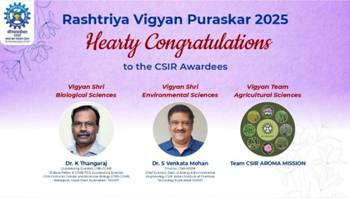
CSIR Winners of Rashtriya Vigyan Puraskar-2025
Two CSIR Scientists, Dr. S. Venkata Mohan (Director, CSIR–NEERI) and Dr. K. Thangaraj (Outstanding Scientist, CSIR–CCMB) have received the prestigious Rashtriya Vigyan Puraskar – Vigyan Shri 2025 in the Environmental Sciences and Biological Sciences discipline respectively. Also, CSIR’s Aroma Mission Team has been selected for the prestigious Rashtriya Vigyan Puraskar – Vigyan Team Award 2025 under Agricultural Sciences discipline.
***
NKR/AK
(Release ID: 2204762)
Visitor Counter : 7903