Ministry of Environment, Forest and Climate Change
Union Environment Minister Chairs High-Level Review on Air Pollution Mitigation Action Plans of Delhi and Sonipat, the Third in Series of Review Meetings for Delhi-NCR
Shri Bhupender Yadav calls for a Practical Approach in identifying Sources of Pollution and evolving Implementable Solutions, Targeting Major Polluters rather than Inconveniencing the Common Public
Remove Encroachments, Liquidate Legacy Waste Dump Sites; Improve Last-mile Public Transport Connectivity, Identify Road Corridors for Signal-Free Movement during Peak Traffic Hours in Delhi: Shri Yadav
Posted On:
17 DEC 2025 3:57PM by PIB Delhi
Union Minister for Environment, Forest and Climate Change, Shri Bhupender Yadav today chaired a high-level meeting to undertake a detailed review of the Action Plans of the Municipal Bodies of Delhi and Sonipat, for tackling air pollution in Delhi-NCR cities. This was the third meeting in the ongoing series of structured reviews, conducted on prescribed parameters and formats as directed by the Minister in the earlier meeting held on 03.12.2025.
The Minister directed officers to remain closely connected with ground-level realities, identify the major sources of pollution in the NCR, and evolve practical and implementable solutions. Stressing the need to improve the global image of the National Capital, Shri Yadav underscored the importance of a ‘Whole-of-Government’ and ‘Whole-of-Society’ approach to effectively address air pollution.
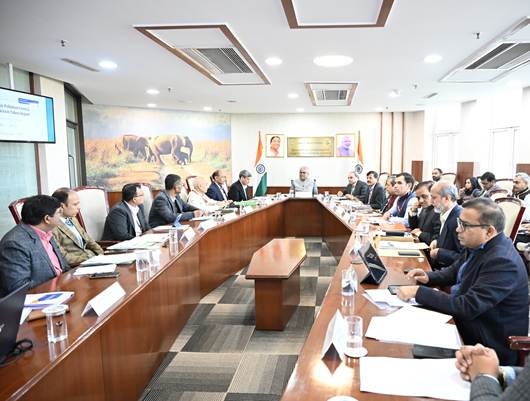
Issuing specific directions, the Minister stated that Construction and Demolition (C&D) activities must not be permitted unless C&D waste handling and processing infrastructure is identified and created within a 10 km radius of the construction site. He further directed that provisions be made to prohibit demolition during the peak pollution period in the NCR from October to December, with immediate directions to be issued pending amendments in the rules. Inspection drives were ordered to be launched forthwith across NCR cities, with strict action against defaulters. Emphasising that challans should not be an end in itself, the Minister called for a practical approach, focusing on targeting major polluters rather than inconveniencing the common public. “Motivate stakeholders, persuade the public, and act firmly against defaulters,” he said.
Shri Yadav also directed that proper placement of multi-level parking facilities in Delhi be ensured so that they do not themselves become sources of traffic congestion. He instructed the removal of illegal parkings and encroachments from 62 identified traffic congestion hotspots in the city. A detailed plan is to be prepared to identify road corridors and enable signal-free movement during peak traffic hours from 9–11 am and 4–7 pm, in coordination with Delhi Police. Vehicles below BS-IV standards are not to be allowed on these corridors. The Minister stressed that unplanned urban expansion must be checked and called for last-mile connectivity for residents of high-rise buildings to nearby public transport hubs to increase use of public transport facilities and reduce peak-hour congestion. He also directed exploration of the expansion of waste-to-energy plants at Municipal Solid Waste (MSW) dump sites and identification of open spaces for greening through public participation, including adoption of parks and water bodies.
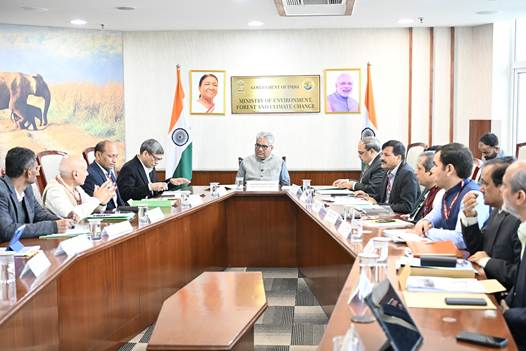
The Municipal Corporation of Delhi was asked to adopt a 360-degree approach encompassing legislative reforms, enforcement action, and provision of alternative solutions to people living or working in encroachments. These measures are to be on the lines of voluntary relocation models followed in tiger reserves, with the objective of eliminating traffic congestion and pollution hotspots. The Minister further directed fast-tracking the liquidation of Okhla, Bhalswa and Ghazipur legacy waste dump sites to achieve tangible results by the end of 2026. Removal of stray animals from roads was also emphasised to prevent accidents and traffic jams. The Commission for Air Quality Management (CAQM) was requested to analyse PNG production and consumption bills of industrial units to assess the actual transition of polluting units to clean fuel.
The Minister stressed the need for sustained awareness programmes to bring about behavioural change among all stakeholder groups and encouraged voluntary public participation. IEC activities were directed to focus on actual pollution stakeholders such as industries and construction companies, making them aware of applicable by-laws and parameters. CAQM was asked to revise IEC guidelines accordingly. Shri Yadav also called for provision of heating devices to workers through CSR initiatives to prevent biomass and MSW burning in the NCR. Emphasising handholding and supportive facilities to enable behavioural change, the Minister called upon citizens to become active partners in the fight against air pollution and urged all agencies to work in mission mode to achieve a 40 per cent reduction in AQI over the next one year.
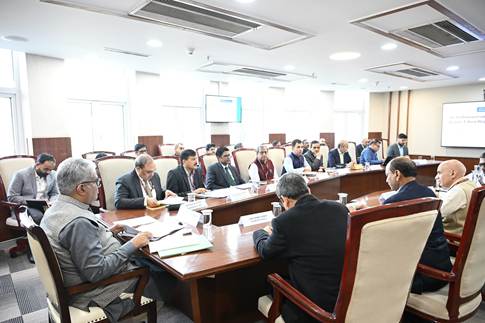
The meeting was attended by the Secretary (MoEFCC), Chairman, Commission for Air Quality Management (CAQM), senior officers of the Ministry of Environment, Forest and Climate Change, Central Pollution Control Board (CPCB) and Delhi Pollution Control Committee (DPCC), Secretary (Environment & Forest), GNCTD, and Municipal Commissioners of Delhi and Sonipat.
*****
VM
(Release ID: 2205235)
Visitor Counter : 1012