AYUSH
The Second WHO Global Summit on Traditional Medicine Commences in New Delhi Today
Union Minister of Health and Family Welfare Shri JP Nadda presides over the inaugural ceremony of the Global Summit in presence of Union Minister Shri Prataprao Jadhav
Dr. Tedros Adhanom Ghebreyesus, Director-General, WHO, applauds India’s leadership in traditional medicine
India expands global footprint of traditional medicine as India–WHO partnership drives integration through science and standards: Shri Prataprao Jadhav
India reaffirms global commitment to science-based and equitable traditional medicine: Secretary, Vaidya Rajesh Kotecha
Ashwagandha: From traditional wisdom to global impact— Global experts discuss science, safety and standards
WHO global summit opens plenary sessions on restoring balance in traditional medicine and global health systems
Posted On:
17 DEC 2025 7:52PM by PIB Delhi
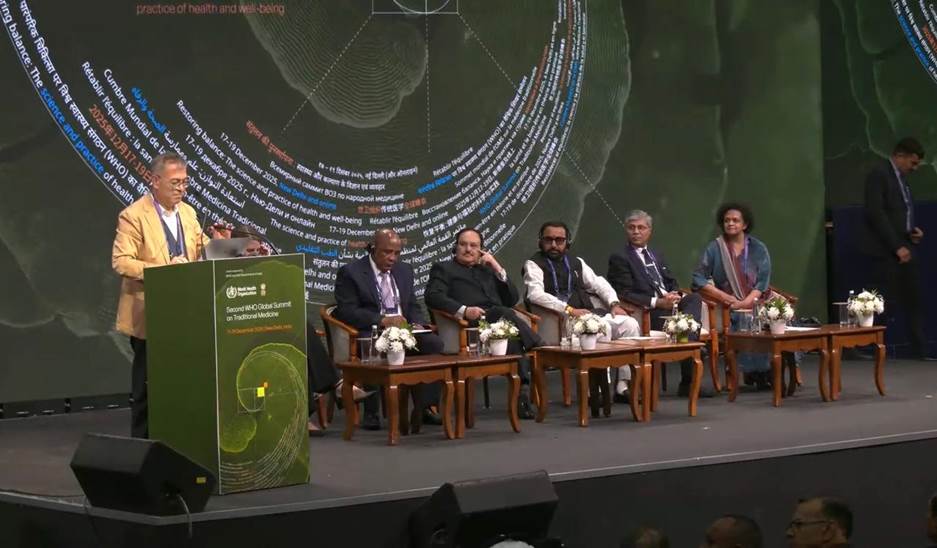
Union Minister of Health and Family Welfare Shri JP Nadda, in the presence of Union Minister Shri Prataprao Jadhav inaugurated the Second WHO Global Summit on Traditional Medicine at Bharat Mandapam, New Delhi today. Dr. Tedros Adhanom Ghebreyesus, Director-General, WHO, also shared a special video message that was played during the inaugural session. The session marks the beginning of the three-day mega global scientific congregation being held from 17th to 19th December 2025. Prime Minister Shri Narendra Modi is expected to grace the closing ceremony of the Summit on 19th December 2025. Centered on the theme “Restoring Balance: The Science and Practice of Health and Well-Being,” the summit is being jointly organized by the World Health Organization (WHO) and the Ministry of Ayush, Government of India. The event brings together policymakers, scientists, practitioners, Indigenous knowledge holders and civil society leaders from around the world to advance a shared vision of balanced, inclusive and sustainable health systems.
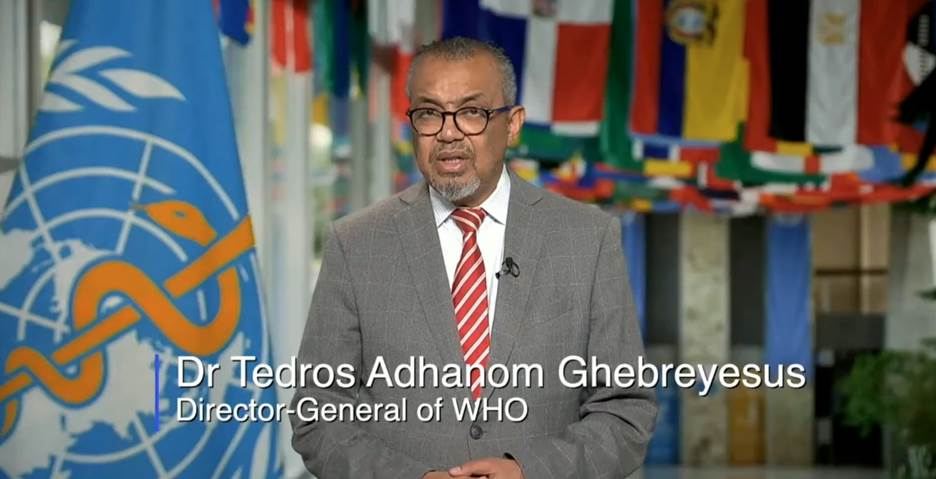
Dr. Tedros Adhanom Ghebreyesus, Director-General, WHO, in a video message, appreciated India’s partnership and leadership in the field of traditional medicine. Emphasizing that health is not only about technology and treatment but also about balance, dignity and the shared wisdom of humanity, he noted that the World Health Assembly earlier this year adopted the WHO Global Traditional Medicine Strategy 2025–2034. The strategy focuses on strengthening the evidence base to guide decisions through science and data, ensuring safety and quality through effective regulation, integrating traditional, complementary and integrative medicine (TCIM) into national health systems beginning with primary health care, and unlocking its broader value for biodiversity, sustainability and community well-being. He further highlighted that to translate this strategy into action, WHO has established the Global Centre for Traditional Medicine in India.
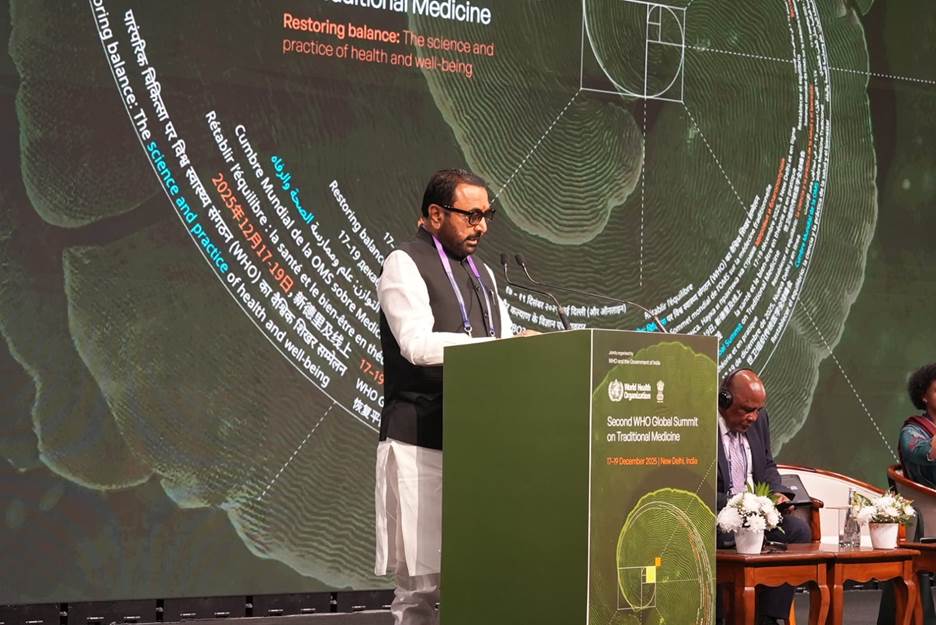
In his inaugural address, Union Minister Shri Prataprao Jadhav said, “India’s collaboration with the World Health Organization reflects a shared commitment to bring traditional medicine into the mainstream of global healthcare through science, standards, and evidence. Since the partnership began in 2016, significant milestones have been achieved, including the launch of ICD-11 Module 2 in 2024, integrating Ayurveda, Siddha, and Unani morbidity codes into international health classification. Ongoing work on the International Classification of Health Interventions (ICHI) and the upcoming WHO Global Traditional Medicine Centre in Jamnagar, scheduled for completion in October 2025, underscore a decisive shift towards global acceptance, harmonization, and institutional strengthening of traditional medicine.”
Shri Jadhav also said “India continues to expand international cooperation in the field of traditional medicine through education, research, and capacity building. The country offers 104 scholarships annually to foreign nationals, has signed 26 country-level MoUs, collaborates with over 50 institutions worldwide, and has established Ayush Chairs in 15 universities and Ayush Information Cells in 43 countries. Collaborative research initiatives, including Ashwagandha trials in the United Kingdom, Guduchi studies in Germany, and Ayurveda-based diabetes research in Latvia, are generating a growing body of evidence. Leveraging digital platforms such as the Ayush Grid and advanced technologies including artificial intelligence, India is systematically documenting and validating traditional knowledge to address contemporary global health challenges.”

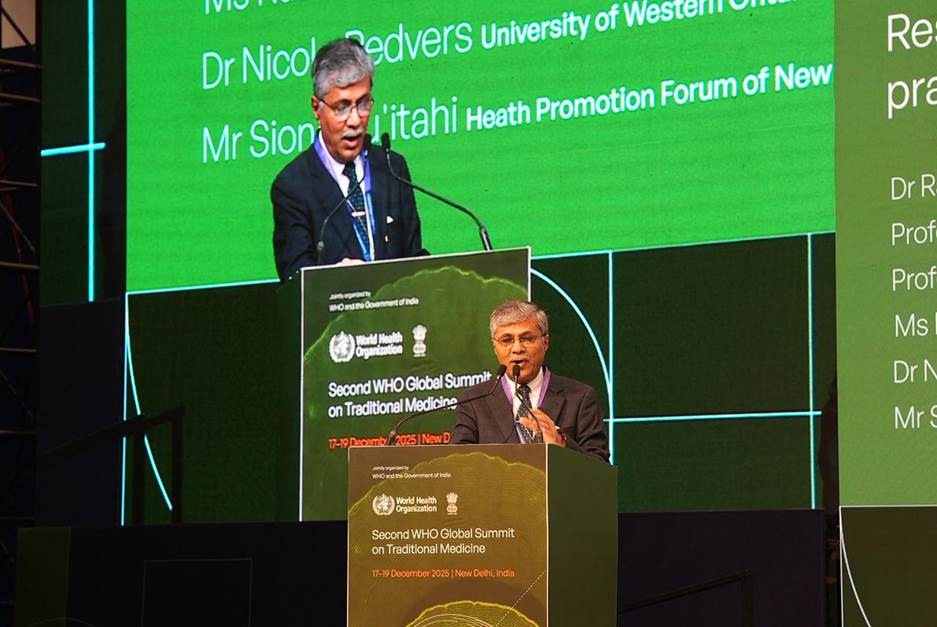
Vaidya Rajesh Kotecha, Secretary, Ministry of Ayush, highlighted that the Summit builds on the momentum of the first WHO Global Summit on Traditional Medicine and the Gujarat Declaration, reaffirming a shared global commitment to science-based, sustainable, and equitable Traditional Medicine. He emphasized India’s role as a committed partner to WHO and Member States, underscored the significance of the WHO Global Traditional Medicine Centre at Jamnagar as a global hub for policy, research, and innovation, and noted that the Summit—guided by the WHO Global Traditional Medicine Strategy 2025–2034—aims to strengthen regulation and integration of Traditional Medicine into health systems, safeguard biodiversity and traditional knowledge, and harness frontier technologies, all anchored in the theme of “Restoring Balance” for people and the planet.
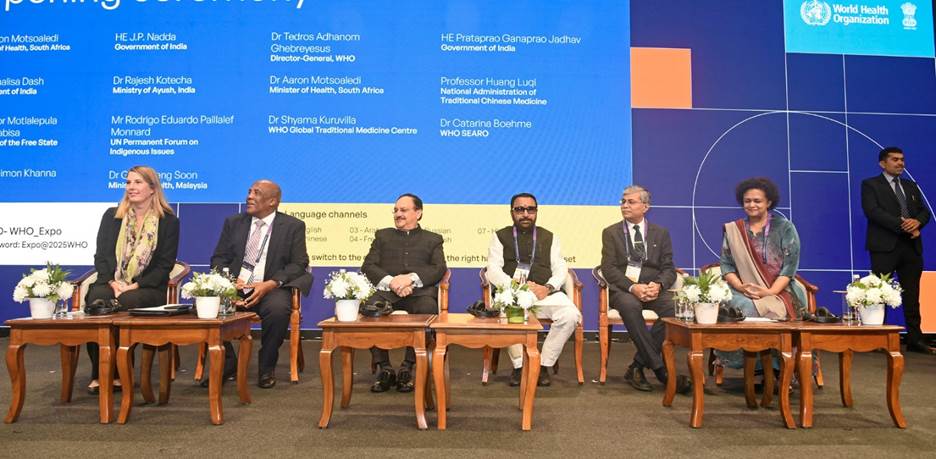
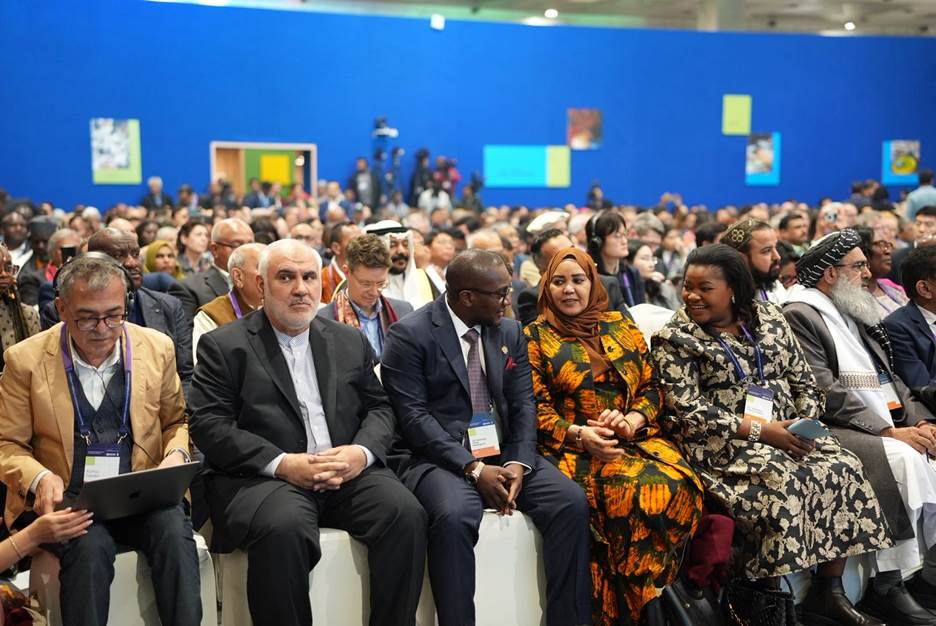
The ceremony was attended by esteemed dignitaries including Dr. Goh Cheng Soon (Malaysia) and Prof. Motlalepula Matsabisa (South Africa), Co-chairs of the Steering Committee of the Second WHO Global Summit on Traditional Medicine; Dr. Shyama Kuruvilla, Director a.i, WHO Global Traditional Medicine Centre; H.E. Aaron Motsoaledi, Minister of Health, Republic of South Africa; H.E. Luqi Huang, Vice Commissioner, National Administration of Traditional Chinese Medicine, China; Rodrigo Eduardo Paillalef Monnard, Chile, Member, UN Permanent Forum on Indigenous Issues (UNFPII), and the senior officials of Ministry of Ayush
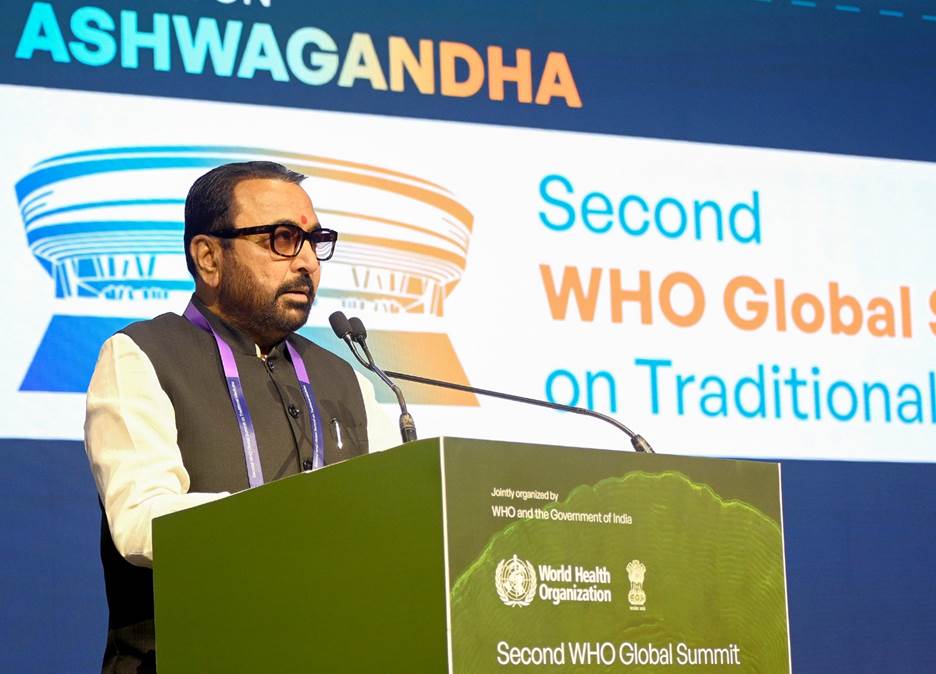
A major highlight of the event was the parallel session, ‘Ashwagandha: From Traditional Wisdom to Global Impact – Perspectives from Leading Global Experts’, that was curated to present the clinical evidence on therapeutic benefits of Ashwagandha. The session brought together leading international experts, regulators and researchers to examine the evolving scientific, regulatory and safety landscape of Ashwagandha (Withania somnifera). The session also highlighted Ashwagandha’s growing global recognition for its adaptogenic, neuroprotective and immunomodulatory properties, while underscoring the importance of rigorous preclinical and clinical research, standardisation, safety assessment and pharmacovigilance. Expert presentations and an interactive panel discussion emphasised harmonising global standards, strengthening evidence-based validation and fostering international collaboration to support the responsible integration of Ashwagandha into modern healthcare systems while preserving the integrity of traditional knowledge.
Following the inaugural ceremony, the Summit commenced a series of focused plenary discussions examining key dimensions of restoring balance in global health systems, knowledge governance, biodiversity stewardship and equity.
The first session, Plenary - 1– “Restoring Balance: The Science and Practice of Health and Well-Being,” brought together leaders and knowledge holders from WHO, the Ministry of Ayush, China’s National Administration of Traditional Chinese Medicine, South African Indigenous Knowledge Systems, and experts from Canada and New Zealand. The dialogue underscored persistent imbalances in knowledge access, governance structures and planetary health, and highlighted the importance of integrating diverse knowledge systems, strengthening scientific rigor, and protecting biodiversity to advance global health equity.
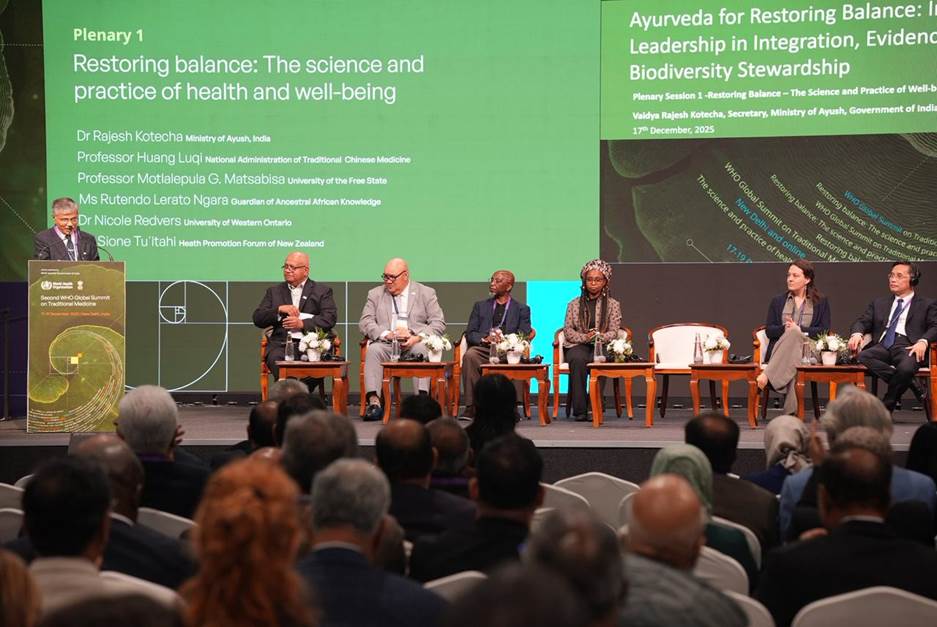
Plenary 1A explored how traditional medical knowledge aligns with the broader continuum of global health understanding. The session featured the introduction of the Traditional Medicine Global Library and examined how knowledge systems have been historically valued or marginalized across cultures. Speakers from India, China, Africa, Europe and Latin America discussed ways to incorporate plural evidence models into contemporary health frameworks while ensuring scientific integrity.
Plenary 1B focused on the theme of equity in Traditional Medicine knowledge, particularly addressing historical patterns of extraction, commercialization and inadequate recognition of Indigenous wisdom. Panelists from Bolivia, WIPO, ARIPO, Africa, South America and civil society highlighted the need for justice-driven governance models and equitable benefit-sharing mechanisms for traditional knowledge holders.
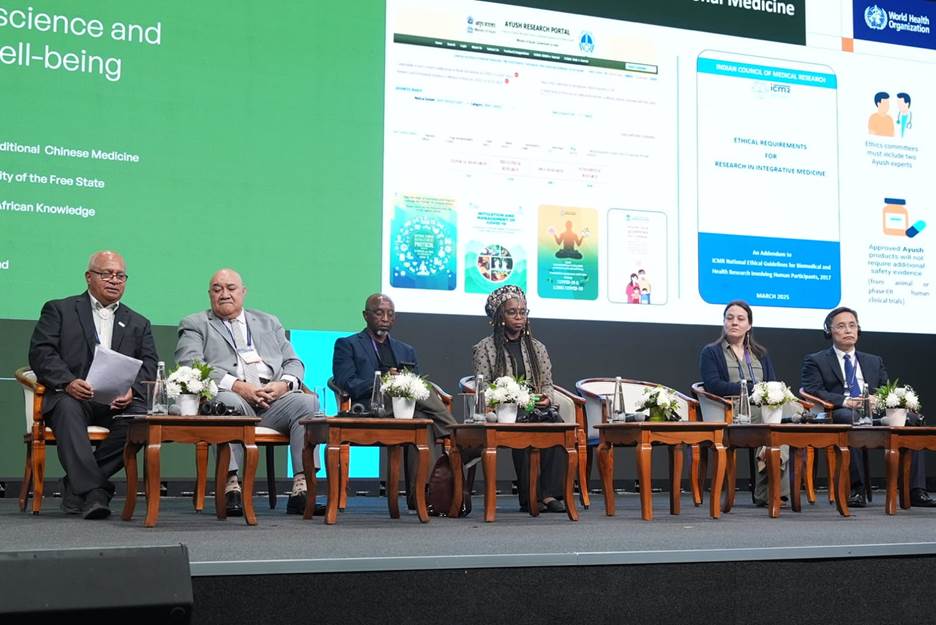
In Plenary 1C, the discussions turned to ecological balance and planetary health, examining the role of Traditional Medicine in biodiversity conservation and climate-responsive health strategies. Experts from Australia, Kenya, India, Guatemala, Indonesia, Egypt and Uganda emphasized the intrinsic connections between cultural knowledge, sustainable ecosystems and holistic public health.
The final session of the day, Plenary 1D, addressed governance and resource frameworks for Traditional, Complementary and Integrative Medicine (TCIM). Speakers from Mali, Tanzania, Germany, Iraq, Malaysia and Cuba shared insights on strengthening policy structures, improving quality systems and supporting sustainable approaches that enable TCIM to contribute effectively to global health systems.

The sessions collectively reinforced the understanding that health is deeply rooted in balance—between individuals, their communities and the environment. With environmental pressures, structural inequities and governance gaps increasingly disrupting this equilibrium, speakers called for holistic approaches that uphold Indigenous rights, safeguard knowledge systems, strengthen evidence structures and ensure fair benefit-sharing. The insights emerging from these deliberations position Traditional Medicine as a vital catalyst for restoring harmony between people and ecosystems, setting the conceptual foundation for the Summit’s forthcoming technical discussions and policy dialogues.
***
SR/GS/SG
(Release ID: 2205535)
Visitor Counter : 3449