Ministry of Communications
DoT and UNDP host National Workshop on Advancing Circular Economy in the Telecom Sector
India’s Telecom Sector taking steps to Move from Intent to Implementation on Circular Economy: Shri R. N. Palai
DoT envisages Lifecycle-Based, Circular and Sustainable Growth of India’s Telecom Sector
Posted On:
19 DEC 2025 7:00PM by PIB Delhi
The Department of Telecommunications (DoT), Ministry of Communications, in partnership with the United Nations Development Programme (UNDP), organised a National Workshop titled “Advancing Circular Economy in the Telecom Sector: Enabling Policy & Practice” at New Delhi today. The workshop brought together policymakers, industry leaders, technology providers, academia, international organisations and value-chain stakeholders to deliberate on accelerating the adoption of circular economy practices in India’s telecom sector.
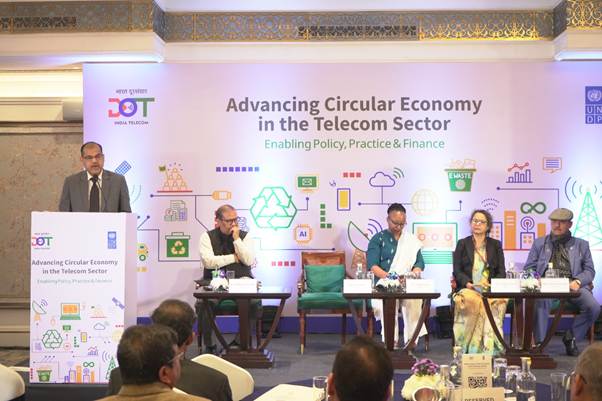
The workshop aimed to bring together diverse stakeholder perspectives and identify actionable pathways for embedding circularity across the telecom value chain, including sustainable product design, efficient resource use, lifecycle management, digital tools and financing mechanisms. Discussions focused on aligning policy frameworks, industry practices and technology solutions to support long-term sustainability and resilience of the sector.
The inaugural session was moderated by Dr. Shilpi Karmakar, Project Manager, UNDP, who outlined its objectives. Welcome remarks and context setting were delivered by Dr. Ashish Chaturvedi, Head – ACE, UNDP. This was followed by addresses by Ms. Sunita Verma, Scientist ‘G’, Ministry of Electronics and Information Technology (MeitY); Shri Kamendra Kumar, Former Director, TCIL & Chairman, Tamil Nadu Telecom Limited; and a special address by Dr. Angela Lusigi, Resident Representative, UNDP, highlighting the importance of multi-stakeholder collaboration.
Delivering the inaugural keynote address, Shri R. N. Palai, Member (Technology), Digital Communications Commission (DCC) and ex-officio Secretary to the Government of India, DoT, emphasised that sustainability and circularity in telecom are no longer optional but strategic imperatives. He noted that while the Indian telecom sector contributes less than two percent of greenhouse gas emissions in India, its scale and reach across nearly 1.2 billion users place a responsibility on the sector to lead in adopting environmentally responsible practices.
Shri Palai highlighted that telecom is the invisible infrastructure underpinning modern economy and a silent enabler of climate action by facilitating reduction in Greenhouse gas emissions and improving efficiency across various sectors. He observed that while the transition towards renewable energy in telecom networks is becoming the new normal, sustainability must extend beyond energy efficiency to encompass the entire lifecycle of telecom products and infrastructure. Emphasising issues such as e-waste management, right-to-repair and sustainable design, he called for a shift from the traditional use-and-discard model towards regenerative and resource-efficient systems aligned with India’s broader sustainability goals.
Dr. Angela Lusigi’s address mentioned about UNDP’s close working with the Government of India, including in advancing circular economy transitions in the telecom sector. She underlined UNDP’s role in supporting DoT in preparation of the Circular Economy Plan in Telecom Sector plan.
Dr. Lusigi urged stakeholders to use the workshop as a platform to develop a time-bound roadmap in Telecom Sector, supported by clear policy frameworks, industry commitment, investments in innovation and infrastructure, and robust monitoring and accountability mechanisms.
A highlight of the workshop was a presentation by Shri Arun Agarwal, DDG (Satellite), DoT, on the Circular Economy Action Plan in the Indian Telecom Sector. The presentation outlined suggestions for policy directions and practical interventions covering sustainable design and manufacturing, lifecycle management of telecom assets, reduction in e-waste, adoption of digital tracking systems and strengthening transparent and resilient supply chains.
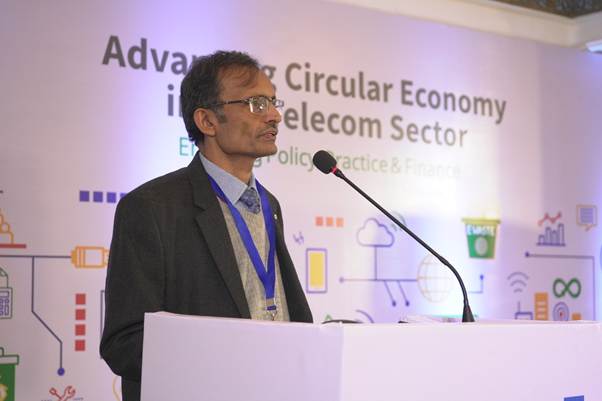
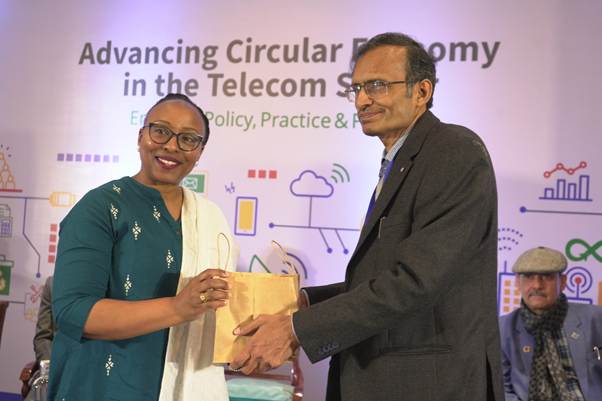
The technical deliberations included Panel Discussion in Session I on “Rethinking the Telecom Supply Chain for Circularity and Sustainability”, moderated by Shri Arun Agarwal, with panelists Shri Surendra Kumar Gotherwal, Scientist ‘E’, MeitY; Dr. Anjali Taneja, Regulatory Affairs Leader, Inter IKEA Group; Ms. Jasroop Sandhu, VP Vodafone Idea; Dr. Reva Prakash, Advisor, GIZ; and Dr. Sandip Chatterjee, Senior Advisor, SERI India. The panel discussed Govt. initiatives to achieve circularity, challenges in circular telecom supply chain and policy interventions to overcome them, key aspects of value-chain, Design for circularity in Telecom and component harvesting , Sustainable Procurement, existing circularity practices in industry, etc.
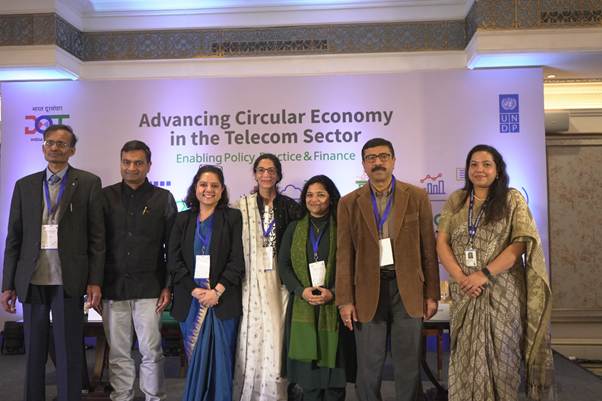
This was followed by Panel discussion in Session II on “Digital Tools for Transition towards Circular Economy”, moderated by Dr. Shilpi Karmakar, UNDP, with panelists Shri Rakesh Desai, DDG, TEC, DoT; Ms. Deepti Kapil, Addl. Director CPCB; Dr. Priyanka Kaushal, Professor, IIT Delhi; and Shri Pranshu Singhal, Karo Sambhav. The session focused discussion on digital tools supporting a more circular telecom sector in India, CPCB’s perspective in using digital platforms and data tools in EPR implementation, digital platforms and blockchain-based traceability to improve material recovery and transparency, integration of data analytics, AI, and IoT to enable circularity, etc.
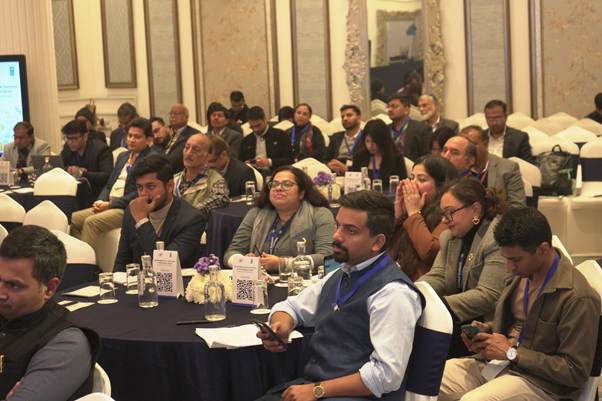
In the concluding session, participants emphasised that India’s telecom sector needs to move from dialogue to implementation. The discussions highlighted that circularity must be pursued through coordinated ecosystem-level action and supported by scalable and sustainable business models. Further, the discussions emphasised on the need for coordinated, ecosystem-level action; creating enabling framework; strengthening multi-stakeholder collaboration platforms; prioritising pilot-to-scale pathways; shared ownership—where government provides direction and enabling conditions, industry drives innovation and adoption, and partners support implementation, capacity building, and financing.
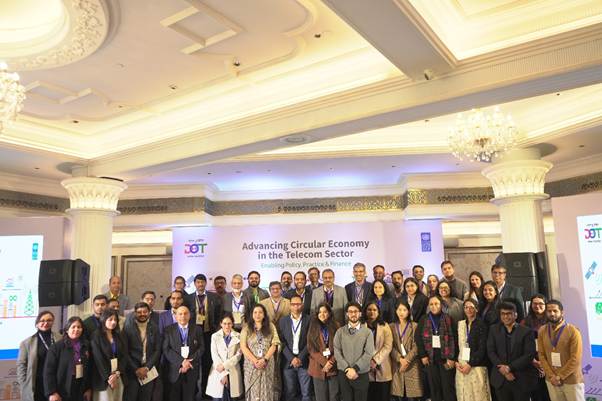
The workshop concluded with a shared commitment by DoT, UNDP and stakeholders to strengthen collaboration and accelerate the transition towards a more circular, sustainable and resilient telecom sector in India.
****
MI/ARJ
(Release ID: 2206704)
Visitor Counter : 1018