PIB Backgrounder
PESA Mahotsav
Celebrating Community-Led Governance under the PESA Act
Posted On:
22 DEC 2025 10:55AM by PIB Delhi
Key Takeaways
- The Ministry of Panchayati Raj is celebrating a two-day PESA Mahotsav: Utsav Lok Sanskriti Ka on December 23 and 24 this year in Visakhapatnam, Andhra Pradesh.
- The Mahotsav marks the anniversary of the Panchayats Extension to Scheduled Areas (PESA) Act, 1996.
- The PESA Act empowers tribal communities by extending Panchayati Raj provisions to their scheduled lands, protecting them from being removed or alienated in their lands.
- The objective would be to spread awareness on the act and improving the capabilities of local level bodies in Scheduled Areas.
Introduction
Tribal communities in India make up about 8.6% of the population. Areas with significant tribal populations are designated as Scheduled Areas by the President of India in terms of Article 244 of the Constitution so that tribals can have control over their local resources, development, and social life.
In 1993, India's Constitution was amended (73rd Amendment) to establish Panchayati Raj Institutions or local governance structures at the village, block, and district levels. The amendment devolved power to local-level institutions, empowering villagers to make decisions regarding their development and communities. However, the 73rd Amendment Act did not apply to tribal Scheduled Areas automatically.
In 1996, the Panchayats (Extension to Scheduled Areas) Act (PESA) came into force, giving similar powers to tribal communities in Scheduled Areas to self-govern. This landmark legislation restores and protects the rights of tribal communities over their land, water, forest resources, culture, and governance systems. It extends decentralised democracy to tribal communities by empowering tribal Gram Sabhas.
The PESA Act also recognises that tribal communities have unique traditional governance systems and special developmental needs.
Eight of the ten states with tribal Scheduled Areas have framed their PESA rules, while Odisha and Jharkhand have created draft rules.
PESA Mahotsav 2025, Dec 23-24, Visakhapatnam, Andhra Pradesh
The Ministry of Panchayati Raj will hold the PESA Mahotsav in Visakhapatnam on 23–24 December 2025, coinciding with the anniversary of the PESA Act, 1996. The Mahotsav is envisioned as a landmark initiative that will showcase traditional sports like Chakki Khel, Uppanna Barelu, Cholo and Puli Meka, Mallakhamba, Pithool, Gedi Doud and Sikor; cultural heritage and tribal cuisine. Its objective is to empower tribal communities by providing a nationally recognised platform to celebrate, preserve and promote their rich traditions.
Panchayati Raj in India — 73rd Constitutional Amendment (1993)
The 73rdConstitutional Amendment (1993) added Part IX and the Eleventh Schedule to the Constitution. Part IX of the Constitution delegates power to institutions at the village and district levels, also known as the Panchayats. The Eleventh Schedule lists 29 subjects over which these local institutions have decision-making powers. The Amendment made way for a more decentralised democracy.
Part IX of the Constitutional amendment established a three-tier structure of Panchayati Raj institutions – Gram Panchayats at the village level, Panchayat Samitis at the intermediate or block level (representing a group of villages), and Zilla Parishads at the district level. All the members of these three bodies are elected. Further, the chairperson of panchayats at the intermediate and district levels are indirectly elected from amongst the elected members. But at the village level, the election of Panchayat Sarpanch may be direct or indirect.
At every level of Panchayat, seats are reserved for Scheduled Castes and Scheduled Tribes in proportion to their population.
A Gram Sabha is a body consisting of all the persons registered in the electoral rolls of a village within the area of a Gram Panchayat. The powers and functions of Gram Sabhas are determined by state legislatures through law.
PESA Act of 1996
The PESA Act extends the Panchayati Raj system or the 73rd Constitutional Amendment provisions to the tribal-dominated Fifth Schedule Areas.
The Act gives Gram Sabhas and Panchayats in these areas additional powers to maintain their traditional governance systems.
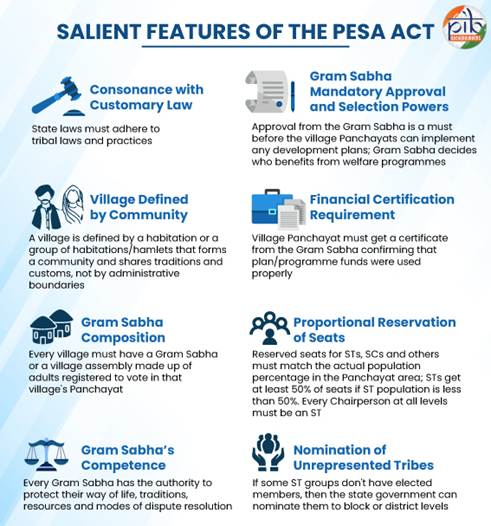
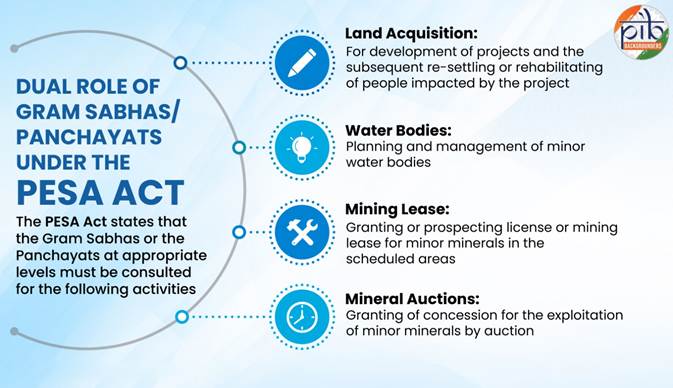
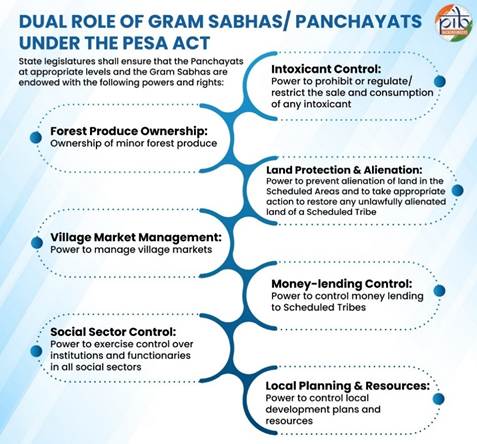
Salient Features of the PESA Act
The enhanced powers of the Gram Sabhas form the heart of the PESA Act, allowing tribal communities more authority over their own village governance.
Even though there are constitutional rules for Panchayats and Gram Sabhas, the PESA Act overrides them, and the state legislatures cannot make any Panchayat law violating these features.
Scheduled Areas and the PESA Act
The Constitution’s Fifth Schedule empowers the government to establish Scheduled Areas in states where Scheduled Tribes (STs) reside (not including the states of Assam, Meghalaya, Tripura and Mizoram).
At present, 10 states have Fifth Scheduled Areas:
|
#
|
Name of the State
|
Villages
|
Panchayats
|
Blocks
|
Districts
|
|
Fully
covered
|
Partially
covered
|
|
1
|
Andhra Pradesh
|
1,586
|
588
|
36
|
0
|
5
|
|
2
|
Chhattisgarh
|
9,977
|
5,050
|
85
|
13
|
6
|
|
3
|
Gujarat
|
4,503
|
2,388
|
40
|
4
|
7
|
|
4
|
Himachal Pradesh
|
806
|
151
|
7
|
2
|
1
|
|
5
|
Jharkhand
|
16,022
|
2,074
|
131
|
13
|
3
|
|
6
|
Madhya Pradesh
|
11,784
|
5,211
|
89
|
5
|
15
|
|
7
|
Maharashtra
|
5,905
|
2,835
|
59
|
0
|
12
|
|
8
|
Odisha
|
19,311
|
1,918
|
119
|
6
|
7
|
|
9
|
Rajasthan
|
5,054
|
1,194
|
26
|
2
|
3
|
|
10
|
Telangana
|
2,616
|
631
|
72
|
0
|
4
|
|
|
Total
|
77,564
|
22,040
|
664
|
45
|
63
|
Andhra Pradesh, Chhattisgarh, Gujarat, Himachal Pradesh, Maharashtra, Madhya Pradesh, Rajasthan and Telangana have framed their PESA Rules. Odisha and Jharkhand have framed their draft PESA Rules.
Ministry Initiatives for PESA Act Implementation
The Ministry of Panchayati Raj has taken various steps to implement the PESA Act effectively, including organizing national and regional conferences on the Act and training personnel on its provisions. MoPR and seven anchor states conducted two rounds of state-level master trainer training in 2024-25 to train elected representatives on all PESA provisions. Over 1 lakh participants at the state, district, and block levels were trained.
The PESA-Gram Panchayat Development Plan Portal was also launched during the National Conference on the PESA Act in September 2024. It facilitates planning and monitoring of development activities aligned with the rights and priorities of tribal communities under the PESA Act. The portal enables hamlet- and village-wise resource allocation of Central Finance Commission grants, State Finance Commission grants, Centrally Sponsored Schemes, State Schemes, and other funds in PESA Gram Panchayats, which they can use to plan village-wise activities.
PESA DAY
The Ministry of Panchayati Raj celebrates December 24, 2024, as PESA Day. The goal was to raise awareness about the PESA Act and strengthen governance by empowering Gram Sabhas and improving Gram Panchayats in Scheduled Areas. The national event was held in Ranchi and chaired by the Secretary, Ministry of Panchayati Raj.
The MoPR established a dedicated PESA Cell, staffed with ministerial team and consultants (Social Sciences, Legal and Finance sectors) to strengthen oversight and coordination.
Manuals on the PESA Act were translated to various languages, including tribal languages (in collaboration with the Ministry of Tribal Affairs). The manuals were translated to Telugu, Marathi, Gujarati and Odia, and the tribal languages of Santhali, Gondi Bhili and Mundari.
The MoPR sent proposals to 16 universities for the establishment of Centres of Excellence in central universities to institutionalise PESA capacity-building and documentation. The Indira Gandhi National Tribal University, Amarkantak (central government share: Rs.8.01 crore for 5 years) signed an MoU on July 24, 2025, with MoPR and the Government of Madhya Pradesh for one such CoE. A Programme Advisory Board was constituted to the CoEs and a 2025–26 Work Plan was approved with focus on documentation of customs, dispute resolution models, training manuals, information and communication materials on PESA in local/tribal languages, and 5 model PESA Gram Sabhas.
PESA Act Success Stories and Best Practices
The PESA Act has empowered tribal communities. Exercising these powers, tribal communities across the country have defended their rights, promoted inclusive development, strengthened accountability, and driven their communities' development. "PESA in Action: Stories of Strength and Self-Governance", a compilation of 40 PESA Act success stories, was published in July 2025. The stories detail how tribal communities have used the powers given to them by the Act, to strengthen and empower their Gram Sabhas, produce and manage forest produce, take charge of minor minerals in their lands, and manage water bodies, among other achievements.
Empowered Gram Sabha Increases Economic Activity
Khamdhogi is a village of 443 people in Kanker district, North Bastar, Chhattisgarh, a Fifth Schedule Area. According to the Chhattisgarh PESA Rules 2022, a Gram Sabha was established in this village.
The villagers, living in the remote hinterlands, were struggling with development and finding livelihood options. They lacked technical knowledge and were rooted in traditional means of livelihood. Many were also living below the poverty line. Even with the establishment of the Gram Sabha, community participation was low.
To overcome these challenges, the villagers were trained and organised into various committees. The training allowed them to gain technical knowledge. To increase community participation, the presence of one man and one woman from each household during the Gram Sabha's decision-making meetings was made mandatory.
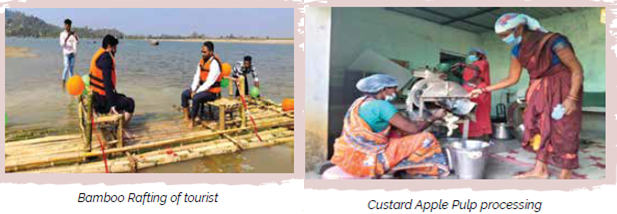
Due to these initiatives, the villagers began forest produce collection, fisheries, bamboo rafting, and other activities, increasing their economic output. These initiatives, led by the Gram Sabha, helped the community come together to manage village affairs and promote sustainable livelihoods.
Combining Traditional Practices with PESA Act Provisions
The PESA Act empowers tribal communities to continue their traditional cultural and economic practices. Chilgoza pine nuts are a prized forest produce in Kinnaur district, Himachal Pradesh. The Rarang Gram Panchayat traditionally harvests these nuts according to their customs.
According to the Himachal Pradesh PESA Rules 2011, the state's forest department must consult the Gram Sabha before preparing any plan for the harvesting of forest produce. Moreover, the rules assert that communities have the right to manage and utilize minor forest produce, even beyond their immediate village boundaries, as per their traditional practices.
Due to these rules the Rarang Gram Panchayat was able to implement their customary laws and practices. The sale of the nuts to traders is equally divided among all households. Every family is expected to provide a few people to collect the harvest. Forest plots are pre-allocated to individual households, and families have complete control over these plots.
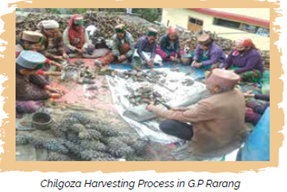
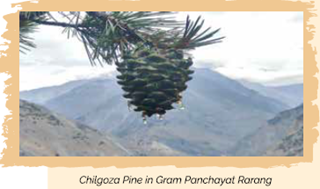
The PESA Act has strengthened equity and inclusive, strengthened community decision-making power and institutions, preserved traditional practices and made way for sustainable resource management.
Management of Minor Minerals Leads to Grassroots Transformation
Vadagudem village is located on the Godavari basin, a prime location for sand mining. The village formed a Tribal Sand Mining Cooperative Society to manage sand mining in their area. This initiative transformed 100 families into direct stakeholders in the Society. The Gram Sabha approved sand mining rights for this Society from the river basin. The mining operation generates Rs. 40 lakh annually in revenue. These funds are channelled into village infrastructure development, education, healthcare, and livelihood support. The Panchayat also receives revenue through seigniorage charges, which is used for community development.
The PESA Act has led to a significant boost in tribal welfare, self-employment, and rural development, empowering tribal communities economically and socially.
Fighting Displacement with the PESA Act
When the forest department surveyed the area around Bhim Talai, a remote village in Udaipur district, Rajasthan, they included the village and four other revenue villages within the 'Phulwari Ki Naal Wildlife Sanctuary'. This sanctuary spans 500 sq km and borders Gujarat. The forest department declared the tribal area a critical habitat and began displacing the Bhil tribal community who had lived there for generations.
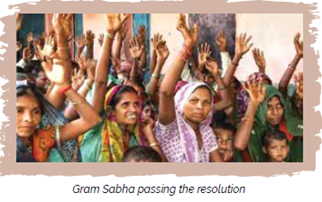
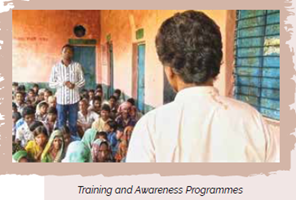
The villagers organized themselves into a Gram Sabha under the PESA Act with help from a non-profit organization, which also provided legal awareness training. The Gram Sabha held a special meeting and unanimously passed a resolution that the village would not be evacuated, citing the Rajasthan Panchayati Raj Act 1999, which requires Gram Sabha approval before any land acquisition. The Medi Gram Panchayat approved this resolution. Today, the Bhil community continues to live securely, with their traditions and land protected under the PESA Act.
Conclusion
PESA Mahotsav highlights the Government of India’s sustained commitment to strengthening self-governance in Scheduled Areas under the PESA Act. Through policy reforms, capacity-building, cultural documentation, digital initiatives and community-led governance efforts, the Ministry of Panchayati Raj is strengthening and empowering Gram Sabhas. These efforts promote community-led governance and ensure that tribal communities play a central role in shaping their own development.
References
Click here to see in PDF
PIB Research
(Release ID: 2207293)
Visitor Counter : 13585