Office of Principal Scientific Advisor to GoI
Principal Scientific Adviser Unveils "National Technology Readiness Assessment Framework (NTRAF)" to Standardise Innovation Assessment in India
Posted On:
29 DEC 2025 7:43PM by PIB Delhi
Principal Scientific Adviser (PSA) to the Government of India, Prof. Ajay Kumar Sood, unveiled the National Technology Readiness Assessment Framework (NTRAF) on December 29, 2025. The launch event was attended by Dr. Parvinder Maini, Scientific Secretary, Office of the PSA (OPSA); and Dr. Shivkumar Kalyanaraman, CEO, Anusandhan National Research Foundation (ANRF), Dr. Preeti Banzal, Adviser/Scientist ‘G’, OPSA; Shri Praveen Roy, Head TT, Department of Science and Technology (DST); Dr. Jyoti Sharma, Head RDI, DST, Shri Rohit Gupta, Chief Technology Officer (CTO), OPSA and other officials from OPSA and Confederation of Indian Industry (CII). Developed in collaboration with CII, this framework establishes a unified, objective yardstick to measure the maturity of technology projects from laboratory conception to commercial deployment. The framework is open for public consultation until January 31, 2026.
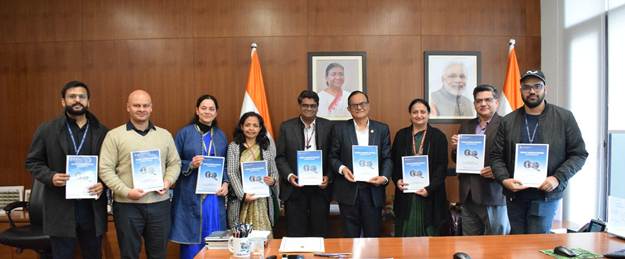
The framework aims to serve as the operational backbone for various R&D funds launched under National Missions. By providing a rigorous methodology to assess projects across the 9 Technology Readiness Levels (TRL) - ranging from Proof of Concept (TRL 1-3) to Prototype Development (TRL 4-6) and Operational Deployment (TRL 7-9), the framework will enable funding bodies to allocate resources with greater precision and de-risk early-stage technologies for private investment.
Speaking at the launch, Prof. Sood highlighted the critical need for a common language between researchers and investors. "For too long, the Indian deeptech ecosystem has faced a precarious situation where academia and industry speak different dialects regarding technology readiness. This mismatch often creates a 'Valley of Death' between TRL 4 and TRL 7, where funding dries up due to perceived risks. The NTRAF moves us from subjective narratives to objective evidence, ensuring that we are not just funding science experiments, but scalable, market-ready solutions," he stated.
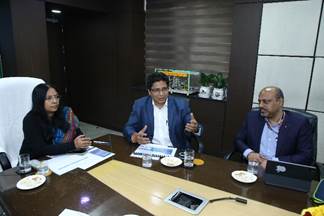
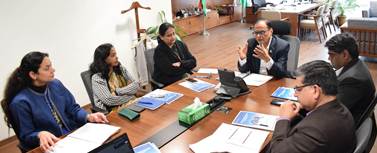
Describing the document as a "definitive guide" for the scientific community, Dr. Maini noted “By establishing a common language for technology maturity, we aim to bridge the often-subjective gap between a researcher’s claim of readiness and an investor’s or evaluator’s requirement for proof.”
Dr. Kalyanaraman emphasised that technology readiness must run parallel to market validation, particularly beyond TRL 4. He also suggested a pilot phase where 20 selected technologies may be cross-validated by the NRDC to calibrate and stress-test the framework before its broader adoption.
Shri Roy and Dr. Sharma from DST welcomed the framework as a "timely intervention" crucial for effective implementation of the RDI Fund, stating that the structural rigour it brings to evaluating high-risk, high-reward projects will help refine and evolve the tool in alignment with India’s dynamic innovation landscape.
Dr. Rahul Katna, Counsellor – Technology, Innovation and R&D, CII, emphasised the industry’s role in shaping the tool, noting that its stringent standards ensure any startup claiming to be ‘deployment-ready’ meets true industrial-grade validation.
Shri Gupta underscored that the NTRAF eliminates the ambiguity hindering technology transfer by establishing a unified metric that synchronises research laboratories, industry, and government on a validated, manufacturable definition of readiness.
Key features of the Framework include:
- Global Best Practices, Indian Context: Adapted from global standards (such as NASA) but tailored to the specific needs of the Indian R&D ecosystem.
- Objectivity over Subjectivity: Replaces qualitative estimation with a structured, evidence-based checklist for every stage of development.
- Sector-Specific Nuances: Includes specialised annexures for distinct sectors like Healthcare & Pharmaceuticals and Software, acknowledging that development pathways differ across domains.
- Self-Assessment Tool: Empowers Project Investigators to realistically gauge their standing and identify technical gaps before seeking funding.
***
MJPS/SR
(Release ID: 2209568)
Visitor Counter : 5501