Ministry of Jal Shakti
Union Jal Shakti Minister C. R. Patil Interacts with States/UTs on Innovative Faecal Sludge Management Models under Swachh Bharat Mission-Grameen
Jal Shakti Minister C. R. Patil Applauds Community-Led FSM Initiatives under SBM(G); Calls for Scalable and Sustainable Rural Sanitation Solutions
Posted On:
07 JAN 2026 11:16AM by PIB Delhi
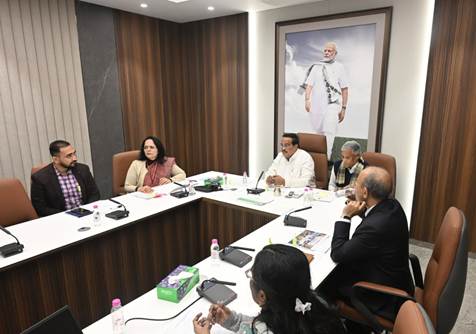
Ministry of Jal Shakti organized a virtual interaction with various Districts in States/UTs on 6th January 2026 to discuss various models of Faecal Sludge Management (FSM) being implemented under Swachh Bharat Mission (Grameen) in the country.
The interaction was chaired by the Hon’ble Union Minister of Jal Shakti, Shri C. R. Paatil. Minister of State for Jal Shakti, Shri V. Somanna, Secretary, Department of Drinking Water and Sanitation, Shri Ashok K.K. Meena and Joint Secretary and Mission Director, SBM(G), Ms. Aishvarya Singh participated in the interaction. District Collectors, CEOs of Zilla Panchayats, SHG members, Panchayat members along with State Mission Directors and senior officials of nodal Departments from States/UTs joined virtually.
The objective of the interaction was to share successful and scalable FSM models from different parts of the country, strengthen cross-learning among States/UTs and districts on various aspects of FSM and reinforce the importance of safe sanitation systems beyond toilet construction, with a focus on the entire sanitation value chain.
Representatives from Gujarat, Sikkim, Madhya Pradesh, Karnataka, Odisha, Ladakh and Tripura shared their field experiences and presented their respective models covering in-situ treatment models, community solutions, interventions made for ensuring effective O&M along with SHGs and Panchayats to ensure sustainability of Faecal Sludge Treatment Plant (FSTPs), urban-rural linkages for FSM. Efforts made for safe collection, transportation, treatment and reuse of treated faecal sludge and wastewater was discussed. Many models also provided avenues for employment generation at community level, in addition to ensuring swachhata.
During the interaction, States presented a range of innovative and scalable FSM models from across the country. A notable example emanated from Khordha district of Odisha, where a transgender-led Self-Help Group (SHG) is driving the operation and maintenance of their FSTP. This initiative demonstrates how sanitation service delivery can be both inclusive and sustainable, while also creating dignified livelihood opportunities for members of the transgender community. The model highlights the power of community-led enterprises in advancing equitable access to essential services, promoting social inclusion, and strengthening economic empowerment within marginalized groups.

Other FSM models included: large-scale adaption of twin-pit toilets in remote tribal areas of Dang district in Gujarat; focused efforts undertaken for retrofitting of single-pit to twin-pit toilets in Mangan district in Sikkim ensuring FSM compliance in remote, hilly regions; India’s first rural FSTP at Kalibillod Gram Panchayat in Indore district, Madhya Pradesh, where an innovative experiment of pisciculture in treated effluent is being done along with an MRF to add to financial resources; cluster-based FSTP model of Dakshina Kannada district in Karnataka with strong involvement of SHGs in operations and maintenance; Ecosan toilets being made in the extreme cold, arid and high-altitude conditions of Leh district in Ladakh and deployment of mobile bio-toilets for public events, community gatherings and fairs in Gomati district, of Tripura which is being managed through self-sustaining, local SHG-led operation and maintenance.
The interaction also included members from the communities who are directly implementing these models on the ground and who spoke to the Hon’ble Union Minister of Jal Shakti, Shri C. R. Paatil on their filed experiences. Communication in local languages of the participants was also encouraged, which made them comfortable resulting in enthusiastic sharing of experiences.
Hon’ble Minister of Jal Shakti, Shri C. R. Patil, lauded the participants for showcasing innovative models that not only contribute to a Swachh Bharat but also generates income and livelihood opportunities. He noted that many of these initiatives have been implemented in difficult geographies, proving that challenging circumstances inspire lasting solutions. He underlined that FSM is an important component of sustainable rural sanitation and is vital for both protection of public health and clean environment, besides ensuring Sampoorna Swachhhata. He emphasized that community participation, involvement of SHGs, Panchayats & various stakeholders and adoption of context-specific, need based and appropriate technologies is essential to making FSM solutions viable, inclusive and long-lasting. He further expressed that under the visionary leadership of Hon’ble Prime Minister Shri Narendra Modi, the nationwide movement for Swachhata has gained unprecedented momentum, taking Gandhiji’s true message of cleanliness and mass participation to every corner of the country.
The Ministry reiterated its commitment to strengthening work being done by States and UTs for FSM across rural India under SBM(G) through technical support, capacity building and promotion of innovative, community-led and inclusive models developed by States and UTs.
*****
AMK
(Release ID: 2211990)
Visitor Counter : 1712