Special Service and Features
IIT Madras develops ramjet-assisted Artillery Shells
प्रविष्टि तिथि:
12 JAN 2026 3:46PM by PIB Chennai
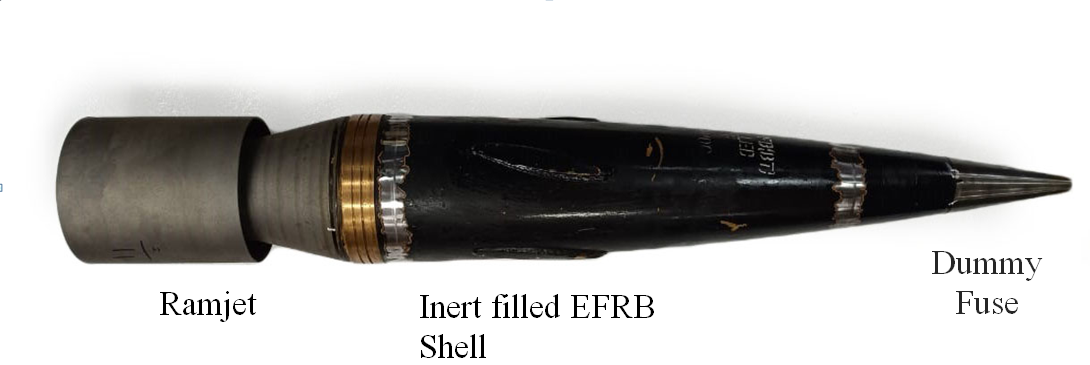
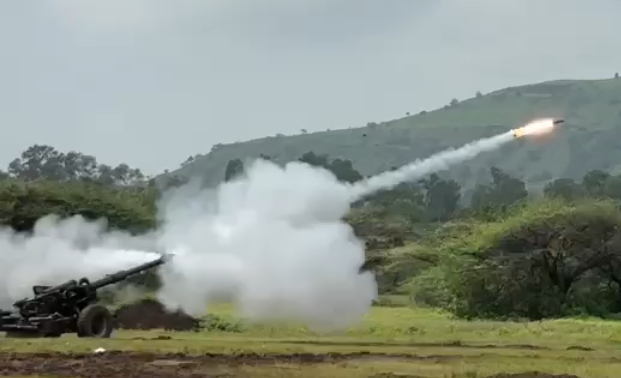
Indian Institute of Technology Madras (IIT Madras) researchers have successfully developed and tested ramjet-propelled artillery shells designed to dramatically extend the range of conventional gun systems. This marks a significant milestone in the indigenous development of defence technology.
The IIT Madras innovation integrates a ramjet engine into an existing 155 mm artillery shell, replacing the conventional base-bleed unit. Unlike rocket-assisted projectiles or incremental aerodynamic improvements, this approach enables sustained propulsion after the shell exits the barrel, significantly extending its reach while preserving the shell’s destructive effectiveness on target.
A ramjet is a type of engine that uses the vehicle’s high speed to compress incoming air, mix it with fuel, and generate thrust without moving parts like turbines. In artillery systems, ramjets allow shells to travel much farther after being fired, extending range without changing the gun itself. This gives armed forces greater reach and flexibility while keeping costs and complexity low.
The research addresses one of the most persistent challenges in modern artillery — increasing firing range without sacrificing mobility, deployability or lethality. While missiles offer long-range strike capability, they are expensive and complex. Artillery guns remain the backbone of battlefield firepower due to their simplicity, survivability and cost-effectiveness, but have traditionally faced hard technological limits on range.
The project was led by IIT Madras faculty Prof. P.A. Ramakrishna with Lt Gen P R Shankar (retd), Prof H S N Murthy, Prof G Rajesh, Prof. M Ramakrishna, Prof. Murugaiyan, Lt. Gen. Hari Mohan Iyer (retd), Prof. Lazar C and Dr. Yogesh Kumar Velari.
Elaborating on the current status of this project, Prof. P.A. Ramakrishna, Department of Aerospace Engineering, said, “If fully realised, this technology could allow Indian artillery units to engage targets at nearly 50 % more distances, offering commanders greater tactical flexibility, deeper strike options and enhanced deterrence — without the need for new gun platforms or costly missile systems. Importantly, the design ensures that the extended range does not dilute battlefield impact, maintaining the lethality required for frontline operations. All this has been possible with the Govt. focus on Atmanirbar Bharat and the introduction of a program called the ‘Professor of Practise’.”
Shedding light on the next stems, Prof. P.A. Ramakrishna added, “The same technology when adopted to rockets can enhance the range significantly. Some projects in this direction are already underway.”
The project, initiated in 2020 in collaboration with the Indian Army, has progressed through multiple stages of testing. Early trials using a 76 mm gun developed at IIT Madras validated the core concept, followed by scaled testing on 155 mm artillery guns. Subsequent trials conducted in September 2025 at the School of Artillery, Deolali, successfully demonstrated clean gun exit, stable flight and ramjet ignition, validating both internal and external ballistics.
Further field trials in December 2025 at the Pokhran Field Firing Range marked another critical step, with the shell exiting the gun cleanly at higher operational zones. Ongoing refinements are addressing remaining technical challenges, paving the way for full operational capability.
Beyond defence applications, the project showcases the potential of indigenous, mission-driven research to deliver real-world outcomes. By reimagining how existing systems can be upgraded rather than replaced, IIT Madras’s work offers a scalable and cost-efficient pathway for modernising artillery forces.
The ramjet artillery programme stands as a compelling example of how academic innovation, when closely aligned with operational needs, can directly strengthen national security and position India at the forefront of global defence research.
***
TV/KR
(रिलीज़ आईडी: 2213738)
आगंतुक पटल : 271