Ministry of Science & Technology
India Moves from Technology Adoption to Technology Leadership: Dr Jitendra Singh inaugurates ₹40 Crore DST (Ministry of Science & Technology) funded NIDHI Centre of Excellence at IIM Ahmedabad
India Sets Up 59,000 Sq Ft Deep-Tech Nerve Centre at IIM Ahmedabad for Startups and Technology Translation
From Incremental Growth to Deep-Tech Transformation: Dr Jitendra Singh highlighted India’s New Innovation Path
Good Science Alone Is Not Enough; Startups Need Management to Survive, Says Union Minister Dr Jitendra Singh
Posted On:
12 JAN 2026 6:00PM by PIB Delhi
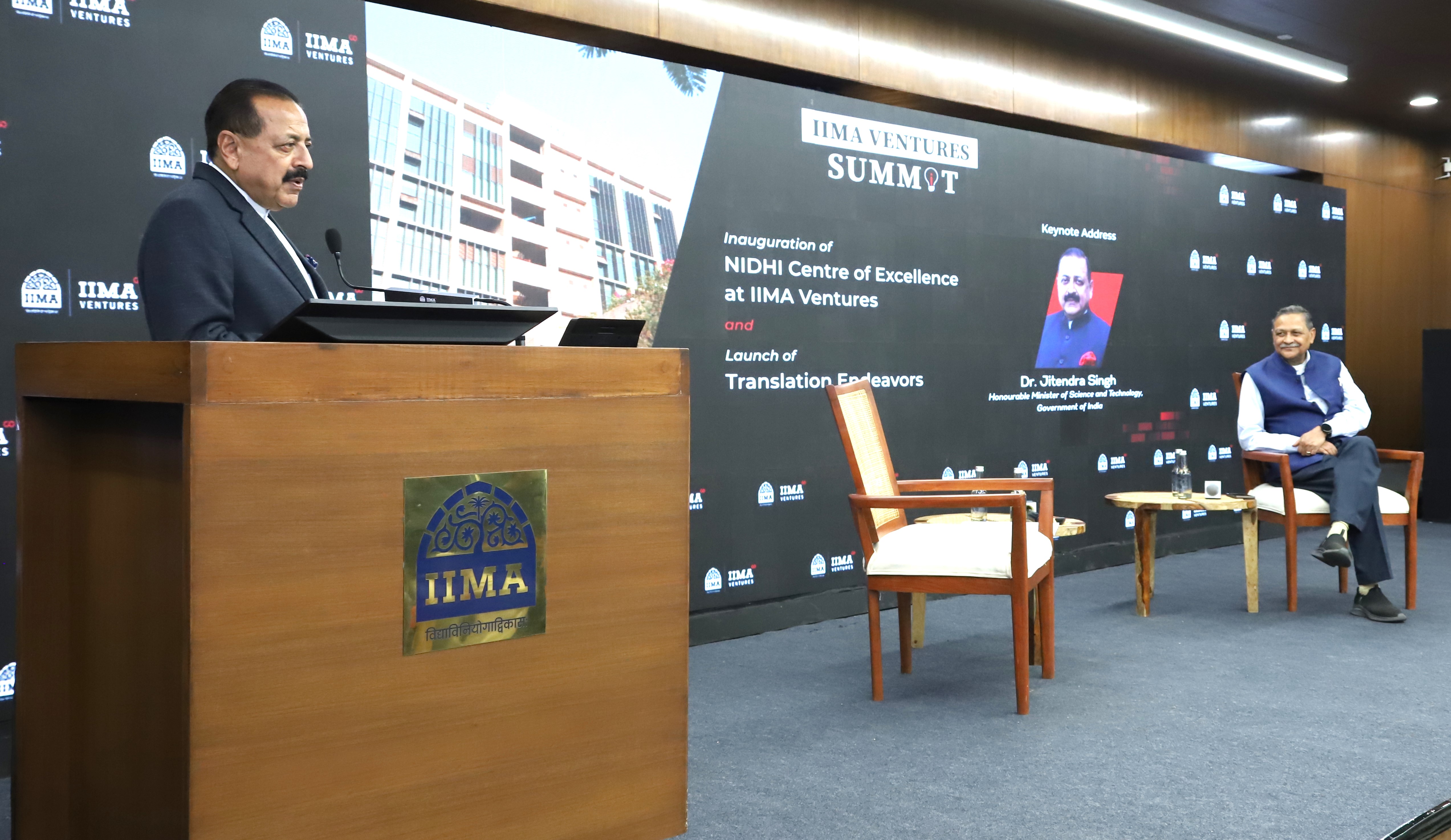
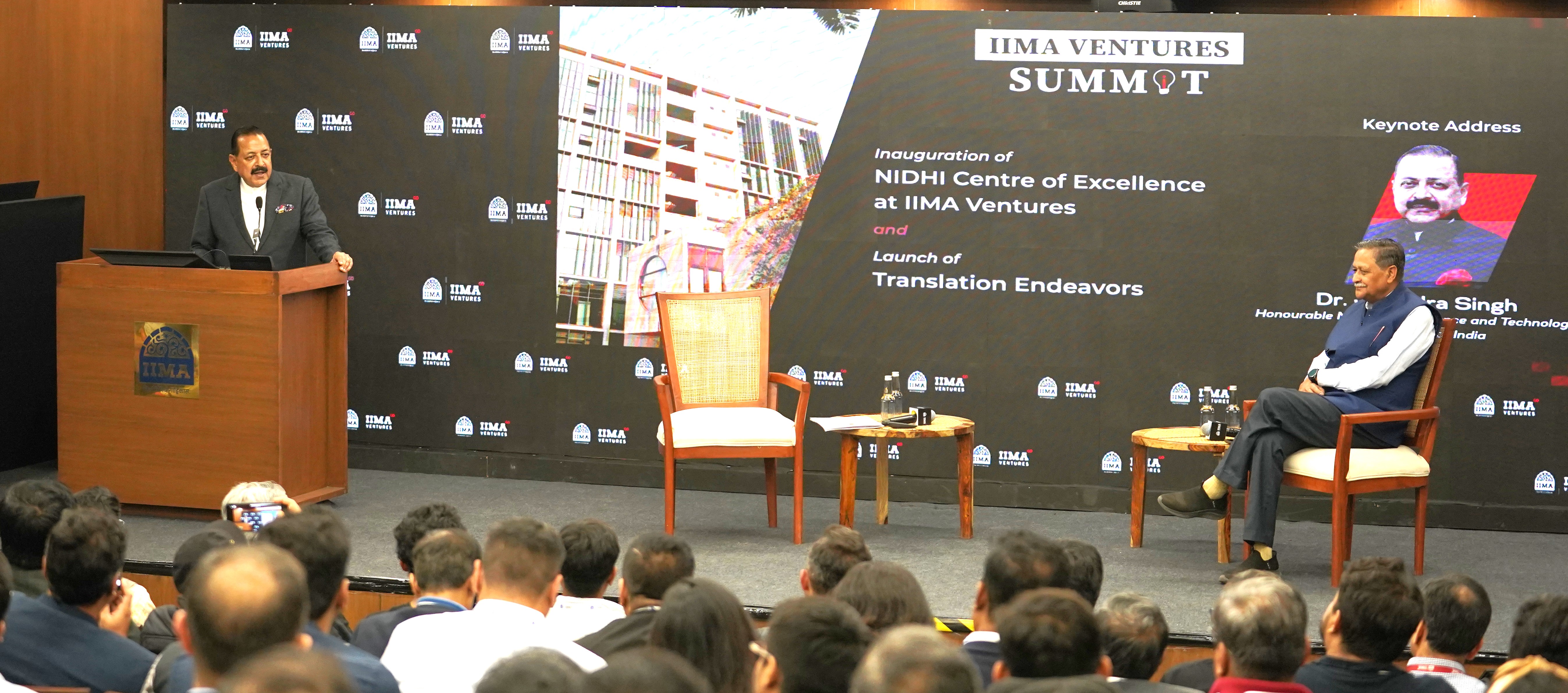
India’s journey from technology adoption to technology leadership received a significant boost today with the launch of the DST–NIDHI Centre of Excellence (CoE) at the Indian Institute of Management, Ahmedabad (IIM-A).
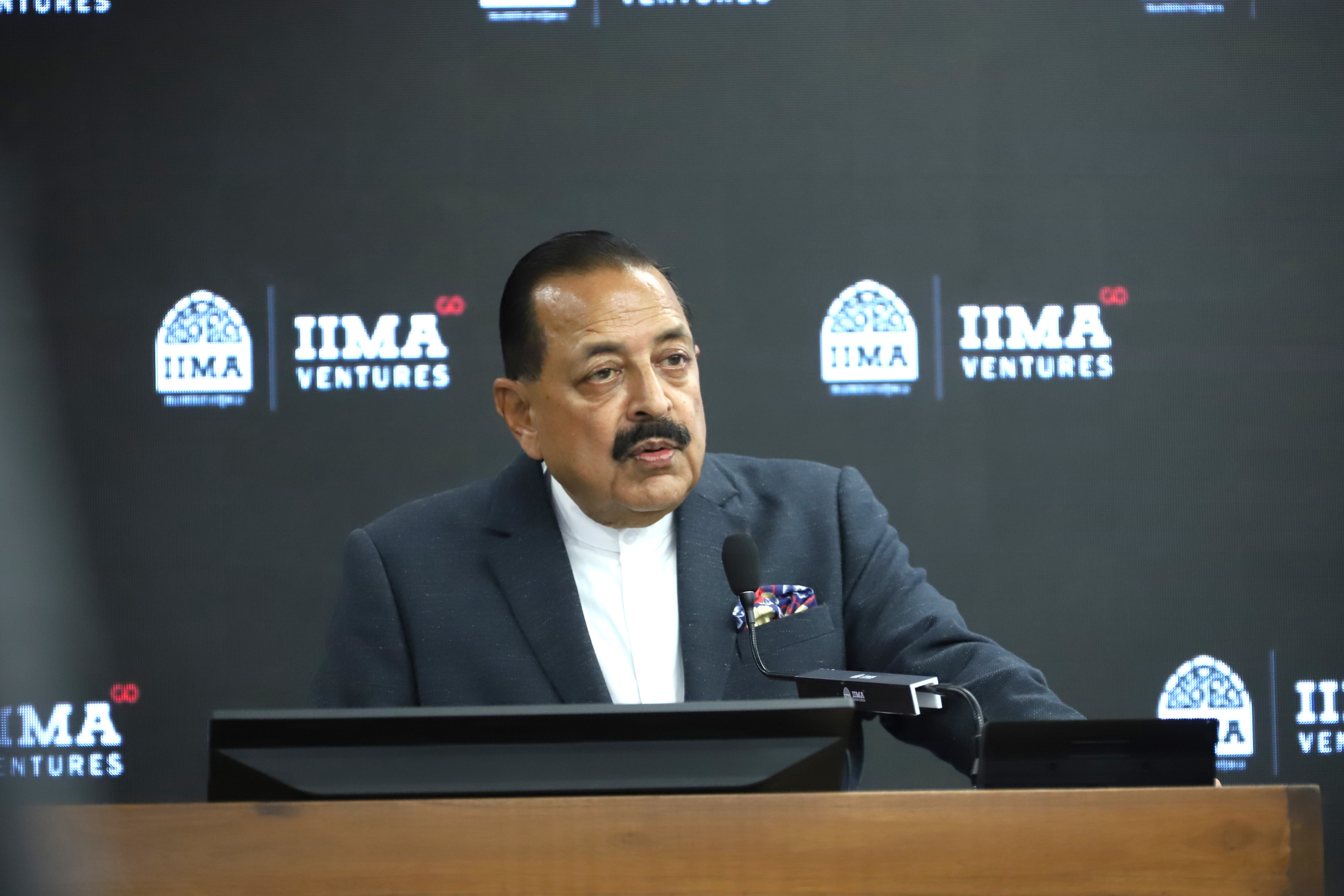
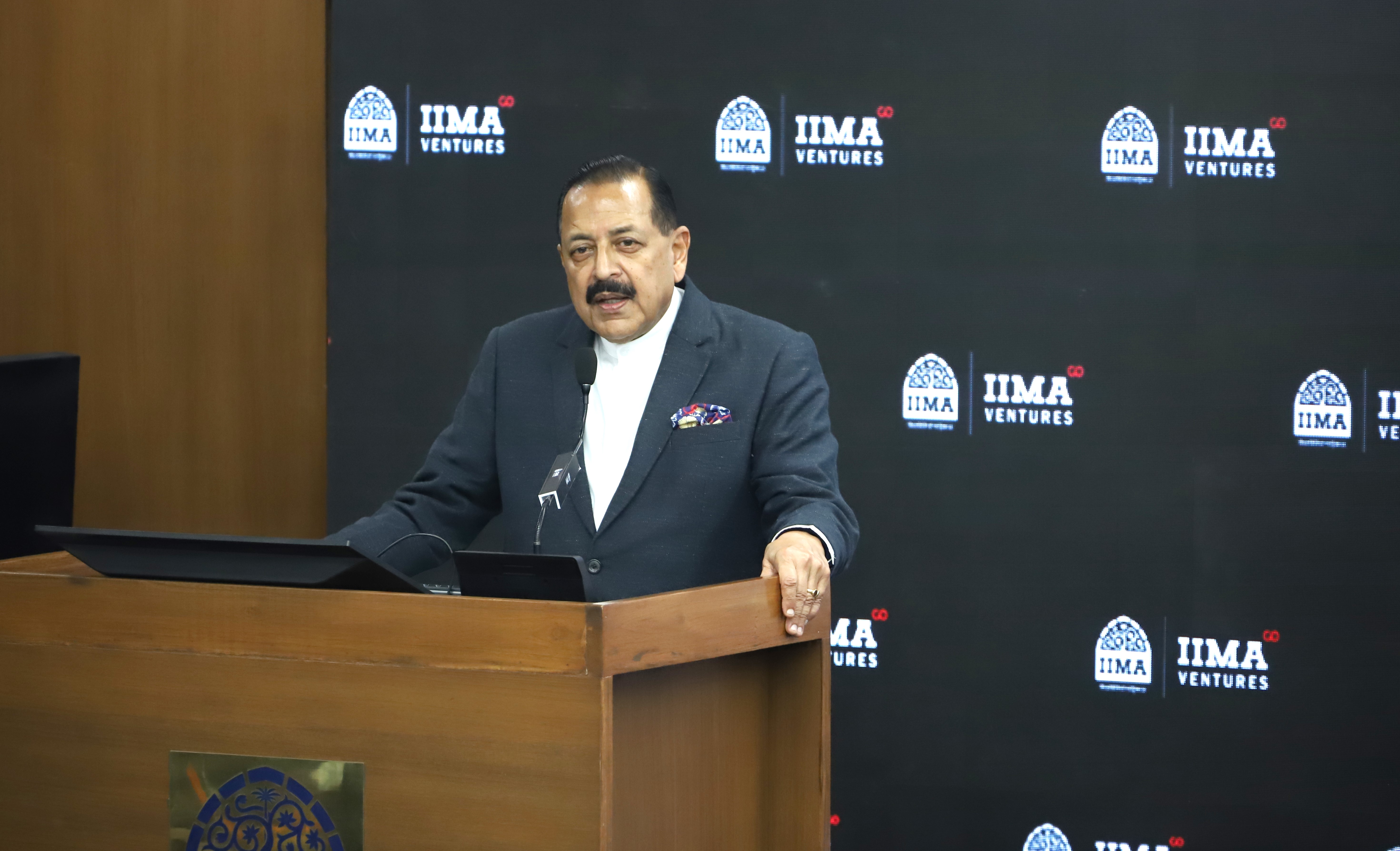
The Centre of Excellence, supported and funded by the Department of Science and Technology (DST) with an investment of approximately ₹40 crore, was dedicated to the nation by Minister of State (Independent Charge) for Science & Technology and Earth Sciences, Dr Jitendra Singh.
The newly established Centre of Excellence is housed in a dedicated new building and block within the existing IIM Ahmedabad campus, envisioned as a national hub for deep-tech entrepreneurship, technology translation, and venture creation. The Centre aims to provide StartUps and entrepreneurs with a unique interdisciplinary advantage, enabling close collaboration between technology experts, management professionals, and industry stakeholders under one integrated ecosystem.
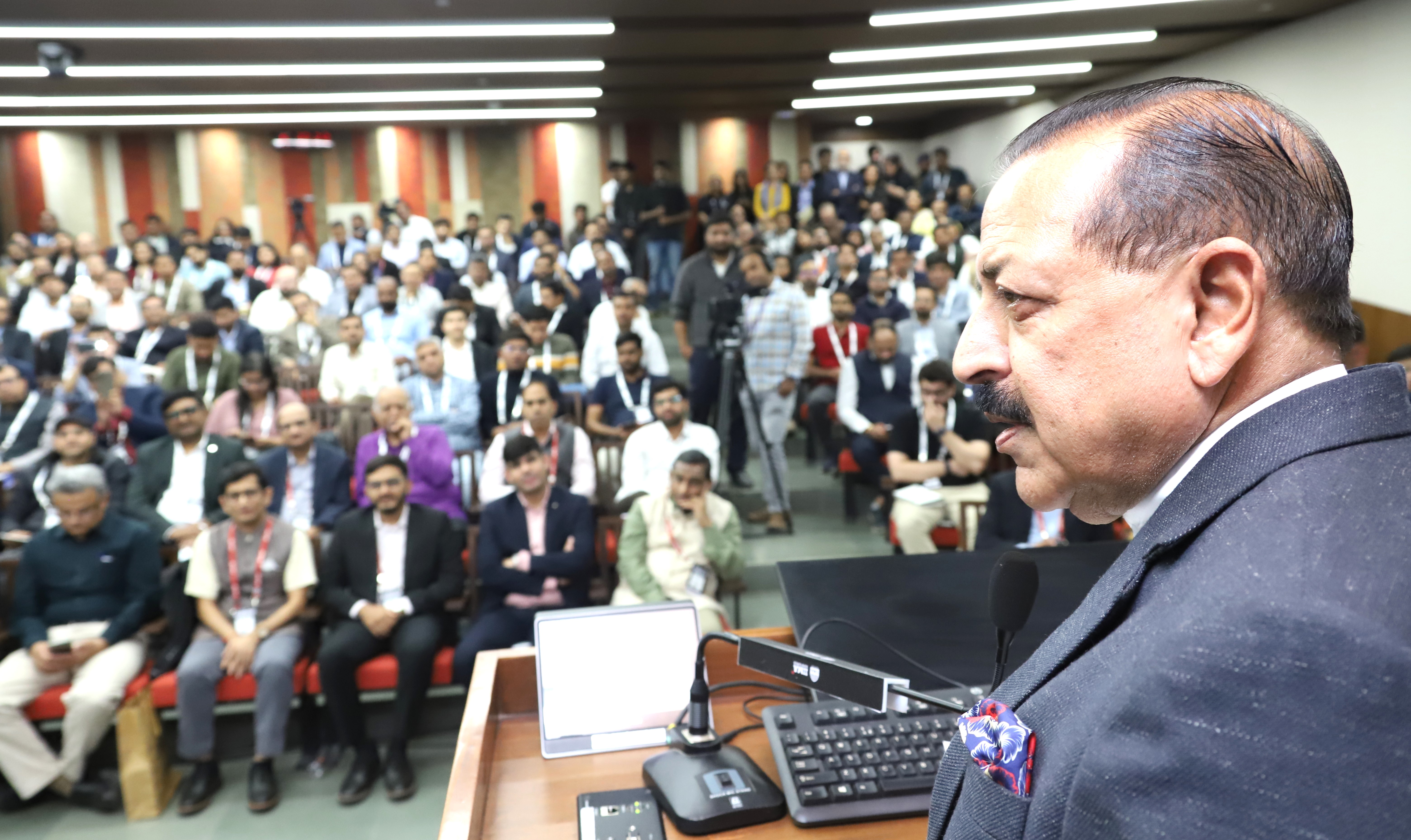
Speaking on the occasion, Dr Jitendra Singh highlighted that India has decisively transitioned from incremental, technology-adopting growth to deep science-led, technology-driven development over the past decade. He emphasised that the country is now focused on deep tech-driven growth, where innovation rooted in fundamental research is translated into scalable, market-ready solutions.
“Deep technology is not a passing trend; it is a national imperative. India’s future growth, strategic autonomy, and global competitiveness will be determined by how effectively we translate science into solutions,” the Minister said.
The Minister noted that institutions like IIM Ahmedabad, with their strong grounding in management excellence and national ethos, have a critical role to play in ensuring that scientific innovation is supported by robust commercialisation strategies. He underlined that technology without management cannot achieve optimal outcomes, just as management without technology risks stagnation, making such integrated centres essential for sustainable innovation.
The DST–NIDHI Centre of Excellence at IIM-A has been designed as a comprehensive venture-creation space, spanning 59,000 sq. ft., with facilities including venture creation labs, collaborative workspaces, meeting and board rooms, training areas, and networking zones. It will support early-stage startups, deep-tech founders, investors, students, and institutional partners, strengthening the pipeline from lab to market.
The Minister also highlighted the importance of democratising innovation, noting that nearly half of India’s startups now emerge from Tier-2 and Tier-3 cities, dispelling the myth that innovation is limited to metropolitan centres. Affordable digital access, expanding incubation networks, and supportive policy frameworks have enabled talent from across the country to participate in India’s innovation story.
Referring to India’s improving global standing, the Minister pointed out that the country today ranks among the top three startup ecosystems globally, with strong growth in patent filings, scientific publications, and resident-led innovation. He stressed that these achievements reflect years of sustained investment in scientific capacity-building and ecosystem development.
The launch also marked the unveiling of “Translation Endeavours”, a multi-institutional collaborative platform bringing together leading academic and research institutions to address the critical challenge of technology translation in deep-tech domains. The initiative aims to break silos between academia, industry, government, and investors through shared infrastructure, coordinated incubation, and industry-aligned innovation pathways.
The Minister emphasised that government support mechanisms such as the Research, Development and Innovation Fund (RDIF) and the Anusandhan National Research Foundation (ANRF) are designed to provide patient, risk-tolerant support for deep-tech ventures, including early-stage startups, enabling them to scale responsibly and sustainably.
Concluding his address, the Minister called upon researchers, students, industry, investors, and institutions to collaborate closely, stressing that India’s innovation future depends not only on ideas, but on persistence, integrity, and effective translation of science into societal impact. “Dream boldly, but build responsibly. The nation is backing your ideas with policy, funding, institutions, and trust,” he said.
*****
NKR/AK
(Release ID: 2213848)
Visitor Counter : 1433