Ministry of Jal Shakti
DDWS holds 5th District Collectors’ Peyjal Samvad
Jal Seva Aankalan: The Gram Panchayat–led, digital functionality assessment tool will strengthen service delivery in Har Ghar Jal villages
Districts share field innovations in Community Engagement, Ranney Wells for bulk water supply, 24×7 water supply, planned IEC for Jan Bhagidari and O&M systems
Posted On:
15 JAN 2026 5:47PM by PIB Delhi
The Department of Drinking Water & Sanitation (DDWS), Ministry of Jal Shakti, organised the 5th edition of the District Collectors’ Peyjal Samvad today, bringing together senior officials, district administrations, and sector experts to deliberate on strengthening the implementation of Har Ghar Jal under the Jal Jeevan Mission (JJM).
The virtual event was chaired by Shri Ashok K. K. Meena, Secretary, DDWS, and witnessed participation from District Collector/Deputy Magistrate/ District Officials across the country.
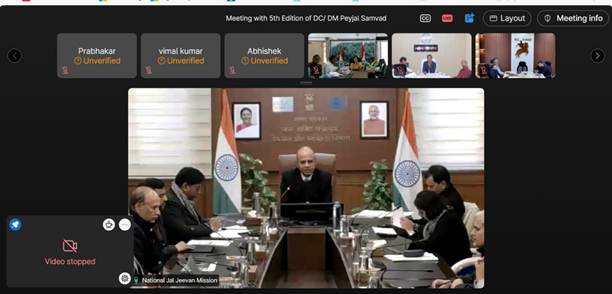
In his address, Secretary, DDWS, Shri Ashok K.K. Meena appreciated the district teams’ efforts and encouraged them to continue strengthening service delivery with diligence and community partnership. He emphasised the need to transition from infrastructure creation to service delivery in rural drinking water supply by highlighting Community Ownership and Service Delivery in Rural Water Supply. He underscored the critical role of Gram Panchayats and elected representatives, noting that under the 73rd Constitutional Amendment, the responsibility for operation and maintenance of drinking water systems rests at the Gram Panchayat level and must be effectively implemented.
Shri Meena appreciated the strong community participation emerging across states, including migrant communities and inter-state workers supporting water services. He stated that this community-led approach will guide the next phase of the programme.
He highlighted two key priorities:
1. Jal Arpan – the structured handover of rural water supply schemes to Gram Panchayats and communities after a 15-day trial run. He recommended observing Jal Arpan annually as an Annual Maintenance Fortnight, ensuring preventive maintenance and renewed community ownership where the system already handed over to community.
2. Jal Seva Aankalan – systematic self-assessment of functionality in villages declared as 100% Har Ghar Jal, to maintain service quality and sustainability.
He further encouraged District Collectors to share well-documented best practices for wider adoption.
Smt. Ankita Chakraborty, Deputy Secretary – NJJM, welcomed the Secretary, Additional Secretary and Mission Director – NJJM, Mission Directors from States and all participating District Collectors/ District Magistrates to the 5th District Collectors’ Peyjal Samvad. She highlighted that the focus of today’s deliberations would be on Jal Seva Aankalan, which was launched on 30th December, 2025 by hon’ble Minister of Jal Shakti.
DDWS Presentation on Jal Seva Aankalan
A detailed presentation on Jal Seva Aankalan, a Gram Panchayat-led functionality assessment tool under JJM, was made during the session by Smt. Ankita Chakraborty, Deputy Secretary – NJJM. She said the initiative aims to strengthen service delivery by enabling Panchayats to assess drinking water systems on three critical parameters: regularity of supply, adequacy of availability, and water quality.
She explained the step-by-step process of Jal Seva Aankalan, guiding participants through the navigation path on the e-Gram Swaraj portal for Panchayat Secretaries to complete the assessment.
The Jal Seva Aankalan process involves five structured steps:
- VWSC-led discussion on service functionality.
- Gram Sabha endorsement for transparency and collective ownership.
- Data entry on the JJM IMIS Panchayat Dashboard by Panchayat Secretaries.
- Public visibility of assessment findings through the Nari Panchayat App, with a 30-day feedback window.
- Consolidated reporting at district and state levels for planning and corrective actions.
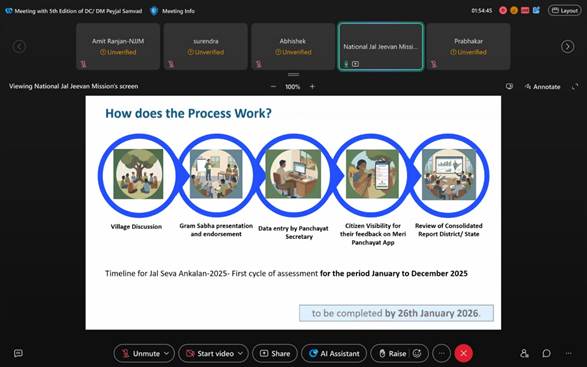
She mentioned that the current cycle of Jal Seva Aankalan applies to Gram Panchayats declared Har Ghar Jal on or before 31st December 2020, covering approximately 1.17 lakh Panchayats. These Panchayats have at least one year of operational experience, ensuring credible assessments. The list of eligible Panchayats is available on the JJM IMIS in Form J8.
The Jal Seva Aankalan framework includes 23 assessment questions addressing infrastructure, service-level gaps, source sustainability, and O&M preparedness. The first cycle must be completed by 26th January 2026.
She urged officials to ensure training of Panchayat Secretaries, timely Gram Sabha meetings, and accurate data entry. Jal Seva Aankalan will generate actionable insights for evidence-based planning and improved rural water service delivery.
District Presentations
The following districts presented their progress and field practices. Each presentation was delivered by the respective District Collector/ Deputy Commissioner/ District Officials.
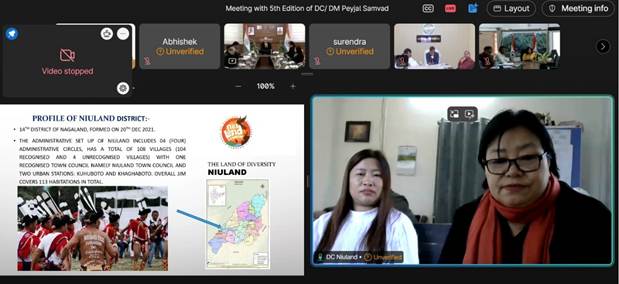
- Niuland, Nagaland: Smt. Sara S Jamir, Deputy Commissioner shared that before JJM, women and girls walked long distances through hilly terrain to fetch water. With WATSAN’s (Water and Sanitation committee) support, community participation strengthened ownership for efficient O&M of piped water schemes. Success stories include Padala (Yehokhu) village for active involvement of youth and women, Hokhezhe village where WATSAN and the Council Chairman contributed extra pipeline costs, and Izhevi village where residents pay ₹100 per month for O&M.
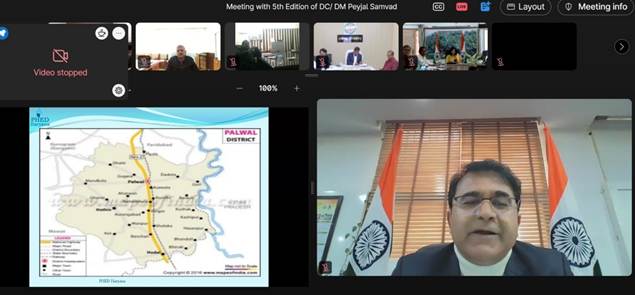
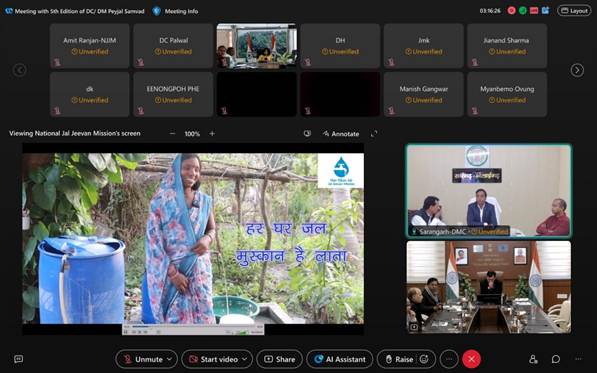
- Palwal, Haryana: Dr Harish Kumar Vashistha, District Collector presented Ranney Wells technology for bulk water supply. The technology helped tackle fluoride contamination and ensures quality water is being supplied. This technology reduces electricity costs and requires less land.
-
- Sarangarh-Bilaigarh, Chhattisgarh: Dr. Sanjay Kannoje, Collector & District Magistrate, emphasized that rigorous IEC campaigns and sustained community awareness are the foundation for active public participation in water management. He highlighted innovative strategies such as Ratri Chaupals conducted in clusters of 10 villages, where community members share feedback and grievances are resolved promptly, ensuring trust and transparency. Trained Jal Bahini members play a critical role by regularly testing water quality using Field Testing Kits (FTKs) and educating villagers on safe water practices. Additionally, Self-Help Groups, titled Jal Sangh Bahini, inspire communities to conserve groundwater through Shramdaan initiatives. These groups lead the construction of magic pits and soak pits in convergence with SBM-G and MGNREGA.
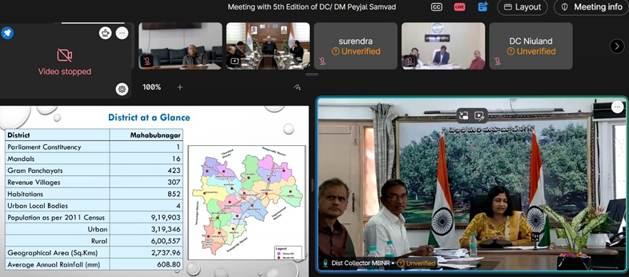
- Mahabubnagar, Telangana: Smt. Viziendira Boyi, Collector & District Magistrate, presented an overview of the district and explained the progress under Mission Bhagiratha for ensuring 24x7 quality water supply. She highlighted that backwater is drawn through pumping or gravity for treatment at Water Treatment Plants (WTPs). Third-Party Inspection Agencies (TPIA) vet the commissioning of schemes, while Gram Panchayats ensure tap connections for newly emerged households. Monitoring of water supply is carried out by villagers themselves, fostering community ownership. The district has adopted digital monitoring for provisioning of 100 liters per capita per day (LPCD), using a color-coded system—green, yellow, and red—to indicate performance. Impressively, 90% of villages in the district fall under the green zone, reflecting strong implementation and community engagement.
These presentations showcased both achievements and ongoing challenges, underlining the diversity of approaches adopted to accelerate progress under Har Ghar Jal.
In his concluding remarks, Shri K.K. Soan, AS&MD - NJJM, highlighted that the Department is documenting efforts and presentations shared during every District Collectors’ Peyjal Samvad in the monthly newsletter Jal Jeevan Samvad, enabling districts to learn from each other’s experiences. He commended the strong leadership and innovative practices demonstrated across districts in strengthening drinking water service delivery, noting that these best practices will be widely shared for the benefit of all States and districts.
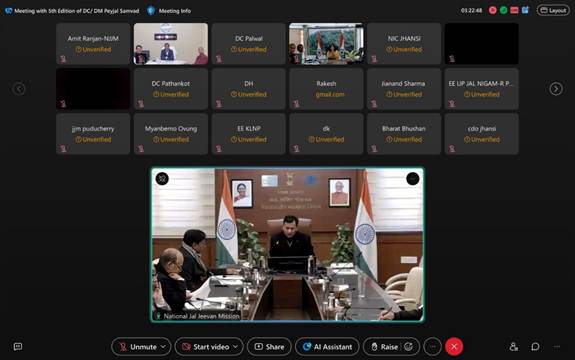
He emphasized that the Jal Jeevan Mission now marks a clear transition from infrastructure creation to service delivery, with District Collectors playing a pivotal role in implementation. Stressing the importance of Jal Seva Aankalan, he explained that this community-led self-assessment mechanism will provide realistic, ground-level insights into functionality and enable timely corrective actions. He urged all districts to complete the Jal Seva Aankalan process within January, ensure proper training of Panchayat functionaries, accurate data entry, and effective use of dashboards for decision-making. He reiterated that the leadership of District Collectors is critical to sustaining Har Ghar Jal achievements and empowering Gram Panchayats for long-term service delivery.
The session concluded with a vote of thanks by Shri Yogendra Kumar Singh, Director-NJJM, who acknowledged the proactive participation of district officials and reiterated DDWS’s commitment to supporting states in ensuring safe drinking water for every rural household.
The 5th edition of District Collectors’ Peyjal Samvad was attended by more than 1500 participants across the country including District Collector/ Deputy Commissioner/ District Officials, Mission Directors and State Mission Teams, from State/UTs.
AMK
***
(Release ID: 2214966)
Visitor Counter : 1036