Ministry of Jal Shakti
DDWS organized Minister-level Policy Dialogue on Sustainable O&M of Rural Drinking Water Services in New Delhi
Centre and States Deliberate on Long-term Sustainability of Rural Water Supply Systems under Jal Jeevan Mission
Policy Dialogue Focuses on Strengthening Operation & Maintenance Framework for Rural Drinking Water Services
Posted On:
27 JAN 2026 9:49PM by PIB Delhi
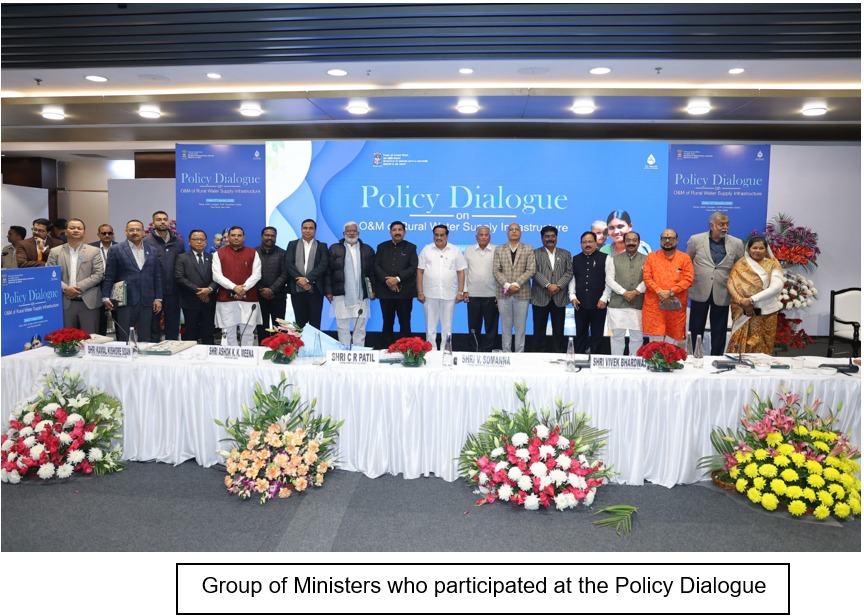
New Delhi: The Department of Drinking Water and Sanitation (DDWS), Ministry of Jal Shakti, today organised a Minister-level Policy Dialogue on Sustainable Operation and Maintenance (O&M) of Rural Drinking Water Services under the Jal Jeevan Mission (JJM) in New Delhi. The dialogue brought together Union and State Ministers, senior Central and State Government officials, and sector experts to deliberate on strengthening long-term sustainability of rural piped water supply systems across the country.
The policy dialogue marks a significant milestone in the restructured phase of Jal Jeevan Mission, where the focus is shifting from infrastructure creation to reliable, citizen-centric drinking water service delivery. The discussions emphasised that sustained provision of safe and adequate drinking water requires strong institutional systems, predictable financing, empowered local governments, and robust digital monitoring mechanisms. The dialogue also reaffirmed that drinking water governance under JJM is aligned with India’s constitutional and administrative framework, with Gram Panchayats and community institutions placed at the centre of long-term service delivery.
The Policy Dialogue witnessed wide-ranging participation, including Hon’ble Deputy Chief Ministers, Hon’ble Ministers of Public Health Engineering, Panchayati Raj and Rural Development, Additional Chief Secretaries, Principal Secretaries, Secretaries, and Mission Directors from States and Union Territories, along with senior officials from the Central Government. In all, more than 150 participants from Public Health Engineering Departments (PHED), Panchayati Raj Departments (PR), and Rural Development Departments took part in the deliberations, ensuring strong cross-departmental engagement and coordinated decision-making.
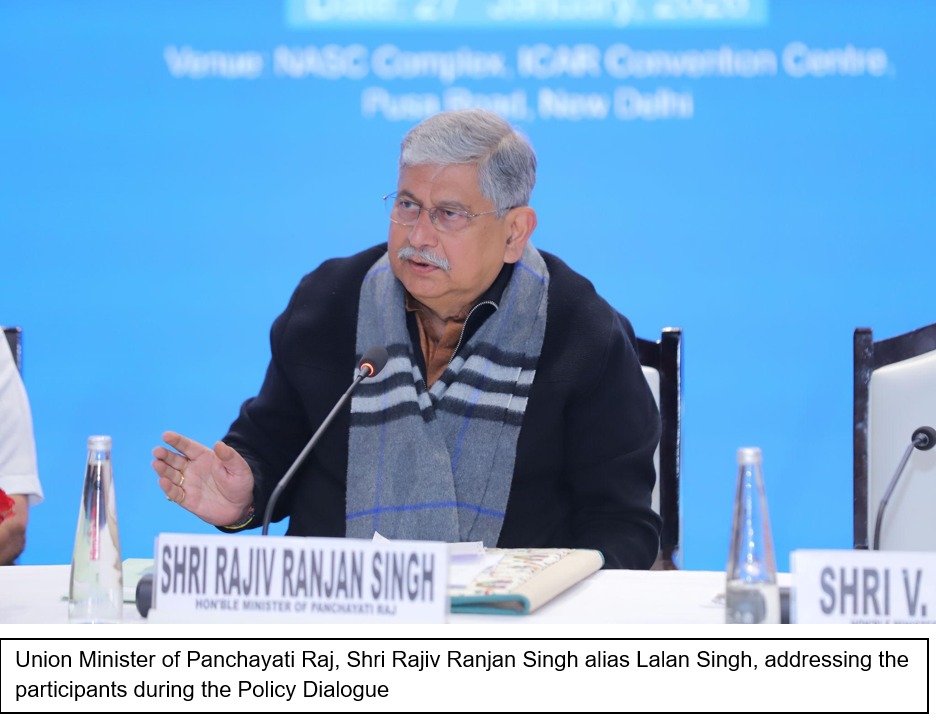
Hon’ble Minister Shri Rajiv Ranjan Singh alias Lalan Singh, Ministry of Panchayati Raj, underlined that while the Jal Jeevan Mission has enabled safe drinking water access across rural India, the focus must now firmly shift from infrastructure creation to sustained Operation and Maintenance (O&M). He emphasised the need for a long-term O&M framework with Gram Panchayats at the centre of service delivery and sustainability, and noted that operational requirements of JJM should be formally addressed during the 16th Finance Commission cycle. He highlighted the importance of forming and strengthening VWSCs, robust monitoring systems, and equal attention to O&M alongside infrastructure. He added that the willingness of villages to pay user charges reflects growing trust in reliable services, and stressed that drinking water services must be integrated into Gram Panchayat Development Plans (GPDPs) with clear accountability, Gram Sabha oversight, and transparent digital financial systems. He reaffirmed that the Centre and States will work together to ensure safe and reliable drinking water for every rural citizen.
KURM.jpeg)
Echoing the emphasis on sustainability and accountability, Hon’ble Minister Shri C.R. Patil, Ministry of Jal Shakti, spoke about strengthening implementation discipline and financial prudence in the next phase of JJM. He stated that following the signing of MoUs, States would receive fund releases, with each scheme mapped through a unique Scheme ID and future releases linked to the demonstration of 15 days of continuous water supply. He directed States to re-examine and rationalise oversized DPRs, noting that only schemes sanctioned on or before 31 March 2024 would be considered. He further highlighted that under G-RAMG funds, 65%–30% (as applicable) should be utilised for source strengthening, water conservation, and recharge structures. The Minister also appreciated Assam’s ITI-based skill training model and Tripura’s preparedness and confidence in Panchayats managing O&M responsibilities.
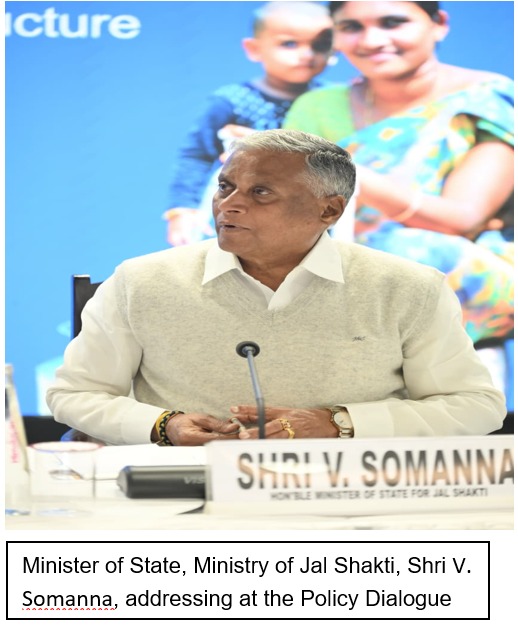
Building on these points, Minister of State Shri V. Somanna highlighted the importance of evolving monitoring systems to support long-term service delivery. He noted that monitoring under JJM should gradually shift from a centrally driven approach to state-centred systems, with greater use of IoT-based tools for real-time monitoring and performance tracking. He described improved local ownership of water supply schemes as a positive and encouraging trend that would further strengthen accountability and sustainability.
O&M Central to Water Governance
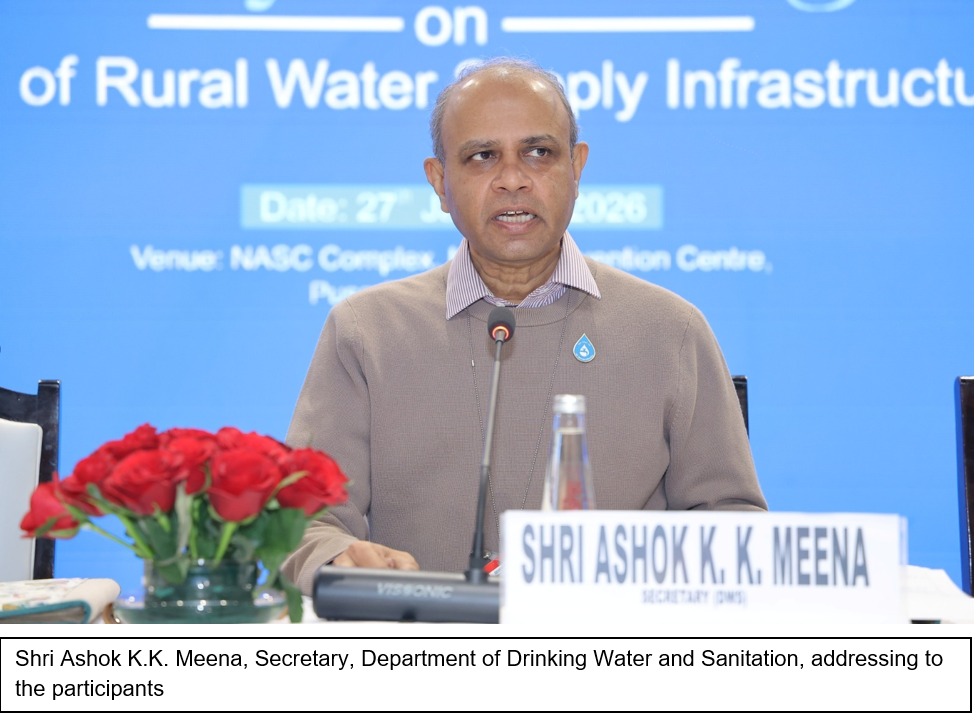
Shri Ashok K.K. Meena, Secretary, Department of Drinking Water and Sanitation, set the context for the Minister-level Policy Dialogue on Sustainable O&M of Rural Drinking Water Services. In his opening remarks, he emphasised that Operation and Maintenance is now central to water governance under Jal Jeevan Mission. He outlined key challenges faced by States, including limited technical capacity at the Gram Panchayat level, weak financial planning, inadequate real-time monitoring, and lack of structured administrative oversight for source sustainability.
He stressed the need for a strong policy, legal and regulatory framework that formally recognises Village Water & Sanitation Committees (VWSCs), ensures ownership of in-village water supply assets by Gram Panchayats, and enables local bodies to levy and ring-fence user charges to meet O&M costs. He reiterated that VWSCs must be legally recognised under respective State Panchayati Raj Acts, and where applicable, by Autonomous District Councils, Hill Councils, and other local governance institutions.
The Secretary highlighted that ownership of in-village piped drinking water supply assets by Gram Panchayats, as envisaged in Cabinet-approved provisions and JJM guidelines, flows directly from constitutional mandates related to local governance of drinking water services. States and UTs were urged to frame or update their policies within this constitutional framework and to share relevant Panchayati Raj Act by-laws to strengthen enforceable O&M arrangements at the grassroots level.
He further underscored the importance of digital public infrastructure, including integrated databases, GIS-based monitoring, and real-time reporting tools, in enabling transparency, accountability, and data-driven governance of rural water supply systems.
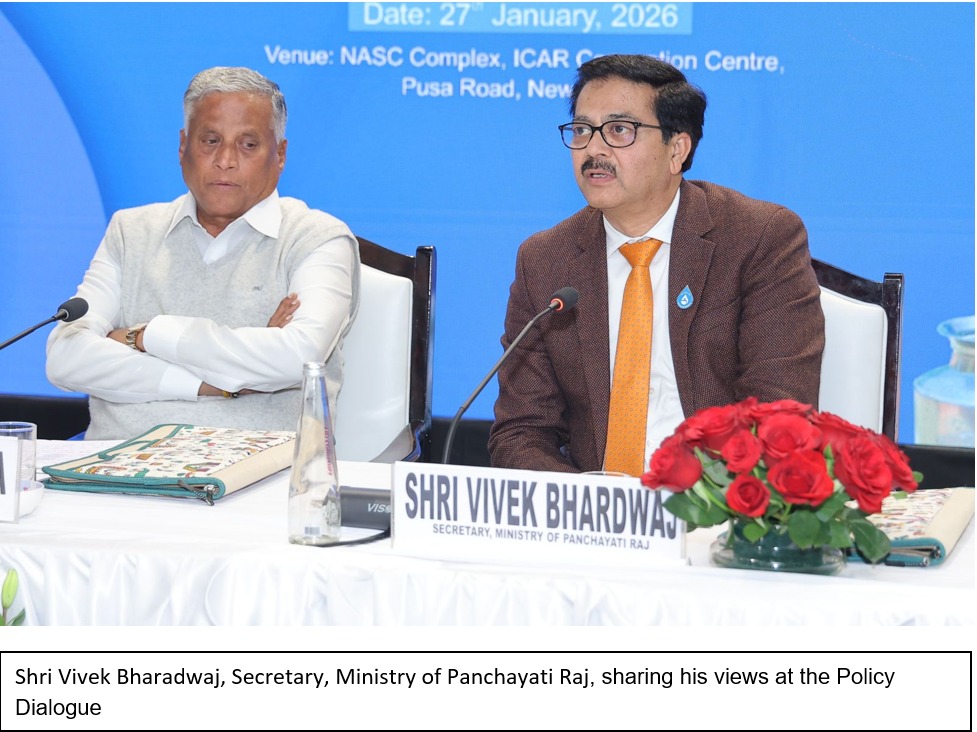
Shri Vivek Bharadwaj, Secretary, Ministry of Panchayati Raj highlighted that Operation and Maintenance (O&M) of rural water supply systems cannot be sustained through departmental efforts alone. He underscored the critical role of Panchayats and elected representatives in ensuring accountability, community ownership, and long-term functionality of assets created under Jal Jeevan Mission. He further expressed hope that the 16th Finance Commission would earmark dedicated resources to support O&M of piped water supply schemes, enabling Panchayati Raj Institutions to effectively discharge these responsibilities.
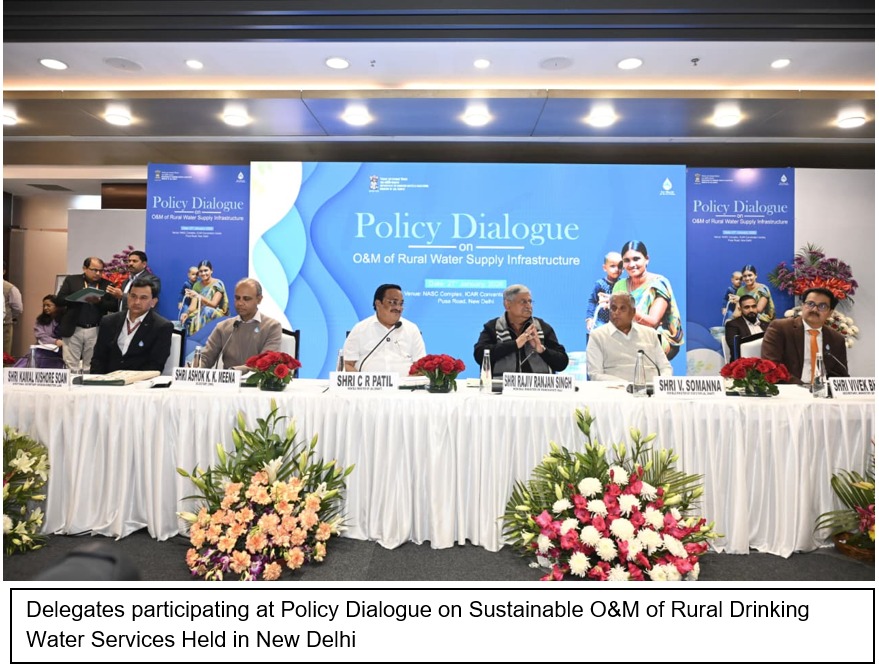
The dialogue highlighted several national initiatives aimed at institutionalising sustainable O&M practices:
-
Jal Arpan: For schemes already completed or handed over, Jal Arpan enables annual maintenance and community engagement programmes. Assets are formally handed over to Gram Panchayats, with a 15-day trial run period to identify and address issues before final handover.
-
Jal Utsav / Jal Mahotsav: An annual 15-day National Campaign from 8 March (International Women’s Day) to 22 March (World Water Day), allowing States to customize activities within a common national framework.
-
Jal Seva Aankalan (Service Assessment): A Gram Panchayat-led self-assessment tool to identify service delivery gaps early and resolve issues locally.
-
Source Sustainability: Strengthening water sources through convergence with rural development schemes for recharge and source protection works.
-
Sujal Gaon IDs and GIS-based Asset Mapping: Mapping water systems from source to household, aligned with the PM GatiShakti framework.
19-Point Advisory on O&M Reforms
Shri Kamal Kishore Soan, Additional Secretary & Mission Director, NJJM, highlighted the 19-point advisory issued by the Government of India on O&M reforms, noting that only five States have adopted it so far. The advisory covers key reform pillars including policy and legal frameworks, institutional roles, human resources, financial sustainability, service delivery standards, asset management, digital systems, and grievance redressal.
He emphasised that these 19 points form a coherent and interdependent reform architecture, and that weakness in any one pillar undermines the effectiveness of the entire system. States and UTs were advised to assess and quantify O&M funding gaps and have them vetted through empowered committees of their respective Finance Departments to ensure predictable budgetary support.
State-wise Discussions and Best Practices
Participants from across States and Union Territories shared diverse experiences, challenges, and good practices in ensuring the long-term sustainability of rural drinking water services. During the dialogue, 18 Ministers from the Ministries/Departments of Public Health Engineering Departments (PHED), Panchayati Raj and Rural Development from 16 states who participated at the Policy Dialogue, shared their State-level experiences and ongoing work under the Jal Jeevan Mission, highlighted key implementation challenges, and offered valuable suggestions to inform and strengthen the next phase of the Mission.
Discussions reflected the varying geographical, climatic, and socio-economic contexts in which water supply systems operate, and the need for flexible yet robust O&M frameworks. Several States highlighted efforts to strengthen source sustainability, promote the use of renewable energy in water supply systems, and adopt long-term planning approaches to safeguard drinking water security.
Community participation emerged as a central theme, with emphasis on empowering Village Water & Sanitation Committees (VWSCs), engaging trained local cadres, and building ownership at the grassroots level to ensure reliable service delivery. States also shared initiatives focused on capacity building, use of technology for monitoring and efficiency, and institutional strengthening to support sustainable operations. Experiences from hilly, drought-prone, and flood-affected regions underscored the need for context-specific solutions, disaster resilience, and convergence with allied sectors. The deliberations highlighted a shared commitment among States to move beyond infrastructure creation towards sustained, citizen-centric water service delivery.
Karnataka showcased its comprehensive, Cabinet-approved O&M policy adopted by over 5,500 Gram Panchayats, highlighting practices such as volumetric water billing, progress towards 24/7 water supply systems, and end-to-end digital monitoring. The State also shared progress under the Karnataka Sustainable Rural Water Supply Program (KSRWSP), supported by the World Bank, focusing on institutional strengthening, performance benchmarking, and water quality system modernisation.
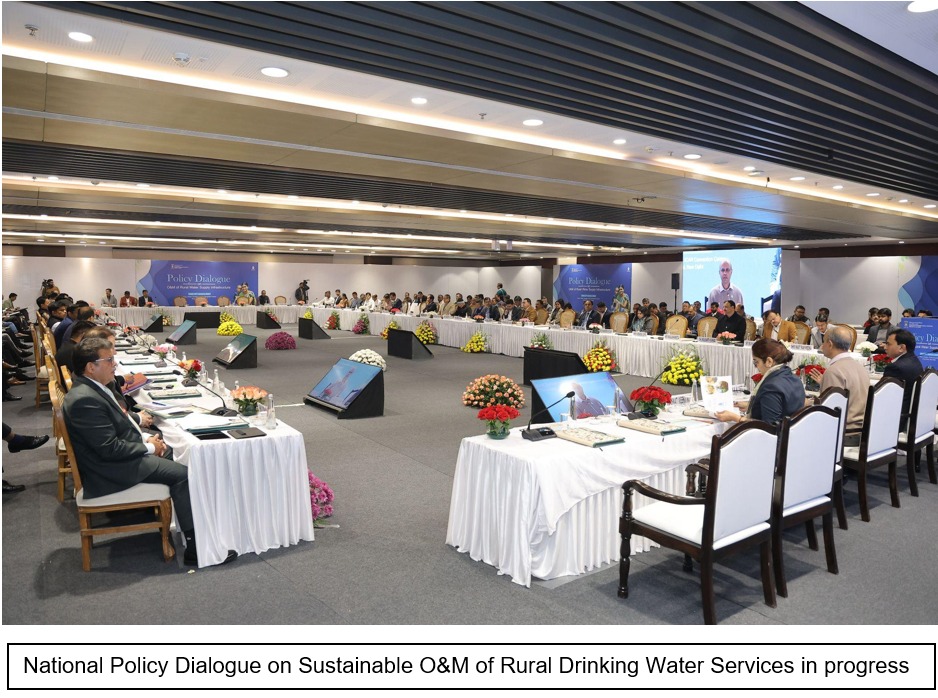
The conference began with, welcome address by Smt. Swati Meena Naik, Joint Secretary (Water), DDWS, highlighting the importance of robust institutional arrangements, effective Information, Education and Communication (IEC), and participatory approaches to sustain rural drinking water services. She underlined that strengthening O&M systems requires not only community ownership but also structured monitoring and review mechanisms at district and Gram Panchayat levels.
She highlighted recent digital initiatives under JJM, including district dashboards developed for District Water & Sanitation Missions (DWSMs), which are emerging as key platforms for review and decision-making. These dashboards are enabling district teams to monitor progress, record field-level observations, and identify problem areas, thereby supporting data-driven planning and timely corrective action.
Smt. Naik also emphasised the integration of e-GramSwaraj login with the Jal Jeevan Mission dashboard, which simplifies access and avoids multiple login systems for field-level functionaries. Through this integration, detailed scheme information, technical drawings, and asset-level data are available on a unified platform, strengthening asset management, distribution network maintenance, and responsiveness of field service teams, which are critical for sustainable O&M of rural water supply systems.
Way Forward
The Policy Dialogue reaffirmed that a strong intersectoral convergence framework will be essential to ensure a smooth and resilient O&M phase over the next 30 years, particularly for source sustainability, energy efficiency, greywater management, skilling, and financing. It was emphasised that liability and accountability for drinking water services rest with the administration and cannot be outsourced or contractor-driven. Day-to-day in-village operations, including water distribution, disinfection, and routine maintenance, must remain with Gram Panchayats and Village Water & Sanitation Committees, ensuring public accountability, community ownership, and reliable service delivery.
****
AMK
(Release ID: 2219386)
Visitor Counter : 1714