Ministry of Science & Technology
Budget 2026–27 announcement of "Biopharma Shakti" to catalyse India's global role in the next industrial revolution and also establish India as a global biomanufacturing hub: Dr. Jitendra Singh
₹10,000-crore Biopharma Shakti to take India beyond conventional pharma into next industrial phase: Dr. Jitendra Singh
In a major boost to mega-science facilities in the country, the Yuva Shakti driven budget of 2026-27 has announced four telescope infrastructure facilities to be set up or upgraded
Nuclear import duty exemptions aligned with SHANTI Act reforms to boost potential investors : Dr. Jitendra Singh
₹20,000-crore carbon capture support to advance clean technologies for industrial growth, says the Minister
National Geospatial Mission to anchor urban planning, modern infrastructure and AI-enabled governance: Dr. Jitendra Singh
These include the National Large Solar Telescope, the National Large Optical Infrared Telescope, the Himalayan Chandra Telescope and the Cosmos 2 Planetarium
Posted On:
01 FEB 2026 6:39PM by PIB Delhi
NEW DELHI, February 1: Union Minister of State (Independent Charge) for Science and Technology; Earth Sciences and Minister of State for PMO, Department of Atomic Energy, Department of Space, Personnel, Public Grievances and Pensions, Dr. Jitendra Singh said the Union Budget 2026–27 announcement of "Biopharma Shakti" will catalyse India's global role in the next industrial revolution and also India as a global biomanufacturing hub.
The Minister said that the announcement lays the groundwork for India’s participation in the next phase of the global industrial transition, with targeted measures in biopharma manufacturing, geospatial infrastructure, carbon capture and advanced energy technologies.
Welcoming the Budget, the Minister said the announcement of Biopharma Shakti, with a ₹10,000 crore outlay, marks a significant step in expanding India’s bioeconomy beyond conventional pharmaceuticals into advanced biologics, biosimilars and medical devices. He said the initiative covers both drugs and devices, with a strong emphasis on cost-effective, indigenously developed technologies, enabling India to move up the global value chain.
Dr. Jitendra Singh said the Budget measure builds on the work already underway under the National Biopharma Mission of the Department of Biotechnology, which has supported vaccine development, biologics, biosimilars and indigenous diagnostics through a network of clinical trial sites, manufacturing facilities and technology transfer offices. He noted that India has already emerged as a leading bioeconomy player, ranking among the top ten global bio-economies and among the top three countries in the Asia-Pacific region, and said Biopharma Shakti would help consolidate this position by scaling up innovation and manufacturing simultaneously. The Minister added that the focus on efficient resource use and value addition also aligns the bio-pharma push with circular economy principles.
The Minister also referred to Budget provisions aimed at strengthening the nuclear energy ecosystem, including customs duty exemptions on the import of components and equipment required for nuclear power plants. Dr. Jitendra Singh said the measure is aligned with SHANTI Act, which seek to widen the scope for private sector participation in the nuclear sector. He said enabling investors and operators to access globally competitive equipment and technologies is essential for improving efficiency, accelerating capacity creation and encouraging credible private participation in nuclear power projects.
Turning to clean technologies, Dr. Jitendra Singh highlighted the Budget’s proposal of an outlay of ₹20,000 crore over five years for Carbon Capture, Utilisation and Storage (CCUS) technologies. He said the funding would support the scale-up of carbon capture projects and improve technology readiness levels for wider industrial application. The Minister pointed out that biotechnology-enabled carbon utilisation and conversion pathways are increasingly relevant as India seeks growth models that combine industrial expansion with environmental responsibility.
On digital and infrastructure planning, Dr. Jitendra Singh described the National Geospatial Mission as a foundational reform with cross-sectoral implications. He said the Mission will develop foundational geospatial infrastructure and datasets, and will be implemented using the PM Gati Shakti platform. According to the Minister, the initiative will directly support modernisation of land records, urban planning and infrastructure project design, enabling more accurate planning and coordination across ministries and states. He added that the creation of reliable geospatial datasets would also provide a base for the integration of emerging tools such as artificial intelligence in governance and infrastructure development.
Dr. Jitendra Singh said the Budget’s science-linked measures reflect a shift towards coordinated, mission-oriented policymaking, where research, manufacturing and deployment move in tandem. He added that the emphasis on biopharma, geospatial systems, clean energy and advanced infrastructure demonstrates India’s readiness to compete in technology-intensive sectors that are expected to shape global growth in the coming decades.
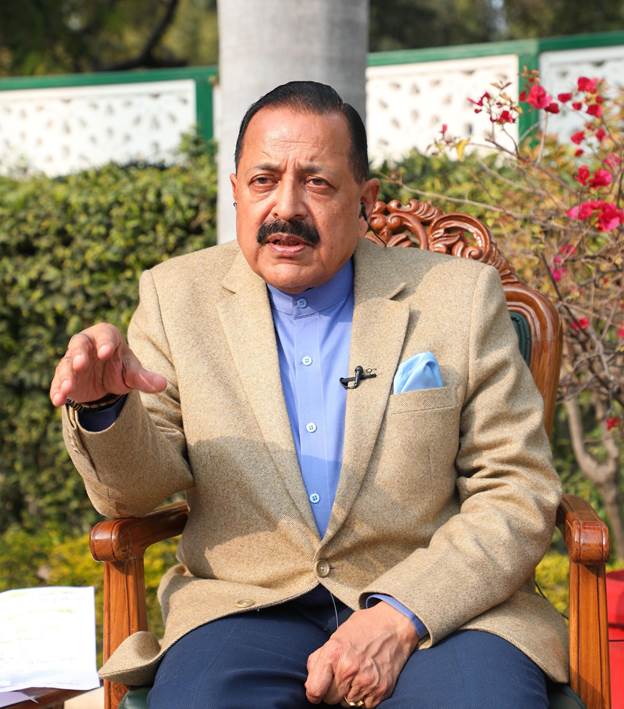
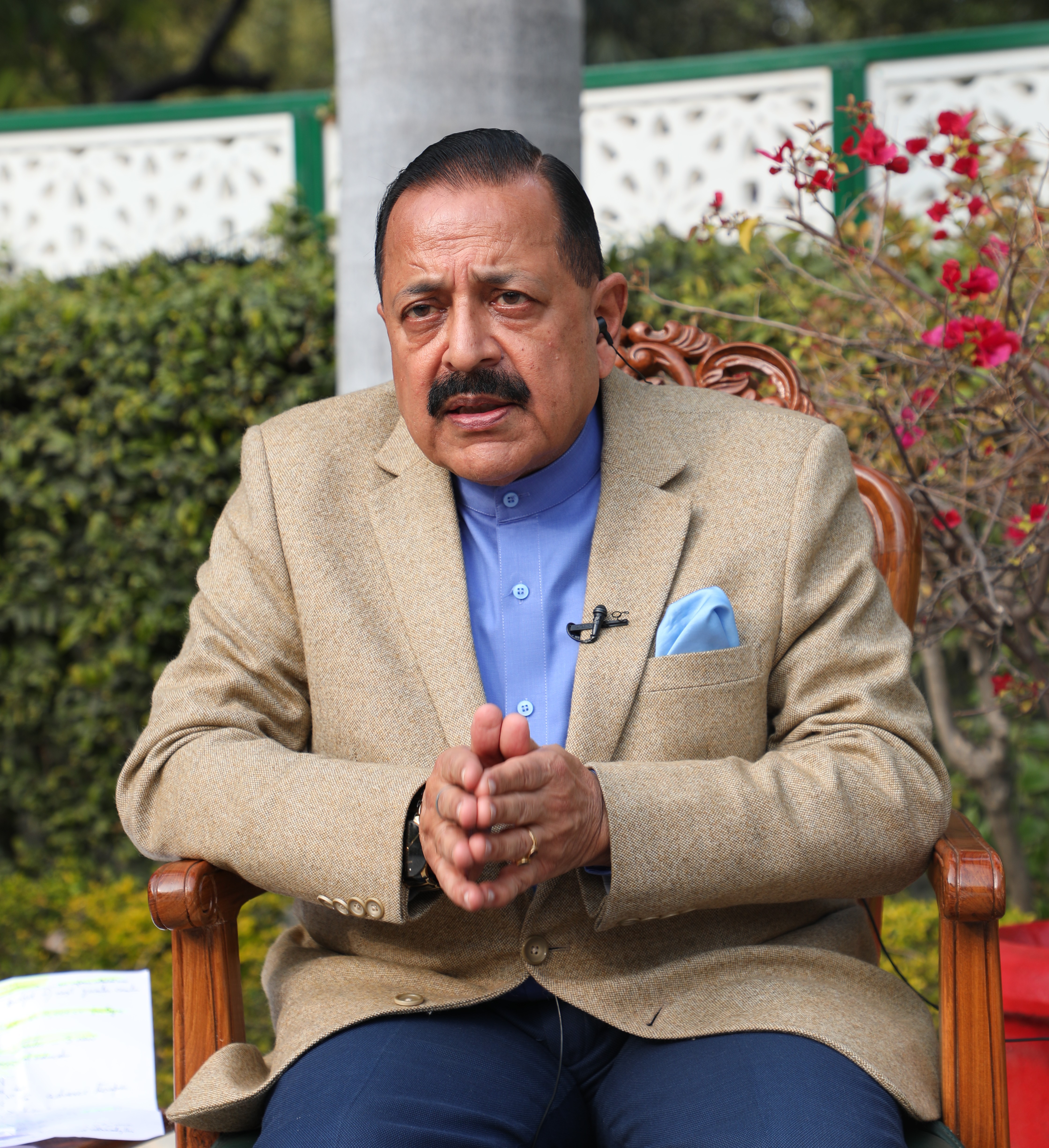
PHOTO : Union Minister Dr Jitendra Singh briefing the media on Union Budget 2026‑27 at New Delhi on Sunday.
*******
NKR/FK/AV
(Release ID: 2221778)
Visitor Counter : 2517