PIB Backgrounder
Transforming India into a Global Biopharma Hub
Budget 2026-27 Series
Posted On:
02 FEB 2026 2:26PM by PIB Delhi
Key Takeaways
- Union Budget 2026–27 proposed the Biopharma SHAKTI with an outlay of Rs. 10,000 crores over five years, aimed at strengthening India’s ecosystem for production of biologics and biosimilars.
- The initiative aligns with aim of transforming India into a leading global biopharma industry and capturing 5% of the global biopharmaceutical market share.
- The National Biopharma Mission and other schemes launched over the past few years are working towards the same goal.
Introduction
The Union Budget 2026–27 marks a decisive shift in India’s approach to pharmaceuticals by placing biopharma and biologic medicines at the centre of its healthcare and manufacturing strategy. This aligns with the Government of India’s vision of transforming India into a leading global biopharma industry and capturing 5% of the global biopharmaceutical market share.
Acknowledging the growing burden of non-communicable diseases and the increasing global reliance on biologics and biosimilars, the Budget positions biopharma as a high-value, future-facing segment critical for both public health and economic growth.
Biopharma involves production, manufacturing, or extraction of therapies through biological organisms, such as human cells, fungi, or microbes. Some examples of biopharmaceuticals include vaccines, antibody treatments, gene therapies, cell implants, modern insulin, and recombinant protein drugs.
Union Budget 2025-26: Biopharma SHAKTI Initiative
Key Budget Announcements for Biopharma:
- Launch of Biopharma SHAKTI, a dedicated national initiative with an outlay of Rs. 10,000 crores over five years, aimed at strengthening India’s end-to-end ecosystem for biologics and biosimilars. The initiative is designed to support domestic development and manufacturing of high-value biopharmaceutical products and medicines, reduce import dependence, and enhance India’s competitiveness in global biologics supply chains.
- Expansion and strengthening of the Biopharma-focused network through the establishment of three new National Institutes of Pharmaceutical Education and Research (NIPERs) and the upgradation of seven existing NIPERs. This measure seeks to address the growing requirement for highly specialised human resources in biopharma research, development, manufacturing and regulation.
- Creation of a large-scale clinical research ecosystem, with a proposal to develop over 1,000 accredited clinical trial sites across the country. This is expected to significantly improve India’s capacity to conduct advanced clinical trials for biologics and biosimilars, accelerating innovation, and positioning the country as a preferred global destination for ethical, high-quality, and efficient clinical trials.
- Strengthening of the regulatory framework for biologics, including enhancing the capacity of the Central Drugs Standard Control Organisation (CDSCO) through the induction of specialised scientific and technical personnel. The focus is on improving regulatory efficiency, aligning approval timeframes with global standards, and enabling faster evaluation of complex biopharmaceutical products.
Why This Matters
The Budget links manufacturing scale, skilled human resources, clinical research capacity and regulatory credibility into a single framework. This signals a clear intent to move India up the pharmaceutical value chain—from being a cost-efficient producer of generic medicines to a global hub for high-quality, innovation-driven biopharmaceutical products.
This Budget push further strengthens the groundwork for India to compete in the global biopharma market while improving domestic access to advanced and affordable biologic therapies.
What is Biopharma?
In recent years, medicines have increasingly moved beyond traditional chemical drugs to therapies that are developed using biology itself. This shift has brought biopharma to the forefront of modern healthcare. Biopharma, or biopharmaceuticals, refers to the part of the pharmaceutical industry that focuses on developing and manufacturing medicines using living biological systems, rather than relying solely on chemical synthesis.
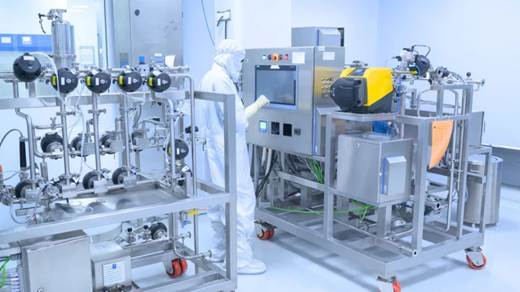
In simple terms, biopharma medicines are produced by working with cells, microorganisms or other biological materials. These may include human or animal cells, bacteria, fungi or similar biological platforms that are used to grow or produce therapeutic substances. Using biotechnology-based research methods, these living systems are guided to produce medicines that can prevent, diagnose or treat disease. Because they are created through biological processes, biopharma products are often more complex and targeted than conventional drugs, allowing them to interact more precisely with biological pathways.
Some of the most widely used modern medicines fall under biopharma, including vaccines, therapeutic proteins, biosimilars and other advanced biologic therapies. These products have become essential to public health programmes and clinical care, particularly for infectious diseases, chronic conditions and disorders where traditional drugs may be less effective. The Government of India has launched various programmes for the development of the industry. This evolving biopharma ecosystem and targeted policy support strengthen the foundation of India’s push to emerge as a globally competitive biopharma hub.
Government Initiatives to Strengthen India’s Biopharma Sector
The Indian pharmaceutical industry is no longer limited to making low-cost generic medicines; it is increasingly investing in research and developing complex, high-value products such as biopharmaceuticals and biosimilars. The country has emerged as a global hub for affordable, high-quality medicines, ranking 3rd in pharmaceutical production by volume and 11th by value.
Over the past several years, the Government of India has implemented a series of policy initiatives and schemes aimed at strengthening the biopharmaceutical sector across the value chain, from research and early-stage product development to manufacturing, innovation and commercialisation.
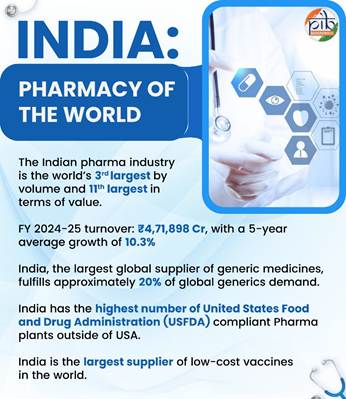
Various initiatives focus on bringing together government, academia, industry and start-ups. They aim to build shared infrastructure, encourage innovation, and strengthen domestic manufacturing, with the goal of making India a global biopharma and biomanufacturing hub.
National Biopharma Mission (NBM) – “Innovate in India (i3)”
The National Biopharma Mission (NBM) – Innovate in India (i3) was launched in May 2017 with an aim of transforming India into a $100 billion leading global biotech industry by 2025 and capturing 5% of the global pharmaceutical share. The scheme’s total cost is Rs. 1,500 crore. It is co-funded by the World Bank and implemented by the Biotechnology Industry Research Assistance Council (BIRAC) under the Department of Biotechnology (DBT). The mission focuses on the development of new vaccines, bio-therapeutics, diagnostics and medical devices to address the rising burden of diseases in the country. The mission also aims to make drugs more affordable and accessible.
NBM supports 101 projects, involving over 150 organisations and 30 MSMEs. It has also generated over 1,000 jobs, including 304 scientists and researchers. Additionally, the Genome India Programme, which involves sequencing 10,000 genomes, is expected to shape future global healthcare strategies, both in treatment and prevention.
It works by bringing together industry, academia and the government. The initial focus of the mission is on developing vaccines for human papillomavirus (HPV), dengue and biosimilars for cancer, diabetics and rheumatoid arthritis and medical devices and diagnostics.
NBM As Catalyst of India’s Health Innovation Ecosystem
A key outcome of the Mission has been the emergence of a new generation of biotech entrepreneurs translating scientific innovation into affordable healthcare solutions.
One such example is Arjun Arunachalam, whose Bengaluru-based start-up, Voxel Grids Innovations Private Ltd, has become the first in India to indigenously develop and market an MRI scanner comparable to global standards at a fraction of the cost of imported machines. These lightweight, energy-efficient scanners are already in use at cancer hospitals in Mumbai and Assam, improving access to advanced diagnostics. The Mission received initial funding from Tata Trusts. But he got the most essential funding – Rs. 12.4 crores – by the BIRAC.
Similarly, Jatin Vimal of Chennai-based Levim Lifetech Pvt Ltd has produced India’s first biosimilar of Liraglutide for Type 2 diabetes, priced at nearly one-third of the imported version. The mission covered 85% of his clinical trial costs.
Private ventures backed by the mission are developing antibiotics and vaccines for diseases such as UTIs, pneumonia, dengue, chikungunya, malaria and Hepatitis E. The mission also supported the world’s first DNA-based COVID-19 vaccine, ZyCoV-D, developed by Zydus Cadila.
The National Biopharma Mission (NBM) has provided early-stage funding to many of the nearly 10,000 bio-based startups since 2014, with Biotechnology Industry Research Assistance Council (BIRAC) establishing about 100 incubation centres.
Over 7,000 participants (45% women) have been trained in global regulatory and intellectual property rights practices; seven Regional Technology Transfer Offices have handled 850+ IP filings and nearly 120 technology transfers.
NBM has established clinical trial sites, supported by a database of around 8 lakh volunteers, enabling trials in cancer, rheumatology, diabetes and ophthalmology.
“India has the capability and the will to make a mark in the $1.1 trillion global pharma industry,” said NBM’s Director Dr Raj K. Shirumalla.”
BIRAC-led Biotech Innovation Support
BIRAC, established in 2012 under Department of Biotechnology, supports innovation through funding schemes, incubation infrastructure and mentorship, with 95 bio-incubation centres established across the country. Its programmes are aligned with national biotechnology and innovation policies and focus on addressing nationally relevant product development needs.
Key schemes include:
- Biotechnology Ignition Grant (BIG): Up to Rs. 50 lakh for 18 months to support early-stage startups; nearly 1,000 innovators supported.
- SEED Fund: Rs. 30 lakh equity support for proof-of-concept stage startups.
- LEAP Fund: Rs. 100 lakh equity support for commercialisation-ready innovations.
- जनCARE – Amrit Grand Challenge: Supported 89 digital health tech innovations in artificial intelligence, machine learning, telemedicine, and blockchain, with a focus on tier-II, tier-III cities and rural areas.
Manufacturing and Industrial Strengthening Measures
To strengthen domestic pharmaceutical and biopharma manufacturing, the Government has implemented schemes such as the Production Linked Incentive (PLI) Scheme for Pharmaceuticals, Strengthening of Pharmaceutical Industry (SPI) scheme and the Bulk Drug Parks Scheme. These initiatives focus on enhancing manufacturing capacity, reducing import dependence for Active Pharmaceutical Ingredients (APIs) and intermediates, upgrading MSME facilities to WHO-Good Manufacturing Standards, and creating common infrastructure facilities within pharmaceutical clusters.
The SPI Scheme includes assistance for common facilities in pharmaceutical clusters, support for technology upgradation of MSMEs, and promotion and development activities for pharmaceuticals and medical devices. Together with PLI schemes and bulk drug parks, these measures aim to enhance supply chain resilience, improve quality standards, and support domestic and export-oriented production of medicines.
Promotion of Research and Innovation in Pharma-MedTech (PRIP)
The Promotion of Research and Innovation in Pharma-MedTech (PRIP) scheme, launched in 2023 by the Department of Pharmaceuticals with an approved outlay of Rs. 5,000 crore, seeks to transform India into an innovation-driven and globally competitive Pharma-MedTech sector. The scheme supports early- and late-stage R&D in new drugs, biosimilars, complex generics, precision medicine and novel medical devices. It also encourages industry–academia collaboration through Centres of Excellence at NIPERs.
BioE3 Policy and Bio-RIDE Scheme
The BioE3 (Biotechnology for Economy, Environment and Employment) Policy was approved by the Union Cabinet in August 2024. The scheme aims to establish biomanufacturing, Bio-AI hubs and Biofoundry for a sustainable Viksit Bharat. The salient features include innovation-driven support for research and development, and entrepreneurship across the sector. The innovations will address critical social issues such as diseases, food security and climate change.
The BioE3 Policy focuses on the following strategic/thematic sectors:
- Biobased chemicals, polymers and enzymes
- Functional foods and smart proteins
- Precision biotherapeutics
- Climate resilient agriculture
- Carbon capture and its utilization
- Marine and space research
The Bio-RIDE scheme launched in September 2024 merged two umbrella schemes of Department of Biotechnology (DBT) under one scheme: ‘Biotechnology Research Innovation and Entrepreneurship Development (Bio-RIDE)’ with a new component namely Biomanufacturing and Biofoundry. The outlay for the scheme is Rs. 9197 crore, covering the 15th finance Commission period from 2021-22 to 2025-26. Like other schemes, this one too aims at using bio-innovation to tackle national and global challenges across sectors such as healthcare, agriculture, environmental sustainability, and clean energy.
The scheme has three broad components:
- Biotechnology Research and Development (R&D)
- Industrial & Entrepreneurship Development (I&ED)
- Biomanufacturing and Biofoundry
The scheme aims to promote bio-entrepreneurship, support cutting-edge research, facilitate industry-academic collaboration, encourage sustainable biomanufacturing, fund researchers, and provide support to students, young researchers and scientists working in the biotechnology field.
Conclusion
All these measures signal a deliberate and coordinated policy approach by the government to build a resilient biopharma ecosystem in India, spanning research, innovation, manufacturing and entrepreneurship. This alignment is increasingly vital as India’s disease burden shifts toward non-communicable conditions such as diabetes, cancer and autoimmune disorders, where access to biologic therapies is essential for long-term health outcomes.
The Biopharma SHAKTI scheme announced in the Union Budget 2026–27 therefore represents a key policy intervention in this direction. Backed by an outlay of Rs. 10,000 crore over five years, the scheme is designed to further strengthen domestic capabilities in biologics and biosimilars through targeted investments in workforce development, nationwide clinical trials infrastructure and enhanced regulatory capacity, reinforcing India’s ambition to become a global biopharma manufacturing hub.
References
Click here to see pdf
****
PIB Research Unit
(Release ID: 2222079)
Visitor Counter : 10720