Ministry of Electronics & IT
From Breakthroughs to Backbones: Global Tech CEOs Define AI’s Responsible Future
The Real Question is Whether We Can Build Trust as Fast as We Build Capability : Nikesh Arora, CEO of Palo Alto Networks
India Must Move From Being a Services Powerhouse to Becoming an IP Powerhouse : Roshni Nadar, Chairperson, HCLTech
Lars Reger, CTO of NXP Semiconductors, Underscored the Importance of Embedding Intelligence Directly into Devices and Physical Systems
Amit Zavery, President, CPO and COO of ServiceNow, Focused on Operationalising AI at Scale
Posted On:
19 FEB 2026 9:33PM by PIB Delhi
As part of the India AI Impact Summit 2026, keynote addresses by Nikesh Arora, CEO, Palo Alto Networks; Roshni Nadar, Chairperson, HCLTech; Lars Reger, CTO, NXP Semiconductors; and Amit Zavery, President, CPO and COO, ServiceNow, examined how artificial intelligence is entering a decisive phase — one defined not only by rapid innovation, but by the urgent need for trust, security, governance, and scalable infrastructure.
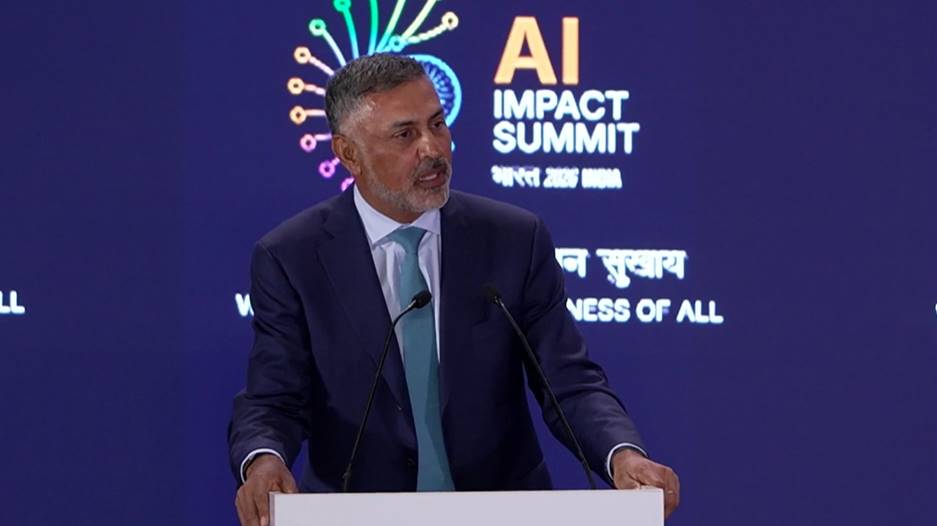
Nikesh Arora, CEO of Palo Alto Networks, framed AI as the fastest technological shift in modern history, cautioning that innovation today is outpacing institutional readiness. “AI will not go away. It cannot be governed out of existence,” he noted. “The real question is whether we can build trust as fast as we build capability.” Highlighting the rise of autonomous, agentic systems, he added, “If AI can act independently, then governance, accountability, and security cannot be afterthoughts. They must be foundational.”
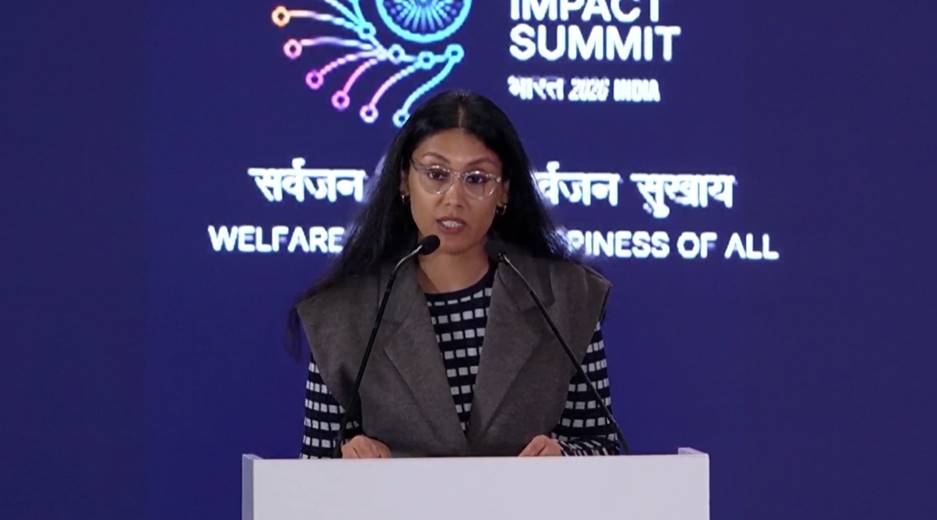
Roshni Nadar, Chairperson of HCLTech, positioned AI as a structural economic inflection point for India and the world. Arguing that knowledge itself is becoming programmable, she said, “In the AI era, advantage will not come from scale alone. It will come from ownership, of platforms, of intellectual property, of innovation.” Calling for a strategic shift, she added, “India must move from being a services powerhouse to becoming an IP powerhouse. Services scale with effort; intellectual property compounds without limits.”
Bringing a hardware and edge-computing perspective, Lars Reger, CTO of NXP Semiconductors, underscored the importance of embedding intelligence directly into devices and physical systems. “The future of AI is not only in massive data centres,” he observed. “It is at the edge—inside vehicles, factories, medical devices, and infrastructure.” Stressing safety and cybersecurity, he remarked, “Without trust at the device level, AI adoption will stall. Functional safety and security are not optional features, they are prerequisites.”
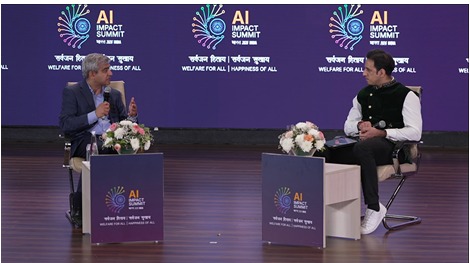
From the enterprise lens, Amit Zavery, President, CPO and COO of ServiceNow, focused on operationalising AI at scale. Highlighting the gap between experimentation and deployment, he stated, “Many organisations are piloting AI, but scaling it requires governance, visibility, and control built into the platform.” Emphasising integration over add-ons, he added, “Security cannot sit beside AI. It must be embedded within it, from design to deployment.”
Collectively, the four leaders underscored a shared imperative, that AI's next phase will be defined not simply by model sophistication, but by its ability to operate securely, efficiently, and responsibly within the systems that power economies and societies. From cybersecurity and intellectual property to edge intelligence and enterprise governance, the keynotes reinforced that the future of AI will depend on trust as infrastructure, ensuring that innovation strengthens institutions, protects users, and delivers resilient, real-world impact at scale.
*****
Mahesh Kumar/ Pawan Faujdar/ Anil Dutt Sharma
(Release ID: 2230492)
Visitor Counter : 509