Ministry of Electronics & IT
AI Beyond Code: Infrastructure, Access and Global Trust Shape the Road Ahead
AI Summit Highlights Power, Policy and People as Keys to the Next Tech Revolution
Geneva to Host 2027 AI Summit as Leaders Push for Democratic Access to AI
Democratizing AI and Strengthening Infrastructure: Leaders Chart the Way Forward
India’s Leadership Moment in a New Era of Responsible and Scalable AI
Posted On:
20 FEB 2026 6:39PM by PIB Delhi
A fresh set of keynote addresses at the India AI Impact Summit 2026 turned attention to the foundations, governance, and global diffusion of artificial intelligence, underscoring that AI’s promise depends as much on infrastructure and cooperation as on algorithms.
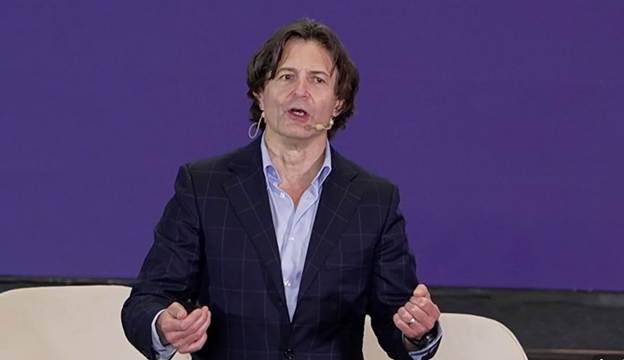
Setting the context for AI’s physical backbone, Giordano Albertazzi, Chief Executive Officer of Vertiv, emphasized that conversations about AI must extend beyond software. “When we talk about AI, we must also talk about data centers, the physical part that actually makes AI possible,” he said. Drawing an analogy, he noted, “If AI is the brain, then infrastructure is the body. Everything must be orchestrated, interoperable, and engineered as one integrated system to support the speed, scale, and density that AI now demands.” His remarks highlighted the critical role of power, cooling, and integrated systems in sustaining exponential AI growth.
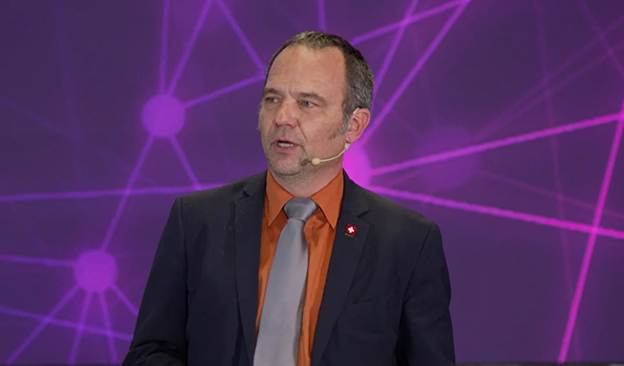
Looking ahead to global cooperation, Thomas Schneider, Ambassador and Vice-Director at Switzerland’s Federal Office of Communications (OFCOM), announced that Geneva will host the next AI Summit in 2027. “Our motivation is not to stage a show, but to make a meaningful contribution to ensuring that humanity uses the unprecedented and transformative potential of AI for good, not for harm,” he said. He added that AI “must raise—not lower—the quality of life for all people,” reinforcing a commitment to human dignity, peace, and pragmatic multilateral engagement.
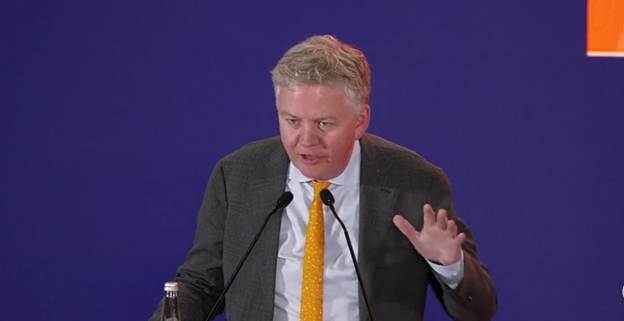
From a global internet infrastructure perspective, Matthew Prince, Chief Executive Officer of Cloudflare, argued for democratized access to AI. Reflecting on history, he said, “Like the printing press, which began in Germany but quickly spread across Europe without central control, AI must not be confined to a handful of companies or countries.” He stressed that AI should empower creators, small businesses, and diverse cultures rather than homogenize them. “AI shouldn’t remove our humanity; it should accelerate and enhance it, this technology must be accessible to everyone, not just the wealthy.”
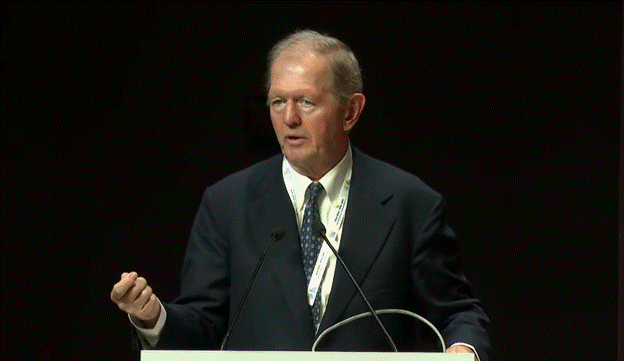
Closing the segment, Marcus Wallenberg, Chairman of SEB and Saab, highlighted India’s leadership moment. He noted that by convening the Summit, India demonstrated “national resolve and industry alignment” similar to that behind its previous transformative initiatives. “As AI diffuses across industries, it will not only enhance competitiveness but also unlock entirely new business models and societal outcomes,” he said, pointing to India’s vast talent base and strong IT ecosystem as key advantages in scaling AI for global impact.
Together, the addresses underscored that AI’s next chapter will be defined not only by innovation in models, but by resilient infrastructure, inclusive governance, open access, and cross-border collaboration, ensuring that AI’s transformative power is both sustainable and widely shared.
*****
Mahesh Kumar/ Pawan Faujdar/ Anil Dutt Sharma
(Release ID: 2230851)
Visitor Counter : 240