Ministry of Environment, Forest and Climate Change
Zoological Survey of India Announces Landmark Discovery of Two new species of Lichen moths and Seven new species records from Indian Himalaya
Posted On:
12 MAR 2026 3:28PM by PIB Kolkata
Kolkata; March 12, 2026
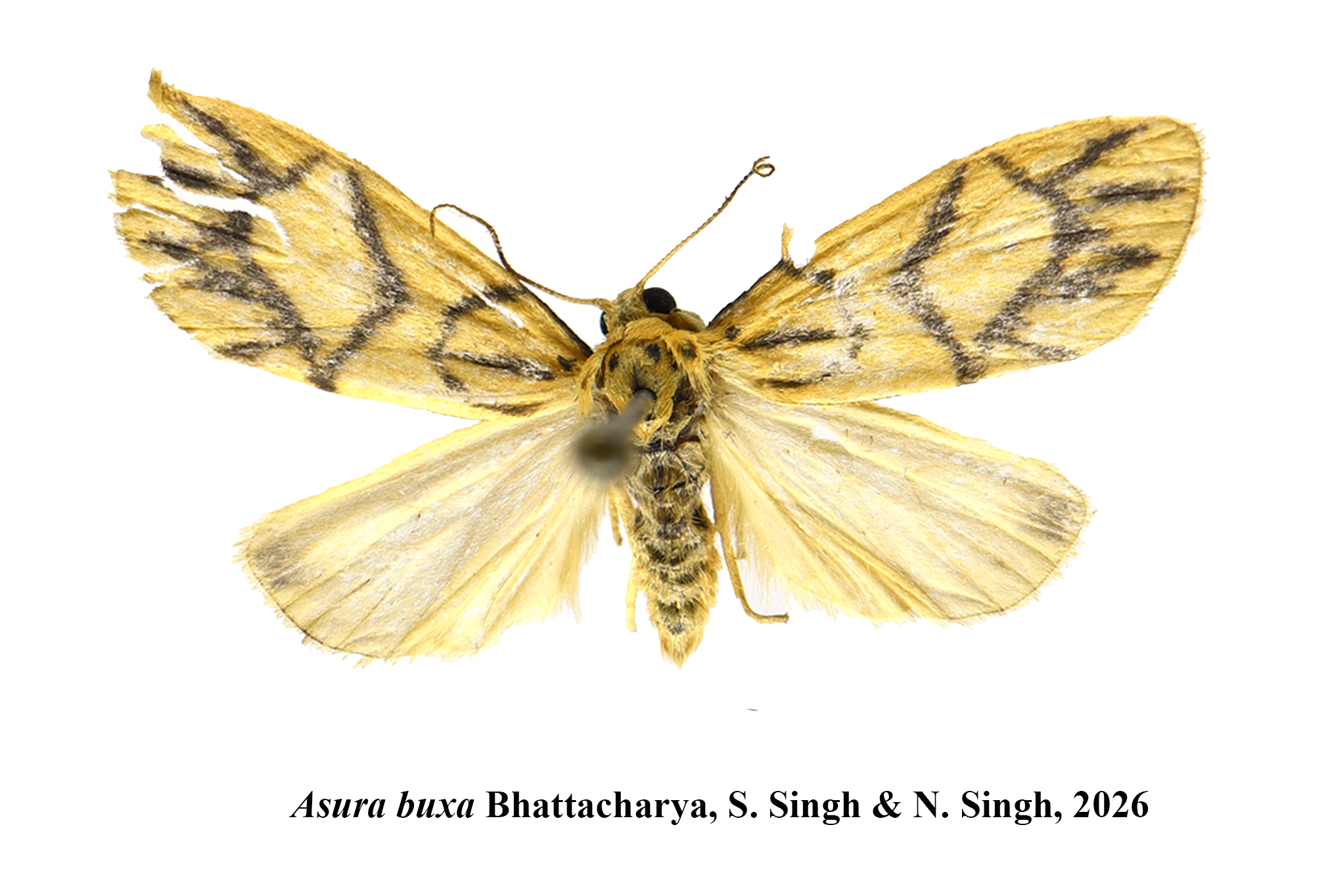
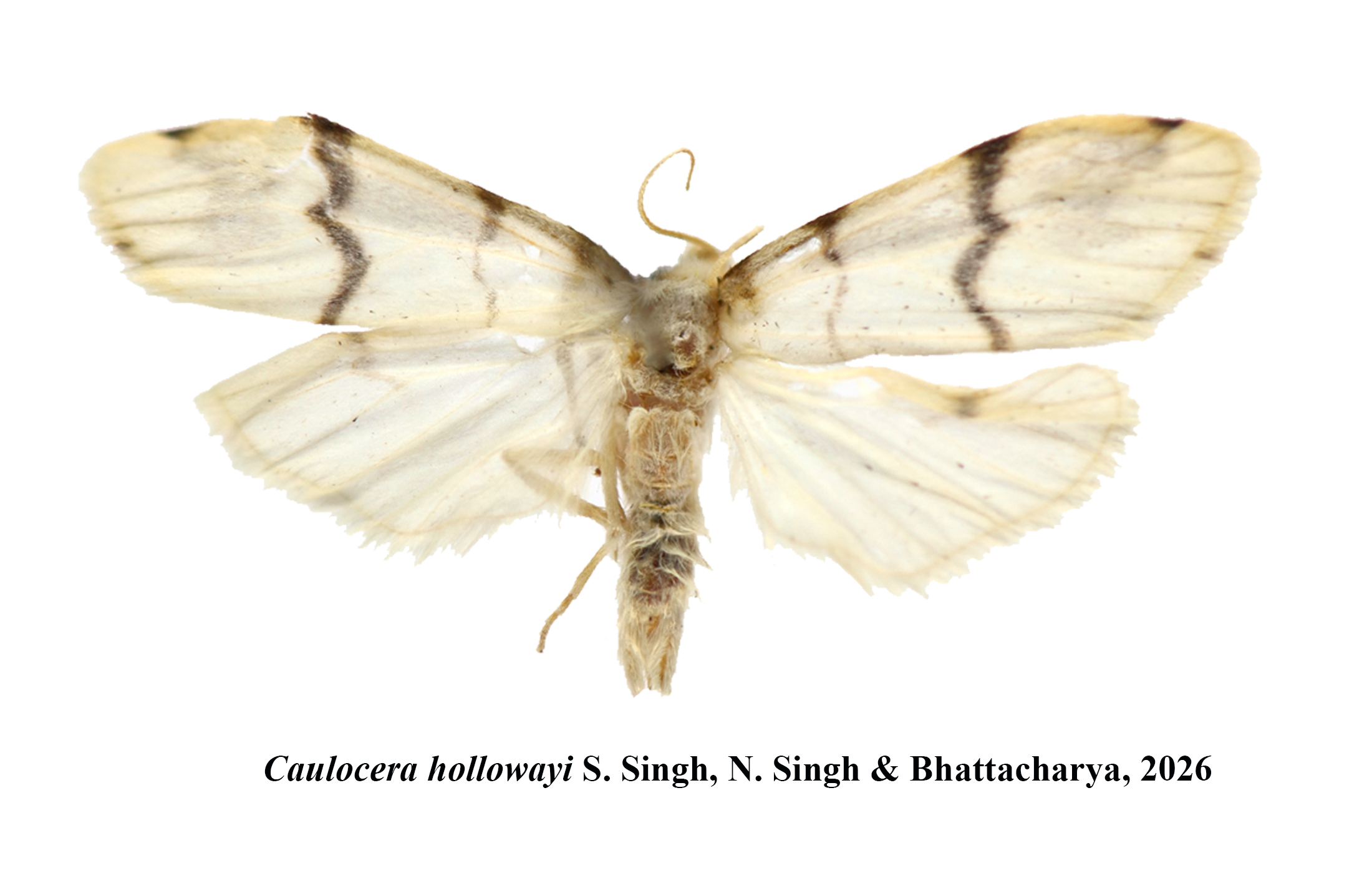
Scientists at the Zoological Survey of India (ZSI) have announced the discovery of two new species of Lepidoptera, marking a historic milestone in Indian entomology. The discovery of Caulocerahollowayi S. Singh, N. Singh & Bhattacharya, 2026 and Asura buxa Bhattacharya, S. Singh & N. Singh, 2026 lichen moths are described by an Indian research team.
A Milestone in Indian Taxonomy
The findings, published on March 2, 2026, in the prestigious international taxonomic journal Zootaxa, conclude seven new species records of lichen from India in the same publication.
Dr. Dhriti Banerjee, Director of the Zoological Survey of India, remarked on the significance of the achievement:
“The discovery of Caulocerahollowayi S. Singh, N. Singh & Bhattacharya, 2026 and Asura buxa Bhattacharya, S. Singh & N. Singh, 2026 are vital contribution to the documentation of India’s moth biodiversity. Research into evolutionarily significant and lesser-known groups like Lepidoptera is essential for understanding ecosystem functioning and air pollution indicator species of Indian Himalaya. This success underscores the necessity of sustained taxonomic efforts in biodiversity hotspots like the Himalayas.”
The Discovery: Caulocerahollowayi S. Singh, N. Singh & Bhattacharya, 2026 and Asura buxa Bhattacharya, S. Singh & N. Singh, 2026
The team comprises of Dr. Navneet Singh (Scientist E, ZSI Kolkata), Dr. Santosh Singh (Scientist B at CZRC, Jabalpur and Ms. Srishti Bhattacharya (UGC SRF at ZSI Kolkata) identified these species from specimens collected near Golitar, Sikkim and Panijhora, West Bengal respectively. Morphological Distinctiveness: The species is distinguished by its unique arrangement of body scales, specific chaetotaxy (bristle patterns), and specialized appendage structures.
Morphological Distinctiveness: These species are diagnosed with external morphology like wing colouration and fascia arrangements, as well as differences in the external genitalic structures like, uncus, valva, tegumen, juxta and aedeagus.
Ecological Role: These moths are indicator species of Air pollution as if there caterpillars feed on lichens.
*******
MSA…
(Release ID: 2238918)
Visitor Counter : 393