Ministry of Science & Technology
India’s largest pregnancy cohort study of 12,000 women to develop AI-driven solutions for preterm births: Dr. Jitendra Singh
GARBH-INi to strengthen India’s fight against preterm births through AI and indigenous research: Dr. Jitendra Singh
India developing indigenous AI tools for early prediction of preterm births, says Union Minister Dr. Jitendra Singh
GARBH-INi integrates science, technology, and healthcare for improved birth outcomes: Dr. Jitendra Singh
Science-led maternal health interventions under GARBH-INi link cutting-edge research with India’s 2047 vision: Dr. Jitendra Singh
Posted On:
23 MAR 2026 4:24PM by PIB Delhi
Union Minister of State (Independent Charge) for Science & Technology, Earth Sciences, and MoS PMO, Personnel, Public Grievances, Pensions, Atomic Energy and Space, Dr. Jitendra Singh today said that India’s largest pregnancy cohort study of 12,000 women under the GARBH-INi initiative is aimed at developing indigenous, AI-driven solutions to address preterm births, one of the leading causes of neonatal mortality as well morbidity in adulthood.
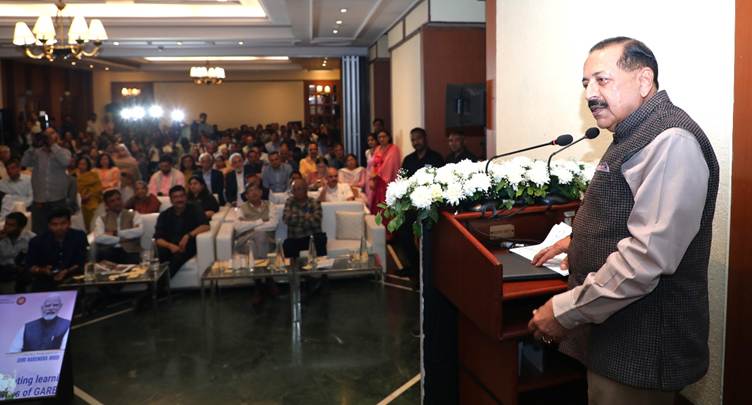
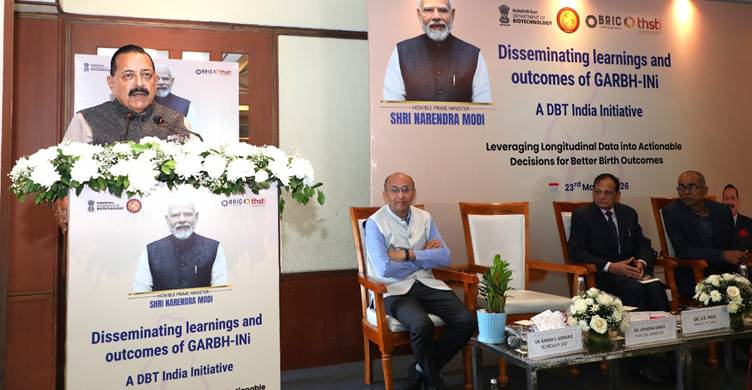
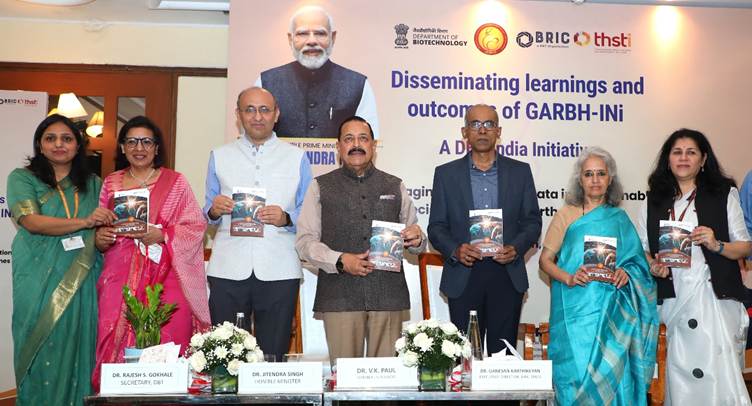
The Minister was addressing the programme on “Disseminating Learnings and Outcomes of GARBH-INi (Interdisciplinary Group for Advanced Research on Birth Outcomes)”, a Department of Biotechnology (DBT) initiative, at India Habitat Centre, New Delhi. The event was attended by Secretary, Biotechnology, Dr. Rajesh S. Gokhale; Member, NITI Aayog, Dr. V.K. Paul; Executive Director, THSTI, Dr. Ganesan Karthikeyan, along with leading scientists and researchers.
Focusing on the GARBH-INi initiative, the Minister said that India carries a significant share of the global burden of preterm births, making it essential to develop solutions suited to Indian conditions. He said the programme represents a comprehensive, data-driven approach integrating clinical epidemiology, multi-omics biomarkers, and artificial intelligence for personalised predictions.
The Minister said the initiative has successfully enrolled around 12,000 pregnant women, creating one of South Asia’s largest pregnancy cohorts. The programme has generated a vast repository of over 1.6 million well-characterised biospecimens and more than one million ultrasound images, forming a strong foundation for advanced research.
Dr. Jitendra Singh said that the outcomes of the programme include developing AI-based pregnancy dating models tailored for Indian populations, identification of microbiome-based predictors of preterm birth, rapid diagnostic tools, and genetic markers for early risk assessment. He added that such indigenous solutions are critical for improving maternal and child health outcomes in the country.
The Minister released a compendium documenting the key learnings and outcomes of the GARBH-INi programme. He said the initiative has also established a national biorepository and the GARBH-INi-DRISHTI data-sharing platform, enabling wider access for the research community and contributing to global scientific publications.
On the occasion, key partnerships and technology transfer initiatives were formalised, including transfer of microbiome-based biotherapeutics technology to SundyotaNumandisProbioceuticalsPvt. Ltd., and Letters of Intent with DOTO Health Private Limited and Qure.ai Technologies Private Limited for AI-enabled ultrasound reporting systems and risk stratification platforms under the GARBH-INi-AnandiMaa initiative. The Minister also felicitated participating families for their contribution to scientific research.
Dr. Jitendra Singh said that maternal and child health is central to India’s future growth, adding that the children born today will define the country’s strength and productivity in 2047. He said initiatives like GARBH-INi are part of a larger national mission linking science with long-term nation-building.
Referring to India’s bioeconomy growth from nearly 10 billion USD in 2014 to about 195 billion USD, the Minister said that biotechnology has played a leading role in this expansion. He said India is now being recognised globally for its strengths in preventive and primary healthcare, supported by indigenous innovations.
Dr. V.K. Paul, Member, NITI Aayog, said that the next phase of the programme should focus on effectively utilising the tools, predictive models and platforms developed so far. He emphasised the need for continued scientific efforts, stronger collaborations, and deeper analysis of outcomes to take the initiative forward.
Concluding, Dr. Jitendra Singh said that by strengthening maternal and child health through science-driven initiatives like GARBH-INi, India is shaping a healthier, more productive generation and laying a strong foundation for a developed India by 2047.
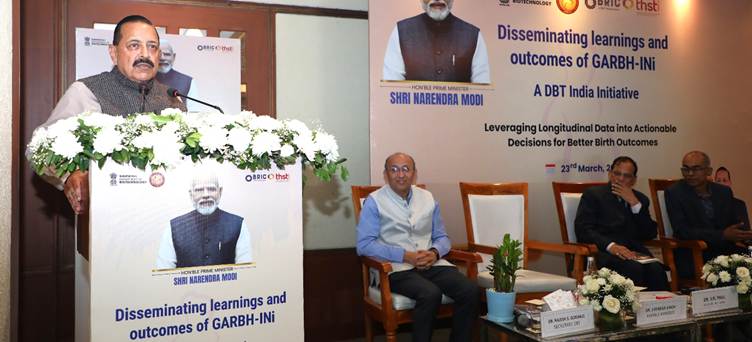
PHOTO: Union Minister Dr Jitendra Singh addressing an event on “Disseminating Learnings and Outcomes of GARBH-INi (Interdisciplinary Group for Advanced Research on Birth Outcomes)”, at India Habitat Centre, New Delhi on Monday.
*****
AK/MJ/NM
(Release ID: 2243961)
Visitor Counter : 2273