Ministry of Home Affairs
Rashtriya Raksha University Inaugurates MAHASAGAR Academy as a Strategic Platform for Maritime Security, Law and Capacity Building
Posted On:
21 APR 2026 5:10PM by PIB Ahmedabad
Rashtriya Raksha University (RRU), inaugurated the MAHASAGAR Academy on 20 April 2026 at its campus in Gandhinagar, in partnership with the Indian Maritime University (IMU). Conceived as a forward-looking platform for education, research, policy dialogue and executive capacity building, the Academy reflects India’s expanding maritime vision under MAHASAGAR – Mutual and Holistic Advancement for Security and Growth Across Regions.
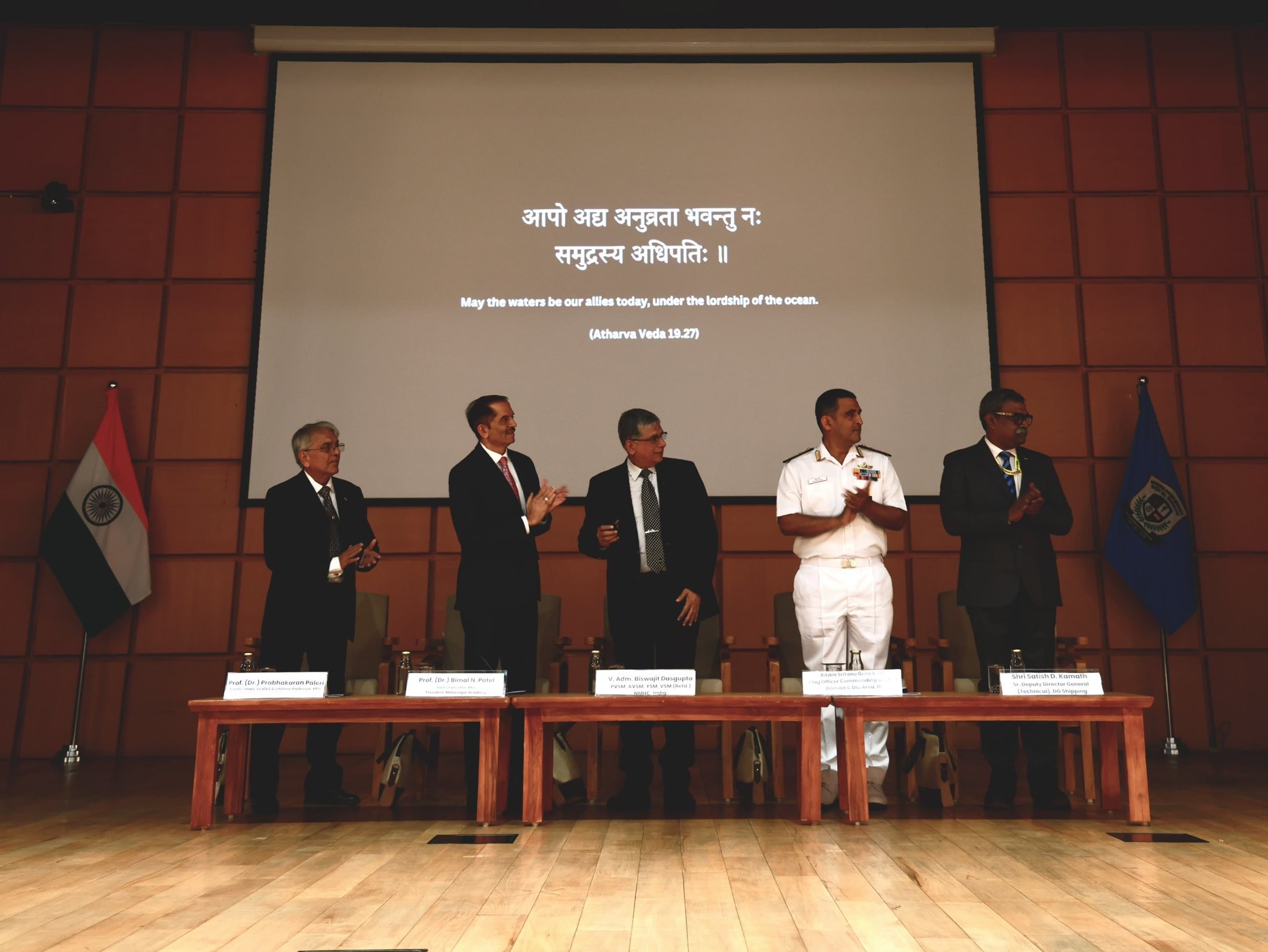
The inaugural day of the Academy brought together distinguished leadership from international adjudication, maritime security, maritime law enforcement and academia, including Vice Admiral Biswajit Dasgupta, PVSM, AVSM, YSM, VSM (Retd.), National Maritime Security Coordinator, India; H.E. Judge Tomas Heidar, President of the International Tribunal for the Law of the Sea (ITLOS); H.E. Judge Neeru Chadha, Vice President of the International Tribunal for the Law of the Sea (ITLOS); Rear Admiral Sritanu Guru, VSM, Flag Officer Commanding Gujarat, Daman and Diu Area, Indian Navy; Shri Satish D. Kamath, Senior Deputy Director General (Technical), Directorate General of Shipping; and Prof. (Dr.) Bimal N. Patel, Vice-Chancellor, Rashtriya Raksha University. The occasion marked the formal launch of an academic and strategic initiative dedicated to strengthening maritime law, governance, operations and regional cooperation.

Delivering the Chief Guest Address (In-person), Vice Admiral Biswajit Dasgupta, PVSM, AVSM, YSM, VSM (Retd.), National Maritime Security Coordinator, India described MAHASAGAR as a vision that must be translated into concrete action through academic reflection, professional dialogue, coherent policy, robust legal frameworks and long-term strategic planning. He emphasised that maritime security is deeply tied to economic resilience, national security and comprehensive national power. He drew attention to the evolving security landscape in the Indian Ocean, marked by supply chain disruptions, hybrid threats, illicit trafficking, IUU fishing, cyber vulnerabilities and the growing strategic significance of maritime domain awareness.
Vice Admiral stressed upon the future of maritime governance which will depend upon the ability of institutions to integrate policy, law, technology and operational readiness. He underscored the importance of evidence gathering, maritime forensics, trained prosecutors to address maritime crime in court of law, and academic examination of emerging technologies such as AI and autonomous systems. He expressed confidence that institutions such as Rashtriya Raksha University can play a leading role in shaping a vibrant maritime knowledge ecosystem for India and the wider Indian Ocean region.
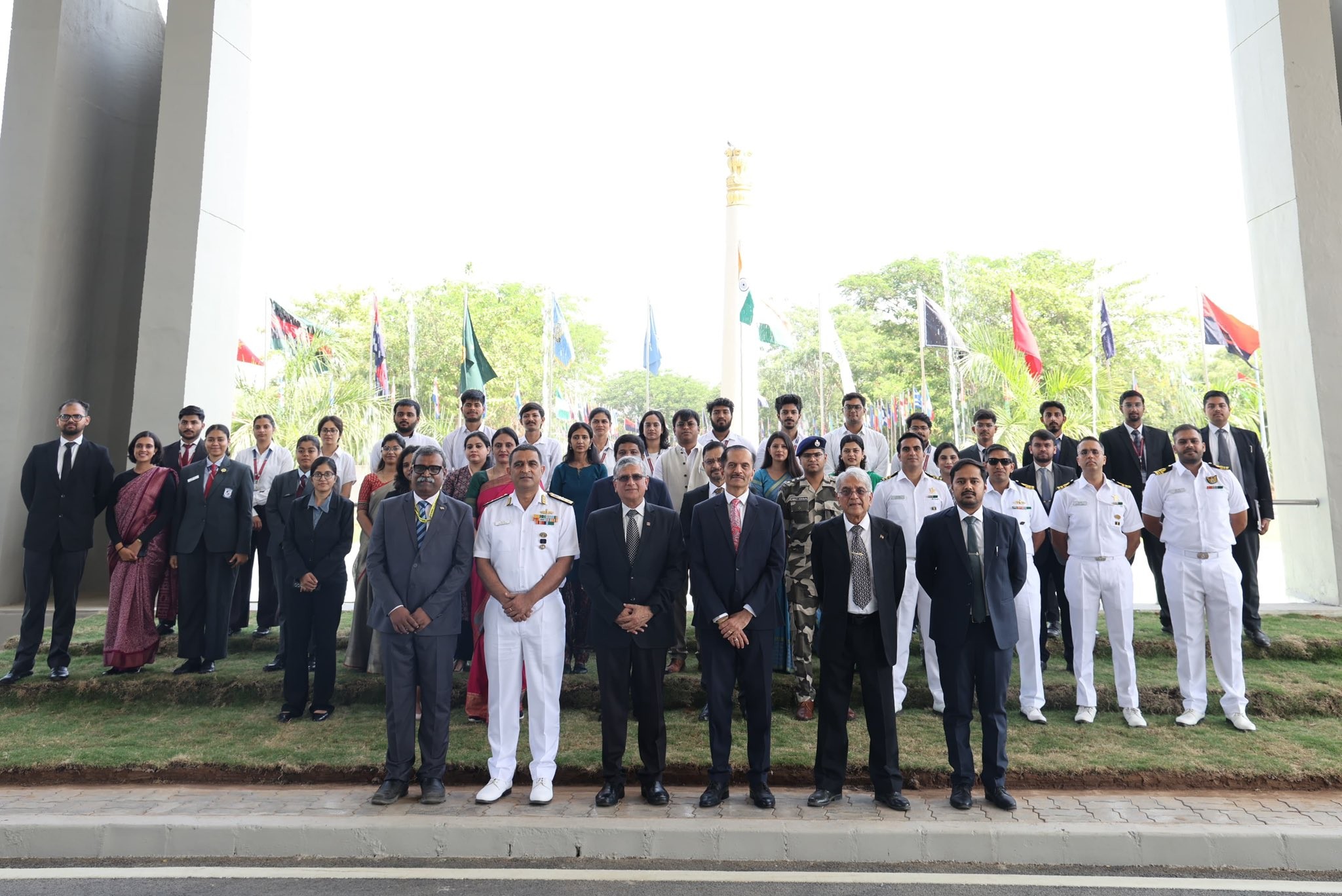
In his Chief Guest address, H.E. Judge Tomas Heidar, President of the International Tribunal for the Law of the Sea (ITLOS), offered a profound reflection on the enduring role of international adjudication in strengthening the rule of law at sea. He underscored that ITLOS, beyond its core function of dispute settlement under the United Nations Convention on the Law of the Sea (UNCLOS), has made a significant contribution to the clarification and progressive development of international law by bringing greater precision, coherence and legal certainty to the interpretation of the Convention. He highlighted that such judicial clarity serves a larger global purpose as it strengthens confidence among States, advances peaceful cooperation and reinforces a stable and rules-based maritime order for the international community as a whole.
Judge Heidar drew particular attention to the Tribunal’s landmark 2024 Advisory Opinion on climate change, which affirmed that anthropogenic greenhouse gas emissions into the atmosphere constitute pollution of the marine environment within the meaning of UNCLOS. He explained that this important legal finding has deepened the contemporary relevance of the Convention by bringing ocean-climate concerns firmly within its interpretative framework, while reaffirming UNCLOS as a living instrument capable of responding to evolving scientific knowledge and global environmental realities. His address offered a compelling reminder that the law of the sea continues to remain central to the stewardship of the oceans, the protection of the marine environment, and the shaping of a just and forward-looking maritime order.
In her Distinguished Guest of Honour address, H.E. Judge Neeru Chadha, Vice President of the International Tribunal for the Law of the Sea (ITLOS), offered a lucid exposition of the Tribunal’s urgent procedures under the United Nations Convention on the Law of the Sea, with particular focus on prompt release and provisional measures. She highlighted that these mechanisms represent a distinctive and highly valuable contribution of ITLOS to international adjudication, enabling timely judicial intervention in matters that demand immediacy, including the protection of the rights of parties, the prevention of aggravation of disputes, and the preservation of the marine environment. She underlined that, through these procedures, the Tribunal has developed a significant body of jurisprudence that provides practical guidance to States in balancing sovereign enforcement powers with the requirements of fairness, legal certainty and international responsibility.
Judge Neeru further emphasised that the work of ITLOS demonstrates how the law of the sea operates not merely as a framework of principles, but as a living system of effective remedies capable of responding to contemporary maritime challenges with speed, precision and credibility. Reflecting on the Tribunal’s record in provisional measures and prompt release cases, she observed that the consistent implementation of its orders by States reflects a wider confidence in international judicial processes and reinforces the centrality of the rule of law in ocean governance. Her remarks offered a powerful reminder that strong institutions, timely legal recourse and principled adjudication remain essential to a stable, cooperative and rules-based maritime order.
Prof. (Dr.) Bimal N. Patel, Vice-Chancellor, Rashtriya Raksha University, stated that the MAHASAGAR Academy carries a larger national and international purpose. He underlined that the Academy draws inspiration from the vision articulated by the Hon’ble Prime Minister of India and is intended to emerge as a knowledge platform where maritime law, law of the sea, coastal security, port security, maritime operations, policy and technology converge in a meaningful and action-oriented manner. Furthermore, describing the Academy as a bridge between classroom and coastline, doctrine and practice, and regional aspiration and operational excellence, while emphasising that the Indian Ocean deserves institutions equal to its scale, history, promise and future.
Professor Patel further highlighted that the Academy comes at a time when the maritime domain stands at the centre of security, governance and development conversations across the Indian Ocean region. He noted that contemporary maritime realities call for stronger institutional synergy, sharper legal understanding, faster information flows and deeper capacity building. He affirmed that RRU, through SICMSS and RCIOLS, is steadily contributing to this national endeavour by building a holistic knowledge architecture for coastal and maritime security law and governance.
Rear Admiral Sritanu Guru, VSM, Flag Officer Commanding Gujarat, Daman and Diu Area, underscored that maritime security remains a fundamental national imperative and a vital pillar of India’s economic resilience, strategic autonomy and regional stability. He highlighted the Indian Navy’s expanding role in safeguarding maritime interests, strengthening regional cooperation and advancing a rules-based maritime order, while expressing confidence that the MAHASAGAR Academy will enrich maritime understanding and strengthen national capacity in this critical domain.
Shri Satish D. Kamath described the MAHASAGAR Academy as a timely and meaningful initiative at a moment when the maritime domain has become central to national security, economic resilience, regional cooperation and sustainable growth. He emphasised that the challenges of modern maritime governance require stronger institutional readiness and closer alignment between scholarship, policy and practice. He noted that the Academy holds strong potential to grow into a centre of excellence for India and the wider region, by fostering research, dialogue, training and leadership in maritime affairs.
(Release ID: 2254167)
Visitor Counter : 215