Ministry of Jal Shakti
Union Minister of Jal Shakti Shri C.R. Patil Chaired 6th edition of Sujal Gram Samvad; Emphasises community-led water security and last-mile service delivery
Multilingual dialogue held with 10 Gram Panchayats across 8 States and 2 UTs, emphasising community-led water security
Posted On:
22 APR 2026 6:09PM by PIB Delhi
The Department of Drinking Water & Sanitation (DDWS), Ministry of Jal Shakti, successfully organised the sixth edition of the multilingual ‘Sujal Gram Samvad’ today. The event was chaired by the Union Minister of Jal Shakti, Shri C.R. Patil in virtual mode, reinforcing the government’s commitment to community-led water governance under the Jal Jeevan Mission (JJM).
The Samvad brought Gram Panchayat (GP) representatives, Village Water and Sanitation Committee (VWSC) members, community participants, Jal Sahiyas, Jal Bahinis, Jal Sakhis, Anganwadi workers, students, teachers and frontline functionaries from the GPs, along with JJM State Mission directors, District Collectors/District Magistrates/Deputy Commissioners, DWSM officials, and senior officers from States and Union Territories.
Addressing the participants during the Samvad, the Union Minister Shri C.R. Patil welcomed the 10 GPs who took part in the interaction. He highlighted the transformative impact of the Jal Jeevan Mission, stating that Water is not merely regarded as a resource; it is recognized as life itself. It is established as the cornerstone for human existence, livestock, and agricultural prosperity. He pointed out that if this cycle be disrupted, the very fabric of lives would be threatened. He added that amid the growing scarcity of water and increasingly unpredictable rainfall, collective vigilance in water conservation, harvesting, and the elimination of wastage is deemed more critical than ever before.
With regards to the vital importance of water, Shri Patil praised the vision of Prime Minister Shri Narendra Modi and thanked him for introducing JJM that has successfully managed to transform lives of people in the field of water. He also highlighted that nearly 9 crore women and sisters have been freed from the daily burden of fetching water over long distances, while an estimated 5.5 crore hours to be saved each day for investment in families, education, and economic opportunities.
Further, Shri C.R. Patil emphasized the importance of multilingual dialogues in capturing grassroots, as the Sujal Gram Samvad series continues to promote collaboration between central initiatives and local governance toward the 'Har Ghar Jal' vision.
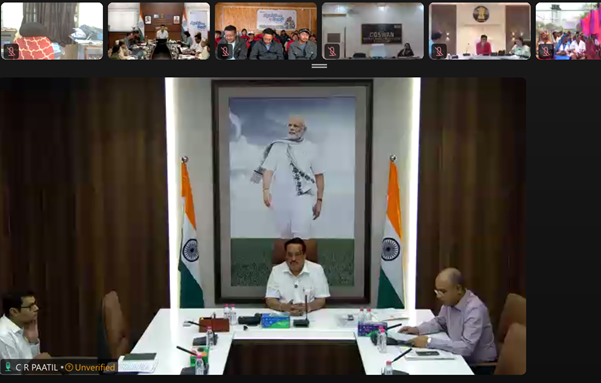
In his opening remarks, Shri Ashok K. K. Meena, Secretary, DDWS welcomed the participants and highlighted that presently a lot of Gram Panchayats are continuously working on maintaining a regular water supply, ensuring water quality, raising community awareness, managing expenses, resolving complaints, and ensuring the correct use of greywater along with the protection of water sources. Marking this progress under JJM, he mentioned that JJM 2.0 has shifted emphasis from mere infrastructure like pipes and tanks to sustainable delivery of safe, clean water to every household on a regular basis.
He urged for local ownership and community participation ahead of Panchayati Raj Day to be celebrated on April 24th, with Gram Panchayat representatives called upon to fully manage water systems. He mentioned that while the foundation is laid by the government, success is attributed to Jan Bhagidari, constant 24/7 monitoring of water schemes and the responsibility is shared by villagers rather than officials. He also said that GPs are tasked with ensuring regular supply, water quality testing, and greywater management; and district administrations are expected to offer technical and managerial support for long-term effectiveness across generations.
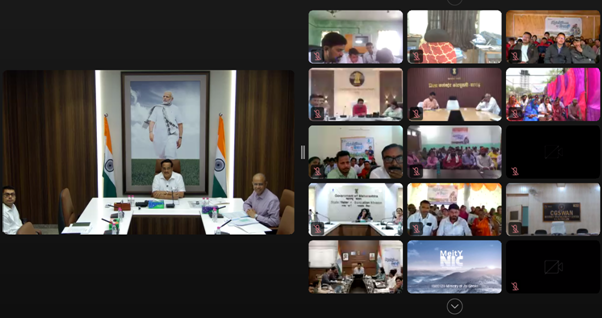
The Sixth edition of ‘Sujal Gram Samvad’ continued its pioneering model of conducting dialogues in regional languages, allowing villagers to share successes and challenges related to JJM and its related initiatives in their mother tongue. This featured participation from 10 Gram Panchayats across 8 States and 2 Union Territories, utilizing languages such as Ladakhi, Rajasthani, Mizo, Marathi, Telugu, Kannada and Hindi.
While conversing with the Gram Panchayats Sarpanches, leading representatives and community participants of each village, notable key highlights were collected which further continued with discussion on reform -linked MoU signing of the remaining states under JJM 2.0.
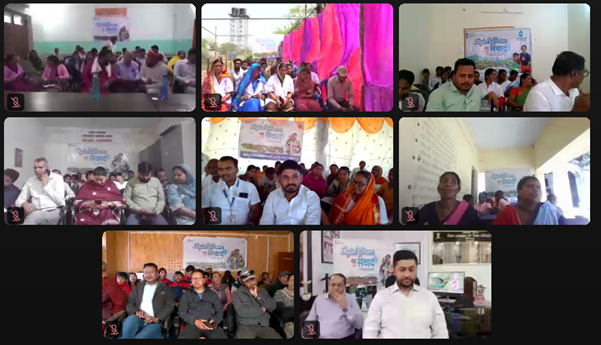
State-Wise Experiences Shared in Regional Languages
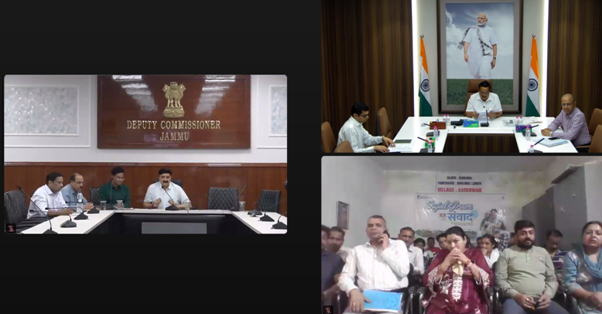
The Samvad began with representatives from Village Asserwan, GP Lower Bhalwal, District Jammu, Jammu & Kashmir. The village members mentioned that after Jal Jeevan Mission they were able to get clean drinking water from their taps, which was earlier a dream for them. They highlighted that JJM has changed their lives as they previously relied on handpumps and private water tankers.
The Mission director highlighted that tap water is supplied in the GP through gravity-based retrofitting scheme. He highlighted that PHED collects a total of 1000 rupees from each household per year for O&M implementation at the village level, this will be transferred to GP once the O&M policy notified.
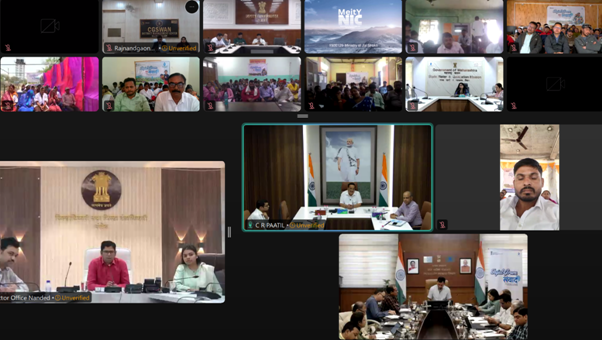
In Dhangarwadi GP, District Nanded, Maharashtra; Union Minister Shri C.R Patil himself interacted with the gram panchayat members in Marathi. A lively interaction took place with the minister and the community members, Sarpanch on user collection charges, water quality testing, rainwater harvesting and FTKs. They stated that ₹750 annual user charges are collected per connection to manage maintenance such as pipeline repairs and that regular village-level meetings are conducted.
District Collector, Nanded highlighted that DWSM meetings are held every month. He noted that household tap water access has enabled many women to take up sericulture with the time saved. He also informed that a Remote Monitoring System is being implemented in 16 villages for real-time monitoring, predictive maintenance, and leakage detection. While pointing out high electricity costs as a challenge, he shared that solar systems are being introduced to improve sustainability.
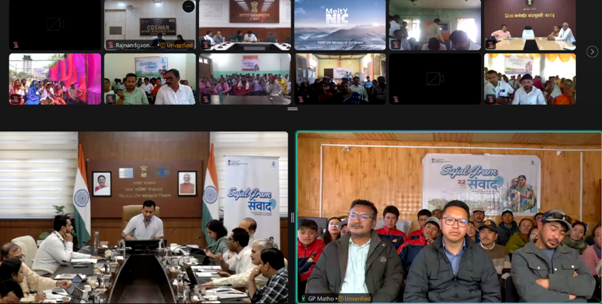
GP Matho, District Leh, Ladakh- Village members and community representatives highlighted community-led sustainability efforts that ensure long-term water security in challenging terrain. They said that Matho is a unique Gram Panchayat because of its spring-based water supply and drip water management approach. The representative informed that the village has achieved 100% household tap water coverage and the water supplied is clean and safe, with quality tested three to four times a year using Field Test Kits. The village’s spring-based supply and unique drip water model have already received national-level recognition. He added that the Panchayat is preparing to introduce a user charge system for maintenance and is currently working on finalizing the process.
While interacting with the Water Sanitation Committee Chairman and the community members from Matho Gram Panchayat, AS &MD, National Jal Jeevan Mission Shri Kamal Kishore Soan praised the GP for its unique technology. He also appreciated the GP for its equal participation and community role resulting to 70 litres per capita per day (LPCD) water in households.
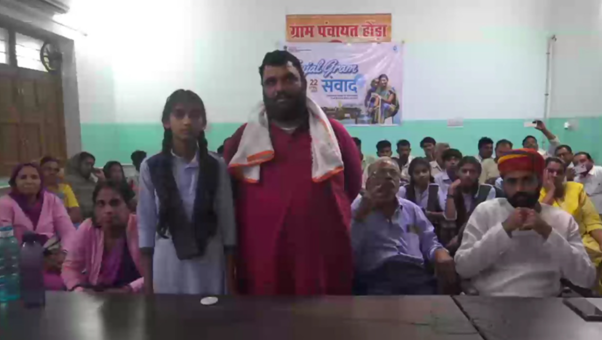
During the Samvad, the Sarpanch of GP Hoda, District Bhilwara, Rajasthan while interacting in Rajasthani language, told DDWS officers that JJM has had a positive impact in the water-scarce state. He noted that although Rajasthan is an arid region with water issues, every household in their Gram Panchayat now has tap water and proper pipeline connectivity under PM Modi’s Har Ghar Jal vision. He described it as a transformative change: women no longer struggle to carry water from far places, the Pani Samiti is working continuously and progressively, FTK testing is done regularly, and Gram Sabha meetings are held routinely.
Mission Director, Rajasthan informed that the model O&M policy is in the final stages of notification, under which user charges will be collected to support the sustainability of water supply systems. However, an amount of ₹18,000 crore has been earmarked under the Finance Commission grants to support O&M activities.
Representatives from Gram Panchayat Hmawngkawn in Serchhip district, Mizoram, shared their experiences in the Mizo language, where active local participation in water system maintenance has been particularly commended. Previously challenged by hilly terrain and seasonal shortages, the village has achieved reliable tap water supply to all households through dedicated VWSCs. Villagers contribute user charges for operation and maintenance, conduct regular quality testing, and protect local sources like springs and streams.
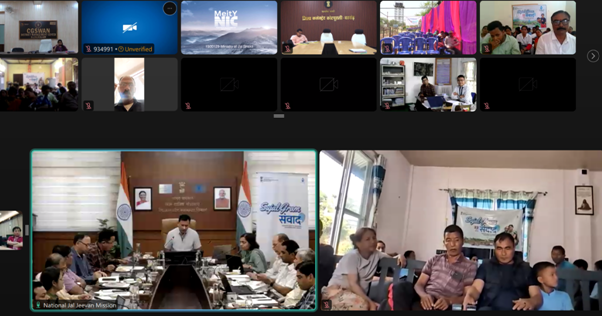
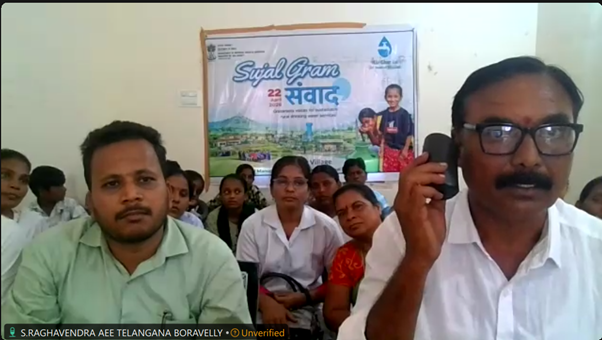
Representatives from GP Boravelly in Jogulamba Gadwal district, Telangana, interacted in Telugu and said, how VWSCs are spearheading system monitoring and management under JJM. They highlighted that full tap water coverage has been achieved across the Gram Panchayat, ending past water affected by high fluoride contamination. With Jal Jeevan Mission & Mission Bhagiratha, regular chlorination ensures safe, potable water of improved quality for the community. Active VWSC, including six women members, ensure strong participation and representation. They hold regular meetings to review supply, maintenance, and quality issues, and have also successfully organized Jal Arpan Diwas to promote community ownership and formal handover of water supply systems at the village level.
The district administrator mentioned that under Mission Bhagiratha, the State programme ensures a water supply of 100 lpcd to households. In the district the GP’s have a 100% coverage under Jal Seva Aankalan and DTUs have been successfully established.
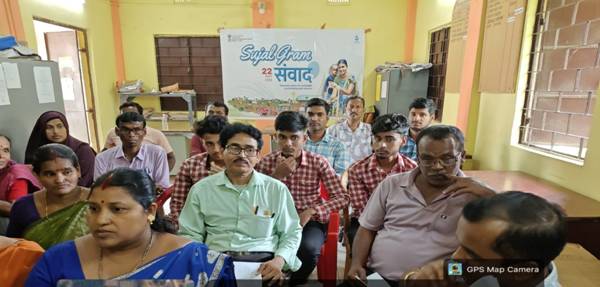
Progress under Jal Jeevan Mission was elucidated by representatives from GP Kalshimura in Sepahijala district, Tripura, in their local language Bengali. Villagers shared that under Jal Jeevan Mission, tap water has now reached every household in the village. Earlier, before the Mission, people had to face many hardships in collecting water. Women had to carry water on their heads and from distant sources. Now, with water being supplied to homes, the village receives an adequate quantity of water, and the earlier difficulties have reduced significantly. Jal Sakhis regularly test the water quality using FTKs.
During the interaction, a student named Rohan Abhata from Class 10 said that both his house and school now have access to tap water. Earlier, water had to be brought from far away, but now life has become easier because water is available at home.
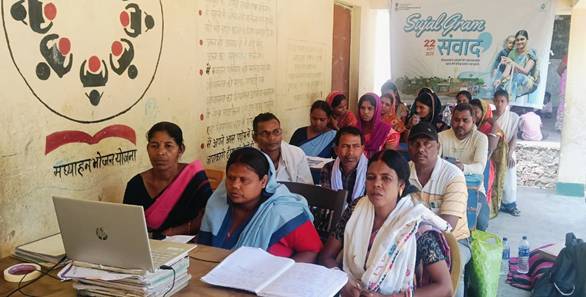
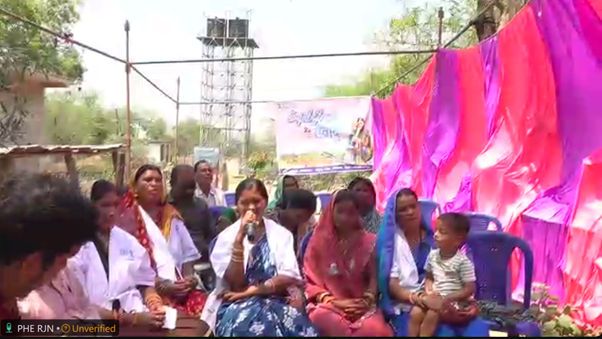
In GP Aruva, District Seraikela, Jharkhand, the village community members interacted in Ho & Hindi. The representative shared that under JJM, water supply systems have been established in the village with a borewell as the primary source. Earlier, the community depended on traditional sources such as wells, ponds, and jhiria, which were often unreliable and required significant effort to access. Each household contributes ₹1 per day as user charge, approximately ₹5,000 has been collected at the Panchayat level so far. Out of this ₹1,000 per month is provided to the pump operator, who is responsible for operating and maintaining the water supply system.
The representative also highlighted the role of the Jal Sahiya in community coordination and awareness. Additionally, members of the Anganwadi worker, Self Help Group have been trained in the use of Field Test Kits (FTK) and are actively involved in regular water quality testing to ensure safe drinking water.
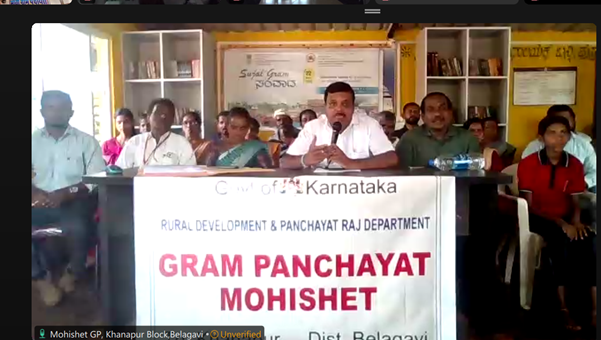
Representatives from GP Mohiseti in Belagavi district, Karnataka, interacted with DDWS officials in Kannada. Successful implementation of voluntary billing systems was highlighted by the village community members. They mentioned that user contributions of ₹80 per household is being collected and utilized for operation and maintenance. They also pay a monthly remuneration of ₹15,000 to the Pump Operator who is skilled under Nal Jal Mitra Program.
During the Samvad, the final interaction concluded with GP Bhatguna, Rajnandgaon district, Chhattisgarh. The Sarpanch along with the village committee members, Anganwadi workers interacted with the officials. They mentioned that after JJM the village avails good quality water 24/7 and quarterly water testing is carried on regular basis. The Jal Bahinis tests water quality using FTKs four times a year. The GP collects ₹80 per household as user charge.
District Collector, Rajnandgaon mentioned that along with Jal Sahiyas the district has Jal Yodhas for proper JJM implementation and functioning all along the district. He also mentioned that user charges are collected based on the population level of the villages in digital manner with QR code payment and tracking, enabling no corruption under JJM. He also emphasized on water sustainability, source sustainability, water rejuvenation and greywater management.
In his concluding remark and way forward, AS & MD, NJJM, Shri Kamal Kishore Soan, appreciated the Gram panchayats and district administrators for their active participation and lively interaction. He commended the participatory approach and urged the GPs to conduct DWS meetings on a regular basis along with proper implementation of O&M policy.
He encouraged continued efforts to expand such best practices and bring more Panchayats on board, so that similar models of transparency, community engagement, and accountability can be replicated in other sectors through skill development, training of Jal Sahiyas and workers at gram panchayat level.
The programme was moderated by Smt. Ankita Chakravarty, DS-NJJM, who welcomed the participants. The session concluded with a vote of thanks, marking another successful step towards achieving the vision of ‘Har Ghar Jal’ with community ownership at its core.
***
AMK/AK
(Release ID: 2254603)
Visitor Counter : 885