Ministry of Jal Shakti
Reform‑Linked MoUs signed with Uttarakhand, Karnataka and Tripura under Jal Jeevan Mission 2.0
MoU between the Centre and States reinforces cooperative federalism, enabling sustainable rural water delivery through accountable systems and empowered community participation
Posted On:
29 APR 2026 6:01PM by PIB Delhi
Reform-linked Memoranda of Understanding (MoUs) under Jal Jeevan Mission (JJM) 2.0 were signed today with the States of Uttarakhand, Karnataka and Tripura following the approval of JJM 2.0 by the Union Cabinet on 10 March 2026.
The reform‑linked MoU mandates a Gram Panchayat‑led, service‑based and community‑centred model of rural water governance, aligned with the objectives of Jal Jeevan Mission 2.0.
The reform‑linked MoU seeks to ensure that every rural household has access to drinking water supply in adequate quantity and of prescribed quality on a regular basis, through strengthened community participation (Jan Bhagidari) and bringing in structural reforms for sustainable operation and maintenance of rural water supply systems, thereby enhancing the living standards of rural communities contributing to long‑term water security aligned with the national vision of Viksit Bharat @2047.
The MoUs were signed during separate scheduled meetings in the presence of the Union Minister of Jal Shakti, Shri C.R. Patil, and Minister of State, Shri V. Somanna. All Chief Ministers of the said three states joined the meeting virtually as per the respective scheduled times.
The MoU with Uttarakhand was signed in the presence of the Chief Minister of Uttarakhand, Shri Pushkar Singh Dhami, who joined the event virtually along with senior officials from the Government of Uttarakhand.
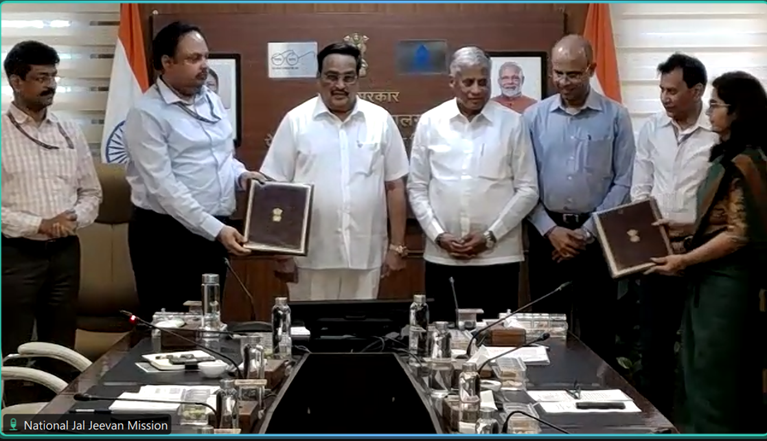
The MoU was signed between Smt. Swati Meena Naik, Joint Secretary (Water), DDWS, and Shri Ranveer Singh Chauhan, Secretary, Dept. of Drinking water and sanitation, Uttarakhand. To exchange the MoU Shri Ajay Mishra, Residence Commissioner, Uttarakhand was present in the office of DDWS physically.
The MoU with the State of Karnataka was formally signed in the virtual presence of Chief Minister Shri Siddaramaiah, Shri Priyank Kharge, Minister for RDPR and IT & BT and other senior officials from the State.
The MoU was signed and exchanged between Smt. Swati Meena Naik, Joint Secretary (Water), DDWS, and Shri Sameer Shukla, Secretary, Rural Development & Panchayat Raj, Karnataka.
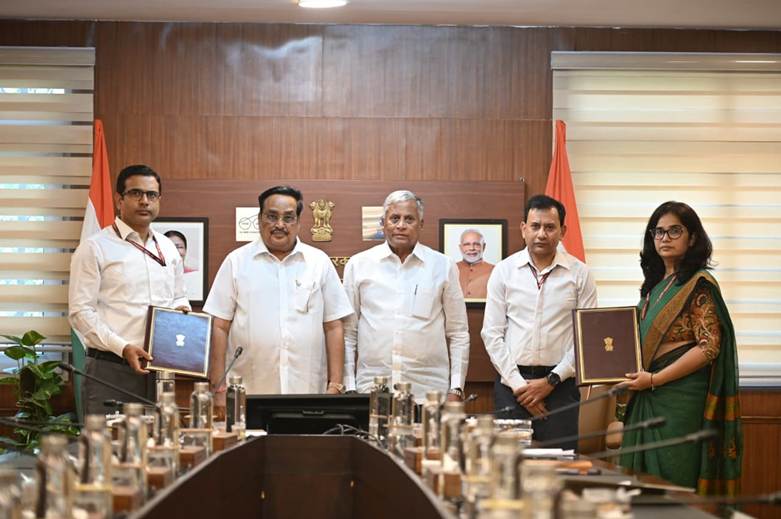
For the State of Tripura, the MoU signing took place in the virtual presence of Chief Minister Prof. (Dr.) Manik Saha and other senior officials from the State.
The MoU was signed between Smt. Swati Meena Naik, Joint Secretary (Water), and Shri Abhishek Singh, Secretary, PWD, Tripura, and was exchanged by Smt. Brammeet Kaur, Residence Commissioner, Tripura.
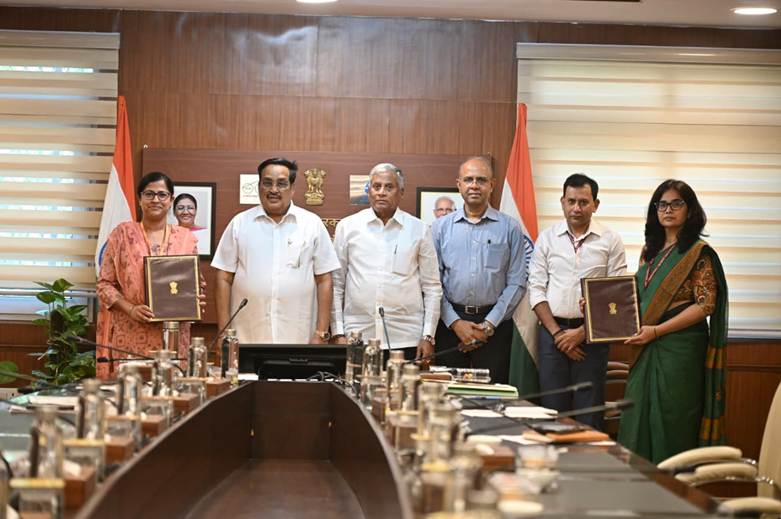
Senior officials from the Department of Drinking Water and Sanitation (DDWS), including Shri Ashok K. K. Meena, Secretary, DDWS, Shri Kamal Kishore Soan, Additional Secretary & Mission Director, National Jal Jeevan Mission (NJJM), along with officers from DDWS were present during the MoU signing.
Addressing the gathering, Union Minister of Jal Shakti, Shri C. R. Patil, said that under the visionary leadership of Prime Minister Shri Narendra Modi, Jal Jeevan Mission has reached extensively at the rural level, and the mission has emerged as a people‑centric movement aimed at enhancing dignity, health and empowerment in rural areas.
Highlighting the evolution of the Mission timeline, Shri Patil stated that while the original deadline was May 2024, it has been extended till December 2028 under the guidance of the Prime Minister, with the aim of achieving 100 per cent tap water coverage and sanitation across the country.
In this regard, Shri Patil urged all the three states to continue the good work and implement Operation and Maintenance of Rural Water Supply at GP level. While addressing state‑specific contexts, Shri Patil highlighted Uttarakhand's stellar achievement of 98% coverage under JJM, providing tap water connections to 14.20 lakh out of 14.48 lakh rural households.
Under his address to the State of Karnataka, he urged the officials to implement the central schemes properly throughout the state. He also urged the Chief Minister to review the issues related to water within the state and take corrective measures to speed up JJM 2.0 implementation.
While addressing, Shri Patil commended Tripura’s achievement of 86% under Har Ghar Jal scheme and urged the state to assure the reporting and certification for HGJ remaining villages on a priority basis.
Shri C.R. Patil further emphasized to all the three states for proper implementation of O&M policy as per JJM 2.0 guidelines along with documented data of the implementation on the JJM Dashboard. He also emphasized the creation of Sujal Gaon ID, establishments of DTUs along with timely arrangements of routine DWS meetings in each district. He also mentioned that the states need to bear the costs of implementation for O&M and Retrofitting at state level.
Shri Patil further stated that Jal Jeevan Mission is not merely a scheme, but a life‑impacting mission that is bringing about fundamental improvements in health, dignity and quality of life, particularly for women and rural communities. Thus, regular and continuous drinking water supply must be ensured in every village, and public grievances should be addressed promptly.
During signing of MoU, Chief Minister of Uttarakhand Shri Pushkar Singh Dhami stated that the Government of Uttarakhand has always worked in cooperation with the Central government. He highlighted the States’s 98% coverage with functional household tap water connection (FHTCs). He expressed his special gratitude to Shri C.R. Patil for his cooperation, support, and guidance, while showing confidence under the MoU signing as it will accelerate JJM works which are crucial for 14 lakh rural families in the Himalayan state. While highlighting the challenges of Uttarakhand's terrain, landslides, and disasters, he mentioned that under Prime Minister Shri Narendra Modi’s guidance the state is adopting balanced ecology-economy efforts including digital monitoring, glacier research, slope conservation, plantations, and public awareness. He also highlighted the benefits achieved through SARRA (Spring and River Rejuvenation Authority) with over 6,500 sources treated in the past year and 3.5 million cubic meters of rainwater harvested along with 1,000 villages being revived under Jal Shakti Abhiyan.
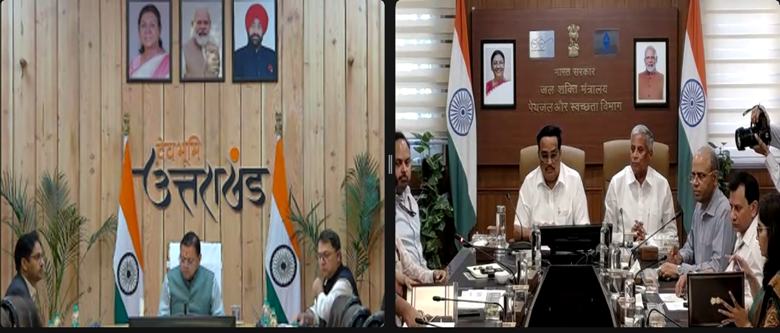
He committed that the state government will abide by all the points of MoU and assured that Uttarakhand would uphold the confidence placed in it through timely execution and strict adherence to the structural reforms envisaged under JJM 2.0, with a focus on quality works, institutional strengthening and long‑term sustainability of rural drinking water systems.
Chief Minister of Karnataka Shri Siddaramaiah highlighted Karnataka's 87% progress under Jal Jeevan Mission at MoU signing, despite of structural water stress challenges as the second arid state of the country. He emphasized the state's sustainability-driven response which ensures safe, reliable drinking water for every household, with uncompromising quality standards maintained in execution.
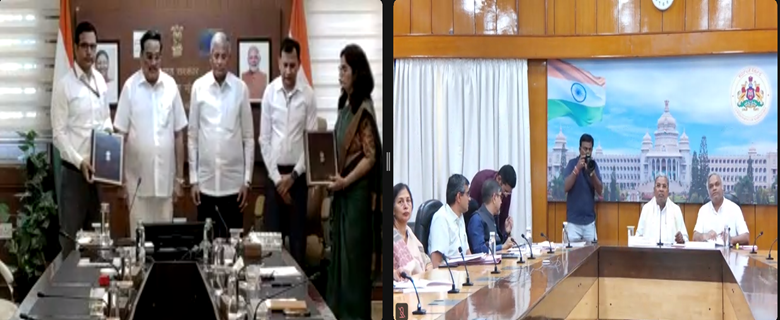
While highlighting the urgency of release of pending funds, the minister assured a full commitment to time-bound completion of JJM 2.0. He also mentioned that Karnataka is among the first states to implement the comprehensive O&M policy and Village Water and Sanitation Committees (VWSCs) with gender-balanced members.
Prof. (Dr.) Manik Saha, Chief Minister of Tripura, highlighted 86% coverage under JJM, which was initially 3% during the commencement of JJM in 2019. While highlighting the achievements of state under JJM, he mentioned that Jal Seva Aankalan has been completed in 151 GPs so far and District Technical Units have been constituted across all 8 districts as the backbone of Water and Sanitation Mission.
He also mentioned that the state is continuously working on O&M policy implementation as per JJM 2.0 guidelines which will commence by May 2026. Further he assured his full commitment to JJM 2.0 guidelines for safe and sustainable tap water supply in every household within the state.
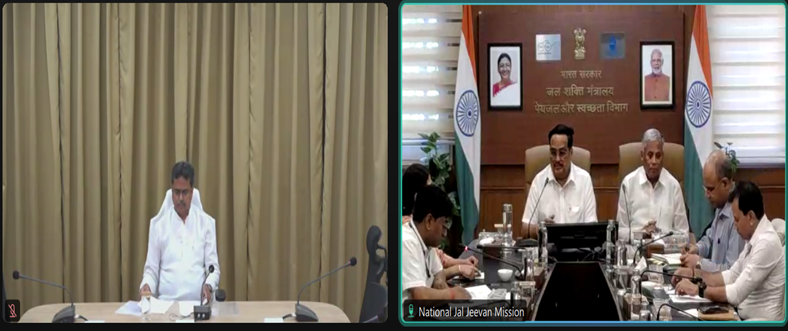
In his opening remarks, Shri Ashok K.K Meena, Secretary, DDWS highlighted that the MoU signing is a shared commitment between the state and the Centre under the Jal Jeevan Mission for providing safe, pure and sustainable drinking water to every household. He further emphasized that under this agreement, Gram Panchayats are now entrusted with the responsibility of managing village water systems and collecting water taxes to ensure long-term sustainability. To support this, he called upon district administrations to hold regular meetings of the District Water and Sanitation Mission (DWSM) to finalise and certify village-level saturation plans.
***
AMK/AK
(Release ID: 2256663)
Visitor Counter : 1706