Ministry of Road Transport & Highways
Through the Ghats, Towards Safer Travel: Voices from the Indore–Khandwa Highway Transformation
Three Tunnels to Make Travel Easier Through Hilly Region
Posted On:
08 MAY 2026 4:44PM by PIB Delhi
For years, the winding ghat roads between Indore and Khandwa have carried more than just vehicles. They’ve carried anxiety, delays and uncertainty. Pradeep Gowli, a farmer from Simrol, remembers those journeys all too well. Transporting produce to market was never just about distance; it was about risk. Sharp curves, traffic bottlenecks and the constant fear of vehicles overturning through difficult ghat terrains meant that even reaching the mandi markets on time was uncertain. Spoiled goods and missed market opportunities were part of the cost of a difficult road.
This reality, however, is on the brink of change. Strengthening connectivity between the key cities of Indore and Khandwa, the four-laning of the 33.4-km Tejaji Nagar–Balwara stretch of NH-347BG, under the Indore–Ichhapur Corridor, from two lanes is not just about widening a road. It’s about reimagining connectivity across a critical corridor in Madhya Pradesh by the Ministry of Road Transport & Highways.
For Ranjit Singh, a driver ferrying pilgrims and tourists to Ujjain and Omkareshwar along this corridor, the journey has long demanded careful attention. Narrow two- lane stretches, sharp bends through challenging ghat sections, growing traffic and frequent accidents made every trip stressful — for both driver and passengers.
Safety was never guaranteed and delays were routine. A local resident, who has witnessed the road’s condition for years, recalls scenes of buses toppling down slopes and traffic jams stretching up to 10 kms, sometimes lasting days. These weren’t isolated incidents but a pattern that disrupted lives, healthcare access and livelihoods.
This gap between importance and infrastructure highlighted a pressing need: a modern, efficient corridor that could not only ease travel but also strengthen economic flow, support regional growth and meet the demands of a rapidly evolving transport network.
Three Tunnels to Make Travel Easier Through Hilly Region
The project is progressing with three tunnels near Indore being built using the New Austrian Tunnelling Method (NATM) to help vehicles travel easier through the treacherous hilly sections of the region with more safety and smoothly, especially during monsoons and peak traffic hours. These include the Bherughat Tunnel (575 meters), Baigram Tunnel (480 meters) and Choral Ghat Tunnel (550 meters). This development is part of the Indore-Ichhapur Corridor initiative undertaken by the Government to strengthen regional connectivity and economic activity. Major black spots such as Bherughat and Choral Ghat will be permanently addressed with these tunnels and significantly reduce accidents.
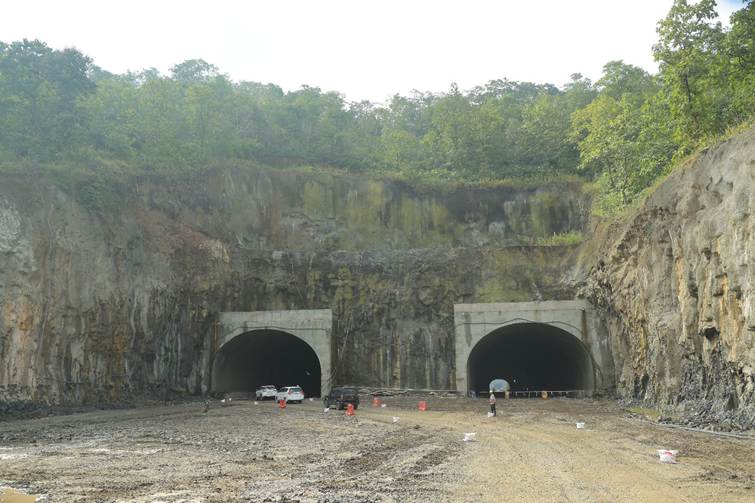
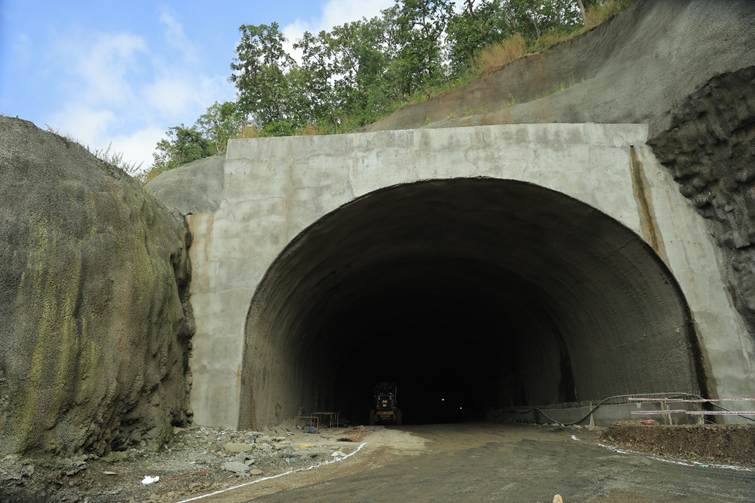
Key Highlights of the Project:
-
4-laning of 33.4 km Tejaji Nagar–Balwara section of NH-347BG under Indore–Ichhapur Corridor
-
Progress status: 88% complete
-
₹924.44 crore investment
-
Engineering Highlights: Construction of three tunnels — Bherughat, Baigram and Choral Ghat — to bypass risky ghat sections
-
Faster, safer travel with reduced congestion & enhanced connectivity to key destinations like Omkareshwar and Khandwa
-
Improved connectivity between Indore and Hyderabad via Jalgaon, Maharashtra
Enabling Momentum through Indore–Ichhapur Economic Corridor Improving this corridor is considered strategically important because Indore is widely regarded as the commercial capital of Madhya Pradesh, known for its strong presence in industry, trade, business and education. Meanwhile, Khandwa serves as a key transport and railway junction in southern Madhya Pradesh, linking several important towns and cities. It’s an important gateway for regional trade and religious connectivity, especially the revered Omkareshwar Jyotirlinga, scenic Hanuwantiya Island and Dada Dhuniwale Darbar.
For long, the Indore–Khandwa route has been an important link connecting western and southern parts of the state, facilitating the movement of agricultural produce, industrial goods and countless daily journeys of people, traders and pilgrims. But the road faced several challenges such as limited width, increasing traffic pressure, sharp curves and difficult ghat sections. This resulted in longer
travel times, higher fuel consumption and increased accident risks, particularly during monsoon and fog conditions. This story is now about to change with the project nearing completion and expected to be ready by this year.
Improved Connectivity in the Region
With the upcoming 4-lane National Highway, travel between Omkareshwar, Burhanpur, Jalgaon, Khandwa and Indore is set to become faster and better. During Simhastha 2028, large number of devotees are expected to travel between the religious sites of two major Jyotirlingas — Mahakaleshwar Jyotirlinga in Ujjain and Omkareshwar Jyotirlinga in Mandhata of Khandwa district. The upgraded corridor will help manage this heavy traffic smoothly and safely, ensuring a more efficient travel experience for all.
Focus on Environmental and Road Safety
Special focus has been given to environmental and safety aspects as well. Modern drainage systems, crash barriers, road safety signage, proper rainwater management and plantation activities for green belt development have been incorporated to make it a sustainable and environment-friendly highway.
Quicker Commutes with Less Congestion
The construction of the Tejaji Nagar–Balwara road is now 88 percent complete at the moment and will significantly reduce travel time from Indore to Omkareshwar of 2 to 3 hours to just 1 hour, offering a huge respite and comfortable journey to travellers from massive traffic jams and dangerous ghat turns with the opening of the tunnels.
Easing Everyday Challenges to Farmers and Local Communities
For farmers like Pradip, the upcoming tunnels bring a much-needed sense of relief. He says, “Earlier when we used to transport our produce, we were scared that our vehicle would overturn. There used to be traffic jams and our produce used to get spoilt. Not reaching in time in the market, there was a problem in selling our goods too there. With these tunnels, a lot of problems will go for us, especially the jams we used to face.”
For drivers such as Ranjit, who regularly ferry tourists along this route, safety stands out as the biggest advantage. “I am constantly worried because driving on the current two-lane road is always stressful. There’s constant fear because accidents happen on the stretch almost every day,” he says. “It will be safer and easier for us to drive, once the four-lane road is complete.”
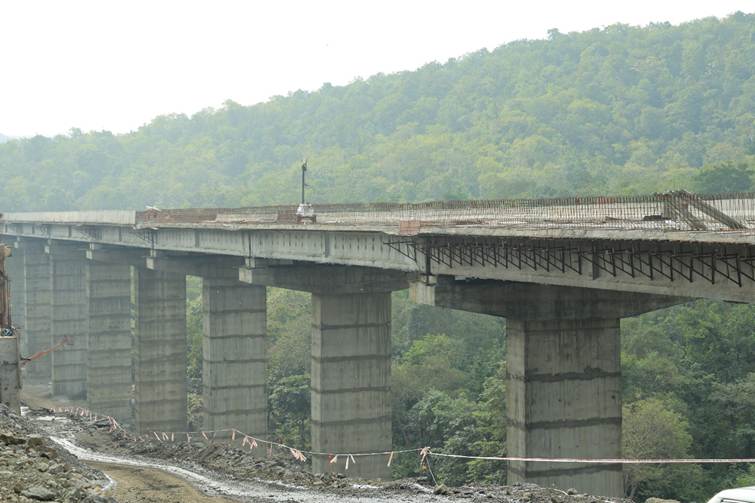
*****
GDH/DS/HJ
(Release ID: 2259072)
Visitor Counter : 1445