National Human Rights Commission
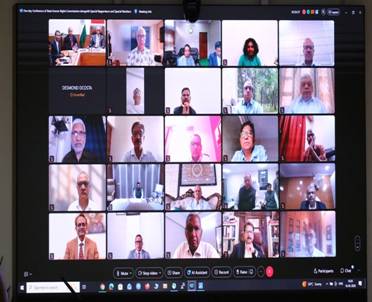
NHRC, India holds a day-long Conference of SHRCs along with its Special Rapporteurs and Special Monitors in 'virtual mode' in New Delhi
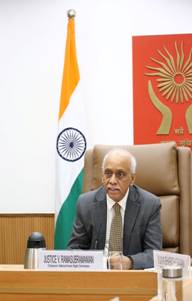
Chairing the Conference, NHRC Chairperson, Justice V. Ramasubramanian advises for maintaining jurisdictional clarity as per the PHR Act to reduce unnecessary litigation and enable the Commissions to deliver more effective and quality service
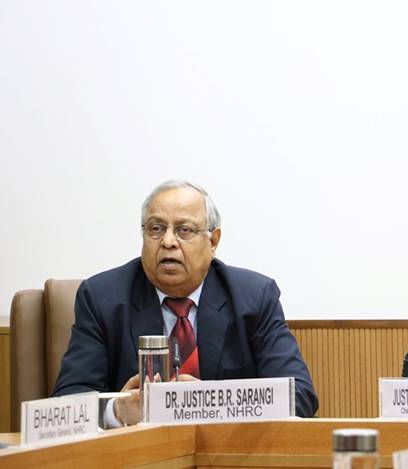
NHRC Member, Justice (Dr.) Bidyut Ranjan Sarangi describes the interaction between the NHRC and SHRCs as an important initiative to strengthen coordination
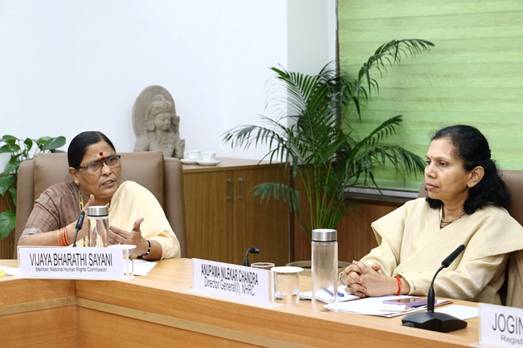
NHRC Member, Smt. Vijaya Bharathi Sayani urges SHRCs to increase field visits and engage more with affected communities
NHRC Secretary General, Shri Bharat Lal emphasises the need to bridge the gap between policy intent and ground-level implementation as well as lived realities through a coordinated approach for creating a more effective deterrent against human rights violations
Posted On:
19 MAY 2026 1:17PM by PIB Delhi
The National Human Rights Commission (NHRC), India organised a day-long Conference of the State Human Rights Commissions (SHRCs) along with its Special Rapporteurs and Special Monitors in virtual mode at its premises in New Delhi. Chairing the Conference, NHRC Chairperson, Justice V. Ramasubramanian emphasised that India’s human rights framework is unique, as both the NHRC and SHRCs exercise concurrent jurisdiction on certain matters in addition to their subject-specific jurisdiction. He underlined that the country’s human rights performance is assessed collectively through the functioning of all Commissions. Therefore, there is a need to avoid duplication of cases, improve information sharing and promote best practices. NHRC Members, Justice (Dr.) Bidyut Ranjan Sarangi, Smt. Vijaya Bharathi Sayani; Secretary General, Shri Bharat Lal; DG (I), Smt. Anupama Nilekar Chandra and senior officers were present.
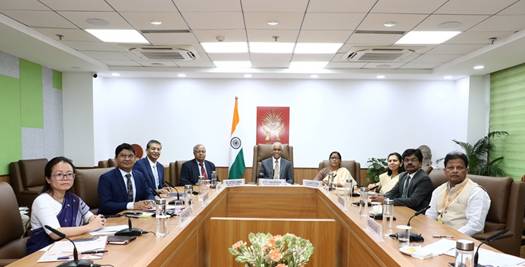
Justice Ramasubramanian urged SHRCs to digitise their functioning and join a common integrated HRCNet portal with the NHRC. He also cautioned the Commissions against exceeding their jurisdiction, noting that while courts have expanded the scope of fundamental and human rights, human rights institutions must remain guided by the definition under the Protection of Human Rights Act. He said that maintaining jurisdictional clarity would reduce unnecessary litigation and enable Commissions to deliver more effective and quality service. He also expressed hope for closer collaboration and future in-person engagements among the Commissions.
|
|
|
Member, Justice (Dr.) Bidyut Ranjan Sarangi described the interaction between the NHRC and SHRCs as an important initiative to strengthen coordination. He underlined the need for better communication and coordination between them to ensure effective implementation of orders and timely delivery of benefits to persons in distress, particularly in sensitive matters such as custodial deaths.
Member, Smt. Vijaya Bharathi Sayani urged SHRCs to increase field visits and engage more with affected communities. She said that coordination between SHRCs and NHRC Special Monitors and Special Rapporteurs may strengthen institutional effectiveness. She also highlighted the initiative of Karnataka government displaying SHRC contact details for public assistance.
Before this, giving an overview of the Conference, the NHRC Secretary General, Shri Bharat Lal in his opening remarks said that human rights is a complex subject requiring collective action, close coordination and a reconciled approach among the NHRC and its Special Rapporteurs and Special Monitors with the SHRCs. Referring to complaints received through the Commission’s online system, he highlighted that in the last 5 years, 4.28 lakh complaints have been received out of which major complaints fall in different categories viz. Police related violations (18%), organized exploitation by mafias (17.4%), service matters – non-payment of pensions/ salary (6%), violations of women’s rights (5.8%), conditions in jails and prisons (3.5%), Workers rights violations (2.2%), health related violations (2%), human rights violations in educational institutions (2%), child rights violations (1.7%) among others.
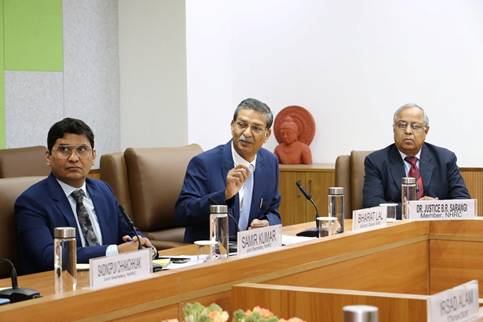
Emphasising proactive monitoring and field-based interventions, he also highlighted the cases of custodial deaths, abuse in shelter homes, poor living conditions in mental health institutions, manual scavenging deaths, as well as gaps in rehabilitation and certification mechanisms for beggars, persons with disabilities and transgender persons. He expressed the hope that such engagements and dialogues may help in building stronger institutional coordination to bridge the gap between policy intent and ground-level implementation, while creating a more effective deterrent against human rights violations.
Digital governance plays a crucial role in ensuring speedy and efficient redressal of human rights violations. The NHRC has developed the HRCNet portal as a complaint management system. Its adoption by all human rights institutions can help avoid duplication and improve coordination in handling cases. So far, 23 SHRCs have adopted the system and are onboarded. However, the SHRCs of Andhra Pradesh, Gujarat, Jharkhand and Nagaland are yet to onboard, while the Madhya Pradesh and Rajasthan SHRCs, despite being onboarded, are yet to begin processing complaints through the portal.
At the international level, human rights violations are monitored through global mechanisms, while within the country, the NHRC, 27 SHRCs and various sectoral commissions work towards the protection and promotion of human rights. Therefore, it is important to have a holistic picture of the work being carried out across the country available at one place.
The two sessions of the Conference included an interaction with the SHRCs to understand their challenges, followed by NHRC, India Special Rapporteurs and Special Monitors on their field experiences to strengthen the human rights mechanism in the country.
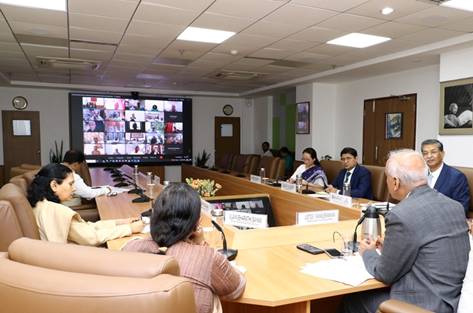
The Chairperson, Members and representatives of the SHRCs of Himachal Pradesh, Haryana, Rajasthan, Uttar Pradesh, Odisha, Assam, Manipur, Tripura, Meghalaya, Nagaland, Chhattisgarh, Telangana, Gujarat, Goa, Karnataka participated in the discussions besides the NHRC Special Rapporteurs and Special Monitors who have been assigned thematic areas of human rights and zones respectively to report on the human rights situation to the Commission for its recommendations.
Some of the important suggestions, among others, that emanated from the Conference for strengthening of SHRCs and institutional coordination are as follows:
- Strengthening the SHRCs by the state governments through improved staffing, infrastructure, outreach, field engagement and institutional capacity to effectively address increasing complaints relating to custodial violence, police excesses and other human rights violations;
- Enhancing the enforceability and legal clarity of Human Rights Commission recommendations and increasing public awareness regarding the mandate, powers and jurisdiction of Human Rights Commissions;
- SHRCs should join the HRCNet portal for handholding and integrated digital data-sharing with NHRC, India to improve coordination, monitoring and avoidance of duplication of proceedings;
- SHRCs and NHRC Special Monitors and Special Rapporteurs to improve mutual coordination for convergence among government departments and other stakeholders for better accountability and follow-up action;
- Increasing frequency of coordinated field visits, inspections and institutional follow-up, including visits to prisons, mental health institutions, de-addiction centres, shelter homes, hospitals, old age homes and other vulnerable institutions;
- NHRC and SHRCs need to strengthen outreach, legal aid and accessibility mechanisms for vulnerable persons unable to independently approach institutions, including women, children, homeless persons, elderly persons and persons with mental illnesses;
- SHRCs to follow up NHRC directives to states to prevent misuse of human rights platforms by fraudulent organisations, intermediaries and vested interests;
- SHRCs need to further expand NHRC, India’s initiatives for human rights awareness, education and sensitisation initiatives through academic institutions, human rights cells and community outreach programmes;
Special Rapporteurs and Special Monitors provided excellent feedbacks and inputs from the ground. The suggestions for the thematic and sector-specific human rights concerns are as follows:
- Focus may be on preventive human rights interventions through regular training and capacity-building of police, correctional staff and CAPFs, rather than relying primarily on punitive action after violations occur;
- Prison reforms to be implemented and followed, including reduction of overcrowding, improved living conditions, better communication facilities, standardisation of prison wages and expansion of observation homes and shelter homes;
- Ensuring proper rehabilitation of rescued child labourers, bonded labour victims and other vulnerable children through stronger coordination, legal enforcement and awareness among district authorities and police;
- Strengthening Child Welfare Committees, child protection systems and restoration of child and senior citizen helplines across districts and states;
- Greater emphasis on mental health, leprosy and disability rights through rehabilitation, stigma reduction, welfare access and community-based monitoring;
- Ensuring protection and recognition of intersex infants, gender non-conforming children and other vulnerable groups, including monitoring of institutional and medical practices affecting them;
- Improving dignity and accessibility in welfare delivery systems, including PDS shops and institutions serving vulnerable populations;
- Using scientific and real-time environmental monitoring systems, evidence-based research and environmental justice mapping to address pollution, water contamination and climate-related human rights concerns;
- Improving occupational safety, healthcare, insurance and welfare protections for sanitation workers, dump-site workers, truck drivers, mine workers and other vulnerable labour groups;
- Strengthening awareness campaigns and preventive mechanisms for occupational diseases such as silicosis through safer technologies, protective measures and diagnostic infrastructure;
- Improving conditions in schools, tribal hostels, hospitals, prisons and other institutions through regular inspections, grievance redressal and monitoring mechanisms;
- Improving availability of specialised teachers and inclusive educational support systems for children with hearing, visual and other disabilities;
- Replicating successful welfare and rehabilitation models, including Anganwadi-linked childcare facilities in prison and community-based support systems, across states;
- Ensuring compensation, rehabilitation and welfare support for frontline workers and disaster-affected personnel; and
- Addressing concerns relating to recruitment standards and quality of public health services as part of the right to health framework.
***
NSK
(Release ID: 2262697)
Visitor Counter : 171