PIB Backgrounder
Prime Minister’s Visit to the Netherlands
Advancing Energy, Technology and Strategic Cooperation
Posted On:
21 MAY 2026 5:28PM by PIB Delhi
India–Netherlands Relations in an Emerging Global Order
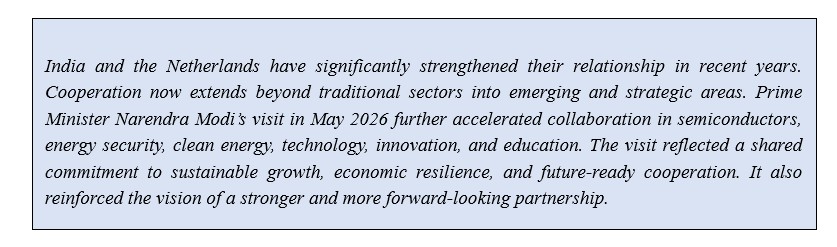
India and the Netherlands share a strong and expanding partnership since establishing diplomatic relations in 1947. Over the decades, cooperation has expanded across trade, investment, water, agriculture, health, and innovation. In an emerging global order, regular high-level exchanges have strengthened bilateral engagement. They have also created momentum for deeper economic and technological collaboration. Both countries now cooperate in semiconductors, renewable energy, maritime technology, defence, education, and digital innovation. The partnership also supports sustainable development, global supply chain resilience, and rules-based international cooperation. Strong people-to-people ties and growing business engagement have further deepened bilateral relations. Prime Minister Narendra Modi’s visit in May 2026 further strengthened this future-oriented partnership and India’s engagement with Europe.
India–Netherlands: Driving Innovation, Trade and Sustainability
The India-Dutch partnership is built on strong historical ties and expanding strategic cooperation. It combines Dutch strengths in frontier technologies with India’s scale and innovation ecosystem. Cooperation is growing in semiconductors, green hydrogen, maritime technology, and skilled mobility. The partnership is also important for global governance, economic resilience, and sustainable development. It reflects shared economic interests, technological collaboration, and common global ambitions.
Strategic and Geopolitical Context: The Netherlands today engages India not as a market alone, but as a major power. The Dutch ecosystem of frontier technology paired with India's scale of deployment defines a partnership of “innovation meets scale,” visible most strikingly in semiconductors, water, hydrogen and maritime technology.
Trade, Investment and EU FTA Gateway: The Netherlands is one of India's largest trade destinations in Europe, with bilateral trade worth USD 27.8 billion (2024-25). It is the fourth largest investor in India with a cumulative FDI of USD 55.6 billion. The total merchandise trade with the Netherlands accounts for 2.46% of India’s total merchandise trade. India has a trade surplus of USD 17.393 billion (INR 144,095 crores) with the Netherlands.
There are over 300 Dutch companies present in India and over 300 Indian companies present in the Netherlands. Organisations like the Netherlands India Chamber of Commerce & Trade (NICCT) and the Indian Business Chamber (IBC) promote bilateral trade and investment between the economies.
Semiconductor Collaboration: In 2024, India and the Netherlands forged a partnership to revolutionise India's semiconductor sector through skill development, training programmes, collaborative research and development and promoting start-ups and entrepreneurship in the sector.
Energy Security & Clean Energy: India and the Netherlands have been working together to scale up the joint ambition for climate change mitigation and adaptation. The two countries have been working together on connecting stakeholders; ensuring knowledge transfer; technology co-development; exchange of best practices; end-to-end infrastructure development and operational safety. The key areas of collaboration are promoting the use of green hydrogen and developing green ports.
Mobility, Diaspora and Tourism: The Netherlands has the second largest population of people of Indian origin in Europe (next only to the UK). It is home to about 240,000 members of the Indian Diaspora, including approximately 20,0000 members of the Hindustani-Surinami community wholly integrated into Dutch society. Both sides are working to streamline migration and mobility.
The India–Netherlands partnership has evolved from strong historical ties into a future-oriented strategic collaboration. Prime Minister Modi’s visit marked a significant step in deepening this comprehensive partnership and strengthening India’s engagement with Europe in an increasingly multipolar world.
PM Visit for Expanding Bilateral Trade and Technology Partnership
The Prime Minister of India and Their Majesties King Willem-Alexander and Queen Máxima of the Netherlands held discussions on strengthening India–Netherlands relations, with a focus on people-to-people ties and cooperation in education, innovation, semiconductors, digital technology, water management, and green partnerships.
They noted the significant progress achieved across these priority areas in recent years. Prime Minister Narendra Modi and Prime Minister of the Netherlands, H.E. Mr. Rob Jetten, also acknowledged the growing momentum and strategic convergence between the two countries. Recognising the expanding scope of bilateral cooperation, the two leaders decided to elevate India–Netherlands relations to a “Strategic Partnership” for the period 2026–2030. The partnership will focus on regular high-level policy dialogues and deeper cooperation across sectors of mutual interest.
Both sides agreed to strengthen economic and investment ties by
- Promoting bilateral trade
- Improving market access
- Encouraging SME participation
- Facilitating investments
- Building resilient value chains,
Additionally, enhanced collaboration extend to
- Water, agriculture and health
- Emerging technologies
- Innovation, science and education
- Energy transition and sustainable development
- Maritime affairs
- Defence and security cooperation
- Migration and mobility and
- Cultural and people-to-people exchanges
Prime Minister visit reaffirmed the importance of deeper international collaboration in addressing shared global challenges and advancing sustainable development. It also highlighted the growing role of strategic partnerships in strengthening innovation, economic resilience, and rules-based global cooperation.
Key Outcomes of the Bilateral Discussion
The outcomes from the Prime minister visit reflect the deepening of India–Netherlands ties and the growing potential for long-term, resilient cooperation across strategic sectors. They also highlight a shared commitment to strengthening global governance, advancing sustainable development, promoting innovation-driven growth, and enhancing cooperation on emerging global challenges through stronger bilateral and multilateral engagement.
Outcome 1: Signing of the India-Netherlands Strategic Partnership
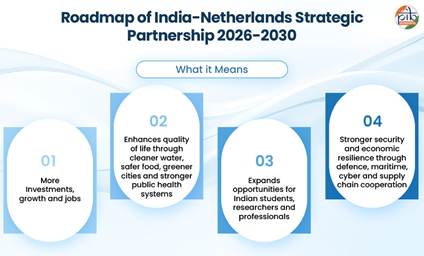
The strategic partnership will further strengthen both country relations and support resilient economic growth aligned with the vision of Viksit Bharat. It will enhance bilateral trade and investment while creating greater employment opportunities in India. The collaboration will also boost academic and research cooperation, fostering innovation and higher research output. In addition, it covers sectors of strategic importance to India’s security and development goals.
Outcome 2: Restitution of Chola Copper Plates to the Government of India
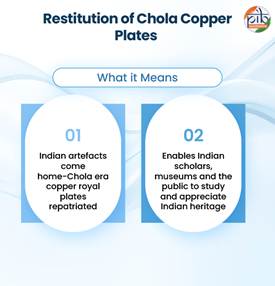
The return of 11th-century Chola Copper Plates to India marked by an important cultural milestone. The plates are royal charters issued by Chola kings and contain inscriptions in Tamil and Sanskrit. They record the grant of Anaimangalam village to a Buddhist vihara in Nagapattinam, Tamil Nadu. Their return will support greater research and appreciation of India’s cultural and historical heritage.
Outcome 3: Strengthening Diasporic Cooperation
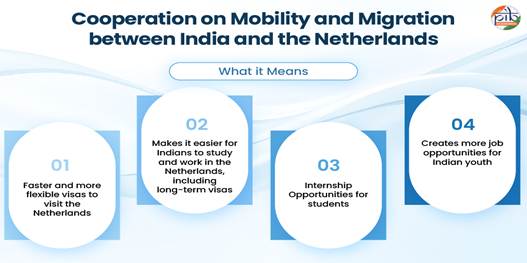
Strengthened mobility and diasporic cooperation will make movement between India and the Netherlands easier and more accessible. Indian students will gain improved academic, research, and internship opportunities. Skilled professionals will benefit from faster and more flexible visa access. The partnership will also create new employment opportunities for Indian youth. These measures will deepen people-to-people ties and promote stronger educational and professional collaboration.
Outcome 4: Cooperation between Tata Electronics and ASML
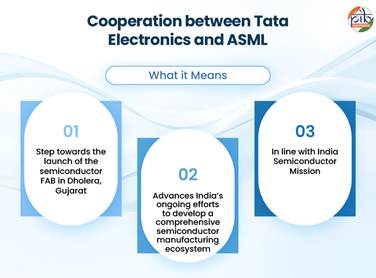
Cooperation in semiconductor sector will mark an important step in advancing India’s ambitions. It supports the development of a semiconductor fabrication facility in Dholera, Gujarat. The partnership will strengthen India’s position in the global semiconductor value chain and promote technology collaboration. It also aligns with the objectives of the India Semiconductor Mission and supports the growth of advanced manufacturing capabilities in India.
Outcome 5: Cooperation in the field of Critical Minerals
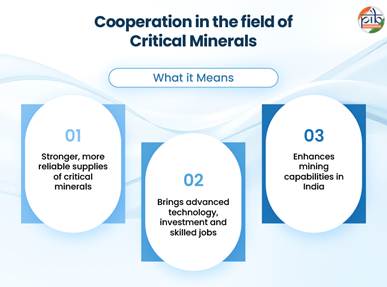
Cooperation in critical minerals will strengthen reliable supply chains for essential resources. It will support India’s clean energy and advanced manufacturing ambitions. The partnership will also bring advanced technologies, investments, and skilled employment opportunities. It is expected to enhance India’s mining and processing capabilities in strategic minerals.
Outcome 6:Technical Cooperation with the Netherlands in the Kalpasar Project, Gujarat
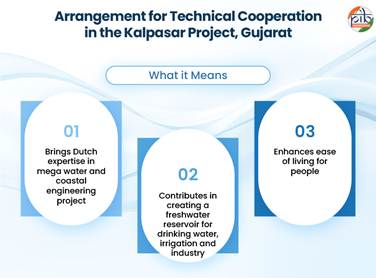
The Strategic Water Partnership will strengthened with Dutch expertise to address water-related challenges in India. It aims to improve access to clean water for domestic and agricultural use, enhancing quality of life. The Kalpasar Project proposes a freshwater reservoir across the Gulf of Khambhat with tidal power, irrigation, and transport links.
The cooperation will also support sustainable water management and large-scale infrastructure development.
Outcome 7 Roadmap on Green Hydrogen
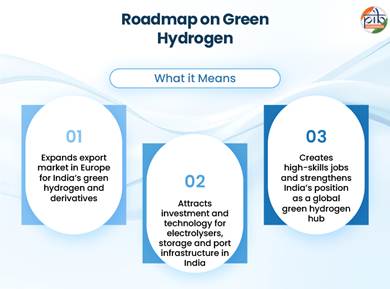
The India–Netherlands Roadmap on Green Hydrogen will strengthen cooperation in renewable energy and investments. It supports India’s goals in production, use, and export of green hydrogen. The initiative promotes faster adoption of green hydrogen as a clean energy source in both countries. It is expected to create new markets, attract investment, generate jobs, and support India’s transition to cleaner fuels.
Outcome 8: Establishment of a Joint Working Group on Renewable Energy
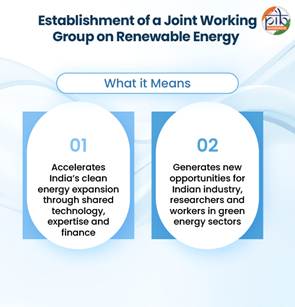
The two sides have set up a Joint Working Group on Renewable Energy to enhance cooperation and share best practices. It will focus on green hydrogen, bioenergy, bio-chemicals, circular feedstocks, renewables, and battery storage. The group aims to promote industrial partnerships and knowledge exchange between the two countries. It will support India’s clean energy transition while creating jobs and research opportunities.
Outcome 9: Renewal of the Joint Statement of Intent on Capacity Building for Energy Transition between NITI Aayog and the Netherlands
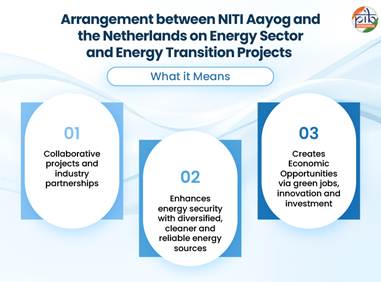
The projects and partnerships in sustainable energy transition will strengthen cooperation in energy security and clean energy development. They will bring together policymakers, industry leaders, and technical experts for deeper collaboration and knowledge sharing. These initiatives are expected to improve stakeholder coordination and support technology cooperation across the sector. They will also create new employment opportunities and contribute to long-term sustainable growth.
Outcome 10: Establishment of Indo-Dutch Centre of Excellence (CoE) for Flowers in West Tripura
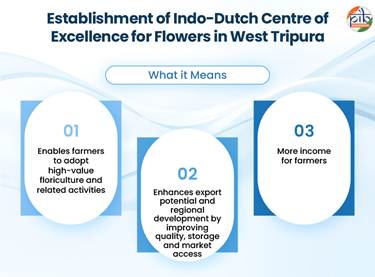
The initiative to develop CoE will develop floriculture in Tripura and boost regional growth. It will increase farmers’ income and create employment opportunities. It will improve livelihoods, especially in rural areas. Overall, it will enhance the standard of living.
Outcome 11: Establishment of Indo-Dutch Center for Excellence in Training in Dairy at the Centre of Excellence for Animal Husbandry, Bengaluru
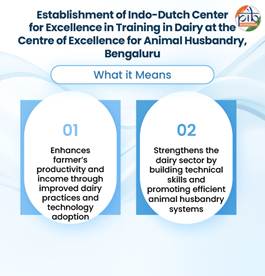
An Indo-Dutch Centre of Excellence on Dairy Training will be set up at the Centre of Excellence for Animal Husbandry (CEAH) in Bengaluru. It will strengthen cooperation in dairy, allied agriculture, and food processing between India and the Netherlands. Training and knowledge sharing will improve productivity, quality, and skills in the sector. It will also create employment opportunities and strengthen animal husbandry.
Outcome 12: Collaboration in Animal Husbandry and Dairying
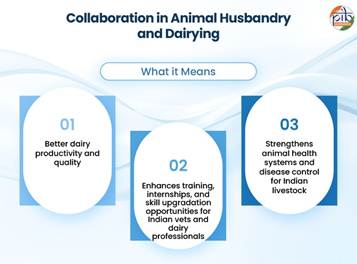
The collaboration will strengthen India–Netherlands cooperation in agriculture and animal husbandry, with a focus on market access, climate-resilient farming, and food security. It will promote knowledge sharing, technology cooperation, and sustainable agricultural practices across the sector. The partnership is expected to improve farm productivity, strengthen livestock health and disease management, and enhance supply chain efficiency. It will also support rural livelihoods, generate employment opportunities, and contribute to long-term agricultural sustainability.
Outcome 13: Arrangement for Collaboration in Health
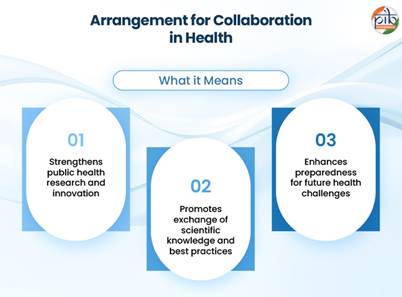
The collaboration in health will further strengthen India–Netherlands cooperation to address global health risks through research, collaboration, and knowledge exchange. It focuses on infectious diseases, antimicrobial resistance, non-communicable diseases, digital health, and climate–health linkages. It is further supported by cooperation between the Dutch National Institute for Public Health and the Environment (RIVM) and the Indian Council of Medical Research (ICMR).
Outcome 14: Customs Mutual Administrative Assistance Agreement
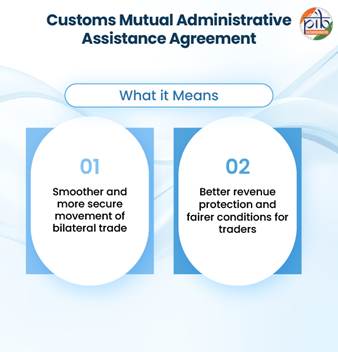
The Agreement on Mutual Administrative Assistance in Customs Matters to enhance cooperation between customs authorities. It will enable information sharing to improve enforcement and facilitate legitimate trade between India and the Netherlands. The agreement will also make trade more efficient by reducing costs and delays while improving transparency and export competitiveness.
Outcome 15: Cooperation in the field of Higher Education
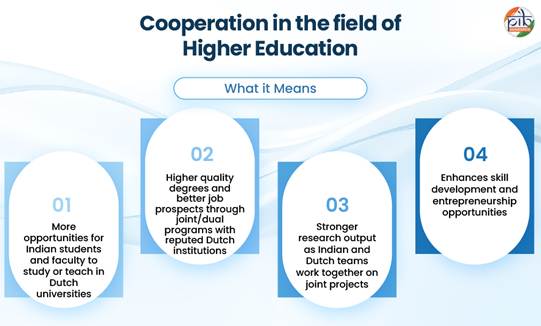
The bilateral cooperation in higher education will enhance mobility of teachers and students and strengthen collaborative research. It will improve skills, employability, research output, and create new employment and entrepreneurial opportunities.
Outcome 16: Cooperation between Nalanda University and University of Groningen, the Netherlands
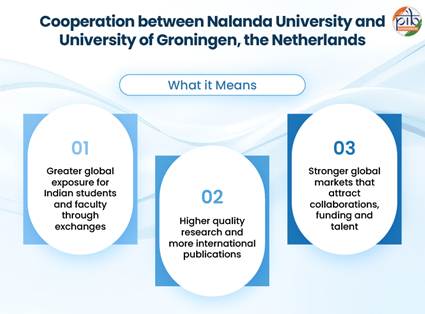
The cooperation between Nalanda University and the University of Groningen will deepen academic and institutional collaboration between India and the Netherlands. It will provide students and faculty with greater global exposure through joint academic activities, exchanges, and collaborative programmes. The partnership will also create opportunities for interdisciplinary research, teaching collaboration, and knowledge sharing in emerging areas of study. In addition, it is expected to facilitate access to international funding opportunities, strengthen innovation ecosystems, and support talent development and capacity building in higher education.
Outcome 17: Collaboration between Leiden University Libraries and the Archaeological Survey of India
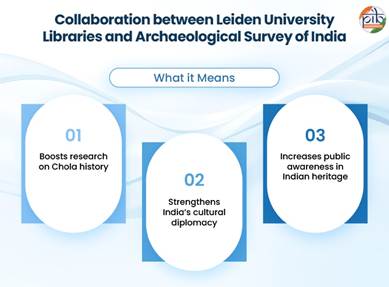
The collaboration between Leiden University Libraries and the Archaeological Survey of India will strengthen bilateral cooperation in historical research, archival preservation, and cultural exchange. The initiative will create new opportunities for joint research on the Chola period, promote academic collaboration, and improve access to valuable historical records and manuscripts. It will also deepen cultural diplomacy and enhance global awareness of India’s rich civilisational and archaeological heritage.
Collectively, these outcomes mark a transition from conventional cooperation to a future-oriented strategic partnership. They reflect a shared vision for resilient growth, technological advancement, and stronger coordination on global challenges. The expanding India–Netherlands partnership is poised to become a key pillar of innovation-led international cooperation.
Towards a Future-Ready India–Netherlands Partnership
India and the Netherlands are steadily expanding their partnership into a comprehensive and future-oriented collaboration. Strong complementarities in technology, clean energy, semiconductors, water management, innovation, and trade provide a robust foundation for deeper engagement. The elevation of ties to a Strategic Partnership reflects growing mutual trust and shared global priorities. As both countries strengthen economic, technological, and people-to-people linkages, the partnership is poised to contribute meaningfully to sustainable growth, resilient supply chains, and international cooperation.
References:
- Ministry of External Affairs
- Press Information Bureau
- Embassy of the Netherlands in India
· https://www.netherlandsandyou.nl/web/india/w/the-netherlands-and-india-work-together-to-boost-the-semiconductor-industry
· https://www.netherlandsandyou.nl/web/india/themes/climate-energy
Click here to see pdf
PIB Research
(Release ID: 2263796)
Visitor Counter : 2999