Ministry of Education
IIT Jodhpur Scientists Build Futuristic ‘Wonder Materials’ Atom by Atom; Research Opens New Possibilities for Energy, Smart Sensors and Self-Glowing Roads
From ultra-light metallic borophene to electricity-free glowing paints, IIT Jodhpur’s NanoSense Lab is developing next-generation materials that could transform batteries, road safety, clean energy and industrial technologies
Posted On:
25 MAY 2026 5:57PM by PIB Jaipur
Indian Institute of Technology Jodhpur researchers are redefining the future of materials science by engineering advanced materials at the atomic scale — research that could dramatically impact energy storage, environmental sensing, smart infrastructure, and next-generation electronics.
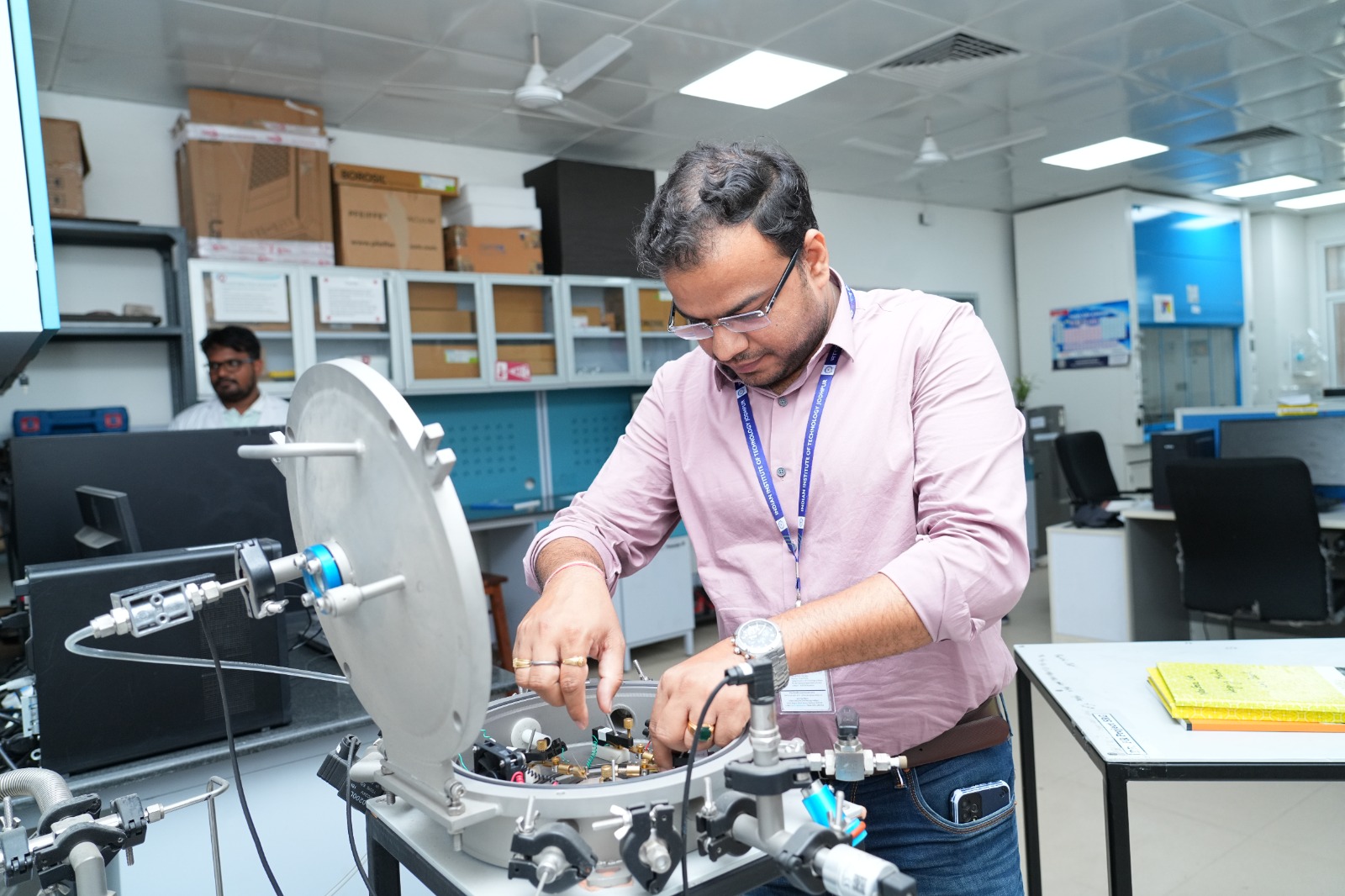
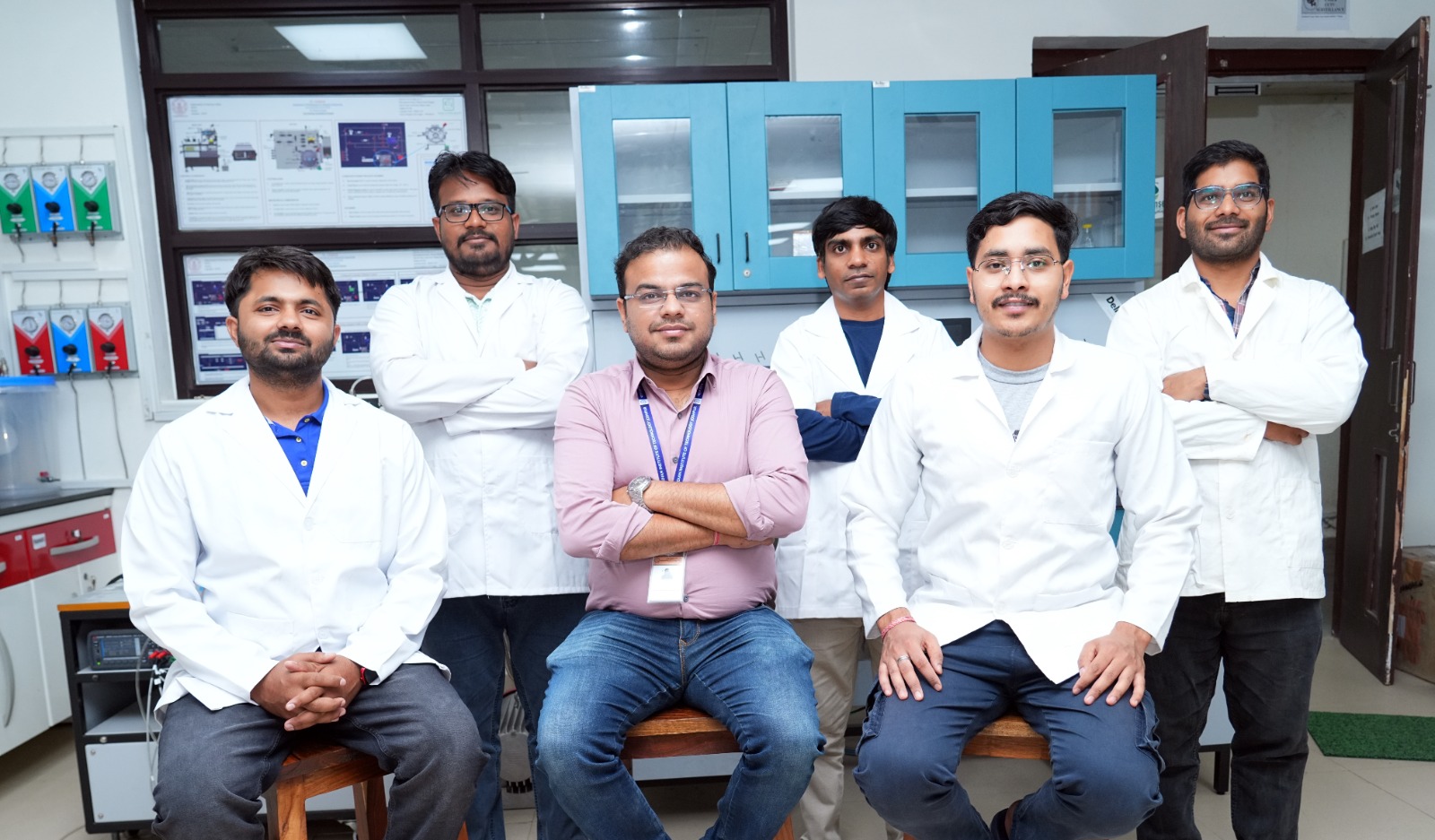
At the heart of this breakthrough work is the NanoSense Lab at IIT Jodhpur, led by Dr. Pranay Ranjan from the Department of Metallurgical and Materials Engineering. His team is pioneering research on futuristic two-dimensional (2D) materials — ultra-thin materials only a few atoms thick — that possess extraordinary electrical, optical, and mechanical properties.
The lab is drawing national attention for its work on Borophene, one of the world’s lightest and most promising 2D materials, with applications ranging from high-performance batteries and supercapacitors to advanced gas sensors and nanoelectronics.
“We are trying to answer a very fundamental question — can we design materials atom by atom, and if yes, how can those materials improve the technologies people use every day?” said Dr. Pranay Ranjan.
“Our goal is not limited to scientific discovery. We want these materials to move from laboratory research to technologies that can directly benefit society and industry.”
IIT Jodhpur’s Breakthrough Research on Borophene
While graphene has long dominated global conversations around advanced materials, IIT Jodhpur researchers are now pushing the frontier further with borophene — a metallic 2D material made entirely of boron atoms.
Unlike graphene, which behaves as a semi-metal, borophene is intrinsically metallic and extremely lightweight, making it highly attractive for ultra-fast energy storage devices.
“Borophene behaves very differently from most known 2D materials,” explained Dr. Ranjan.
“Its metallic nature, lightweight structure, and exceptional electronic properties make it an exciting candidate for future batteries, supercapacitors, and sensing technologies.”
The NanoSense Lab has successfully synthesized borophene as a freestanding 2D material — a major scientific achievement in itself. The research team is also studying other advanced materials such as hematene, graphene, and graphene oxide for applications in spintronics, hydrogen generation, coatings, and electronic devices.
From Laboratory Discovery to Industrial Scale Production
One of the most remarkable aspects of the IIT Jodhpur research is its transition from small laboratory experiments to scalable industrial production.
Under Dr. Ranjan’s leadership, the NanoSense Lab is actively working toward “Lab-to-Fab” translation — converting cutting-edge scientific discoveries into commercially viable technologies.
The team has established a strategic collaboration with the New Materials Division of the Tata Group to scale up the production of advanced 2D materials including borophene, graphene, hematene, and graphene oxide.
The collaboration focuses on indigenous material development for sectors such as defence, electronics, and energy storage, strengthening India’s push toward technological self-reliance.
“India must not remain dependent on imported advanced materials,” said Dr. Ranjan.
“Our work aims to build indigenous capabilities in next-generation materials manufacturing and create technologies that are designed and developed within the country.”
IIT Jodhpur Develops Self-Glowing Paint Without Electricity
Among the most publicly relatable innovations emerging from the NanoSense Lab is a self-glowing paint technology developed in collaboration with Marudhar Paints and Polymers.
The paint absorbs sunlight during the day and emits a visible glow at night through phosphorescence — without requiring any electricity, batteries, or external power source.
The technology has already undergone temperature and humidity testing and is being prepared for industrial-scale deployment.
The potential applications are enormous: highway dividers, road curves, public safety markings, emergency exits, and low-energy urban infrastructure.
“Simple scientific innovations can create massive public impact,” said Dr. Ranjan.
“If roads, safety markings, and infrastructure can remain visible at night without consuming electricity, it can significantly improve both sustainability and safety.”
Smart Sensors That Can Detect Dangerous Gases
The NanoSense Lab is also developing highly sensitive borophene-based gas sensors under a project supported by the Ministry of Electronics and Information Technology.
These sensors can detect dangerous gases by monitoring tiny changes in the electrical resistance of borophene when exposed to different gas environments.
The research has major implications for industrial safety, environmental monitoring, healthcare diagnostics, and smart city technologies.
Importantly, the sensors are being tested not only in controlled laboratory conditions but also in simulated real-world environments involving mixed gases and varying atmospheric conditions.
“We are building practical technologies, not just academic demonstrations,” Dr. Ranjan emphasized.
“Our focus is on creating robust materials and devices that can function reliably in real-world conditions.”
Strengthening Local Industry Through Deep-Tech Innovation
In a rare example of grassroots technology transfer, IIT Jodhpur is also collaborating with local industries in Rajasthan to apply advanced materials research to real manufacturing problems.
Partnerships with companies such as Metallizing Equipment Company and Raghu Diamonds are exploring applications ranging from advanced coatings and vacuum deposition systems to ultra-hard wear-resistant surfaces.
These collaborations demonstrate how deep scientific research at IIT Jodhpur is directly contributing to regional industrial innovation and India’s growing advanced manufacturing ecosystem.
Positioning IIT Jodhpur at the Frontier of Future Materials Research
The work emerging from the NanoSense Lab places IIT Jodhpur among the leading institutions advancing next-generation materials science in India.
By combining fundamental research, industrial collaboration, and scalable innovation, the institute is creating technologies that bridge scientific excellence with societal impact — from smarter energy systems and safer roads to indigenous deep-tech manufacturing.
As global industries increasingly seek lighter, faster, and more intelligent materials, IIT Jodhpur’s atom-by-atom engineering approach could become central to the technologies of the future.
00000
(Release ID: 2265027)
Visitor Counter : 142