Posted On:
04 JUN 2026 12:31PM by PIB Delhi
|
India has achieved a sustained environmental transformation through deliberate policy action and consistent implementation. Over twelve years, the country has expanded forest and tree cover, restored wetlands, mangroves, and coastal ecosystems, and advanced river rejuvenation through the Namami Gange Programme with reduced pollution levels. Wildlife populations of tigers, lions, elephants, rhinos, and other species have also increased. The nation has improved its capacity by raising solid waste processing rates, advancing circular economy practices through Extended Producer Responsibility (EPR) frameworks, promoting green skills and environmental awareness, adopting technology for conservation, and strengthening disaster resilience. It has also built international credibility by meeting key climate targets years ahead of schedule and leading through initiatives such as the International Solar Alliance (ISA), One Sun One World One Grid (OSOWOG), Coalition for Disaster Resilient Infrastructure (CDRI), Mission LiFE (Lifestyle for Environment), International Big Cat Alliance (IBCA), and by hosting major environmental summits. This demonstrates strong alignment between policy ambition and delivery outcomes.
|
Three Pillars of India’s Green Transformation
Over the past twelve years, India has pursued a comprehensive environmental transformation guided by the principles of Vishwaas, Nirman, and Jan Kalyaan. The government has recognised that ecological security is critical for economic growth, public welfare, and long-term national resilience. As climate change, resource pressures, and environmental degradation intensify globally, India has adopted a balanced approach that combines conservation, sustainability, and development.
During this period, environmental governance has been significantly strengthened through sustained policy action and institutional reforms. The Government has also advanced circular economy practices, promoted green skills and environmental awareness, and encouraged greater public participation in environmental stewardship. Technology-enabled systems and science-based planning have improved transparency, monitoring, and implementation effectiveness.
Collectively, these efforts have strengthened India’s ecological capability, expanded national capacity for sustainable development, and enhanced global credibility, forming the three pillars of India’s green transformation. Together, these pillars reflect a systemic shift towards more resilient ecosystems, stronger institutional and technological readiness for sustainable growth, and a more influential role for India in global environmental governance. This integrated approach has not only improved domestic environmental outcomes but has also positioned India as a trusted and responsible leader in advancing collective climate action and sustainability.
Pillar 1: Increasing Ecological Capability and Biodiversity for a Resilient India
Ecological capability is critical for long-term environmental security and climate resilience. Healthy forests, rivers, wetlands, coasts, and wildlife habitats support livelihoods and sustain natural resources. They also strengthen resilience against climate and environmental shocks. Over the past twelve years, India has expanded its ecological capability through habitat restoration, species protection, and landscape-level conservation. These efforts are improving ecosystem health, enhancing biodiversity, and building a more resilient India.
- Growing Green: Reviving Forest Landscapes
Forests are among India's most valuable natural assets. They support biodiversity, regulate water cycles, store carbon, and sustain the livelihoods of millions of people. Recognising their critical role in climate resilience and sustainable development, the government has undertaken sustained efforts to expand green cover, restore degraded ecosystems, and strengthen landscape-level conservation.
The Green India Mission (GIM), under the Ministry of Environment, Forest and Climate Change, is a flagship initiative dedicated to forests and ecosystem restoration. Launched in FY 2015–16, the mission aims to strengthen ecological resilience and climate action. As of March 2026, ₹1019.26 crores have been released across Indian states.
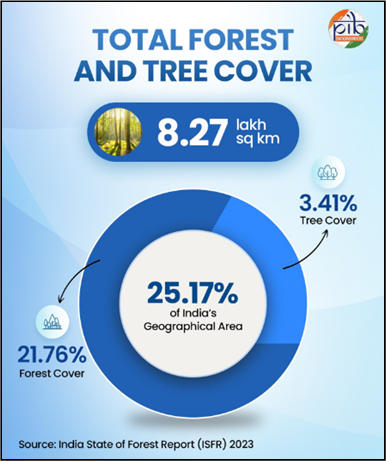
The Mission has contributed significantly to improving forest quality and enhancing carbon sequestration. According to the India State of Forest Report (ISFR) 2023, India’s forest and tree cover stands at 8.27 lakh sq. km, accounting for 25.17 percent of the country’s geographical area. Forest cover alone covers 7.15 lakh sq. km (21.76 percent), while tree cover accounts for 1.12 lakh sq. km (3.41 percent). India’s forests currently store 30.43 billion tonnes of carbon stock, forming one of the country’s most important natural assets for climate mitigation and ecological security.
Other initiatives to increase green cover include:
- The Compensatory Afforestation Fund Management and Planning Authority (CAMPA) was established under the Compensatory Afforestation Fund Act, 2016 to strengthen forest restoration and ecological conservation.
- Between FY 2020–21 and 2024–25, more than 3.20 lakh hectares of compensatory afforestation were undertaken across India under CAMPA funding. The initiative also introduced GIS-based monitoring systems, Digital Annual Plans, and the HARIT-SANKALP platform to improve technology-driven forest governance and afforestation management nationwide.
- National Afforestation and Eco-development Board is implementing Nagar Van Yojana (NVY) since 2020 which envisages developing 1000 Nagar Vans/Vatikas in the country during the period of 2020-21 to 2026-27.
- As on March 31, 2026, National Authority has released an amount of Rs. 557.62 crore for development of 626 Nagar Vans/Vatikas.
- Aravalli Green Wall Initiative, to restore degraded landscapes across Rajasthan, Gujarat, Haryana, and Delhi. The initiative targets restoration of 6.31 million hectares.
- The programme has established 435 nurseries with a combined capacity of 393.24 lakh seedlings. About 36,025 hectares were restored in 2025 alone.
|
Did You Know?
“Ek Ped Maa Ke Naam” campaign was launched in 2024 by Prime Minister Narendra Modi. It emerged as one of the world’s largest public environmental movements. The campaign adopted a whole-of-government and whole-of-society approach. A total of 262.4 crore saplings were planted till December 2025. Plantation activities were digitally tracked through the Meri LiFE portal. The initiative combined ecological objectives with cultural and emotional values, strengthening public participation in climate action.
|
These achievements reflect the government’s long-term commitment to ecosystem restoration and sustainable forest management. By strengthening green cover and natural carbon sinks, India is enhancing ecological resilience while advancing its climate and sustainable development goals.
- Restoring River Ecosystems
Water pollution is both a driver and a consequence of environmental degradation. It creates a damaging feedback loop that reduces aquatic biodiversity, contaminates food chains, and weakens the natural self-cleansing capacity of ecosystems.
To address this challenge, the Namami Gange Programme was launched in June 2014 as a flagship river rejuvenation mission. The programme seeks to reduce pollution and restore the ecological health of the River Ganga and its tributaries. The programme focuses on sewage treatment infrastructure, industrial effluent control, riverfront and ghat development, biodiversity conservation, afforestation, and strong public participation. It was launched with an initial outlay of ₹20,000 crore and has been extended under Phase-II till March 2026 with an additional ₹22,500 crore, strengthening long-term river restoration and sustainable water management efforts.
Key Achievements:
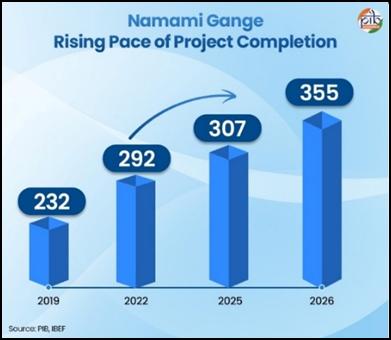
- River rejuvenation: As of February 2026, 524 projects worth ₹43,030 crore were sanctioned, with around 355 projects already completed. Additionally, ₹21,340 crore has been disbursed since inception, reflecting sustained investment in river restoration.
- Sewage treatment and pollution control infrastructure: A total of 218 sewerage infrastructure projects (STPs), costing ₹35,698 crore, have been undertaken to remediate polluted river stretches, with a combined treatment capacity of 6,610 MLD (Million Litres per Day). Of these, 138 STPs with 3,977 MLD capacity have been completed and made operational.
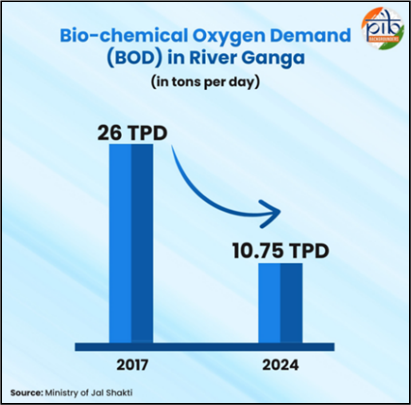
- Industrial pollution levels: Industrial BOD load declined from 26 TPD (Tons per day) in 2017 to 10.75 TPD in 2024, while industrial effluent discharge reduced from 349 MLD to 265.56 MLD over the same period.
- Ecological restoration and afforestation across the Ganga basin: Approximately 33,024 hectares have been afforested with an expenditure of ₹414 crore. In addition, 7 Biodiversity Parks and 5 priority wetlands have been sanctioned under the programme.
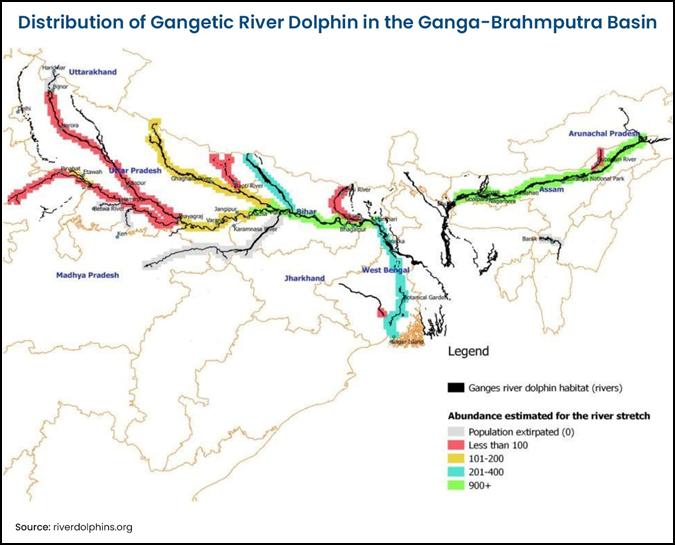
- Biodiversity Conservation: Around 203 lakh Indian Major Carp (IMC) fingerlings have been released to strengthen aquatic biodiversity and support fisher livelihoods. Surveys recorded 3,037 gharials across 22 rivers, while Gangetic dolphin surveys covered 8,507 km across 28 rivers, with the population estimated at 6,327 dolphins.
|
Did You Know?
Project Dolphin, launched on 15 August 2020, completed its first-ever range-wide dolphin population assessment and strengthened legal protection by recognising the Gangetic Dolphin and Indus Dolphin as distinct species under the Wildlife (Protection) Act, 1972. The initiative also supports conservation of the rare Irrawaddy Dolphin, best known in India from Chilika Lake, and includes proposals such as a 200-km Dolphin Conservation Zone in the Chambal River and participation in global efforts like the Declaration for River Dolphins.
|
The Namami Gange Programme demonstrates a holistic, science-driven approach to river rejuvenation, integrating infrastructure development with ecological restoration. Its measurable outcomes reflect a decisive shift from pollution control to long-term basin-wide sustainability. Collectively, these efforts are restoring the ecological integrity of the Ganga while strengthening livelihoods and environmental resilience.
- Conserving Wetlands for Ecological Lifelines
Wetlands are among the most productive and ecologically significant ecosystems on Earth. They include lakes, marshes, floodplains, mangroves, and coastal lagoons that play a vital role in maintaining environmental balance. Wetlands recharge groundwater, improve water quality, reduce flood risks, support rich biodiversity, and enhance climate resilience. They also sustain agriculture, fisheries, and the livelihoods of millions of people.
Recognising their ecological and economic importance, the Government of India strengthened wetland conservation through the National Plan for Conservation of Aquatic Ecosystems (NPCA), launched in 2013. The programme promotes the integrated conservation and restoration of wetlands, with a focus on improving water quality, biodiversity, and overall ecosystem health. To further strengthen protection measures, the government notified the Wetlands (Conservation and Management) Rules, 2017. These rules prohibit activities such as encroachment, discharge of untreated effluents, and dumping of solid waste, providing a stronger regulatory framework for the conservation and sustainable management of wetlands across the country.
The scale of wetland conservation efforts has expanded significantly over the years. As of August 2018, the NPCA covered 148 identified wetlands and lakes across 24 States and 1 Union Territory. The Central Government released ₹893.69 crore to support conservation activities. By 2022, programme coverage increased to 164 wetlands, with cumulative funding reaching ₹1,066.43 crore. The expansion continued in 2023, when 165 wetlands, including 42 Ramsar sites, were sanctioned under the programme. By then, cumulative financial releases had risen to ₹1,088.85 crore, reflecting sustained investment in wetland conservation and ecosystem management.
These efforts have significantly deepened wetland conservation, ecological restoration, and long-term environmental sustainability across the country.
|
Did You Know?
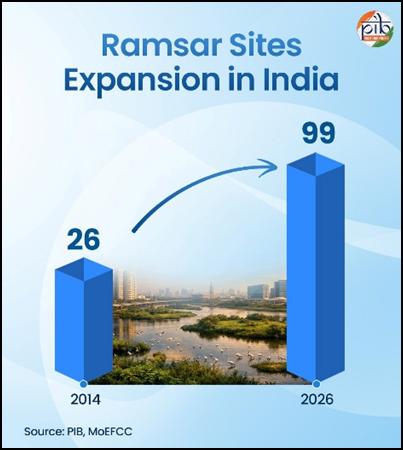
Ramsar sites are wetlands recognised under the Ramsar Convention, an international treaty adopted in Ramsar, Iran, in 1971 for wetland conservation and sustainable use. These wetlands are ecologically important for biodiversity, water security, climate resilience, and livelihoods. India had only 26 Ramsar sites in 2014. By April 2026, the number increased to 99 wetlands, reflecting India’s strong commitment to wetland conservation and ecosystem protection.
|
- Mangrove Ecosystems Conservation
Mangroves are salt-tolerant forests found along tropical and subtropical coastlines. They protect coastal regions from cyclones, erosion, storm surges, and sea-level rise. Mangroves also store carbon, support marine biodiversity, and sustain fishing communities.
India accelerated mangrove restoration through the MISHTI scheme (Mangrove Initiative for Shoreline Habitats & Tangible Incomes) and received an initial outlay of ₹100 crore.
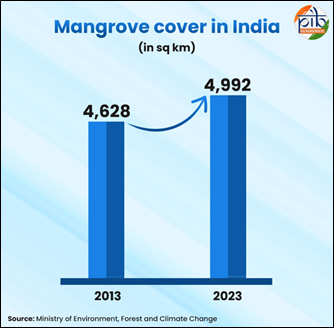
The success of the initiative is clearly visible in the steady expansion of India’s mangrove cover. India’s mangrove cover increased from 4,628 sq. km in 2013 to 4,992 sq. km in 2023. This represented a net gain of 363 sq. km, strengthening coastal resilience and ecological security.
5. Blue Horizons: India’s 7,500 km Maritime Frontier
Coastal systems include beaches, estuaries, sand dunes, coral ecosystems, and coastal waters. They support fisheries, tourism, trade, biodiversity, and maritime livelihoods. India’s 7,500-kilometre coastline is critical for economic growth and climate resilience. Healthy coastal ecosystems also provide protection against erosion, storms, and sea-level rise.
Since 2014, the Government has strengthened coastal conservation through the National Coastal Mission. The Mission focuses on sustainable coastal management and climate adaptation. Coastal governance was further reinforced through the Coastal Regulation Zone (CRZ) Notification, 2019. The framework promotes science-based planning and protects ecologically sensitive coastal areas. It also safeguards the livelihoods of fishing and coastal communities. Updated Coastal Zone Management Plans (CZMPs) have strengthened regulation and monitoring. In 2017, a pilot beach development programme was launched under the Integrated Coastal Zone Management Project. The programme focused on cleanliness, environmental management, safety standards, and sustainable tourism. To sustain these efforts, the National Coastal Mission was extended for 2025–31 with an allocation of ₹767 crore.
|
Did You Know?
Blue Flag certification is an internationally recognised eco-label awarded by the Foundation for Environmental Education, Denmark. The certification is granted to beaches meeting 33 stringent criteria related to water quality, environmental management, safety, cleanliness, and sustainable tourism practices.
|
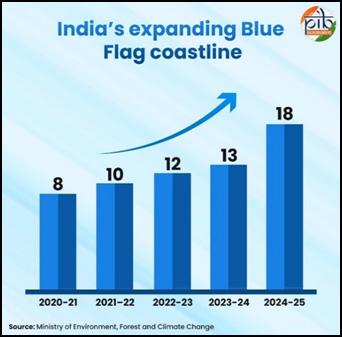
India’s coastal conservation efforts have delivered notable results. The country’s first eight beaches received Blue Flag certification in 2020. The number increased to 10 in 2021–22, 12 in 2022–23, 13 in 2024–25, and 18 in 2025–26. These certified beaches are spread across seven coastal States and four Union Territories. The achievement reflects India’s growing commitment to sustainable coastal tourism, environmental stewardship, and world-class beach management practices.
|
Did You know?
The National Marine Turtle Action Plan, launched in 2021, provides a coordinated framework for conserving marine turtles and their habitats along India's coastline. As part of these efforts, around 7,979 turtle hatchlings were safely released with an impressive 96.7% hatching success rate, reflecting healthier coastal and marine ecosystems. The initiative promotes protection of nesting beaches, reduces threats such as bycatch and entanglement, strengthens scientific monitoring and research, and complements legal protection for all five marine turtle species under the Wildlife (Protection) Act, 1972. It is advancing India's commitment to strengthening coastal systems and maritime sustainability.
|
- Integrated Wildlife Conservation for Endangered Species
India’s wildlife conservation reflects strong ecological stewardship and expanding protected landscapes. Flagship species programmes demonstrate science-based and community-supported conservation success. Healthy populations indicate improved governance, monitoring, and habitat restoration across ecosystems.
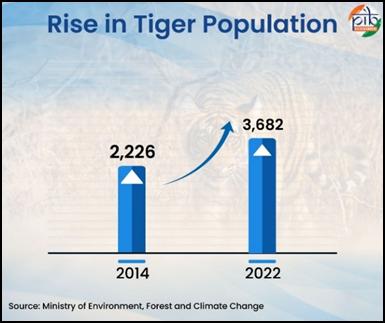
- Project Tiger: Launched in 1973, Project Tiger remains the country’s flagship wildlife conservation programme. Between 2014 and 2025, the initiative strengthened habitat protection, scientific monitoring, and community-based conservation through the National Tiger Conservation Authority (NTCA). During this period, the number of Tiger Reserves increased from 46 to 58, while the tiger population rose from 2,226 in 2014 to 3,682 in 2022, according to the All India Tiger Estimation. The area under tiger reserves expanded to nearly 85,000 sq. km in 2026, and 23 reserves achieved CA|TS accreditation as on December, 2023. Today, India supports over 70% of the world’s wild tigers, highlighting its global conservation leadership.
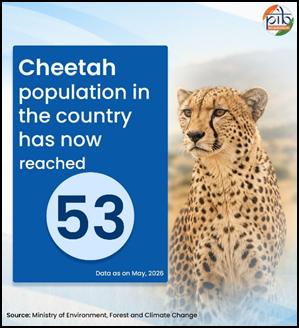
- Project Cheetah: Launched on 17 September 2022, Project Cheetah is the world’s first intercontinental translocation of a large wild carnivore and a landmark initiative for restoring India’s grassland ecosystems. Since its launch, 29 cheetahs have been brought to India from Namibia (8 in September 2022), South Africa (12 in February 2023), and Botswana (9 in February 2026). The population of cheetah in country has now reached 53, marking a significant conservation milestone.
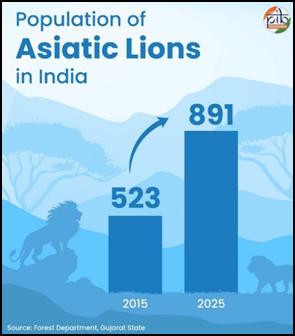
- Project Lion: Announced in August 2020, Project Lion provides a long-term framework for habitat development, corridor conservation, and scientific management across Gujarat’s lion landscape. The initiative builds on the remarkable recovery of the Asiatic lion. Lion numbers increased by over 70 per cent, from 523 in 2015 to 891 in 2025, while their distribution range expanded by about 59 per cent. Conservation efforts have strengthened satellite habitats and wildlife corridors.
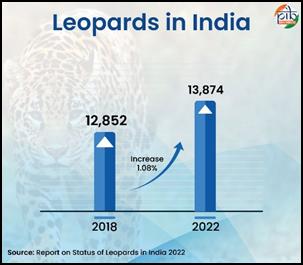
- Leopard: Leopards are a key large carnivore in India’s forest ecosystems and often coexist with tigers. Conservation is supported through the Centrally Sponsored Scheme “Development of Wildlife Habitat” and integrated landscape management under Project Tiger. The “Status of Leopards in India 2022” report estimates 13,874 leopards, up from 12,852 in 2018, reflecting an average annual growth rate of 1.08 percent. Central India and the Eastern Ghats show stable or increasing populations, while the Shivalik hills and Gangetic plains record localized declines. Monitoring is coordinated by the National Tiger Conservation Authority (NTCA) and the Wildlife Institute of India (WII) through periodic national assessments, strengthening habitat protection, conflict mitigation, and coexistence in multi-use landscapes.
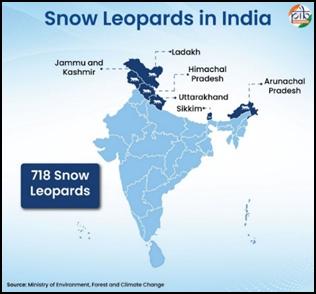
Additionally, the Government of India also recognises the Snow Leopard as a flagship species of the high-altitude Himalayas. Conservation is guided by Project Snow Leopard and the National Snow Leopard Ecosystem Protection Priorities. The SECURE Himalaya project (Securing Livelihoods, Conservation, Sustainable Use and Restoration of High Range Himalayan Ecosystems), launched in October 2017 by the MoEFCC with United Nations Development Programme (UNDP) support and Global Environment Facility (GEF) funding, focuses on ecosystem conservation and livelihoods.
The first Snow Leopard Population Assessment in India (2019–2023) covered 1,20,000 square kilometres and over 70 percent of potential habitat, estimating 718 snow leopards across Ladakh, Uttarakhand, Himachal Pradesh, Arunachal Pradesh, Sikkim, and Jammu and Kashmir. SPAI 2.0 has been initiated for long-term monitoring and improved conservation planning.
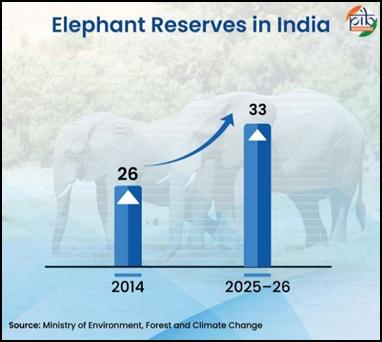
- Elephant: Project Elephant is a flagship programme of the Government of India to conserve wild Asian elephants, their habitats, and migration corridors. India currently supports nearly 60 percent of the global wild Asian elephant population. Since 2014, the programme has been strengthened through the first DNA-based Synchronous All India Elephant Estimation (2021–25), establishing a standardised, science-driven population assessment framework and estimating 22,446 wild elephants. Elephant Reserves increased from 26 in 2014 to 33 in 2025–26, while corridors expanded from 88 (2010 Gajah report) to 150 in 2023.
- One Horned Rhinoceros: The National Conservation Strategy for the Indian One-Horned Rhinoceros 2019 provides a long-term framework for population expansion, genetic security, habitat connectivity, translocations, and climate-resilient management. Guided by this strategy, coordinated efforts by forest departments and local communities have driven a nearly 170 percent increase in rhino numbers since the 1980s, growing from 1,500 to over 4,000 as of September 2024, making India a model for science-based, community-supported megaherbivore conservation.
India’s conservation model integrates species recovery with landscape-level ecosystem management. Continuous policy support and data-driven monitoring ensure long-term biodiversity resilience. These efforts position India as a global leader in wildlife conservation outcomes.
Pillar 2: Expanding National Capacity for Sustainable Transformation
Environmental progress depends on the capacity to sustain and scale it. Strong institutions, scientific knowledge, skilled citizens, and modern systems are essential for addressing environmental challenges. Over the past twelve years, India has strengthened this capacity through reforms, innovation, and technology-driven governance. The country has expanded waste management systems, green skills, research capabilities, and disaster preparedness. Together, these efforts are creating stronger foundations for sustainable growth and environmental resilience.
- Managing Solid Waste: Turning a Crisis into a Circular Opportunity
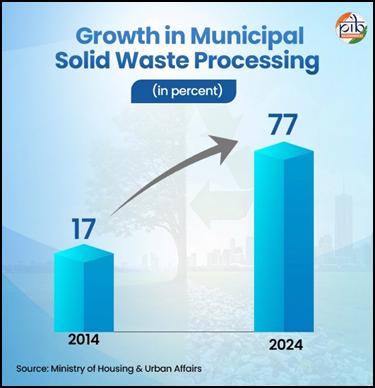
In 2014, India faced a mounting solid waste crisis. Cities were choking, dumpsites were overflowing, and barely 17 percent of waste was being scientifically processed. Twelve years later, the picture has fundamentally changed. Solid waste processing capacity surged from 17 percent in 2014 to over 77 percent by 2024, driven by a growing network of Material Recovery Facilities, bio-methanation plants, and waste-to-energy units. Urban India today processes 1,29,206 TPD out of 1,59,109 TPD of municipal solid waste generated daily.
The government simultaneously turned its attention to India's toxic legacy. Thousands of unscientific dumpsites accumulated over decades. Through biomining and bioremediation, 1,138 dumpsites have been fully remediated across 1,048 cities in 29 states, with 877 lakh metric tonnes of legacy waste cleared and 7,646 acres of land reclaimed. To complete this mission, the Dumpsite Remediation Accelerator Programme (DRAP) was launched in November 2025, targeting zero dumpsites by October 2026.
On the regulatory front, the Solid Waste Management Rules, 2026, superseding the 2016 Rules, mandate four-stream source segregation: wet, dry, sanitary, and special care waste and operationalise online tracking of all waste management stages. Recognising that bulk waste generators account for nearly 30 percent of total solid waste, the Rules introduce Extended Bulk Waste Generator Responsibility (EBWGR), making large establishments directly accountable for their waste. Industries including cement plants must now substitute solid fuel with Refuse Derived Fuel (RDF), with the substitution rate rising from 5 percent to 15 percent over six years converting waste into an energy resource. These efforts mark India's decisive shift from landfill dependence to a resource-efficient, circular waste economy.
- Closing the Loop: Building a Circular Economy with EPR
A circular economy is a production and consumption model that promotes reuse, recycling, repair, and resource recovery instead of linear disposal of waste. It aims to minimise pollution, conserve natural resources, and enhance overall material efficiency. Extended Producer Responsibility (EPR) is a policy approach under which producers are made responsible for the environmentally sound management of their products after use. It covers collection, recycling, reuse, and safe disposal of waste, ensuring accountability across the product life cycle.
The Government of India has strengthened the circular economy framework through sector-specific Waste Management Rules covering multiple waste streams. These include the Plastic Waste Management Rules, E-Waste (Management) Rules, Battery Waste Management Rules, Waste Tyre EPR framework, Used Oil EPR system, End-of-Life Vehicles (ELV) framework, Construction and Demolition Waste Rules, and EPR for non-ferrous scrap metals. These rules institutionalise producer accountability and promote structured recycling ecosystems across sectors.
As of March 2026, India has significantly expanded its recycling ecosystem. There are 4,574 registered recyclers across waste streams. Total waste processed stands at 417.57 lakh MT, with 341.93 lakh MT covered under EPR certificate generation. Category-wise recycling performance includes:
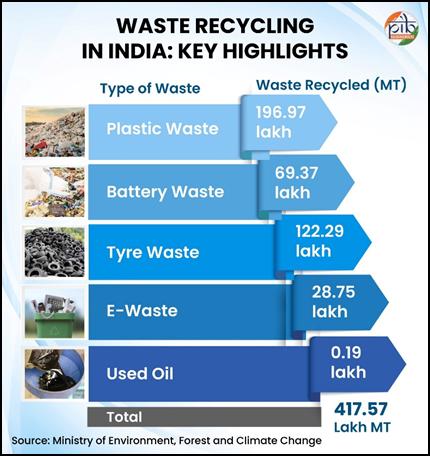
- Plastic Waste: 196.97 lakh MT (2,986 recyclers)
- Battery Waste: 69.37 lakh MT (520 recyclers)
- Tyre Waste: 122.29 lakh MT (579 recyclers)
- E-Waste: 28.75 lakh MT (386 recyclers) and
- Used Oil: 0.19 lakh MT (103 recyclers).
India’s circular economy transition demonstrates a clear shift toward sustainable resource management and reduced environmental burden. The expansion of EPR frameworks has strengthened accountability and recycling capacity across sectors. These developments reflect India’s growing institutional maturity in waste governance. Collectively, they mark a decisive move toward a resource-efficient and environmentally responsible economy.
- Building Capacity through Education, Awareness & Green Skill Development
India faces growing environmental challenges such as climate change, biodiversity loss, and land degradation. To strengthen environmental awareness and green skills, the Government has implemented several initiatives focused on education, training, and community participation.
The Environmental Education, Awareness and Training (EEAT) Scheme of the Ministry of Environment, Forest and Climate Change supported programmes like the National Green Corps (NGC), National Nature Camping Programme (NNCP), and Capacity Building Programme (CBP). Implemented across 21 States and 1 Union Territory, the scheme facilitated over 1 lakh eco-clubs and engaged around 5.5 lakh students through environmental campaigns and awareness activities.
Further, the Environment Education, Awareness, Research and Skill Development (EEARSD) Scheme promotes environmental literacy, sustainable practices, and green workforce development. Under its programmes, over 1.34 crore students participated in environmental education initiatives, 1.14 lakh eco-clubs were registered across 23 States, and more than 4 lakh students contributed innovative ideas through the Eco-Creativity and Innovation Hackathon.
- Research and Advanced Facilities for Strengthening Wildlife Science and Evidence-Based Conservation:
In December 2024, MoEFCC inaugurated a Next Generation DNA Sequencing facility at the Wildlife Institute of India, Dehradun to strengthen wildlife genetics and forensic research. It enables high-throughput genetic analysis for population studies, species identification and evidence in wildlife offence cases. NWDC has advanced the National Wildlife Information System (NWIS), integrating data on protected areas, species, habitats and biogeographic zones for conservation planning and monitoring. Digitisation initiatives by the Botanical Survey of India (BSI) and the Zoological Survey of India (ZSI) are making herbarium and faunal collections accessible online through dedicated databases and portals. Thereby expanding India’s biodiversity knowledge base.
- Technology and Wildlife Crime Control for Strengthening Enforcement and Anti-Poaching Systems:
Technology-enabled surveillance has transformed anti-poaching efforts since 2014, with AI-based systems like HAWK supporting real-time monitoring and predictive analysis for rapid response in difficult terrain. Mobile platforms such as Gajah Suchana have improved traceability, record-keeping and forensic support in wildlife cases. The Wildlife Crime Control Bureau (WCCB) strengthened enforcement through 166 joint operations in the North Eastern Region (2019–2023), leading to 375 arrests. Also, WCCB conducted joint wildlife crime operations nationwide and issued intelligence alerts. It enhanced cooperation with INTERPOL, SAWEN and CITES to combat transboundary wildlife trafficking.
- Strengthening National Capacity for Disaster Resilience
India has significantly strengthened its national capacity for disaster resilience through a comprehensive approach covering preparedness, mitigation, response, recovery, and capacity building. The National Disaster Management Plan (NDMP) was launched in 2016 and revised in 2019 to align disaster risk reduction efforts across all levels of government. The Government also issued 38 hazard-specific guidelines and developed advanced risk assessment tools, including the Dynamic Composite Risk Atlas, flood hazard atlases, and a database of 28,000 glacial lakes in the Himalayan region. These initiatives have enhanced scientific planning and improved preparedness for climate and disaster-related risks.
Technology-driven early warning systems have further strengthened resilience across the country. The Common Alerting Protocol (CAP)-based Integrated Alert System delivers geo-targeted warnings through multiple platforms and has disseminated over 4,500 crore alert messages. Mobile applications such as Damini, Mausam, and Meghdoot, along with advanced forecasting systems of the India Meteorological Department, provide timely weather and disaster alerts. Capacity-building efforts have been reinforced through the National Disaster Response Force (NDRF), community awareness programmes, and the Indian Universities and Institutions Network for Disaster Risk Reduction, which includes more than 330 institutions. Together, these measures have strengthened India’s ability to anticipate, withstand, and respond to environmental and climate-induced disasters.
7. Green Credit Programme (GCP): Strengthening Capacity for Ecological Restoration
GCP, launched through the Green Credit Rules, 2023, represents an innovative approach to building national capacity for environmental restoration and sustainable development. The programme incentivises voluntary environmental actions by individuals, communities, and businesses, encouraging greater participation in afforestation, ecosystem restoration, and sustainable practices. Aligned with the LiFE (Lifestyle for Environment) movement, it seeks to increase green cover, enhance carbon sequestration, restore degraded landscapes, and reduce environmental footprints. By creating a transparent framework for measuring and rewarding environmental outcomes, the programme strengthens institutional, financial, and community capacity for ecological conservation. As of March 2026, 4,391 hectares of degraded forest land across 12 States had been identified for eco-restoration under the programme, contributing to biodiversity enhancement, ecosystem recovery, and long-term environmental resilience.
Collectively, these initiatives have strengthened India’s foundations for long-term environmental sustainability and resilience. From circular economy practices and green skill development to scientific conservation and disaster preparedness, the country has built the institutional and societal capacity needed to support a greener, more resilient future.
Pillar 3: Strengthening Credibility through Leadership and Diplomacy
Environmental challenges cannot be addressed by nations acting alone. Global progress requires credible leadership, international cooperation, and shared responsibility. Guided by the principle of Common but Differentiated Responsibilities and Respective Capabilities, India has advanced climate action while supporting development goals. Over the past twelve years, India has emerged as a leading voice for climate justice, sustainable development, and responsible growth. Through climate leadership, international partnerships, and multilateral engagement, India has strengthened its influence in global environmental governance. These efforts have enhanced India's credibility as a trusted partner in advancing collective climate action and sustainability.
Nationally Determined Contribution
Over successive Nationally Determined Contribution (NDC) cycles, India has steadily enhanced its commitments on emissions intensity reduction, non-fossil energy capacity, and carbon sink creation, reflecting an increasingly ambitious and action-oriented approach to climate leadership.
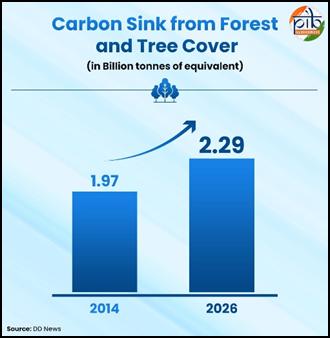
India achieved its target of reducing emissions intensity by 33–35 percent from 2005 levels eleven years ahead of schedule, with reductions already exceeding 36 percent. The target of achieving 40 percent non-fossil electricity capacity by 2030 was met nine years early, and by February 2026, non-fossil sources accounted for 52.57 percent of the country’s installed power capacity. India has also created an additional carbon sink of 2.29 billion tonnes of CO₂ equivalent, making substantial progress towards its long-term climate goals.
Through NDC 1.0 (2015), NDC 2.0 (2022), and NDC 3.0 (2026), India has progressively raised its ambition for 2030 and 2035, demonstrating strong implementation capacity, accelerated clean energy deployment, and a commitment to sustainable development alongside climate action.
|
Did You Know?
Nationally Determined Contributions (NDCs) are climate action commitments submitted by countries under the Paris Agreement of the United Nations Framework Convention on Climate Change (UNFCCC). They provide a roadmap for reducing emissions, expanding clean energy, strengthening climate resilience, and protecting natural ecosystems. NDCs serve as a key policy instrument for balancing environmental sustainability with economic development.
|
World Sustainable Development Summit (WSDS), 2024
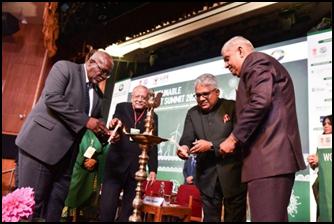
The summit focused on global challenges such as climate change, biodiversity loss, and resource depletion, emphasizing clean energy transition, climate justice, and sustainable development.
The summit showcased India’s approach to balancing economic growth with environmental protection through renewable energy expansion, nature-based solutions, and inclusive climate action. It further elevated India’s position as a global leader in sustainability by highlighting its policy innovations, climate commitments, and people-centric development model. Through WSDS 2024, India reinforced its role as a catalyst for international cooperation and a trusted voice in shaping a sustainable and resilient future.
The International Solar Alliance (ISA), 2015
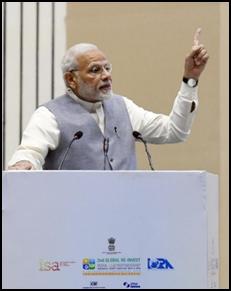
ISA was launched jointly by India and France at the COP21 climate summit in Paris. It was conceived as a treaty-based intergovernmental organization to harness solar energy among solar-resource-rich countries, with a focus on coordinated research, affordable financing, and large-scale deployment of solar technologies. Today, the Alliance has 112 member countries, reflecting its growing global reach and influence.
The ISA has significantly enhanced India’s international credibility by positioning it as a global agenda-setter in climate action and clean energy transition. It has strengthened India's image as a champion of inclusive, climate-resilient growth and reinforced its leadership in global environmental diplomacy.
One Sun One World One Grid (OSOWOG) Initiative, 2018
The One Sun One World One Grid (OSOWOG) initiative was proposed by India in 2018 to promote cross-border sharing of renewable energy. In 2021, India and the United Kingdom jointly launched the Green Grids Initiative–OSOWOG at COP26. The initiative strengthened India’s global credibility by positioning the country as a leader in clean energy cooperation and climate solutions. It demonstrated India’s ability to shape international climate partnerships and advance a shared vision for a globally interconnected renewable energy future.

14th Conference of Parties (COP14) to United Nations Convention to Combat Desertification (UNCCD), 2019
The conference culminated in the adoption of the Delhi Declaration, which reaffirmed global commitment towards achieving Land Degradation Neutrality by 2030. The summit emphasised international cooperation on land restoration, drought resilience, sustainable land management, and ecosystem conservation, while promoting greater convergence among the three Rio Conventions on climate change, biodiversity, and desertification.
By successfully hosting COP14 and advancing consensus on critical environmental issues, India strengthened its position as a leading voice in global environmental governance. The conference enhanced India's credibility in land restoration diplomacy and demonstrated its growing role in fostering multilateral cooperation for sustainable development and ecological resilience.
Coalition for Disaster Resilient Infrastructure (CDRI), 2019
CDRI was launched by India in 2019 during the United Nations Climate Action Summit to promote infrastructure resilience against climate and disaster risks. In 2022, India further strengthened the initiative by granting CDRI the status of an international organization and establishing its headquarters in New Delhi. The initiative enhanced India’s global credibility by demonstrating leadership in disaster risk reduction and climate resilience. It positioned India as a key convener of governments, international organizations, and experts working toward resilient and sustainable infrastructure worldwide.
Convention on Migratory Species (CMS) COP‑13, Gandhinagar 2020

India’s role as host of CMS Conference of the Parties (COP)‑13 in Gandhinagar in 2020 significantly enhanced the credibility of its wildlife conservation efforts. As the first CMS COP-13 held in India, it signalled international confidence in India’s capacity to steer negotiations on migratory species across terrestrial, avian and marine ecosystems. By taking over the COP Presidency, India moved from being primarily a range country and implementer to acting as a norm‑setter and agenda‑shaper in global discussions on migratory wildlife, flyways and transboundary habitats.
Mission LiFE (Lifestyle for Environment), 2022
Mission LiFE was launched in the presence of the United Nations Secretary-General. Mission LiFE promotes a shift from mindless consumption to mindful utilisation of natural resources, encouraging behavioural change for environmental protection. It builds on India’s global call at COP26 (2021) and was strongly reflected in the COP27 Sharm El Sheikh Implementation Plan (2022), which recognised the importance of sustainable lifestyles and consumption patterns in addressing climate change. Mission LiFE has strengthened India’s international standing by positioning it as a global leader in lifestyle-based climate action. It has expanded India’s influence beyond technology and finance into people-centric sustainability.

The G20 New Delhi Leaders’ Declaration (Green Development Pact), 2023
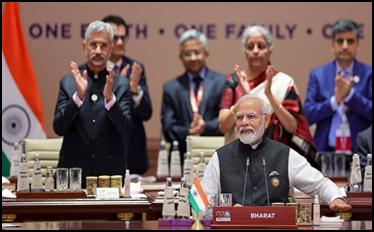
The Pact was adopted on 9 September 2023 during India’s G20 Presidency. It established a strong global consensus on accelerating climate action, sustainable development, and inclusive green growth. The declaration reinforced commitments to the Paris Agreement, expanded renewable energy ambitions, and emphasized sustainable lifestyles, climate finance, biodiversity protection, and circular economy approaches. It enhanced India’s global credibility by positioning it as a consensus builder between developed and developing nations.
International Big Cat Alliance (IBCA), 2023
The initiative aims to conserve seven big cat species: tiger, lion, leopard, snow leopard, cheetah, jaguar, and puma. IBCA formally became a treaty-based intergovernmental organization on 23 January 2025. Currently, 26 member countries from Asia, Africa, and Latin America form part of the Alliance, working together to strengthen global cooperation for big cat conservation.
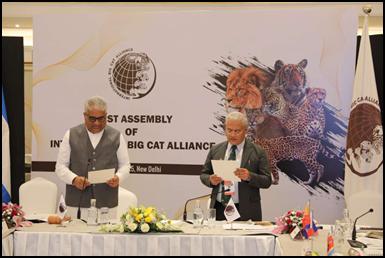
This builds on India’s record of sustaining the world’s largest wild tiger population and long‑term recovery of Asiatic lions and other flagship species. Together, these efforts position India not only as a practitioner of wildlife conservation at home but also as a convener and agenda‑setter for big cat protection worldwide.
The summit also showcased India’s domestic programmes as reference points for other countries. Flagship initiatives for tigers, elephants, bustards, marine turtles and dolphins were presented as practical models for integrating species conservation with community participation and landscape‑level planning. The adoption of Gandhinagar‑linked resolutions and concerted actions during India’s presidency demonstrated that the country can convert its field experience into multilateral commitments, reinforcing its image as a credible bridge between biodiversity‑rich developing countries and the wider global community.
The Road to Viksit Bharat Runs Through Sustainability
Over the last twelve years, India has redefined the relationship between development and environmental stewardship. Sustainability has moved from the margins of policymaking to the centre of national planning, shaping decisions across forests, water resources, biodiversity, waste management, and climate action. Through large-scale conservation, stronger institutions, technological innovation, and global leadership, India has built a robust foundation for long-term environmental security and sustainable growth.
India's green transformation is ultimately a story of Vishwaas, Nirman, and Jan Kalyaan. It reflects Vishwaas in nature's ability to recover when supported by sustained action and collective participation. It embodies Nirman through the creation of stronger ecological assets, modern environmental institutions, and resilient systems for the future. Most importantly, it advances Jan Kalyaan by delivering cleaner environments, secure livelihoods, greater climate resilience, and improved quality of life for millions of citizens.
As India moves towards Viksit Bharat, these principles will continue to guide its environmental journey. Together, they are shaping a greener, more resilient, and more sustainable future for India and the world.
References
Ministry of Environment, Forest and Climate Change
Ministry of Earth Sciences
Ministry of External Affairs
Click here to see pdf
***
PIB Research