Posted On:
06 JUN 2026 12:29PM by PIB Delhi
|
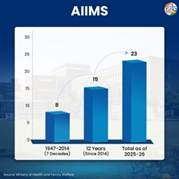
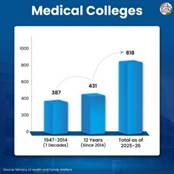
In past 12 years, the Government has significantly strengthened India’s health system. It has insured over 44 crore families and operationalised over 1.86 lakh primary care centres. Generic medicines are now available at rates 50–90% below market price through over 18,000 Jan Aushadhi Kendras. Over 47 crore telemedicine consultations have been delivered. Medical colleges in India have more than doubled. 12 new AIIMS are functional since 2014. Traditional medicine has been formally integrated into the public health system. Maternal and child mortality rates have dropped significantly since 2014. TB incidence has fallen and malaria mortality is down 78%. Prevalence of various other diseases is also declining. Taken together, these gains reflect India's steady progress towards improved public health and universal health coverage.
|
Towards Universal Health Coverage
India has massively transformed its public health infrastructure in the past 12 years. It is now more accessible, affordable, and quality-driven. The impact is deeply visible even at the grassroots levels.
National Statistical Office 2025 survey of over 1.39 lakh households showcases more Indians than ever before are seeking medical care. Those visiting government hospitals and clinics for outpatient care — consultation, diagnosis, tests, prescription — are not having to pay anything. About half of the hospitalised patients are paying below Rs. 1,100 for their care. The poorest of households are benefitting from low or no out-of-pocket healthcare costs at such facilities. These are signs that people have renewed trust in the public healthcare system.
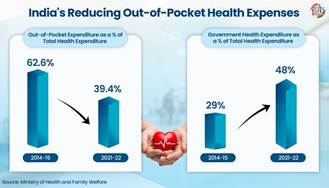
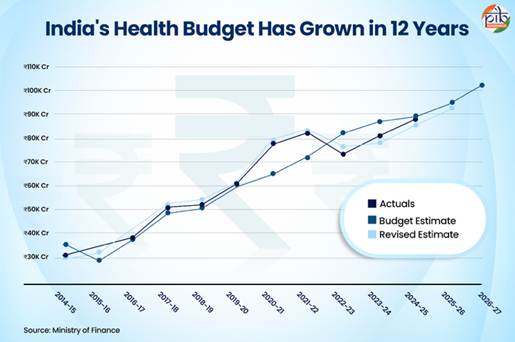
This did not happen by chance. Increased government spending and systematic healthcare upgrades have driven India's progress towards universal health coverage. From insurance schemes to expansion of healthcare infrastructure, India has systematically rebuilt its public health foundations over past 12 years.
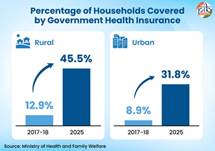
The National Health Mission, with its myriad disease control and care programmes, is making healthcare delivery more targeted. A new and robust digital health infrastructure, along with budding artificial intelligence integrations, is taking healthcare delivery to the next level. To meet rising demand, the government has more than doubled its capacity to train doctors and nurses the system needs. At the centre of these changes is the world's most ambitious universal health coverage programme – the Ayushman Bharat scheme, launched in 2018.
Ayushman Bharat: Universal Health Coverage for Every Citizen
Ayushman Bharat — meaning Long Life India — provides affordable, quality healthcare to people from all walks and all stages of life. It has emerged as a critical lifeline for socio-economically weaker sections and senior citizens above 70 years. The Ayushman Bharat architecture rests on four key pillars that collectively strengthen preventive, promotive, curative, and digital healthcare systems across the country.
Pillar 1: Public Health Insurance Through Ayushman Bharat – Pradhan Mantri Jan Aarogya Yojana (AB-PMJAY)
In continuation of the National Health Mission, the government introduced the National Health Policy (NHP), 2017. It outlines a transformative vision for India’s healthcare system. The policy recognised emerging healthcare challenges, including the rise of non-communicable diseases and escalating treatment costs. To tackle these issues, the government in 2018 launched Ayushman Bharat - Pradhan Mantri Jan Aarogya Yojana (AB-PMJAY). It has now emerged as the world’s largest publicly funded health assurance scheme.
AB-PMJAY provides free public health insurance up to Rs. 5 lakh per family per year to socio-economically deprived families. Such families make up about 40 per cent of the population, or about 12 crore families. The insurance saves these families from catastrophic healthcare bills.
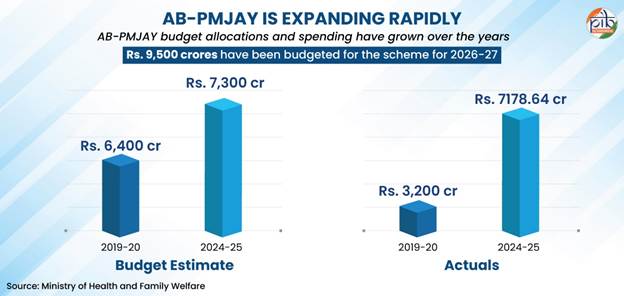
In a landmark expansion of the scheme in October 2024, the government introduced the Ayushman Bharat Vay Vandana, extending the insurance coverage to all senior citizens above 70 years.
The insurance covers consultations, hospitalisations and specialised treatment for a wide range of conditions, including cancer and heart diseases.
Empanelled public and private hospitals offer this insurance scheme. About 40,000 claims are processed daily for more than 1,900 treatment packages.
AB-PMJAY is available across the country, and has become a cornerstone of healthcare equity for lower-income people and senior citizens:
- 44.14 crore Ayushman Cards were created
- 12.03 crore hospitalisations were covered
- Treatment worth Rs. 1,80,435 crore was provided
- 36,218 hospitals were empanelled — 19,659 public and 16,559 private
- 1.20 crore senior citizens were enrolled under the Ayushman Bharat Vay Vandana scheme, who availed over 13.84 lakh treatments worth Rs. 3,000 crore (as on June 5, 2026)
Ayushman App
One-stop hub for PM-JAY beneficiaries – Available on both Android and iOS in 19 regional languages. Beneficiaries can:
- Verify eligibility
- Download Ayushman e-cards
- Monitor wallet balances
- Locate empanelled hospitals
- Raise grievances
A Second Chance at Life
Soni Kahtoon, wife of a daily wage worker from Motihari, Bihar, suffered from a heart valve condition for years while her family struggled financially. Her husband borrowed Rs. 2.5 lakh for treatment at a private hospital in Bihar, which brought no relief. Under AB-PMJAY, she received free heart valve replacement surgery at a multi-specialty hospital in Lucknow. She recovered and returned home to her children. Ayushman Bharat saved Soni and her family from a lifetime of financial duress.
Pillar 2: Primary Care Through Ayushman Arogya Mandirs (AAM)
The government is scaling primary healthcare infrastructure for less specialised treatment of minor ailments and for public outreach health programmes. Ayushman Arogya Mandirs (AAMs) are being established to provide primary healthcare at every neighbourhood. These AAMs are the cornerstone of community health in India, expanding universal health coverage. They provide comprehensive care spanning preventive, promotive, curative, rehabilitative and palliative care.
Each AAM offers 12 free services, going well beyond maternal and child healthcare. These include the screening and management of diseases, oral, eye and ear-nose-throat care, and mental health support. Teleconsultations, first-level emergency and trauma care, and free essential medicines and diagnostics are also provided at these centres. The AAMs have recorded a cumulative footfall of over 540 crores as on date. The government is rapidly building this infrastructure. There are now:
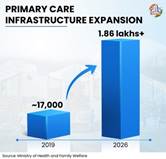
- 1.86+ lakh Ayushman Arogya Mandirs are functional, including:
-
- 1.34 lakh Sub Health Centres
- 24,483 Primary Health Centres
- 5,474 Urban Primary Health Centres
- 12,259 AYUSH centres
- 9,758 Urban Health and Wellness Centres (as of June 5, 2026)
AAMs are also centres for community health outreach for Community Health Workers and Accredited Social Health Activists (ASHAs). At these centres, they spread awareness of health programmes, check in on patients, and keep track of community health.
Improving Public Health at the Grassroot Level
For years, the Lalmati sub-centre in Assam's Bongaigaon district served over 10,000 people across 10 villages, providing only basic maternal and child health services. When the centre was upgraded to an AAM through the Ayushman Bharat scheme, it was truly transformed. The AAM expanded its services, adding screening of non-communicable diseases, mental health support, oral and eye care, and emergency services. Trained Community Health Officers were deployed to lead the team delivering these services.
Due to these changes, the area has recorded zero maternal and child mortality from preventable causes since 2024. High-risk pregnancies have more than halved. Cases of communicable diseases and anaemia have also declined.
Pillar 3: Pandemic Preparedness Through PM-ABHIM
Primary healthcare centres also play a pivotal role during public health emergencies, as seen during COVID-19. They become centres for disease surveillance, screening and treatment. The government has been significantly expanding the primary healthcare infrastructure to ensure pandemic preparedness.
Launched on October 25, 2021, the Pradhan Mantri Ayushman Bharat Health Infrastructure Mission (PM-ABHIM) is one of India’s largest pan-national programmes aimed at developing a resilient, accessible, and self-reliant public health system. Its total financial outlay is Rs. 64,180 crores, spanning from financial years 2021–22 to 2025–26.
The mission is building capacity at every tier of the health system and is:
- Providing support for 23,224 rural health and wellness centres in 10 high-focus states.
- Establishing:
- 13,736 urban health and wellness centres in all states.
- 3,389 block public health units in 11 high-focus states.
- Setting up 744 integrated public health labs in all districts
- Establishing 631 critical care hospital blocks in all districts with a population of more than 5 lakh.
Beyond physical infrastructure, PM-ABHIM is also building India's pandemic defence architecture. This includes:
- Dedicated investments in bio-security preparedness, pandemic research, and disease surveillance
- Outbreak response and preparedness at 50 points of entry into the country
- Critical Care Blocks with 150 beds being established across 12 central institutions
Pillar 4: Digital Health Ecosystem Through Ayushman Bharat Digital Mission (ABDM)
A robust digital health infrastructure is as crucial for improving healthcare accessibility as brick-and-mortar infrastructure. At its core, it gives citizens ownership of their own health data — making it portable, accessible, and usable across any provider in the country. It creates a single source of truth for health facilities, professionals, and pharmacies, enabling better clinical decisions and continuity of care. It also creates a national database that the government can use to analyse public health trends, support medical research, and take a more targeted approach to interventions.
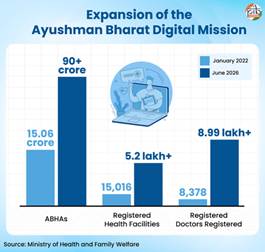
The fourth pillar, the Ayushman Bharat Digital Mission (ABDM), is focused on building a comprehensive, citizen-centric digital infrastructure. It was launched in September 2021. At the heart of ABDM is the Ayushman Bharat Health Account (ABHA) — a unique 14-digit health identity number to which a citizen's complete health records are linked. With the citizen's consent, these records can be accessed by any healthcare professional across the ABDM network, enabling paperless, seamless care. ABDM also facilitates evidence-based decision-making for more effective health interventions at a population level.
The ABHA app, run by the National Health Authority, has a QR-based appointment registration service, which helps with long queues at hospitals or clinics. It also helps verify patient data. The app is leading the expansion of ABDM:
- 20.49 crore registrations were recorded on the app
- 27,328 facilities spanning 36 states and union territories were connected to the platform (as of March 31, 2026)
National Health Mission: Targeting Myriad Ailments and Diseases
The NHM with its two sub-missions — National Rural Health Mission and National Urban Health Mission — delivers targeted programmes that address specific diseases, populations, and health challenges.
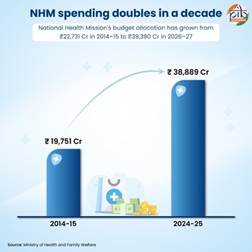
NHM has improved public health outcomes across maternal and child health, disease elimination and immunisation.
Central to the NHM are community health workers operating from the primary healthcare centres. Due to the rapid expansion and upgradation of the primary healthcare infrastructure through Ayushman Bharat, these health workers are more capable than ever. They deliver healthcare services to more people, in more places, with better tools and data than before. Their work spans several targeted programme areas — beginning with maternal and child healthcare.
Maternal and Child Healthcare under National Health Mission
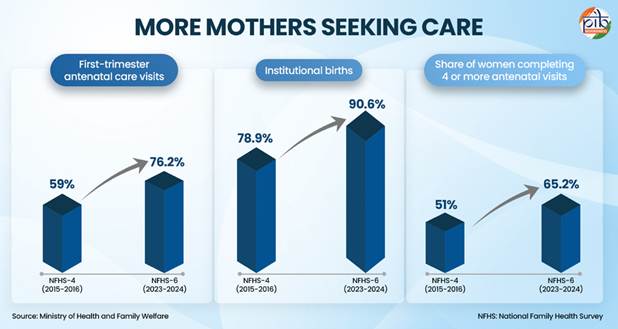
Pradhan Mantri Surakshit Matritva Abhiyan (PMSMA): Launched in 2016, this scheme provides free and quality antenatal check-ups at government health facilities. Crores of women have benefitted from this scheme:
- Over 7.47 crore pregnant women were examined
- 22,349 facilities provided PMSMA services nationwide (as of June 5, 2026).
Janani Suraksha Yojana (JSY): This scheme supports women through childbirth. It encourages facility-based deliveries among poor pregnant women, particularly those from below-poverty-line households, and the scheduled caste and scheduled tribe communities.
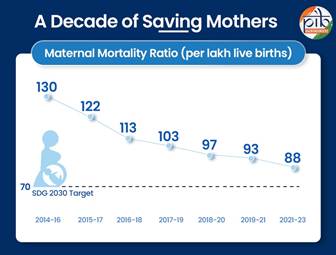
Janani Shishu Suraksha Karyakram (JSSK): This scheme entitles every pregnant woman at a public facility to government-funded free delivery, drugs, diagnostics, diet, and transport. There is no out-of-pocket cost. In 2014, the JSSK was extended to all antenatal & post-natal complications of pregnancy.
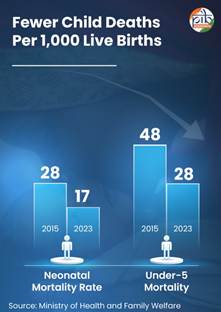
These programmes together have significantly reduced maternal mortality rates.
Community Health Workers Ensure Safe Institutional Births
The pregnancy of Mubashira (of Malappuram, Kerala) was identified as high-risk at Panakkad Urban Family Health Centre. Thereafter, ASHA workers conducted monthly home visits throughout her pregnancy. They monitored both maternal and foetal health. They provided antenatal care and vaccined Mubashira (tetanus and adult diphtheria vaccination). The local police station was also informed at the outset. Regular phone conversations helped build trust with the family. Due to the community outreach, Mubashira safely delivered the baby girl at a hospital.
The NHM runs several other schemes to take care of mothers and children. These include:
Maternal Health
- Surakshit Matritva Aashwasan: Guarantees free, dignified healthcare to every woman and newborn at public health facilities.
- Midwifery Initiative: Trains Nurse Practitioner Midwives
- Stillbirth Surveillance and Response: Tracks and reduces stillbirths, targeting fewer than 10 stillbirths per 1,000 births by 2030.
Child Health
- Home Based Newborn Care: ASHA workers conduct six home visits after birth to monitor newborn health and enable early referral.
- Home Based Care of Young Child: ASHA workers conduct five home visits for children aged 3–15 months to support nutrition and early childhood development.
- Rashtriya Bal Swasthya Karyakram: Screens children for birth defects, developmental delays, deficiencies, and diseases
Nutrition and Adolescent Health
- Anaemia Mukt Bharat: Provides iron and folic acid supplementation to pregnant women, children, and adolescents.
- Weekly Iron Folic Acid Supplementation: Provides weekly Iron and Folic Acid tablets to adolescents to prevent deficiency.
- Mothers' Absolute Affection: Promotes breastfeeding and complementary feeding through frontline health worker training.
- Adolescent Friendly Health Centres: Provide counselling and clinical services to adolescents at the primary healthcare level.
- Menstrual Hygiene Scheme: Ensures adolescent girls have access to information, sanitary products, and safe disposal mechanisms.
Mission Indradhanush
Vaccination of newborns and pregnant mothers is crucial to ensure their health and longevity. The government runs the Universal Immunisation Programme (UIP), which targets 2.67 crore newborns and 2.9 crore pregnant women annually — offering free vaccines against 12 diseases.
Despite this programme, many children and pregnant women are not or partially vaccinated. In 2014, the government launched Mission Indradhanush as a catch-up programme for such communities with low vaccination rates.
Through Mission Indradhanush:
- 5.46 crore children and 1.32 crore pregnant women that were not immunised before were vaccinated
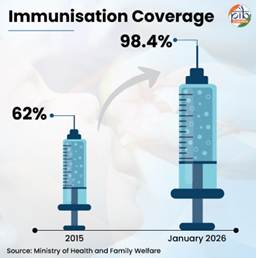
Across routine immunisation, over 95 per cent of children aged 12–23 months received their vaccinations at a public health facility in 2023–24, according to the National Health Family Survey (2023-2024).
Together, these efforts have significantly improved vaccination coverage nationwide.
The share of zero-dose children — those who have received no vaccines at all — fell from 0.11 per cent of the population in 2023 to 0.06 per cent in 2024.
India's immunisation programmes have also contributed to the elimination of maternal and neonatal tetanus, as certified by the World Health Organisation in May 2015.
U-WIN
To strengthen timely vaccination of children and pregnant women, the Government launched the U-WIN (Universal Immunisation Web-enabled Network) platform for a pan-India rollout in 2024. U-WIN digitally records every vaccination event, tracks due doses, and ensures permanent, portable health records for beneficiaries. It reduced gaps caused by missed or untracked vaccinations.
- 11.87 crore children and 3.96 crore pregnant women are registered on the platform (as of March 2026).
The government also launched a three-month cervical cancer prevention campaign in February 2026. The campaign provided free human papillomavirus (HPV) vaccine to girls aged 14 years across the country, which number about 1.15 crore.
Beyond protecting mothers, children and young girls, NHM's programmes have also driven significant progress in eliminating communicable diseases that have long burdened India’s public health system.
Eliminating Communicable Diseases
The government has reduced the prevalence of communicable diseases over the past 12 years. NHM's targeted programmes for disease elimination and treatment have delivered measurable outcomes across tuberculosis, malaria, and leprosy.
Tuberculosis
India has reduced tuberculosis (TB) incidence through the National Tuberculosis Elimination Programme (NTEP). The goal of the programme is to eliminate tuberculosis. This programme is multifaceted and includes screening and treatment of TB through government facilities.
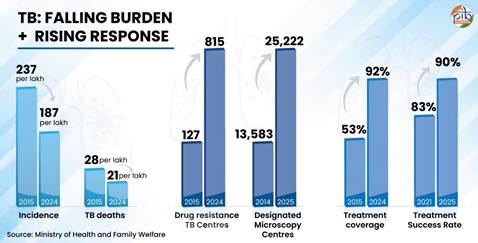
Due to the programme, TB cases and fatalities have declined faster than the global rate of decline. A strong community support network established through the programme also helped in combating TB.
- Over 3.78 lakh Nik-shay Mitras — volunteers who provide TB patients with nutritional, vocational and diagnostic support — supported over 20 lakh patients.
- These volunteers provided over 45 lakh food baskets (as of December 2025). This support helped patients stay committed to their treatment over the full course of care.
Pradhan Mantri TB Mukt Bharat Abhiyaan: Launched in September 2022, the Pradhan Mantri TB Mukt Bharat Abhiyaan is the community-led component of the National TB Elimination Programme (NTEP). It transformed TB elimination into a Jan Andolan — a people's movement.
- Through awareness drives and community mobilisation, over 20 crore individuals have been screened for TB and more than 28 lakh patients diagnosed since December 7, 2024.
This large-scale screening helped identify previously undetected TB cases circulating silently within communities.
Malaria
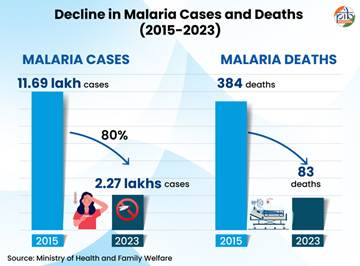
India, once among the highest malaria-burden countries globally, has significantly reduced cases and deaths since 2017 through sustained and targeted government interventions via the NHM.
In 2016, the government launched the National Framework for Malaria Elimination, which provides a roadmap for eliminating malaria by 2027. Building on this framework, the National Strategic Plan for Malaria Elimination (2023–2027) introduced enhanced surveillance and a "test, treat, and track" approach to case management. It also developed real-time data tracking. These interventions have contributed to a sustained decline in both malaria cases and deaths across India.
Other Communicable Diseases
NHM's targeted programmes have driven measurable progress even beyond TB and malaria — reducing transmission, cutting fatality rates, and pushing several diseases towards elimination.
- HIV-AIDS: The mother-to-child transmission rate has declined by about 74.5% between 2010 and 2024. This has outpaced the global decline of around 56.5% in the same period.
- Kala-Azar: 633 endemic blocks in 54 districts have shown less than one case per 10,000 population.
- Japanese Encephalitis: Case Fatality Rate has reduced from 17.6% (2014) to 7.1% (2024)
- Dengue: Case Fatality Rate has reduced to 0.13% in 2024.
- Lymphatic Filariasis:
- 143 of 348 endemic districts (41%) have stopped Mass Drug Administration and cleared Transmission Assessment Survey, up from 15% in 2014 (MDA is the administration of drugs to whole populations irrespective of disease status).
- MDA coverage improved from 75% (2014) to 85% (2025) against total population.
- Leprosy:
- Districts achieving elimination (<1 case per 10,000) went up from 542 (2014-15) to 638 (2024-25).
- The new case detection rate has dropped from 9.73 per 100,000 in 2014-15 to 7.0 per 100,000 in 2024-25.
COVID-19 and Pandemic Response
India’s pandemic response was among the most proactive. The government started screenings at airports before the first domestic case was reported. A dedicated vaccine task force was also formed in April 2020. India was among the first, globally, to introduce the Rapid Antigen Tests.
On January 16, 2021, India launched the National COVID-19 Vaccination Programme, which became one of the world’s largest vaccination drives. Over 220 crore doses — including two indigenous vaccines — were administered free of charge at government schools, clinics, hospitals, and other venues. Certificates were digitised and delivered via the COWIN digital platform.
The government rapidly scaled up its infrastructure during the pandemic:
- Testing labs grew from 14 to 3,400
- ICU beds increased from 2,168 to 1.45 lakh
- Oxygen-supported beds went up from 50,583 to 5.15 lakh
- Before the pandemic, India did not produce any PPE kits domestically. During COVID-19, domestic PPE manufacturing scaled from zero to more than 5 lakh kits per day.
- Over 1,563 Pressure Swing Adsorption (PSA) oxygen plants were sanctioned, and about 900 Oxygen Express trains transported over 36,840 tonnes of liquid medical oxygen during times of crisis.
Under Vaccine Maitri, India supplied vaccines to nearly 100 countries — including free vaccines to 48 countries. Under this humanitarian initiative, India provided about 300 million doses. India truly lived the ethos of Vasudhaiva Kutumbakam — “the world is one family” — by standing with the world in times of need.
Prevention and Treatment of Non-Communicable Diseases
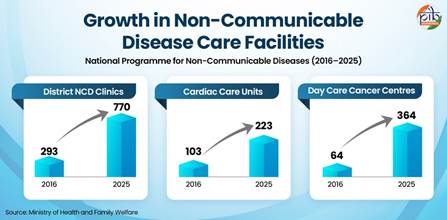
Non-communicable diseases (NCDs) — heart disease, diabetes, cancer, stroke — account for 60% of all deaths in India. To address this growing burden, NHM's National Programme for Prevention and Control of NCDs (NP-NCD) has been strengthening infrastructure for early detection, diagnosis, and treatment.
Early Detection and Screening
Ayushman Arogya Mandirs (AAMs) function as the cornerstone for community screenings of NCDs, including cancer. The government also runs various clinics and care centres for cancer screenings, diagnosis and management of the diseases.
- Over 60 crore screenings have been conducted for oral, breast and cervical cancers at AAMs.
- 35.3 crore people have been screened for oral cancer out of which:
- 2.3 lakh people have been detected with the cancer
- About 2 lakh people are being treated
- Over 16.5 crore have been screened for breast cancer
- 8.73 crore screenings have been done for cervical cancer, out of which:
- 1.1 lakh women have been diagnosed
- About 97,000 are being treated
- Since 2017, 41.5 crore people have been screened for hypertension, out of which:
- 7.1 crore have been diagnosed, and
- 5.7 crore people are notified.
- 41.3 crore people have been screened for diabetes, out of which:
- 4.7 crore people have been found diabetic
- 3.4 crore people are being treated.
Treatment and Care
Cancer Care
The government has made cancer treatment a priority over the past 12 years. It is expanding cancer care from district to tertiary levels.
- The Strengthening of Tertiary Cancer Care Centres Facilities Scheme established 19 State Cancer Institutes and 20 Tertiary Cancer Care centres.
- Cancer treatment facilities were approved in all 22 new All India Institutes of Medical Sciences (AIIMS). These facilities are equipped with diagnostic, medical, and surgical capabilities.
- The national cancer surveillance was expanded through over 600 cancer registry sites and over 100 stroke registry sites. This enhanced the government's ability to track and respond to non-communicable diseases at scale.
Kidney Disease and Dialysis
NCDs can also trigger secondary conditions. Chronic kidney disease, for instance, can occur due to uncontrolled diabetes, high blood pressure, and other causes. End-Stage Renal Disease is the final and most severe stage of chronic kidney disease. Dialysis, its primary treatment, is expensive.
To support patients of the disease, the government rolled out the Pradhan Mantri National Dialysis Programme (PMNDP) in 2016, which provides free dialysis treatment to the poor.
Through this programme:
- 31.74 lakh patients received dialysis treatment
- Over 4 crore haemodialysis sessions were held across 1,816 centres
- The programme saved patients an estimated Rs. 10,102.25 crore in out-of-pocket healthcare expenses (as on June 5, 2026)
Many treatments for NCDs are also covered under the AB-PMJAY insurance scheme, providing poorer sections of society an affordable means of recovery.
Prevention: Reducing NCD Risk Factors
A sedentary and unhealthy lifestyle is often a leading cause for NCDs, particularly for obesity and diabetes. Since 2014, the government has launched several initiatives outside the NHM to combat NCDs and promote a healthy lifestyle.
Eat Right India
A healthy diet is key to combating or preventing obesity, diabetes, under-nutrition and micronutrient deficiencies. Launched in July 2018, the Eat Right India movement promotes safe, healthy, and sustainable food. It promotes hygiene at food establishments, healthy eating practices, and food free from contaminants. The initiative takes a whole-of-government approach – cutting across ministries and departments to deliver coordinated outcomes. The initiative has involved the community in influencing change in people’s diets and lifestyle practices. Through this programme:
- 182 Clean Street Food Hubs were certified
- 546 Fruits and Vegetables Market were certified
- 411 railway stations were (as on June 5, 2026)
- Over 21 thousand kilos Used Cooking Oil was collected in 2024-25 financial year
Fit India
Engaging in physical activity is also an important way of combating NCDs. Launched in 2019, the Fit India Movement encourages people to incorporate fitness into their daily routines. The Fit India Sundays on Cycle campaign promotes cycling in urban spaces as a simple, accessible, and eco-friendly way to stay active.
- The Fit India Sundays campaign engaged over 30 lakh citizens across over 2.8 lakh locations since its launch.
Tobacco Control
Tobacco use continues to be a major public health challenge, claiming over 13 lakh lives annually in India. Tobacco use is also a leading cause of cancer.
Through the National Tobacco Control Programme, India has achieved a 17.3% reduction in overall tobacco use over the past decade.
Tobacco use among school-going children declined too:
- It declined from 14.6% in 2009 to 8.5% in 2019 (Global Youth Tobacco Surveys 4 & 5)
Various initiatives under the NTCP helped communities kick off tobacco addition.
- The government operates various Tobacco Cessation Centres across the country through this programme. Over 2,000 Tobacco Cessation Centres were established across the country in district hospitals, medical colleges, dental colleges, and NCD clinics.
- In 2016, the government launched a toll-free National Tobacco QuitLine (1800-112-356) that offers free counselling and support, along with follow-up support.
- Over 6.5 lakh people were assisted through this helpline from June 2016 to April 2026.
- Sustained counselling helped 34.5% of the callers quit tobacco.
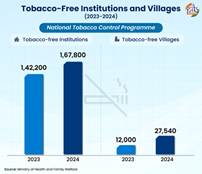
- The government launched the Tobacco Free Youth Campaign in 2023 — now in its third edition – to ensure that school-children and youth do not develop tobacco addiction. Across successive 60-day campaigns:
- Over 3.09 lakh educational institutions and 39,000 villages achieved tobacco-free status
- Over Rs. 2.1 crore was collected in fines
India received the Bloomberg Philanthropies Award in 2025 for tobacco control. The award recognised the government's progress in curbing tobacco use through a national toll-free quit line and cessation support services at health facilities across the country.
Preventing disease is only one part of building a healthy society. When illness does occur, access to treatment should depend on need—not on a person’s ability to pay.
Providing Affordable Medicines and Emergency Transport
Healthcare becomes truly accessible and equitable when people can afford the medicines, tests, and transport that treatment requires. Three government initiatives have directly addressed and solved these problems.
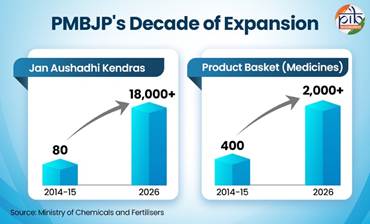
The Pradhan Mantri Bhartiya Janaushadhi Pariyojana provides quality-assured generic medicines at significantly lower prices than market prices. These medicines are available for purchase at Jan Aushadhi Kendras (JAKs) across the country. This initiative has made quality generic medicines available at a fraction of branded prices — typically 50–80% cheaper.
The AMRIT (Affordable Medicines and Reliable Implants for Treatment) Pharmacies initiative was launched in 2015. These pharmacies provide life-saving and essential medicines at discounts ranging from 50% to 90%. They have brought down treatment costs for patients, especially for those from low-income backgrounds.
- Till date, AMRIT Pharmacies have benefited over 6.85 crore patients with over 255 outlets established. Patients have saved about Rs. 8,400 crore through this scheme.
The government launched the Free Essential Diagnostics Initiative in 2015, under the National Health Mission to address the high out of pocket expenditure on diagnostics. The initiative prescribes free essential tests at every level of the public health system:
The initiative covers:
- 9 tests at Sub-Centre level
- 19 at Primary Healthcare Centres
- 39 at Community Health Centres
- 57 at the District Hospital level
The specialities covered are:
- Haematology
- Serology
- Biochemistry
- Clinical Pathology
- Microbiology
- Radiology
- Cardiology
Free Diagnostics Initiative
Andhra Pradesh was the first state to implement the Free Diagnostics Initiative in 2016. Before, patients in the state paid out-of-pocket for basic lab tests and radiology at public facilities. The state government launched the NTR Vaidya Pariksha initiative across all 13 districts to implement the Free Diagnostics Initiative in government facilities. Free lab and radiology services were extended to:
- 1,182 primary healthcare centres
- 192 community health centres
- 31 Area Hospitals, and
- 8 District Hospitals.
Tele-radiology was introduced at 120 facilities lacking qualified radiologists. Four new CT centres were set up on Public-Private-Partnership mode. The response was immediate:
- Between 45,000 to 55,000 tests and 1,200 X-rays were conducted every working day through this initiative.
- About 60–70 Computed Tomography (CT) studies were reported daily via tele-radiology.
- Outpatient visits rose by over 16 lakh and inpatient admissions by 2.72 lakh between January–June 2016, compared to the same period in 2015.
- Running costs were approximately Rs. 10 crore per month across 1,400 healthcare centres statewide.
The model was designed for replication across other states under NHM.
Emergency transport is also provided by the government. Over the past 12 years, the government has systematically closed the gap between a patient and a hospital by expanding India’s primary emergency ambulance network.
Dial 108 and Dial 102 operate across 35 states and union territories. Dial 108 handles medical emergencies like critical care, trauma, and accident emergencies. Dial 102 focuses on pregnant women and children, managing the beneficiaries of the Janani Shishu Suraksha Karyakram (JSSK) scheme end-to-end. Various emergency support vehicles are closing the gap:
- 3,044 Advanced Life Support ambulances
- 15,283 Basic Life Support ambulances
- 3,918 Patient Transport Vehicles, 19 boats, 81 bikes for hard-to-reach areas
Reaching People Where They Are: Digital and Last-Mile Health Services
Since 2014, the government has expanded last-mile healthcare delivery through digital health technology. Geography is no longer a barrier between people and their health. A patient in a remote village earlier had little hope of seeing a specialist. Now, they can virtually consult them. Three platforms have been central to this effort.
eSanjeevani: National Telemedicine Service
eSanjeevani, India's national telemedicine platform, is at the centre of this digital shift. Citizens living in underserved or remote areas can now consult a doctor via smartphones, computers or at the nearest primary and sub-health centres.
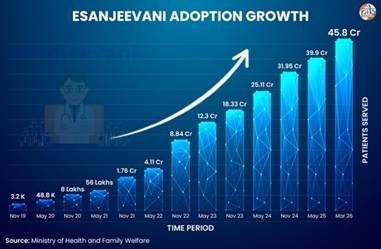
Launched in November 2019, eSanjeevani was initially designed for doctors at health centres to consult one another. However, demand for the platform exploded once the pandemic barred people from visiting hospitals and clinics.
Now, the platform connects people directly to specialists sitting in top medical institutes of the country.
Since its launch:
- Over 47 crore calls were recorded
- More than 2.34 lakh healthcare providers — including doctors, specialists, and super-specialists across government hospitals, medical colleges, and Ayushman Arogya Mandirs — were onboarded onto the platform
Tele-MANAS: Mental Health on the Phone
For those seeking mental health care, there exists the Tele-MANAS telemedicine service launched by the government in October 2022. It makes mental healthcare — historically stigmatised and under-resourced — accessible to those living outside cities, where such care has long been concentrated. The service improves access to quality mental health counselling and care services across the country.
The service is available in 20 languages across all 36 states and union territories. People can get telephone-based counselling, psychotherapy, psychiatric consultations, and referral services, including urgent care through Tele-MANAS.
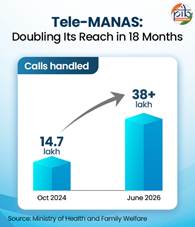
In October 2024, the government launched the Tele-MANAS mobile app, which made the use of the service easier. The app also makes services accessible to the visually impaired. This is through a specially designed, user-friendly digital interface and a toll-free phone line that does not require screen use. The use of the telemedicine service was boosted since the launch of the app.
- There are now 53 Tele-Manas Cells and 23 Mentoring Institutes connected to the platform.
i-DRONE for Medicine Delivery
Medicine delivery is often difficult in remote and hilly regions, or difficult terrain. Drones are now being used to deliver medicines to those who cannot get them due to physical or other barriers. The Indian Council of Medical Research launched the i-DRONE service in 2021. These drones are used to transport medicines, vaccines and blood samples for testing via drones.
- 22,000 medicines were delivered through 7,700 kilometres via drones.
- 65 healthcare centres used the service
Transforming Healthcare Delivery Through Artificial Intelligence
The government is deploying artificial intelligence across healthcare to further increase equity, accessibility, affordability and speed.
AI-powered Clinical Decision Support Systems (CDSS) assists doctors during eSanjeevani consultations through structured data capture and clinical alerts.
- 28.2 crore eSanjeevani consultations benefited from standardized AI-enabled support since CDSS was introduced in April 2023 through November 2025.
AI tools are also strengthening disease screening. The ‘Cough Against TB’ tool uses cough analysis to identify likely tuberculosis cases.
- An additional 12-16% TB was reported by using this tool – cases which may have been missed if the patients were screened using conventional methods.
- More than 1.62 lakh people have been screened using this tool from March 2023 through November 2025.
MadhuNetrAI enables automated diabetic retinopathy screening, helping prevent avoidable blindness. It eliminates the need for a specialist ophthalmologist at the point of screening.
- The solution was implemented across 38 facilities in 11 states
- It provided AI assistance during screening of more than 14,000 retinal images, benefiting 7,100 patients (as of December 2025).
Medical Education and Workforce
Over the past 12 years, the government has expanded medical education to meet rising demand for health professionals.
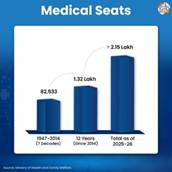
Nursing has received equal attention:
- 157 new nursing colleges are being established alongside the new medical colleges — adding approximately 15,700 nursing graduates annually.
- The number of nursing seats have increased since 2014 too (as of June 2025):
-
- B.Sc. Nursing seats: up 53% to 1,27,290
- M.Sc. Nursing seats: up 39% to 14,986
Alternative Healthcare
Alongside modern medicine, the government has also formally integrated traditional healthcare systems into the public health framework since 2014.
The Ministry of AYUSH (Ayurveda, Yoga, and Naturopathy, Unani, Siddha and Homoeopathy), formed in November 2014, established traditional medicine as an active part of India's health system.
- 942 AYUSH institutions were opened (as of 2025)
The National AYUSH Mission co-locates AYUSH facilities at public health centres and district hospitals. Traditional care now shares infrastructure with modern medicine.
- AYUSH care was mainstreamed across 13,093 NHM co-located facilities (as of December 2025)
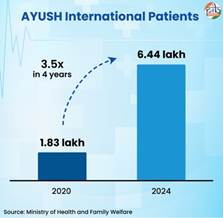
To unify the traditional healthcare ecosystem, the AYUSH Grid will digitally connect all AYUSH hospitals and laboratories nationwide.
India is also positioning AYUSH as a global offering. A dedicated AYUSH Visa was introduced in July 2023, for foreign nationals seeking treatment in India. This has significantly expanded the country’s potential to become the world’s health and wellness capital.
Towards a Viksit Bharat 2047
During the past 12 years, investments in medical infrastructure, primary healthcare, and medical education have strengthened India’s health sector. These efforts are steadily advancing the country towards universal health coverage. It is the fulfilment, in practice, of the government’s motto — Sabka Saath, Sabka Vikas.
A healthier population is not only a moral achievement — it is an economic one. When people are not pushed into poverty by medical bills, they spend more on their development. When workers are not lost to preventable disease, they are more productive at work. When children survive their first years and grow up well-nourished, they learn, earn, and contribute.
The benefits over the past 12 years will compound across generations. Children born today into a system with near-universal immunisation coverage, accessible primary care, and early disease screening will live longer, healthier lives than their parents. They will also inherit a stronger health baseline in turn. India is moving steadily towards its vision of Viksit Bharat @ 2047 — a healthier, stronger, and more prosperous nation for every citizen.
References
Press Information Bureau
Ministry of Health and Family Welfare
Others
Click here to see PDF
PIB Research