Posted On:
08 JUN 2026 11:07AM by PIB Delhi
Over the past twelve years, India’s sustained public interventions have expanded access to essential services, reducing deprivation across underprivileged households. Nearly 25 crore people escaped multidimensional poverty through expanded welfare delivery and social protection measures. Rural tap water coverage increased from 3.23 crore households in 2019 to 15.84 crore by May 2026. Over 12.11 crore household toilets were built, raising rural sanitation coverage from 39% in 2014 to universal coverage. PM Ujjwala Yojana provided over 10.57 crore free LPG connections, improving women’s health and reducing indoor pollution. Ayushman Bharat issued 43.93 crore health cards, expanding affordable healthcare access for economically vulnerable families. PMGKAY ensured free foodgrains for over 81 crore beneficiaries, strengthening food security for poor households nationwide. Female primary school dropout rates declined sharply from 4.6% in 2013-14 to 0.3% in 2024-25. Digital governance reforms enabled Aadhaar-based ration delivery. Welfare delivery also expanded in Aspirational Districts and tribal regions through targeted water, sanitation, and livelihood interventions.
Strategic Paradigms in Poverty Alleviation and Multi-Sectoral Welfare
Over the past decade, India has witnessed a significant transformation in poverty alleviation, social protection, and welfare delivery. The public policy has been guided by the principles of inclusion, accessibility, and last-mile delivery. This has ensured that the benefits of economic growth are distributed amongst all.
Notably, average inflation declined from 8.1% during 2004–2014 to 5.1% during 2014–2025. This contributed to greater price stability and improved household purchasing power. At the same time, multidimensional poverty in India declined sharply from 29.17% in 2013–14 to 11.28% in 2022–23. This reflected a 17.89 percentage-point reduction. Nearly 25 crore people were lifted out of multidimensional poverty during this period.
This progress has been driven by the large-scale expansion of welfare schemes and social protection measures. Key interventions include financial inclusion, affordable healthcare, food security, housing, livelihood support, and digital governance reforms. Improved infrastructure and public service delivery have further strengthened these efforts. Overall, these initiatives have enhanced the quality of life for millions of poor households across rural and urban India.
Foundations of Dignity: Universal Access to Basic Needs
Government interventions have focused on tap water connectivity, sanitation coverage, LPG access and rural electrification across rural and urban India. The efforts reflect a broader transition toward improved quality of life, human development, and basic service delivery at scale.
I. Universal Access to Water, Sanitation, and Hygiene (WASH)
Over the past decade, access to clean energy, safe drinking water, and improved sanitation has emerged as a central pillar of India’s welfare and public health strategy. Large-scale interventions have significantly enhanced quality of life and reduced health vulnerabilities. This has strengthened human dignity, particularly across rural and underserved regions.
Jal Jeevan Mission
The Jal Jeevan Mission (JJM), launched in 2019, represents a transformative infrastructure initiative to institutionalize universal access to potable water for rural households.
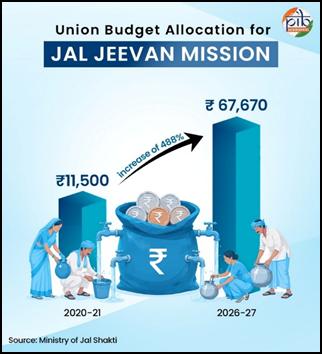
The Mission was started to reduce the long-standing burden on rural women associated with manual water collection. The program facilitates significant advancements in health, educational attainment, and socio-economic status for rural populations.
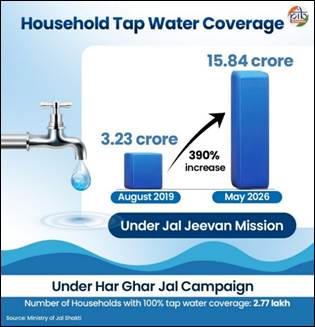
Reflecting its strategic priority, fiscal allocations expanded by approximately 488% between 2020-21 and 2026-27, reaching ₹67,670 crore. Empirically, the mission has achieved substantial scale, with household tap water coverage increasing from 3.23 crore in August 2019 to 15.84 crore by May 2026. This marks the coverage of 81.87% of the total 19.35 crore households. Moreover, 2.77 lakh villages achieved 100 percent tap water coverage under the Har Ghar Jal campaign.
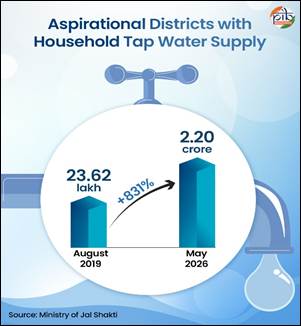
Furthermore, the initiative has addressed developmental disparities through targeted interventions in Aspirational Districts and Blocks. In Aspirational Districts, household tap water coverage increased from 23.62 lakh in August 2019 to 2.20 crore by May 2026. Similarly, in Aspirational Blocks, 1.11 crore households had gained access to tap water by May 2026. This systemic expansion underscores a robust commitment to enhancing public health and rural dignity.
The operational guidelines of the Jal Jeevan Mission specify certification requirements for villages under the “Har Ghar Jal” framework. This institutional focus has resulted in a significant expansion of potable water access. A village is certified only after achieving comprehensive saturation of tap water access across key community institutions and households.
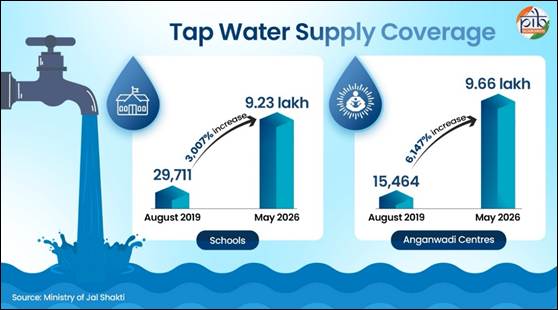
In this context, the number of schools with tap water connectivity increased from 29,711 in August 2019 to 9.23 lakh by May 2026. Also, the tap water coverage in Anganwadi Centres rose from 15,464 to 9.66 lakh during the same period. Further, tap water connectivity in Gram Panchayats and Community Health Centres reached 3.93 lakh institutions, covering 77.27 percent of such facilities. Improved access to clean drinking water has reduced waterborne diseases, strengthened sanitation, and supported better educational outcomes, particularly for children and adolescent girls.
Swachh Bharat Abhiyan - Urban
The Swachh Bharat Mission (Urban), inaugurated in 2014, is a multifaceted strategy that targets both physical infrastructure and behavioural change. Beyond eliminating open defecation and manual scavenging, the initiative prioritizes converting substandard sanitation facilities and institutionalizing municipal solid waste management. This flagship movement has fundamentally shifted social norms, catalysing a substantial increase in demand for and use of sanitary infrastructure.
The budget outlay was increased from ₹62,009 crore under SBM-U Phase 1 (2014–2021) to ₹1.41 lakh crore under SBM-U 2.0 (2021–2026). This marks an increase of approximately 128.3%. Under this Mission, door-to-door waste collection increased from 43% in 2014 to 98% in 2026. Waste processing at various Collection & Material Recovery Centres rose from 16% in 2014 to 82% in 2026.
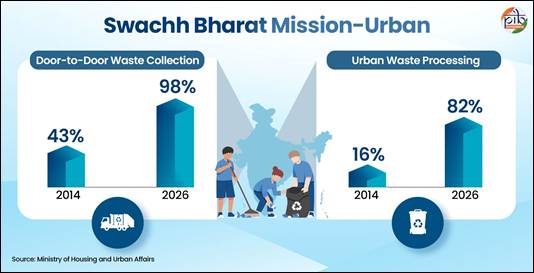
Construction of individual household toilets exceeded the stipulated targets, with 63.74 lakh units completed, achieving 108.62 percent of the target. Similarly, community and public toilet infrastructure expanded substantially, reaching 6.36 lakh units, equivalent to 125.46% of the target. As a result of these interventions, 4,692 cities have been declared Open Defecation Free (ODF). 4,314 cities are certified as ODF+ and 1,973 cities as ODF++, reflecting significant progress in urban sanitation and waste management.
What are ODF+ and ODF++?
ODF stands for Open Defecation Free, a status in which no one defecates in the open and everyone uses toilets. ODF+ means that an area is not only free of open defecation but also has effective solid and liquid waste management. Consequently, that area has a visible level of overall cleanliness. Moving further, ODF++ means that all toilets within that area are functional and properly maintained. Faecal sludge and sewage in that area are also safely treated, instead of being discharged directly into drains or water bodies.
Swachh Bharat Abhiyan - Grameen
Prior to 2014, approximately 550 million individuals in rural India lacked access to adequate sanitation facilities. This was resulting in significant public health challenges and the erosion of social dignity, particularly for women and children. In response, the Swachh Bharat Mission (Grameen) was inaugurated in October 2014. This strategic priority is reflected in the 83% increase in fiscal allocations. Budget allocations have increased from ₹3,929 crore in 2014–15 to ₹7,192 crore in 2026-27.
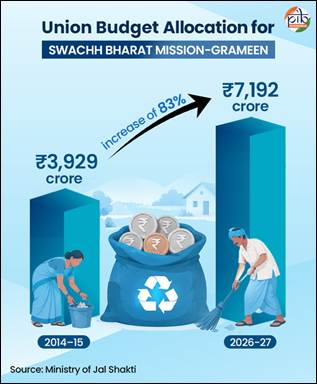
Under this Mission, over 12.11 crore individual household toilets have been constructed so far. During Phase I, sanitation coverage was increased significantly from 39% in 2014 to 100% in 2019. Following this, India was declared Open Defecation Free in 2019. As of March 2026, over 5 lakh villages had attained ODF Plus (Model) status. ODF Plus includes comprehensive village cleanliness through solid and liquid waste management systems in rural India. This progression underscores a systematic shift from basic access to holistic environmental sanitation.
Comprehensive waste management protocols have been institutionalized across rural India. Solid waste management systems are active in 5.31 lakh villages, and liquid/greywater management in 5.50 lakh villages. This infrastructure is further bolstered by 2,415 plastic waste management units spanning 5,482 blocks. The achievement of SBM has been associated with a significant decline in morbidity and mortality.
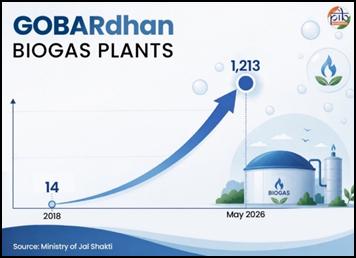
Furthermore, the GOBARdhan initiative has experienced exponential growth. It transitioned from 14 operational biogas plants in FY 2018–19 to over 1,213 by May 2026. This systemic integration of waste management infrastructure and bio-energy production underscores a robust transition toward a circular economy.
II. Advancing Clean Cooking, Renewable Energy, and Rural Electrification
India’s comprehensive strategy for universal energy access focuses on clean cooking fuel, rooftop solar adoption, and total rural electrification.
Pradhan Mantri Ujjwala Yojana
Launched in 2016, PM Ujjwala Yojana (PMUY) seeks to reduce dependence on traditional cooking fuels among economically vulnerable households. The scheme provides free LPG connections and refill support to adult women beneficiaries from poor households.
PMUY has improved rural health and living conditions by reducing indoor air pollution and reliance on biomass-based fuels. The scheme also reduces women’s drudgery, supports environmental conservation, and improves nutrition outcomes.
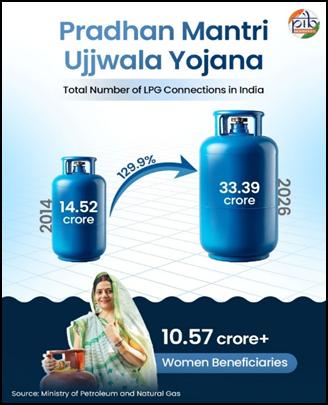
As of May 2026, over 10.57 crore free LPG connections have been provided to women from below-poverty-line (BPL) households. Consequently, the total number of LPG connections in the country increased from 14.52 crore in 2014 to 33.39 crore in 2026. This marks a rise of around 129.9% in 12 years.
Pradhan Mantri Surya Ghar: Muft Bijli Yojana
Launched in 2024, PM Surya Ghar: Muft Bijli Yojana promotes the adoption of rooftop solar systems. It provides subsidies for household solar installations and offers up to 300 units of free electricity per month. This helps reduce electricity expenditure for poor and middle-class households. It also enables additional income through the sale of surplus power. As a welfare-oriented initiative, it supports energy self-sufficiency and reduces dependence on fossil fuel-based electricity.
Reflecting the growing emphasis on the scheme, the union budget allocation increased to ₹22,000 crore in 2026-27. The initial allocation was ₹6,250 crore in 2024-25
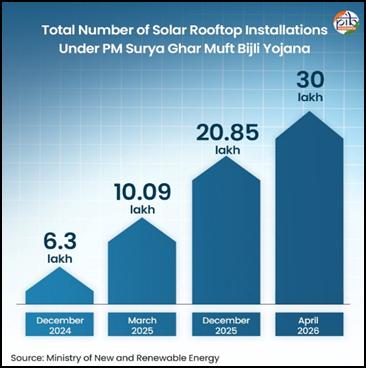
As of April 2026, the scheme had benefitted 36.8 lakh households. The number of solar rooftop installations increased significantly from 6.3 lakh in December 2024 to 30 lakh by April 2026.
Universal Village Electrification
Pradhan Mantri Sahaj Bijli Har Ghar Yojana (SAUBHAGYA) was launched in 2017 to ensure universal household electrification. It provides electricity access to all willing households nationwide. The scheme has contributed to improved health and education outcomes, while reducing dependence on kerosene. It further enhances overall living conditions, particularly for women. Under this scheme, 100% of willing households were electrified nationwide by March 2019.
The scope of electrification was expanded beyond households to include streets and community infrastructures. Deendayal Upadhyaya Gram Jyoti Yojana, launched in 2014, focused on strengthening rural power infrastructure. The scheme also ensures a reliable electricity supply for agricultural activities. Under this scheme, 100 percent village electrification was achieved by 2025.
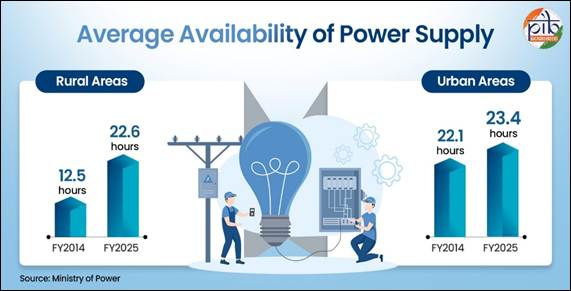
Such targeted interventions have significantly improved electricity access and availability nationwide. The average daily electricity supply in rural areas increased from 12.5 hours in FY2014 to 22.6 hours in FY2025. Similarly, in urban areas, the power supply increased from 22.1 hours in FY 2014 to 23.4 hours in FY 2025. Improved electricity availability has supported socio-economic development by enhancing agricultural productivity through electric irrigation systems. It further strengthens manufacturing capacities and improves urban and industrial infrastructure.
III. Strengthening Public Health and Food Security Systems
India has undertaken significant reforms to strengthen access to, affordability of, and service delivery in healthcare services. The expanded flagship programmes ensure robust nutrition and comprehensive social security for millions.
Ayushman Bharat
The Ayushman Bharat - Pradhan Mantri Jan Aarogya Yojana was launched in September 2018 to achieve universal health care coverage in India. Recognized as the world’s largest publicly funded healthcare scheme, it provides annual health insurance coverage of ₹5 lakh per famiy. It constitutes nearly 12.37 crore economically vulnerable families, the bottom 40 percent of the population. In March 2024, the scheme’s coverage was further expanded to include approximately 37 lakh ASHAs, Anganwadi workers, helpers, and their families.
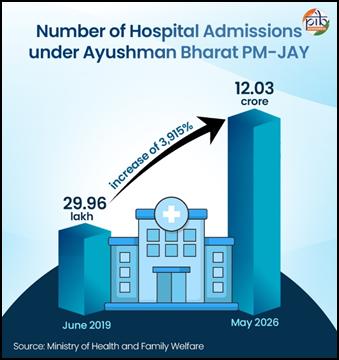
As of May 2026, over 43.93 crore Ayushman Cards had been issued under the scheme. Hospitalization increased substantially from 29.96 lakh in June 2019 to 12.03 crore by May 2026, with total treatment costs of ₹1.80 lakh crore. Concurrently, the Ayushman Bharat Digital Mission (ABDM) has institutionalized digital health governance. It introduced Ayushman Bharat Health Accounts (ABHA), a 14-digit unique digital health identifier that allows seamless health record management. As of May 2026, 88.33 crore ABHA accounts have been created. Around 97.81 crore health records have been linked with these, enabling a paperless healthcare ecosystem.
Foundational infrastructure has similarly scaled, over 1.85 lakh Ayushman Arogya Mandirs have facilitated 540 crore visits. Access to affordable medicines has also expanded significantly, with 7.41 crore citizens benefiting from affordable AMRIT outlets.
Further, under the Ayushman Bharat Vay Vandana Yojana, more than 1.20 crore senior citizens have been enrolled. Approximately 13.84 lakh treatments were delivered at a cost exceeding ₹3,000 crore. Healthcare infrastructure has also witnessed substantial expansion during this period. The number of AIIMS approved and made operational has increased from 8 (1947-2014) to 15 in the last 12 years (2014-2026). Thus, the operational expansion of AIIMS institutions has nearly doubled since 2014. This reflects a robust commitment to healthcare infrastructure and providing affordable healthcare services to economically weaker households.
Child & Maternal Health Interventions
The government has fortified maternal healthcare via strategic interventions. The initiatives include the Janani Suraksha Yojana, Janani Shishu Suraksha Karyakram, and the Pradhan Mantri Surakshit Matritva Abhiyan (PMSMA). Under PMSMA, over 7 crore antenatal check-ups have been conducted, facilitating the early identification and management of high-risk pregnancies. Furthermore, Mission Indradhanush has immunized 5.46 crore children and 1.32 crore pregnant women, substantially improving health outcomes.
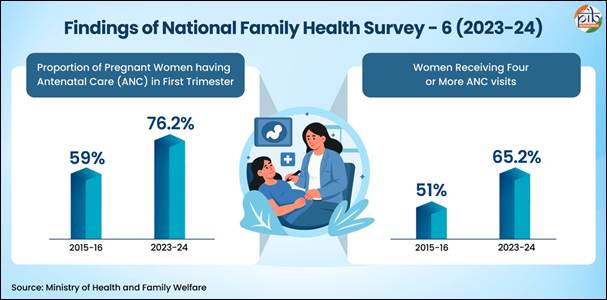
These initiatives have yielded measurable longitudinal progress. The Maternal Mortality Ratio (MMR) has declined from 130 per 100,000 live births (2014-16) to 88 per 100,000 live births (2021-23). NFHS-6 data further indicate that first-trimester antenatal care visits rose from 59% to 76.2% between 2015-16 (NFHS-4) and 2023-24. Similarly, access to at least four ANC visits expanded from 51% to 65.2%, indicating greater utilization of institutional maternal healthcare services.
Moreover, according to the 80th Round of Household Social Consumption released by the National Statistical Office:
- Nearly two-thirds (66.8 percent) of rural institutional deliveries occur in government health facilities. The corresponding proportion in urban areas is 47 percent.
- Longitudinal analysis reveals an increase in the use of public facilities for outpatient services, with rural participation rising from 28% in 2014 to 35% by 2025.
These metrics reflect a successful transition in the healthcare delivery model from reactive crisis management toward a proactive, equitable, and preventative paradigm.
Food Security for All
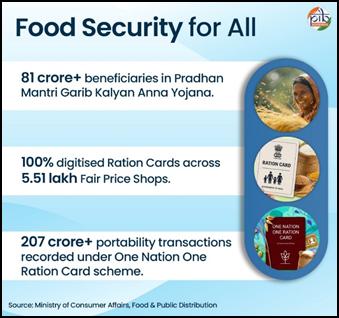
The Pradhan Mantri Garib Kalyan Anna Yojana (PMGKAY), launched in 2020, serves as a critical social safety net. The scheme was introduced to mitigate pandemic-induced economic disruptions. It provides free foodgrains to over 81 crore beneficiaries. Further, the scheme was extended for five years in January 2024.
PMGKAY utilizes the existing Public Distribution System (PDS) infrastructure. The institutional framework of PDS itself has undergone significant modernization. Over 5.50 lakh (99.8%) of 5.51 lakh Fair Price Shops under the PDS are automated for Aadhaar-based distribution. Ration cards are 100% digitised across all States/UTs.
To further strengthen foodgrain distribution infrastructure, the Government approved the SARTHAK-PDS scheme in May 2026 with a budget allocation of ₹25,530 crore. The scheme further optimizes logistics and last-mile delivery through advanced technological integration, under the National Food Security Act.
Furthermore, the One Nation One Ration Card (ONORC) has institutionalized nationwide portability, facilitating over 2.07 billion transactions. This covers all beneficiaries of the PMGKAY, significantly enhancing access to subsidized foodgrains for migrant and mobile populations.
Measurable improvements in nutritional outcomes have accompanied these interventions. According to the NFHS-6 (2023-24), the prevalence of stunting among children declined from 38.4% in NFHS-4 (2015-16) to 29.3%. The wasting decreased from 21% to 19%, and the proportion of underweight children fell from 35.8% to 31.8%. This indicates a gradual improvement in nutritional outcomes among children.
IV. Strengthening Education Access and Learning Outcomes
India’s developmental trajectory is a multi-sectoral approach that bridges historical gaps in gender representation and institutional access. The strategic integration of modernized physical infrastructure and advanced digital pedagogical frameworks has expanded educational opportunities for marginalized communities.
Samagra Shiksha Abhiyan
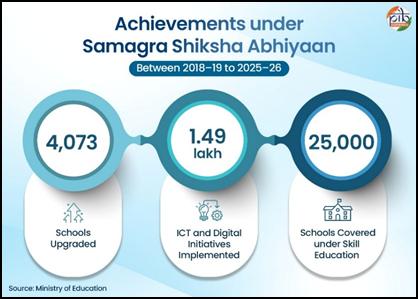
Samagra Shiksha Abhiyan was launched in 2018-19, subsuming Sarva Shiksha Abhiyan, Rashtriya Madhyamik Shiksha Abhiyan, and Teacher Education schemes. The initiative prioritizes universal access and educational inclusivity by modernizing infrastructure, institutionalizing digital learning, and enhancing vocational training. Under this scheme, 4,073 schools have been upgraded, and 1.49 lakh ICT and digital initiatives (including smart classrooms) have been implemented. 25,000 schools have been covered under skill education (between 2018–19 to 2025–26).
Furthermore, the scheme has significantly improved gender-specific infrastructure, with 97.3% of schools currently equipped with functional female sanitation facilities. The total number of schools providing exclusive female sanitation facilities expanded from 13.5 lakh in 2013–14 to 14.2 lakh by 2024–25. Since 2014–15, more than 1.39 lakh separate toilets for girls have been constructed across schools. This expansion of gender-sensitive sanitation infrastructure has contributed to reducing attrition rates among female students and supporting their continued participation in education. Female drop-out rate at the primary school level decreased from 4.6 percent (2013-14) to 0.3 percent (2024-25). At the secondary school level, it reduced from 14.5 percent (2013-14) to 11.5 percent (2024-25).
Reservation for Economically Weaker Section
The Constitution (One Hundred and Third Amendment) Act, 2019, enabled EWS reservation for admission in educational institutions and employment. A 10% EWS reservation is available for candidates outside the existing SC, ST, and OBC reservation categories. This decision benefited the economically disadvantaged individuals from the general category. An annual family income limit of ₹8 lakh identifies eligible EWS beneficiaries.
As a result of these sustained efforts, India has achieved near-universal participation at the elementary level in 2024-25. Gross Enrollment Ratio (GER) was recorded 90.9% at the primary level and 90.3% at the upper-primary level. GER at the higher secondary level increased to 58.4% in 2024-25 as compared to 46.4% in 2014-15.
Beti Bachao Beti Padhao
Launched in 2015, the Beti Bachao Beti Padhao initiative represents a comprehensive and multi-sectoral intervention. It was designed to address the declining Child Sex Ratio and combat gender-biased sex-selective practices. By integrating health, education, and social development frameworks, the program prioritizes the survival, protection, and education of the girl child.
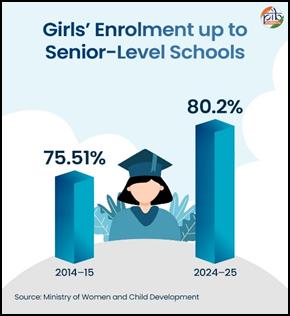
The sustained implementation of the scheme has contributed to notable improvements in gender-related indicators. The sex ratio improved from 943 (Census 2011) to 1,020 females per 1,000 males by 2021. Furthermore, secondary school enrolment for girls expanded from 75.51% in 2014–15 to 80.2% by 2024–25, reflecting a shift toward gender equity in education.
Kasturba Balika Vidyalayas and PM eVidya
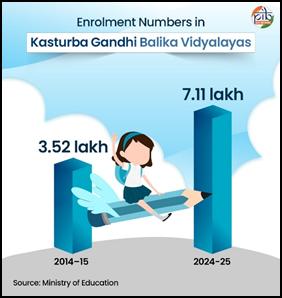
The Kasturba Gandhi Balika Vidyalaya (KGBV) scheme has expanded significantly over the past decade. The number of sanctioned KGBVs increased from 3,609 in 2014–15 to 5,639 in 2024–25. The total residential capacity rose to 8.07 lakh girls during this period. As of 2024–25, 5,133 KGBVs were operational across the country. Student enrolment increased from 3.52 lakh in 2014–15 to 7.11 lakh in 2024. KGBVs provide residential schooling facilities for girls from disadvantaged communities. The scheme primarily supports girls belonging to SC, ST, OBC, and minority communities.
Under Samagra Shiksha, KGBVs are being expanded to provide residential schooling up to Class XII. As of March 2024, 2,616 schools have been upgraded (313 to Class X and 2,303 to Class XII).
The scheme thereby strengthens educational continuity and expands opportunities for girls from vulnerable communities.
Apart from traditional schooling, education is being imparted through various digital modules. Under PM eVidya, SWAYAM Prabha operates 280+ channels with over 3 lakh monthly viewers, enabling nationwide access to educational content. The SWAYAM portal, India’s indigenous MOOC platform, has institutionalized universal access to high-quality pedagogical resources. It has recorded over 5.80 crore enrolments as of January 2026.
Complementing this, the DIKSHA platform provides a digital learning platform, with 2.17 crore registered users and 1.68 lakh daily active users. The digital intervention contributes to improved learning outcomes, educational inclusion, and human capital development.
Building the Backbone: Infrastructure and Connectivity
Robust transport connectivity is fundamental to inclusive development, enabling the seamless movement of people, goods, and services across regions. Sustained investments in rural roads, bridges, railway modernization, and financial payments ecosystem have significantly strengthened physical and financial infrastructure. It has further improved market access and enhanced socio-economic integration across India.
I. Building Homes, Strengthening Communities
The Socio-Economic and Caste Census, 2011, estimated that nearly 40 million households nationwide lacked adequate housing or basic household facilities. The expansion of India’s residential and utility infrastructure is underpinned by a transformative shift in fiscal priority. Flagship programmes such as PMAY and AMRUT have improved housing availability, basic services, and quality of life. These initiatives have also enhanced women's asset ownership and advanced the goal of housing and infrastructure for all.
Pradhan Mantri Awaas Yojana – Urban and Grameen
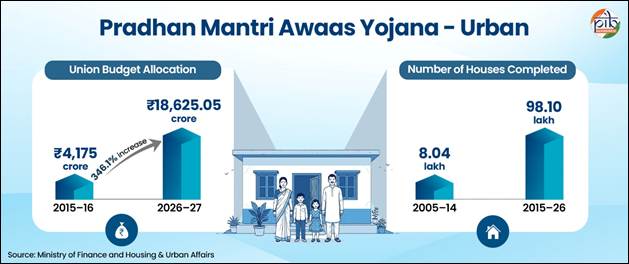
The Pradhan Mantri Awas Yojana–Urban (PMAY-U) has witnessed a substantial increase in fiscal support. Budget allocations rose from ₹4,175 crore in 2015–16 to ₹18,625.05 crore in 2026–27, representing an increase of approximately 346.1%. The scheme has significantly accelerated urban housing delivery, with over 98.10 lakh houses completed between 2015 and 2026. While only 8.04 lakh houses were completed during 2005–2014.
As of May 2026, 1.25 crore houses have been sanctioned, with a total outlay of ₹8.77 lakh crore. Around ₹59,318 crore interest subsidy has been disbursed under the Credit-Linked Subsidy Scheme. Notably, around 96% of houses under PMAY-U 2.0 are registered in the name of a woman.
Union Budget allocations for Pradhan Mantri Awas Yojana–Gramin (PMAY-G) have increased from ₹21 crore in 2015–16 to ₹54,916.70 crore in 2026–27. It represents a growth of approximately 2.61 lakh%.
The scheme has significantly expanded access to rural housing, with 3.91 crore houses sanctioned and 3.03 crore completed as of May 2026. Notably, around 75% of beneficiaries are women, underscoring the programme’s contribution to women’s empowerment and asset ownership in rural India.
Atal Mission for Rejuvenation & Urban Transformation (AMRUT)
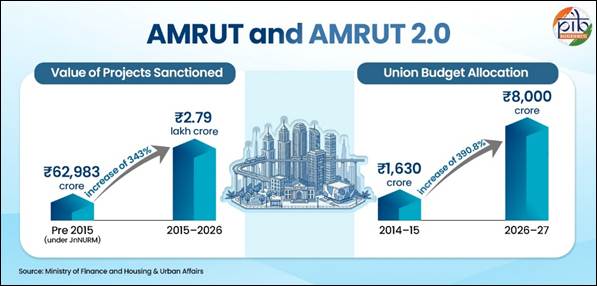
Strategic investment in urban revitalization through AMRUT and AMRUT 2.0 has reached ₹2.79 lakh crore between 2015 and 2026. In comparison, only ₹62,983 crore worth of projects were sanctioned under Jawaharlal Nehru National Urban Renewal Mission (JnNURM) before 2015. This marks an increase of approximately 343% over the preceding JnNURM framework. The mission has also facilitated the provision of over 2.53 crore tap water connections through convergence with other schemes. A total of 7,943 urban infrastructure projects have been completed so far.
Reflecting this strategic emphasis on urban development, Union Budget allocations increased from ₹1,630 crore in 2014–15 to ₹8,000 crore in 2026–27. This fiscal expansion is reflected in a 390.8% growth in budgetary allocations. Coupled with sustained efforts in the housing sector, these interventions underscore India’s progression toward universalizing affordable housing for all.
II. Strengthening Connectivity for Economic and Social Inclusion
Road and railway connectivity play a critical role in improving mobility, economic integration, and access to essential services across India. Investments in rural roads, bridges, railway modernization, and station redevelopment have strengthened connectivity between villages, towns, and urban centres.
Pradhan Mantri Gram Sadak Yojana
The Pradhan Mantri Gram Sadak Yojana (PMGSY) serves as a critical catalyst for rural socio-economic integration by institutionalizing universal all-weather road connectivity. It has emerged as a key enabler of agricultural growth, employment generation, improved access to education and health services, and poverty alleviation. Recognizing the importance of this scheme, the Union Budget allocation increased from ₹386 crore (2014–15) to ₹19,000 crore (2026–27).
Under PMGSY, so far, 99.6% of eligible habitations have been connected with all-weather roads. 6.96 lakh facilities have been linked, including agricultural markets (1.38 lakh), educational centres (1.46 lakh) and medical centres (82,806).
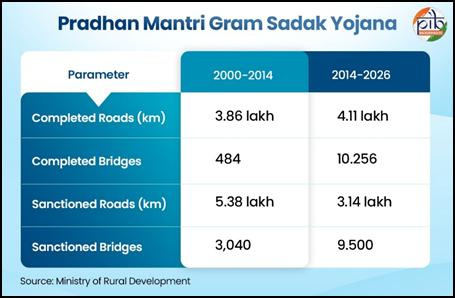
The completed length of roads increased from 3.86 lakh km (2000–2014) to 4.11 lakh km (2014–2026). The number of completed bridges rose from 484 to 10,256 during the same time period. This reflects the sustained expansion of rural connectivity infrastructure nationwide.
Amrit Bharat Trains
The Amrit Bharat Express has been introduced as a modern, non-air-conditioned long-distance sleeper train service offering affordable, reliable transportation. The service is designed to accommodate high passenger demand, particularly during festive seasons and migratory surges. As of May 2026, a total of 60 Amrit Bharat train services were operational.
These connectivity advancements significantly enhance the socio-economic mobility of low-income households. The initiative facilitates equitable access to markets, essential services, and employment opportunities.
III. Advancing Digital Connectivity and Public Service Delivery
India’s digital revolution is characterized by the strategic integration of rural broadband infrastructure and a globally leading financial payments ecosystem. These advancements are institutionalizing transparency in local governance while simultaneously democratizing nationwide access to secure, real-time fiscal systems.
Digitalization of Gram Panchayats
Digital transformation is fundamentally reshaping India’s communicative, educational, and socio-economic landscapes. To mitigate the rural-urban digital divide, the BharatNet initiative was initiated in 2015. BharatNet infrastructure catalyzes digital delivery of services for the rural poor in fields like health, education, livelihood, e-agriculture, and e-commerce. The initiative has expanded high-speed broadband infrastructure to 2.19 lakh Gram Panchayats as of May 2026.
Complementing this, the eGramSwaraj application, launched in 2020, has institutionalized transparent fiscal governance within Panchayati Raj Institutions (PRIs). Over ₹3 lakh crore in cumulative payments have been processed through this application so far. In the FY2025-26, ₹53,342 crore was disbursed, with 2.59 lakh PRIs onboarded and 2.50 lakh PRIs utilizing online payment systems. 2.55 lakh GPs digitally uploaded their development plans, and a registered vendor network exceeded 1.60 crore.
Furthermore, the 2025 launch of SabhaSaar, an AI-driven multilingual summarization tool, has modernized administrative documentation across 1.11 lakh local bodies. The initiative further enhances the efficiency and inclusivity of grassroots governance.
Expansion of Digital Payments
India’s digital payments architecture, spearheaded by the Unified Payments Interface (UPI), has experienced exponential growth. It grew from under 100 crore annual transactions to over 2,100 crore monthly transactions. 86 percent of Person-to-Merchant transactions recorded so far in FY 2026 are below ₹500. This highlights UPI’s deep integration into routine retail and day-to-day transactions. Between 2016 and 2026, the supporting banking network expanded from 21 to 705 institutions. During this period, transaction values surged from ₹0.38 crore to ₹29.52 lakh crore.
These digital initiatives have improved welfare delivery, financial inclusion, and access to local institutions for poor and rural households. Digital systems have reduced leakages, delays, and dependence on intermediaries in public service delivery. Expanded digital access has strengthened economic participation and institutional inclusion for marginalized communities.
Pathways to Prosperity: Livelihoods, Skills, and Financial Security
India has shifted from welfare support to economic empowerment and sustainable livelihoods. Through self-help groups (SHGs), skill development, and employment generation, the government has focused on strengthening income opportunities. It has also focused on improving financial resilience for vulnerable households. These interventions particularly emphasize women-led development and grassroots entrepreneurship. They also focus on digital financial inclusion. These efforts support informal workers, rural households, youth, artisans, and marginalized communities across the country.
Sector-wise Employment Distribution in Rural India
In 2025, agriculture employed nearly 57% of the rural workforce, highlighting its continued dominance in rural livelihoods. The secondary sector, including manufacturing and construction, employed around 21.7% of the rural population. The remaining 21% of the rural workforce is engaged in the tertiary sector and related services.
I. Women-Led Economic Empowerment and Improved Livelihood Opportunities
By leveraging SHGs and technology-driven skill development, different missions are fostering a resilient grassroots entrepreneurial ecosystem nationwide.
Deendayal Antyodaya Yojana - National Rural Livelihoods Mission
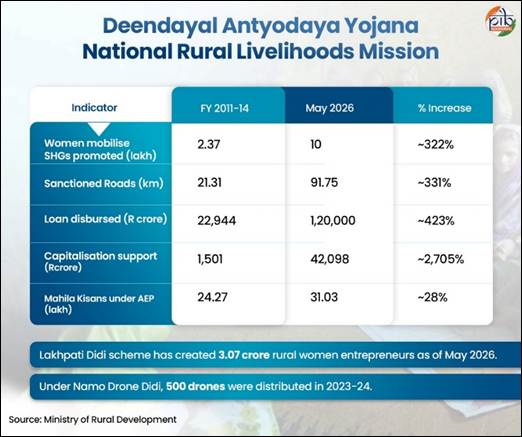
Deendayal Antyodaya Yojana - National Rural Livelihood Mission (DAY-NRLM) reduces poverty by providing sustainable livelihood opportunities for rural households. Under DAY-NRLM, significant expansion in women-led livelihoods has been recorded between FY 2011–14 and May 2026. Women’s participation in SHGs has increased from 2.37 crore to 10 crore. The number of SHGs rose from 21.31 lakh to 91.75 lakh. Loan disbursement expanded from ₹22,944 crore to ₹1.2 lakh crore, and capitalization support increased from ₹1,501 crore to ₹42,098 crore. This reflects the mission’s contribution to women’s economic empowerment and rural livelihood diversification.
Some special initiatives launched under the DAY-NRLM include:
- Lakhpati Didi, launched in 2023, has enabled 3.07 crore rural women to become entrepreneurs as of May 2026. This initiative empowers women associated with SHGs to achieve an annual household income of over Rs. 1 lakh.
- Under Namo Drone Didi, an initiative launched in 2023, 500 drones were distributed in 2023-24. The intervention empowers women through drone-based livelihood opportunities and modern agricultural technology.
Role of Community Resource Persons in Ensuring Last-Mile Delivery of Schemes
A key enabler of rural development is the presence of local resource persons who facilitate continuous engagement with rural communities. A dedicated network of frontline workers, including Accredited Social Health Activists (ASHA), Anganwadi workers, Swachhagrahis, and Community Resource Persons (CRPs), plays a vital role in strengthening the last-mile delivery. Over 9 lakh CRPs are currently active, serving thematic areas like health, nutrition, education, agriculture, entrepreneurship, banking, and insurance.
More than 50,548 Bank Sakhis support women with banking services, transactions, and loan access. Livelihood support is also expanding through the presence of 1.91 lakh Krishi Sakhis, 2,012 Matsya Sakhis, and 1.70 lakh Pashu Sakhis. They play a crucial role in supporting farm and livestock activities for the underprivileged at the grassroots level.
Introduction of Self-Help Entrepreneur Mart (SHE-Mart)
SHE-Marts, announced in the Union Budget 2026-27, aims to create dedicated retail spaces for women under the SHG ecosystem. These are planned as community-owned outlets managed by SHG federations. This will allow women to sell directly to consumers, improve the visibility of their products, and reduce dependence on intermediaries.
The Government has set a target to benefit 1 crore women through this initiative. This initiative will enable women to transition from small-scale livelihood activities to owning and managing sustainable enterprises.
Deendayal Antyodaya Yojana - National Urban Livelihoods Mission (DAY-NULM)
The Deendayal Antyodaya Yojana - National Urban Livelihoods Mission (DAY-NULM) was active from 2013 to 2024. It has institutionalized socio-economic mobility for urban populations through skill development and entrepreneurial support.
Between April 2014 and July 2024, the mission facilitated the formation of 9.55 lakh SHGs and provided revolving funds to 6.58 lakh groups. The initiative trained 15.39 lakh candidates and placed 8.62 lakh candidates. The intervention strengthened livelihood security and social safety nets for marginalized urban households. The mission concluded on 30 September 2024.
These initiatives expanded sustainable livelihoods, women’s economic participation, and grassroots entrepreneurship across rural and urban India.
II. Enhancing Employability through Skill Development Initiatives
India’s workforce development strategy is defined by the institutionalization of large-scale, industry-aligned skilling initiatives. It enhances employability and fosters self-reliance among the youth.
Deendayal Upadhyaya Grameen Kaushalya Yojana
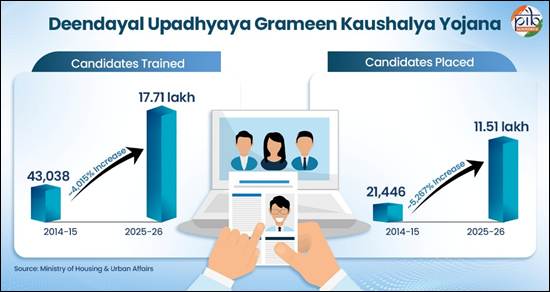
In a transformative move towards inclusive development, the Deen Dayal Upadhyaya Grameen Kaushalya Yojana was launched in 2014. The scheme focused on making India’s rural youth ‘Atmanirbhar’. Under this scheme, the number of candidates trained increased from 43,038 in 2014–15 to 17.71 lakh in 2025–26. Candidates placed rose from 21,446 in 2014–15 to 11.51 lakh in 2025–26.
Pradhan Mantri Kaushal Vikas Yojana
Pradhan Mantri Kaushal Vikas Yojana (PMKVY) was launched in 2015. In 2025, it became a component of the Skill India Programme. The scheme provides youth with employability skills through short-term training. It also focuses on recognition of prior learning. Under PMKVY, over 1.64 crore youth have received skill training since inception. Between April 2024 and March 2026, 10.91 lakh candidates were trained. A total of 69 customized courses and 154 future-skill job roles have been introduced.
Under PMKVY 4.0, 27.43 lakh candidates have been trained across 38 sectors. This focuses on emerging skills such as AI and Industry 4.0. Over 16,900 institutions are implementing PMKVY 4.0. These include more than 6,800 Skill Hubs across schools, higher education institutions, and ITIs.
These interventions have strengthened workforce capabilities through industry-oriented training and skills development.
III. Employment Guarantees and Labor Empowerment
Employment guarantee and labour initiatives strengthened income security, rural resilience, and social protection.
Viksit Bharat - Guarantee for Rozgar and Ajeevika Mission (Gramin)
Viksit Bharat - Guarantee for Rozgar and Ajeevika Mission (Gramin), formerly known as MGNREGA, focuses on enhancing the statutory wage employment guarantee. It provides 125 days of employment to each rural household each financial year.
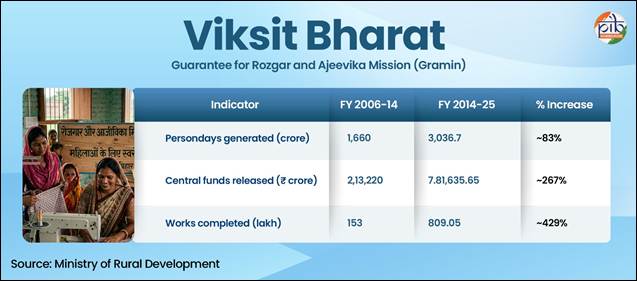
Under this scheme, persondays generated increased from 1,660 crore (FY 2006–14) to 3,036.7 crore (FY 2014–25). The central funds released in the same period rose from ₹2,13,220 crore to ₹7,81,635.65 crore. Works completed increased from 153 lakh to 809.05 lakh. Women’s participation increased from 48% (FY 2013–14) to 58.19% (FY 2024–25).
For FY 2026–27, so far, 41.07 crore person-days have been approved, with 9.76 crore generated. Employment has been provided to 78.99 lakh households, covering 98.83 lakh individuals.
eShram Portal
The eShram portal was launched in 2021 to create a comprehensive national database of unorganized workers linked to Aadhaar. It registers and issues Universal Account Numbers (UANs) to unorganized workers on a self-declaration basis.
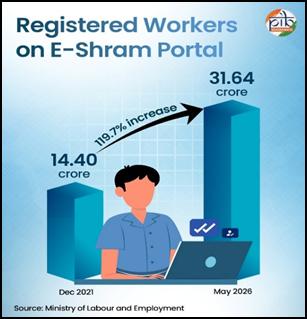
The number of registrations on this portal has increased from 14.40 crore (Dec 2021) to 31.64 crore (May 2026). These initiatives enhanced livelihood security, increased women’s participation, and formalized the registration of India’s unorganized workforce.
IV. Promoting Self-Employment and Inclusive Enterprise Development
Micro-entrepreneurship initiatives strengthened credit access, market opportunities, and livelihood security for small entrepreneurs and informal workers.
PM Vishwakarma Yojana
Launched in 2023, the PM Vishwakarma scheme provides a holistic support framework for traditional artisans and craftspersons. It prioritizes the preservation of vocational heritage and manual expertise. The scheme achieved its target of covering 30 lakh beneficiaries by September 2025. As of May 2026, the program has registered over 30 lakh artisans, of whom 23.97 lakh have received specialized skill training.
Furthermore, 5.92 lakh artisans have been integrated into the formal financial system through sanctioned credit. 16 lakh have been equipped with modern toolkits. The intervention is enhancing the economic resilience of traditional artisanal sectors.
PM SVANidhi
Prime Minister Street Vendor’s Atma Nirbhar Nidhi (PM SVANidhi) Scheme was launched in 2020. The scheme facilitates collateral-free working capital loans for street vendors.
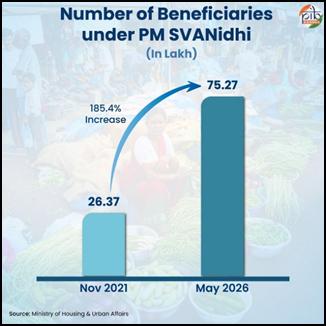
Under this scheme, the number of beneficiaries increased from 26.37 lakh (Nov 2021) to 75.27 lakh (May 2026). To date, cumulative loan disbursements have reached ₹17,710.55 crore, with female beneficiaries accounting for 46% of the recipient base. This highlights a significant trajectory toward gender-inclusive financial integration.
Stand Up India Scheme
The Stand Up India scheme, inaugurated in 2016, institutionalizes entrepreneurship among women, the Scheduled Caste, and the Scheduled Tribe communities. It facilitates collateral-free composite bank loans ranging from ₹10 lakh to ₹1 crore. As of October 2025, the initiative has sanctioned ₹62,807.46 crore to 2.75 lakh beneficiaries. Moreover, these interventions have significantly expanded financial inclusion and fostered economic self-reliance among marginalized vendors, artisans, and entrepreneurs.
VI. Expanding Social Security Coverage for Inclusive Welfare
To strengthen social security coverage, the government has introduced several pension, insurance, and welfare initiatives over the years. The schemes primarily target workers in the unorganized sector and economically weaker sections.
These schemes include:
- The National Pension System (NPS) provides retirement income to citizens and encourages long-term savings habits. Under NPS, beneficiaries increased from 1.05 crore in 2016–17 to 2.17 crore in 2025-26.
- Launched in 2015, the Atal Pension Yojana (APY) provides formal pension benefits to workers without access to them. Beneficiaries under APY increased from 48.80 lakh in 2016–17 to 8.96 crore in 2025–26.
- Launched in 2015, Pradhan Mantri Jeevan Jyoti Bima Yojana (PMJJBY) provides affordable life insurance coverage, especially to economically vulnerable households. Up to May 2026, 27.33 crore beneficiaries have been covered under the scheme.
- Launched in 2015, Pradhan Mantri Suraksha Bima Yojana (PMSBY) provides affordable accident insurance coverage to economically vulnerable citizens. Up to May 2026, 57.92 crore people have been covered under PMSBY.
- Launched in 2019, Pradhan Mantri Shram Yogi Maan-dhan (PM-SYM) provides old-age protection to unorganized workers through a voluntary, contributory pension system. As of May 2026, 52.99 lakh unorganized sector workers had registered under the scheme on a self-declaration basis.
These initiatives have significantly expanded India’s social security net for vulnerable and unorganised workers. The rise in enrolments reflects greater financial inclusion and wider access to pension and insurance coverage.
VII. Expanding Formal Finance for Inclusive Growth
Financial inclusion initiatives expanded access to affordable credit, banking services, and entrepreneurship opportunities for underserved population nationwide.
Pradhan Mantri MUDRA Yojana
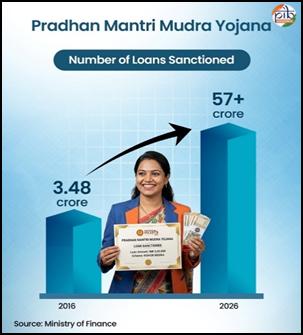
The Pradhan Mantri MUDRA Yojana institutionalizes financial inclusion by providing credit of up to ₹10 lakh to non-corporate/non-farm small & micro-enterprises. Over a decade, the initiative has seen exponential scaling, with cumulative loan accounts expanding from 3.49 crore in 2016 to over 57 crore by 2026.
This growth is characterized by a significant emphasis on social equity. Approximately 49% of loans were sanctioned to entrepreneurs from SC/ST/OBC communities. 66% of loans (38.29 crore), amounting to ₹16.88 lakh crore, have been disbursed to women entrepreneurs.
Pradhan Mantri Jan Dhan Yojana
Pradhan Mantri Jan Dhan Yojana was launched in 2014 to promote universal financial inclusion nationwide. The scheme provides banking access, financial security, and credit support to unbanked and underserved households.
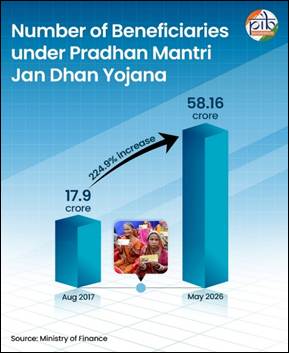
The number of beneficiaries under this scheme increased from 17.9 crore (Aug 2015) to 58.16 crore (May 2026). This marks an increase of around 224.9%. Total balance in these accounts stands at ₹3.02 lakh crore. 13.55 lakh Bank Mitras are delivering branchless banking services across the country.
This scheme provides the basic banking infrastructure to the poor to ensure the effective implementation of Direct Benefit Transfer (DBT) schemes. DBT schemes include PM Ujjwala, Ayushman Bharat PMJAY, SBM-G, and PM Vishwakarma.
Together, these initiatives have strengthened entrepreneurship, increased formal banking participation, and empowered vulnerable communities nationwide.
Accelerating Tribal Development through Integrated Interventions
The government has undertaken holistic development initiatives to uplift the socio-economic conditions of tribal communities across India. By institutionalizing access to modernized infrastructure, specialized residential education, and sustainable entrepreneurial frameworks, these initiatives are fostering inclusive growth.
Pradhan Mantri Janjati Adivasi Nyaya Maha Abhiyan
Launched in 2023, the PM-JANMAN mission accelerates the socio-economic development of 75 Particularly Vulnerable Tribal Groups (PVTGs). The mission provides housing, water, education, healthcare, connectivity, electrification, and sustainable livelihood opportunities in tribal regions.
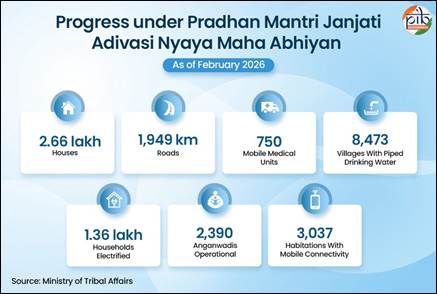
As of February 2026, 2.66 lakh houses, 1,949 km of roads, and 750 Mobile Medical Units have been completed. It has also expanded piped drinking water access to 8,473 villages and electrified 1.36 lakh households. It has operationalized 2,390 Anganwadi centres, and enhanced mobile connectivity across 3,037 tribal habitations.
Pradhan Mantri Janjatiya Unnat Gram Abhiyan
Inaugurated in 2024, the Pradhan Mantri Janjatiya Unnat Gram Abhiyan employs a multi-sectoral, convergent framework to catalyze holistic tribal development. It is also known as the Dharti Aaba Janjatiya Gram Utkarsh Abhiyan. As of April 2026, the mission had sanctioned 12.89 lakh houses and 2,411 km of roads. A total of 2.87 lakh households have been electrified, while 6,305 villages have been covered under the Jal Jeevan Mission. Furthermore, the mission has sanctioned telecom connectivity for 5,252 villages, thereby strengthening basic service delivery in tribal regions.
Pradhan Mantri Janjatiya Vikas Mission
The Pradhan Mantri Janjatiya Vikas Mission (PM-JVM), launched in 2021, leverages TRIFED to institutionalize tribal entrepreneurship and forest-centric livelihoods. Between 2022 and 2025, TRIFED expanded its market outreach through 79 artisan melas and 50 exhibitions. Its promotional expenditure has grown from ₹145 lakh to ₹289 lakh during the same period.
Further, under PM-JVM and PM-JANMAN schemes, a total of 1,146 Van Dhan Vikas Kendras have been sanctioned nationwide. The schemes received a total allocation of ₹11,288.70 lakhs during FY23-24 to FY25-26. These targeted efforts have enhanced tribal livelihoods and value addition in forest produce.
Eklavya Model Residential Schools
The Eklavya Model Residential Schools (EMRS) scheme provides quality education to Scheduled Tribe students in remote tribal areas. The number of operational schools increased from 129 (2014–15) to 499 (May 2026). As of May 2026, EMRSs have an enrolment of 1.54 lakh students.
These targeted initiatives strengthened infrastructure, education, livelihoods, and essential services nationwide to support holistic tribal community development.
From Antyodaya to Sarvodaya: A Decade of Inclusive Development
India’s welfare architecture has evolved from entitlement-based delivery toward saturation-driven coverage. Sustained public investment, targeted welfare interventions, and technology-enabled governance expanded access to basic amenities and better livelihood opportunities. Women-led development, grassroots entrepreneurship, and SHG-driven economic participation have emerged as key pillars of this transformation. The expansion of digital infrastructure and direct benefit delivery mechanisms has enhanced transparency, efficiency, and accountability in public service delivery.
As India advances toward its long-term development aspirations, these initiatives build a more resilient, equitable, and prosperous society. Together, these interventions reflect a broader movement from “Antyodaya to Sarvodaya”, empowering the most vulnerable sections while driving national growth.
References
Ministry of New & Renewable Energy
https://www.myscheme.gov.in/schemes/pmsgmb
https://www.pib.gov.in/PressReleasePage.aspx?PRID=2110283®=3&lang=2
https://www.pib.gov.in/PressReleasePage.aspx?PRID=2081250®=3&lang=2
https://www.pib.gov.in/PressReleaseIframePage.aspx?PRID=2081250®=3&lang=2
Ministry of Power
https://www.pib.gov.in/newsite/printrelease.aspx?relid=171101®=3&lang=2
https://www.pib.gov.in/PressReleasePage.aspx?PRID=2036987®=3&lang=2
https://www.pib.gov.in/PressReleasePage.aspx?PRID=2215187®=3&lang=1
Ministry of Jal Shakti
https://gobardhan.sbm.gov.in/
https://ejalshakti.gov.in/jjmreport/JJMIndia.aspx
https://sbm.gov.in/sbmgdashboard/statesdashboard.aspx
https://www.pib.gov.in/PressReleasePage.aspx?PRID=2223841®=3&lang=1
https://www.pib.gov.in/PressReleseDetailm.aspx?PRID=2114291®=3&lang=2
https://www.pib.gov.in/PressReleseDetailm.aspx?PRID=1941122®=3&lang=2
https://www.pib.gov.in/PressReleasePage.aspx?PRID=2114291®=3&lang=2
https://jaljeevanmission.gov.in/sites/default/files/guideline/JJM_Operational_Guidelines.pdf
Ministry of Housing & Urban Affairs
https://sbmurban.org/
https://sbmurban.org/back-to-beginning
https://pmsvanidhi.mohua.gov.in/Home/PMSDashboard
https://www.pib.gov.in/PressReleasePage.aspx?PRID=2220345®=3&lang=1
https://www.pib.gov.in/PressReleaseIframePage.aspx?PRID=2037057®=3&lang=2
https://www.pib.gov.in/PressReleaseIframePage.aspx?PRID=1946307®=3&lang=2
https://static.pib.gov.in/WriteReadData/specificdocs/documents/2021/dec/doc2021121451.pdf
https://sansad.in/getFile/loksabhaquestions/annex/187/AU6273_GjXZtC.pdf?source=pqals
https://www.niua.in/sites/default/files/2025-07/2020_2_Energy%20Infrastructure%20and.pdf
Ministry of Health & Family Welfare
https://dashboard.nha.gov.in/public/
https://dashboard.abdm.gov.in/abdm/
https://www.pib.gov.in/PressReleasePage.aspx?PRID=2256956®=3&lang=2
https://www.pib.gov.in/PressReleasePage.aspx?PRID=1576128®=3&lang=2
https://www.pib.gov.in/PressReleasePage.aspx?PRID=2256538®=3&lang=1
https://www.pib.gov.in/PressReleaseIframePage.aspx?PRID=2017129®=3&lang=2
https://www.nfhsiips.in/nfhsuser/assets/National%20Family%20Health%20Survey%20(NFHS-6)%202023-2024%20Fact%20Sheets.pdf
Ministry of Consumer Affairs, Food & Public Distribution
https://sansad.in/getFile/loksabhaquestions/annex/187/AU6175_USX1ip.pdf?source=pqals
Ministry of Finance
https://www.pmjdy.gov.in/
https://www.indiabudget.gov.in/
https://www.mudra.org.in/
https://www.myscheme.gov.in/schemes/pmjdy
https://www.npci.org.in/product/upi/product-statistics
https://www.pib.gov.in/Pressreleaseshare.aspx?PRID=1564084®=3&lang=2
https://www.pib.gov.in/Pressreleaseshare.aspx?PRID=1854909®=3&lang=2
https://www.pib.gov.in/PressReleasePage.aspx?PRID=2257087®=3&lang=2
Ministry of Education
https://www.swayamprabha.gov.in/
https://diksha.gov.in/data/
https://www.pib.gov.in/newsite/PrintRelease.aspx?relid=67313®=3&lang=2
https://pmevidya.education.gov.in/swayam-portal.html
https://www.pib.gov.in/pressreleaseiframepage.aspx?prid=1606557®=3&lang=2
https://www.education.gov.in/sites/upload_files/mhrd/files/document-reports/Part1.pdf
https://www.education.gov.in/sites/upload_files/mhrd/files/document-reports/MoE_AR_En.pdf
Ministry of Women & Child Development
https://www.pib.gov.in/PressReleasePage.aspx?PRID=1777719
https://www.pib.gov.in/PressReleseDetailm.aspx?PRID=1781673®=3&lang=2
PIB Backgrounders
https://www.pib.gov.in/PressReleasePage.aspx?PRID=2113800®=3&lang=2
https://www.pib.gov.in/PressReleasePage.aspx?PRID=2237471®=3&lang=1
https://www.pib.gov.in/PressReleasePage.aspx?PRID=2257197®=3&lang=2
https://www.pib.gov.in/PressReleasePage.aspx?PRID=2258761®=3&lang=2
https://www.pib.gov.in/PressReleasePage.aspx?PRID=2182568®=3&lang=2
https://www.pib.gov.in/FactsheetDetails.aspx?Id=148579®=3&lang=2
https://www.pib.gov.in/PressNoteDetails.aspx?NoteId=154355&ModuleId=3®=3&lang=2
https://www.pib.gov.in/PressNoteDetails.aspx?NoteId=158391&ModuleId=3®=44&lang=1
https://www.pib.gov.in/PressReleseDetailm.aspx?PRID=2170998®=3&lang=2
https://www.pib.gov.in/PressReleasePage.aspx?PRID=2185049®=3&lang=2
https://www.pib.gov.in/PressReleasePage.aspx?PRID=2208381®=3&lang=1
https://www.pib.gov.in/PressReleaseIframePage.aspx?PRID=2094929®=3&lang=2
https://www.pib.gov.in/PressReleasePage.aspx?PRID=2181702®=3&lang=2
https://static.pib.gov.in/WriteReadData/specificdocs/documents/2023/aug/doc2023811236901.pdf
https://www.pib.gov.in/PressNoteDetails.aspx?NoteId=156972&ModuleId=3®=3&lang=2
https://www.pib.gov.in/PressNoteDetails.aspx?NoteId=154432&ModuleId=3®=3&lang=2
https://static.pib.gov.in/WriteReadData/specificdocs/documents/2025/aug/doc202588603001.pdf
https://www.pib.gov.in/PressNoteDetails.aspx?NoteId=158738&ModuleId=3®=3&lang=1
https://www.pib.gov.in/PressNoteDetails.aspx?NoteId=156090&ModuleId=3®=48&lang=2
https://www.pib.gov.in/PressNoteDetails.aspx?id=157897&NoteId=157897&ModuleId=3®=3&lang=2
Ministry of Rural Development
https://namodronedidi.da.gov.in/about-scheme
https://lakhpatididi.gov.in/
https://pmgsy.dord.gov.in/dbweb
https://dashboard.dord.gov.in/dashboardnew/mgnrega.aspx
https://dashboard.dord.gov.in/dashboardnew/ddugky.aspx
https://pmayg.gov.in/netiay/PBIDashboard/PMAYGDashboard.aspx
https://nrlm.gov.in/dashboardForOuter.do?methodName=dashboard
https://nrlm.gov.in/outerReportAction.do?methodName=showIndex#gsc.tab=0
https://www.pib.gov.in/PressReleasePage.aspx?PRID=1935711®=3&lang=2
https://www.pib.gov.in/PressReleasePage.aspx?PRID=2204496®=3&lang=2
https://cdnbbsr.s3waas.gov.in/s3d69116f8b0140cdeb1f99a4d5096ffe4/uploads/2026/04/202604211510022943.pdf
Ministry of Panchayati Raj
https://www.pib.gov.in/PressReleasePage.aspx?PRID=2247156®=3&lang=1
https://www.pib.gov.in/PressReleasePage.aspx?PRID=1845366®=3&lang=2
https://www.pib.gov.in/PressReleasePage.aspx?PRID=2223107®=3&lang=1
Ministry of Communications
https://usof.gov.in/en/home
https://www.pib.gov.in/PressReleasePage.aspx?PRID=1515906®=3&lang=2
Ministry of Skill Development and Entrepreneurship
https://www.skillindiadigital.gov.in/pmkvy-dashboard
https://www.pib.gov.in/PressReleaseIframePage.aspx?PRID=2003662®=3&lang=2
https://www.pib.gov.in/PressReleaseIframePage.aspx?PRID=2222122®=3&lang=2
Ministry of Labour & Employment
https://eshram.gov.in//dashboard
https://sansad.in/getFile/annex/266/AU2811_N7VJM7.pdf?source=pqars
https://www.pib.gov.in/PressReleasePage.aspx?PRID=2099153®=3&lang=2
Ministry of MSMEs
https://pmvishwakarma.gov.in/
Ministry of Statistics & Programme Implementation
https://www.mospi.gov.in/uploads/publications_reports/publications_reports1780040415321_0624fb13-fb47-40bc-b470-7c7e9635c3ef_PLFS_2025_F_REV_29052026.pdf
Ministry of Commerce
https://www.ibef.org/government-schemes/stand-up-india
https://www.cgca.gov.in/ccadl/nps
https://www.ibef.org/government-schemes/pradhan-mantri-awas-yojana
https://www.ibef.org/government-schemes/swachh-bharat-mission
https://www.ibef.org/government-schemes/pm-surya-ghar-yojana
https://www.ibef.org/government-schemes/pm-vishwakarma-yojana
https://www.ibef.org/news/pradhan-mantri-suraksha-bima-yojana-a-decade-of-insurance-inclusion
https://www.ibef.org/government-schemes/pradhan-mantri-garib-kalyan-yojana
https://www.ibef.org/blogs/bharatnet-unplugged-transforming-rural-connectivity-in-india
Ministry of Tribal Affairs
https://pmagy.gov.in/
https://pmagy.gov.in/about
https://tribal.nic.in/EMRS.aspx
https://sansad.in/getFile/annex/270/AU3820_wEkEtr.pdf?source=pqars
https://www.pib.gov.in/PressReleasePage.aspx?PRID=2247601®=3&lang=2
https://www.pib.gov.in/PressReleasePage.aspx?PRID=2248491®=3&lang=1
https://www.pib.gov.in/PressReleasePage.aspx?PRID=2198862®=3&lang=2
https://www.pib.gov.in/newsite/PrintRelease.aspx?relid=200303®=3&lang=2
https://sansad.in/getFile/loksabhaquestions/annex/187/AU3367_If5ZGQ.pdf?source=pqals
https://www.pib.gov.in/PressNoteDetails.aspx?NoteId=154915&ModuleId=3®=3&lang=2
https://tribal.nic.in/downloads/Statistics/AnnualReport/AnnualReport2014-15.pdf
Ministry of Electronics and Information Technology
https://socialwelfare.vikaspedia.in/viewcontent/social-welfare/women-and-child-development/women-development-1/lakhpati-didi?lgn=en
Ministry of Social Justice & Empowerment
https://www.pib.gov.in/Pressreleaseshare.aspx?PRID=1781643®=3&lang=2
https://www.pib.gov.in/PressReleaseIframePage.aspx?PRID=1602081®=3&lang=2
Government of Arunachal Pradesh
https://udarunachal.gov.in/daynulm.html
Niti Aayog
https://www.pib.gov.in/PressReleaseIframePage.aspx?PRID=1996271®=3&lang=2
https://niti.gov.in/sites/default/files/2026-05/School-Education-System-in-India.pdf
Cabinet Committee on Economic Affairs
https://www.pib.gov.in/PressReleasePage.aspx?PRID=2265788®=3&lang=1
United Nations
https://www.unicef.org/india/faqs-open-defecation-free-plus-odf-and-sanitation
Click here to see pdf
****
PIB Research