Ministry of Fisheries, Animal Husbandry & Dairying
National Workshop calls for urgent action to tackle marine debris crisis; Monsoon identified as major driver of coastal pollution
Monsoon floods flash-point for Mumbai’s marine debris; FSI proposes local recycling hubs to protect coastline
Posted On:
08 JUN 2026 5:48PM by PIB Mumbai
Mumbai : 8 June 2026
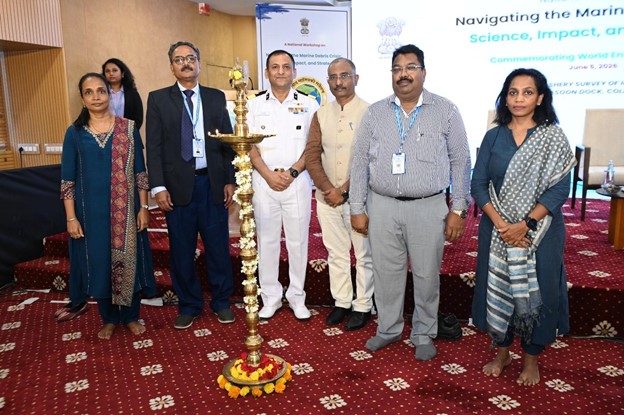
On the occasion of World Environment Day (June 5), the Fishery Survey of India (FSI) organized a national workshop titled “Navigating the Marine Debris Crisis: Science, Impact, and Strategies” in Mumbai. The workshop brought together scientists, policymakers, and stakeholders to discuss the growing threat of marine litter and explore solutions for protecting India’s coastal and marine ecosystems.
Inaugurating the workshop, Dr. S.K. Verghese, DIG Coast Guard, highlighted the need for coordinated action among government agencies, scientific institutions, coastal communities, and civil society to address marine pollution. Experts from FSI, BNHS, CSIR–NIO, ICAR–CIFT, CMFRI, IITs, and other leading institutions participated, including Dr. Mahesh Kumar Farejiya (DDG, FSI), Dr. Kishor Rithe (Director, BNHS), Dr. Soniya Sukumaran (Head, NIO), and Dr. Manas Kumar Sinha (FSI).
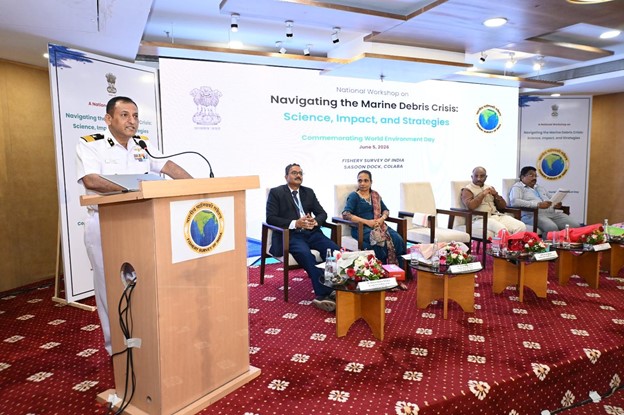
Presenting findings from a year-long survey of ten beaches across Maharashtra, it was reported that nearly half of the annual coastal litter load accumulates during the monsoon. Consumer plastics account for 85.9 per cent of all marine debris recorded. Based on Coastal Cleanliness Index (CCI) assessments, Mumbai’s Versova and Juhu beaches were classified as “Extremely Dirty”, with scores ranging from 37 to 40.
The workshop also highlighted the ecological impacts of marine litter on coastal biodiversity. Scientists reported that 9.21 per cent of live coral colonies off the Mumbai coast are in direct contact with marine debris, resulting in tissue damage and habitat smothering.
Scientific findings presented at the workshop showed that nearly 46% of India’s annual marine litter enters the sea during the monsoon season, driven by rainfall and river discharge through over 80 identified coastal entry points. Experts emphasized that marine pollution is primarily a river-basin issue requiring sustained, systemic interventions beyond periodic beach clean-up drives. As the nodal agency for the FAO Global Litter Project, FSI reported the recovery of 23 tonnes of abandoned fishing gear (ghost gear) from depths of up to 500 metres over the past three years, while ICAR–CIFT scientists highlighted “Jeevsutra,” a biodegradable fishing yarn developed to reduce plastic pollution and promote sustainable fisheries.
The workshop recommended installation of riverine interception systems such as “Trash Booms”, establishment of Marine Litter Recycling Hubs in Dahanu, Versova and Ratnagiri, protection of sensitive coral habitats, and wider adoption of the Arnavrakshadvāram digital monitoring platform. Participants also called for the formulation of a National Marine Litter Policy and strengthened interstate river-basin management to address marine pollution from source to sea.
PIB Mumbai | Sriyanka Chatterjee/Robin Singh/Priti Malandkar
Follow us on social media: @PIBMumbai
  /PIBMumbai
  /pibmumbai
  pibmumbai[at]gmail[dot]com
  /PIBMumbai
  /pibmumbai
(Release ID: 2270315)
Visitor Counter : 461