Special Service and Features
Indian Agricultural Exports: A Journey of Scale, Strength and Success
12 Years of Growth, Resilience and Global Reach
Export Inspection Council has introduced new technology-based regulatory reforms aimed at strengthening export facilitation - Shri Ujjwal Kumar Ghosh, Joint Secretary, Department of Commerce
Posted On:
10 JUN 2026 3:11PM by PIB Thiruvananthpuram
Kochi, June 10, 2026 : India’s remarkable rise in agricultural exports from USD 32.08 billion in FY 2014-15 to a record USD 52.55 billion in FY 2025-26 reflects the significant transformation and sustained progress achieved by the country over the past decade. This milestone was highlighted by the Department of Commerce, Ministry of Commerce and Industry, during an interactive session with stakeholders from the Southern Region, attended by officials from the Department of Commerce, the Export Inspection Council (EIC), representatives of Export Promotion Councils, and members of the agricultural exporting community.
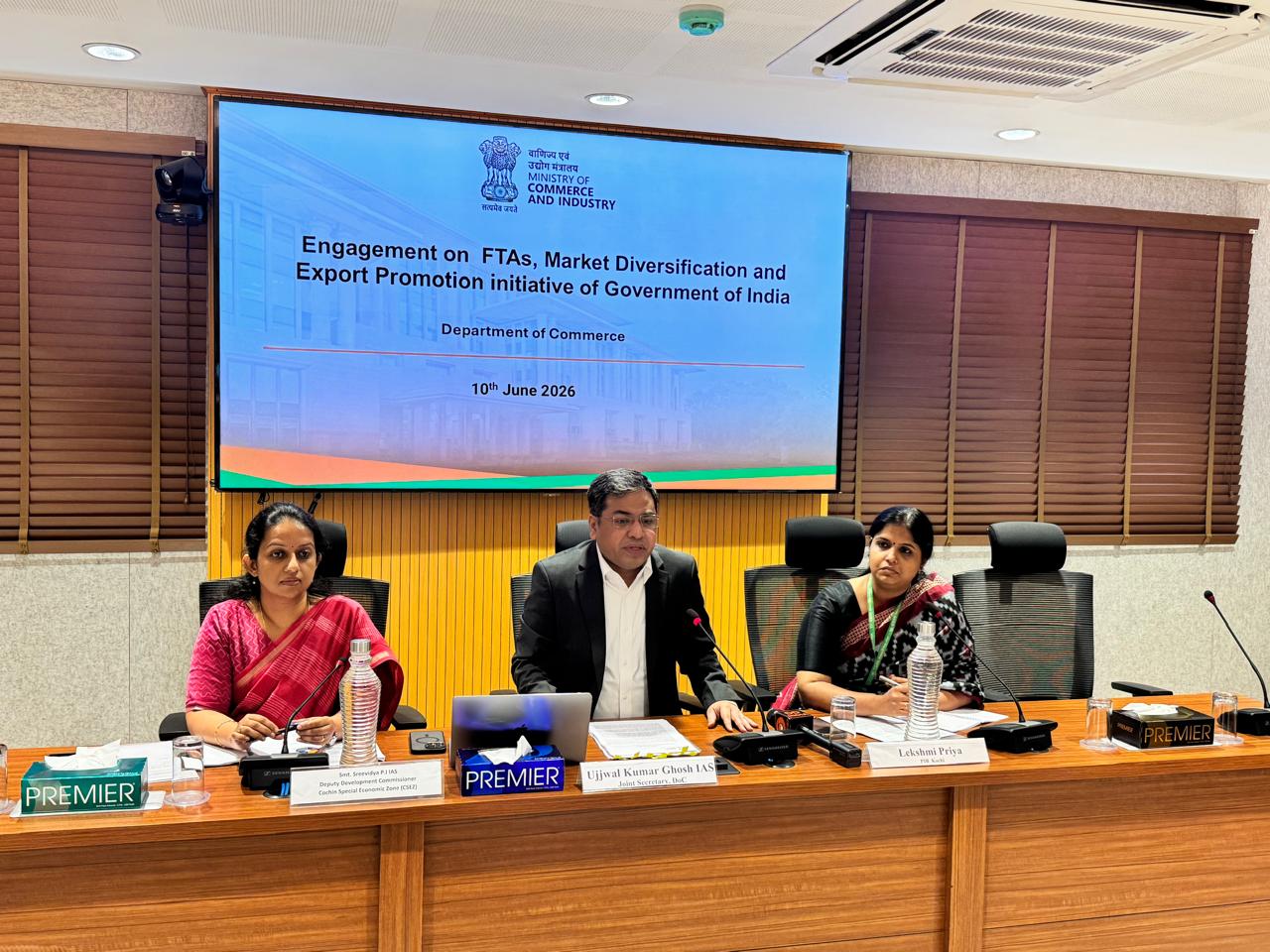
Shri Ujjwal Kumar Ghosh, IAS, Joint Secretary, Department of Commerce, Ministry of Commerce and Industry, Government of India, highlighted that India’s agricultural exports continued their upward trajectory in FY 2025-26, increasing by 2.8 per cent from USD 51.12 billion in FY 2024-25 to USD 52.55 billion. He noted that the growth was driven by in high-value agricultural products, marine exports, and processed food products, reflecting the increasing global competitiveness and diversification of India’s agricultural export basket.
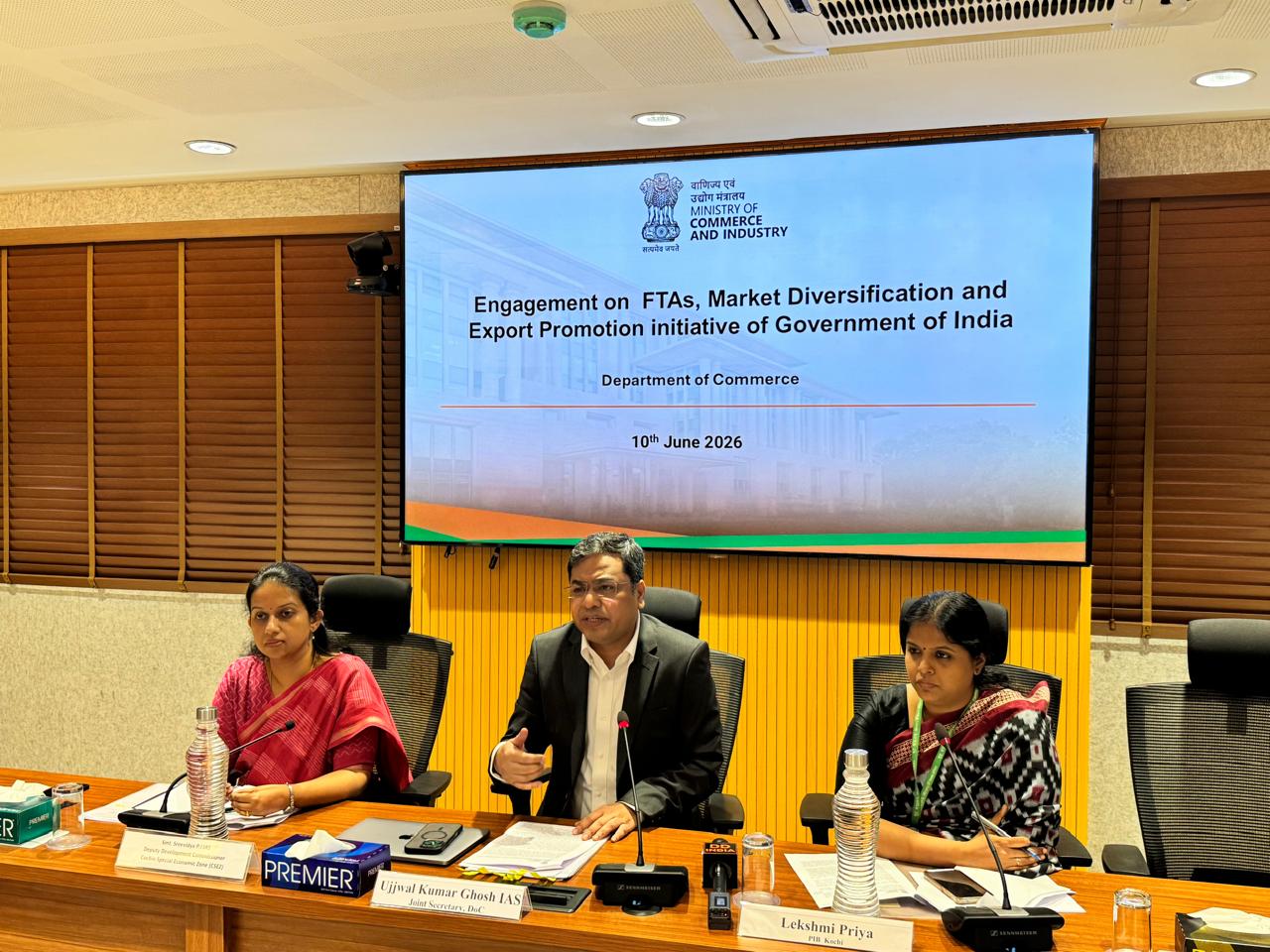
He stated that rice remained India’s largest agricultural export commodity, with exports valued at USD 11.5 billion during FY 2025-26. Marine product exports registered robust growth of 13.4 per cent, rising from USD 7.4 billion in FY 2024-25 to USD 8.4 billion in FY 2025-26, while spice exports maintained a strong performance with export at USD 4.3 billion.
He emphasized that these achievements underscore the resilience of India’s agricultural sector and the success of ongoing efforts to enhance product quality, strengthen export infrastructure, improve market access, and promote value-added agricultural products. Despite global economic uncertainties, changing trade dynamics, and evolving quality standards, India’s agricultural exporters have demonstrated remarkable adaptability, further reinforcing the country’s position as a reliable supplier of agricultural products in global markets.
Shri Ghosh also highlighted that the concluded Free Trade Agreement (FTA) with the United Kingdom, European Union, New Zealand, Oman, Australia, the UAE and the EFTA countries are creating significant opportunities for the expansion and diversification of India's agricultural exports. Improved market access under these agreements is expected to create new opportunities for marine products, particularly shrimp and value-added seafood; Basmati and premium non-Basmati rice; spices, nutraceutical ingredients and traditional food products; tea, especially orthodox and specialty varieties; as well as fruits, vegetables, millet-based products, meat, organic products and processed foods.
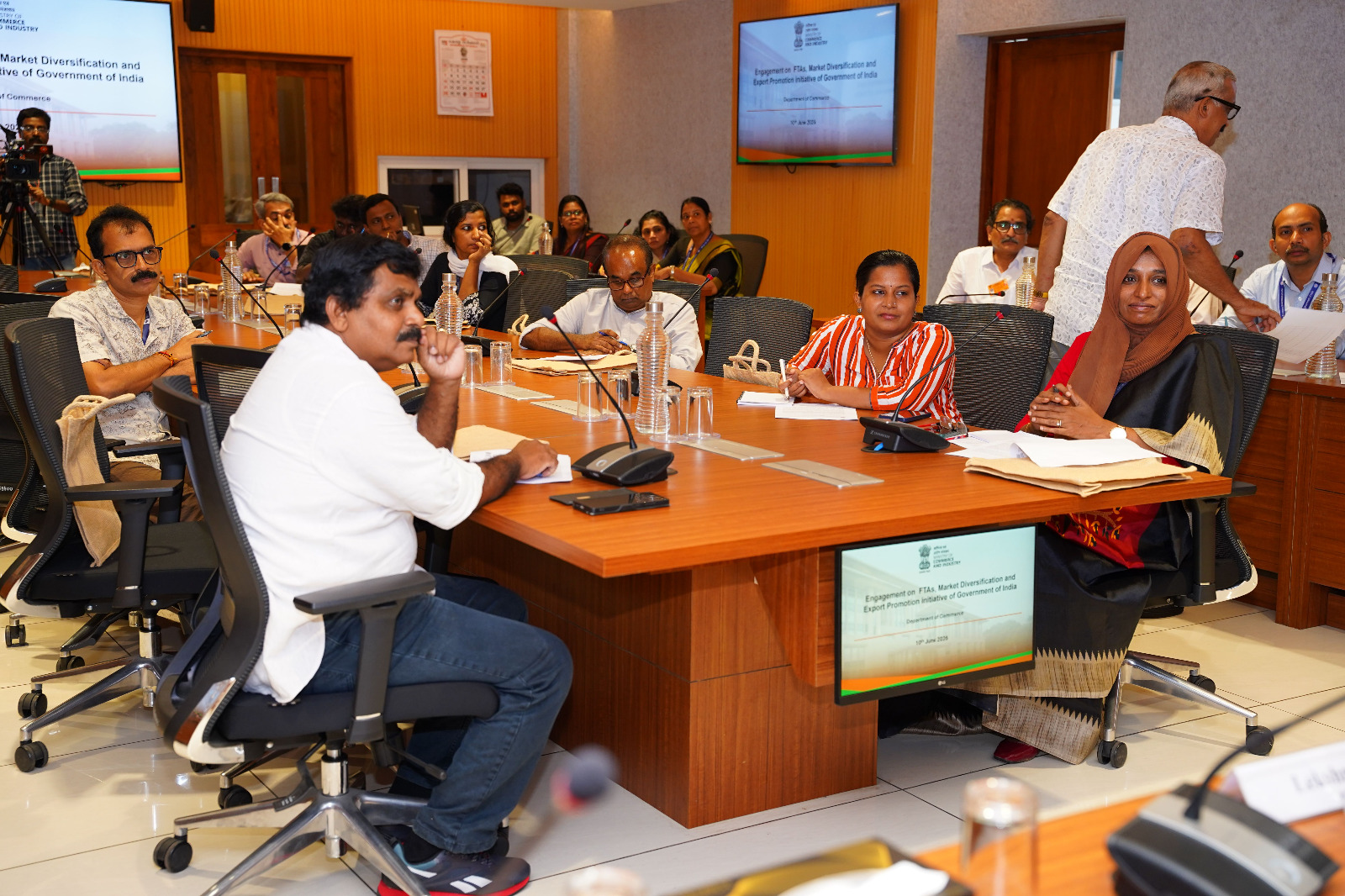
Shri Ghosh reiterated that the Department of Commerce is committed to enabling Indian exporters to fully leverage the opportunities arising from FTAs and other export promotion initiatives. Complementing these efforts, a range of government initiatives, including better access to trade finance, Market Access Support, quality certification and traceability initiative have strengthened India’s agricultural export ecosystem and enhanced the global competitiveness of Indian agricultural and food products. These measures are aimed at facilitating market diversification, encouraged value addition, improved quality standards, and greater integration of Indian products into global value chains. Under the Export Promotion Mission, the Government of India has launched Niryat Protsahan and Niryat Disha as twin initiatives to accelerate export growth and empower MSMEs. While Niryat Protsahan enhances access to affordable trade finance and credit support, Niryat Disha provides market access, accreditation and compliance, branding, and logistics assistance. Together, these initiatives aim to strengthen India’s export ecosystem, improve global competitiveness, and enable businesses to access new international opportunities.
He emphasized that compliance with Sanitary and Phytosanitary (SPS) standards will be critical for sustaining and expanding India’s agricultural exports in the coming years, as global markets continue to adopt increasingly stringent food safety and quality requirements. He highlighted the need for greater focus on antibiotic residue control in marine products, effective management of pesticide residues and aflatoxins in rice, strengthened food safety compliance in spices and tea, and robust phytosanitary measures for fruits and vegetables. He further stressed the importance of enhancing traceability systems, sustainability practices, and environmental compliance across agricultural value chains to improve market access, meet evolving consumer expectations, and reinforce India’s reputation as a reliable supplier of high-quality agricultural products.
Shri Ghosh mentioned that Export Inspection Council has played pivotal role in strengthening India’s export quality assurance ecosystem and enhancing global confidence in Indian products. Over the last decade, the number of recognized laboratories increased from 22 in FY 2014–15 to 89 in FY 2025–26, while export establishments approved for exports rose from 645 to 1,499. During the same period, export certificates accepted by importing countries grew from 60,978 to over 1.7 lakh, reflecting increased international trust in India’s inspection and certification systems.
The official also outlined a series of regulatory reforms of EIC aimed at strengthening export facilitation, enhancing compliance efficiency, and improving the global competitiveness of Indian agri-food exports. Building on the existing inspection, testing, and certification framework, these reforms seek to transition from conventional compliance driven approaches to more risk-based, technology enabled regulatory systems. Key initiatives include the introduction of a Risk-Based Inspection System (RBIS) to optimize inspection frequency based on compliance history, implementation of a Laboratory Information Management System (LIMS) to streamline sample tracking and reporting, and adoption of rapid screening techniques to significantly reduce testing turnaround times.
Several reform measures are currently under discussion to strengthen the export inspection and certification framework. These include simplifying approval and certification procedures for compliant exporters, expanding digitalization to enhance transparency and efficiency, adopting more process-based quality assurance systems, and providing greater operational flexibility to facilitate trade. The proposed reforms aim to improve ease of doing business, reduce compliance burdens, and support faster access to international markets while maintaining regulatory oversight.
LPSS/SKY
****
(Release ID: 2271100)
Visitor Counter : 1213