Ministry of Jal Shakti
From Rooftops and Ponds to Aquifers: Odisha's Groundwater Revival under ‘Jal Sanchay, Jan Bhagidari’
Posted On:
11 JUN 2026 4:39PM by PIB Delhi
As monsoon rains sweep across Odisha, a silent groundwater revolution is unfolding from school rooftops in Jajpur and community ponds in Cuttack to recharge wells in Ganjam. Guided by the vision of Prime Minister Shri Narendra Modi and the Whole of Government, Whole of Society approach embodied in ‘Jal Sanchay, Jan Bhagidari’, the state is transforming seasonal rainfall into a lasting source of water security. By capturing rainwater where it falls and facilitating its recharge into underground aquifers, Odisha is turning every monsoon shower into an opportunity to strengthen its groundwater reserves and build resilience against future water stress.
Across the state, rainwater from schools, colleges, government offices and other institutional buildings is being collected, filtered and channelled into recharge wells, allowing it to replenish depleted aquifers. Simultaneously, recharge structures created within ponds, tanks and other water bodies are enabling surplus monsoon runoff to percolate deep into the ground rather than being lost through surface flow. These interventions are helping restore groundwater levels, improve water availability during dry periods, and create a sustainable model of water conservation that combines government action with community participation, reflecting the core spirit of ‘Jal Sanchay, Jan Bhagidari’.
Jajpur: Scaling Up Groundwater Recharge
Jajpur district has emerged as one of Odisha's most significant examples of scientific groundwater management under Jal Sanchay Jan Bhagidari.
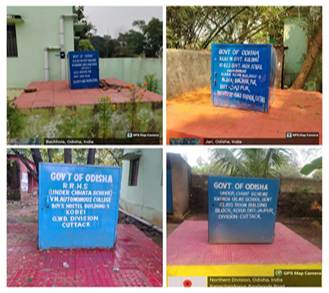
Between 2022-23 and 2025-26, the district constructed 117 recharge shafts under the ARUA Scheme and installed 114 Rooftop Rainwater Harvesting Systems under the CHHATA Scheme across government institutions and educational campuses. The interventions were strategically implemented across high-priority blocks including Korei, Binjharpur, Bari, Rasulpur, Dasarathpur and Jajpur.
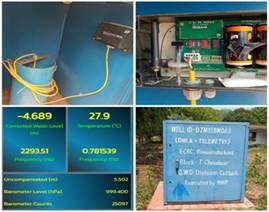
To ensure scientific monitoring and assessment, the district established a robust groundwater monitoring network comprising 47 Digital Water Level Recorder stations and 72 observation wells. Data collected through these monitoring systems indicate improved groundwater conditions and healthier aquifer behaviour across intervention areas.
The benefits extend beyond water conservation. Improved groundwater availability has strengthened drinking water security, supported agricultural resilience and reduced the burden of water collection on households, particularly women. Through awareness campaigns, demonstrations and public outreach activities, communities have become active partners in groundwater conservation.
Cuttack: Integrating Engineering and Community Participation
Cuttack district demonstrates how groundwater conservation can be achieved by combining technical interventions with sustained public engagement.
Under the CHHATA Scheme, 57 Rooftop Rainwater Harvesting Systems were established across government offices, educational institutions and public facilities. Simultaneously, 35 recharge shafts were constructed under the ARUA Scheme in ponds and water bodies to facilitate deep aquifer recharge.
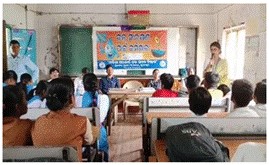
Recognising that long-term sustainability depends on public ownership, the district implemented extensive Information, Education and Communication (IEC) activities. Street plays, awareness campaigns, seminars and workshops were organised across rural and urban areas, engaging Self-Help Groups, students, Panchayati Raj Institutions and local communities in groundwater conservation efforts.
The district's groundwater monitoring framework, consisting of 66 automated monitoring stations and 100 observation wells, provides continuous assessment of aquifer conditions. Groundwater Resource Assessment data indicate that the district maintained a stable groundwater regime, with the Stage of Groundwater Extraction remaining around 47 per cent between 2024 and 2025, reflecting the positive impact of recharge interventions in balancing increasing water demand.
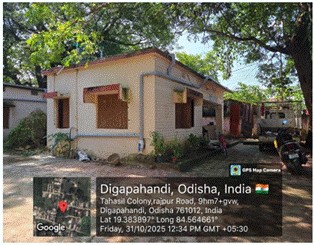
Digapahandi: A Local Model of Urban Groundwater Revival
In Digapahandi urban area of Ganjam district, growing dependence on groundwater, declining rainfall and expanding urban development had contributed to noticeable groundwater stress. Between 2020 and 2022, groundwater levels declined by one to three metres in several locations.
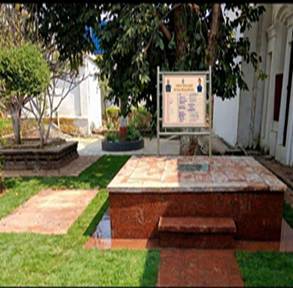
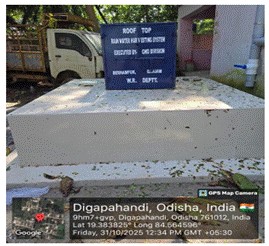
To address the challenge, Rooftop Rainwater Harvesting Systems were installed under the CHHATA Scheme in government offices, schools and public institutions. These structures capture rooftop runoff, filter it and direct it into recharge bore wells, enabling rainwater to percolate into underlying aquifers.
The intervention has delivered measurable results. Comparative groundwater assessments indicate improved post-monsoon recovery, reduced seasonal fluctuations and the emergence of localized recharge zones around intervention sites. Observation wells near recharge structures have recorded healthier groundwater conditions, demonstrating the effectiveness of rooftop rainwater harvesting as a sustainable urban recharge solution.
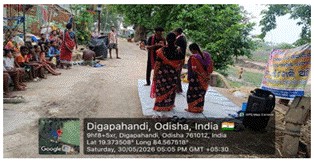
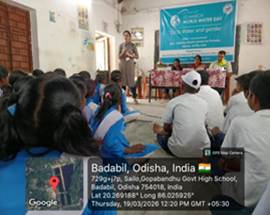
Community participation played a central role in the initiative. Awareness campaigns, street plays, school workshops and public outreach programmes encouraged residents, women, youth groups and local representatives to actively participate in groundwater conservation, fostering a sense of ownership and responsibility towards local water resources.
Water Conservation as a People's Movement
A defining feature of Odisha's groundwater recharge initiatives has been the strong emphasis on community participation. Across districts, awareness drives, workshops, demonstrations and public engagement activities have transformed groundwater conservation from a technical intervention into a collective social effort.
Government institutions, educational campuses, Self-Help Groups, local bodies and community organisations have played an active role in promoting rainwater harvesting, maintaining recharge structures and spreading awareness about sustainable water use. This convergence of scientific planning and public participation embodies the spirit of Jal Sanchay Jan Bhagidari.
Building a Water-Secure Future
The experience of Jajpur, Cuttack and Digapahandi demonstrates that sustainable groundwater management is most effective when infrastructure development is combined with community ownership. Through the implementation of the CHHATA Scheme, which captures rainwater from rooftops, and the ARUA Scheme, which channels surplus water from ponds and tanks into underground aquifers, Odisha has created a scalable and replicable model for groundwater conservation.
As monsoon rains continue to arrive each year, Odisha is ensuring that rainwater is not merely treated as seasonal runoff but as a valuable resource for future generations. By replenishing aquifers, strengthening water security and mobilising communities to participate in conservation efforts, ‘Jal Sanchay, Jan Bhagidari’ is laying the foundation for a more resilient and water-secure future.

***
ND
(Release ID: 2271660)
Visitor Counter : 2218