Ministry of Chemicals and Fertilizers :
Department of Fertilizers
Government Exploring Roadmap to Make Green Urea Production a Reality in INDIA
Posted On:
26 JUN 2026 2:13PM by PIB Delhi
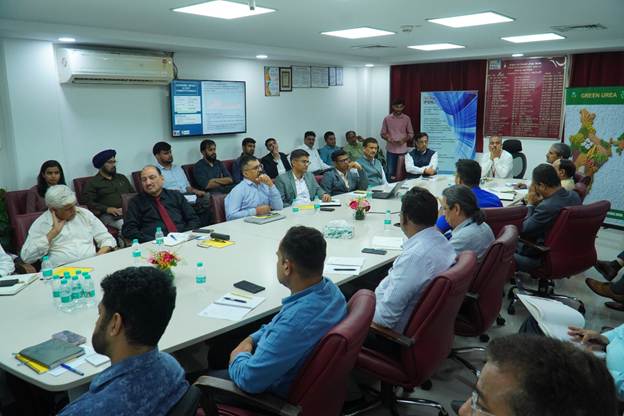
Marking a monumental shift toward sustainable agriculture, carbon neutrality, and technological self-reliance, the Department of Fertilizers (DoF) successfully conducted a high-level Pre-Expression of Interest (EOI) Meeting for the Establishment of Green Urea Plants in India at PDIL. The Meeting was chaired by Dr. K.K. Pathak-Joint Secretary (Department of Fertilizers) who is also serving as Chairman & Managing Director-PDIL.
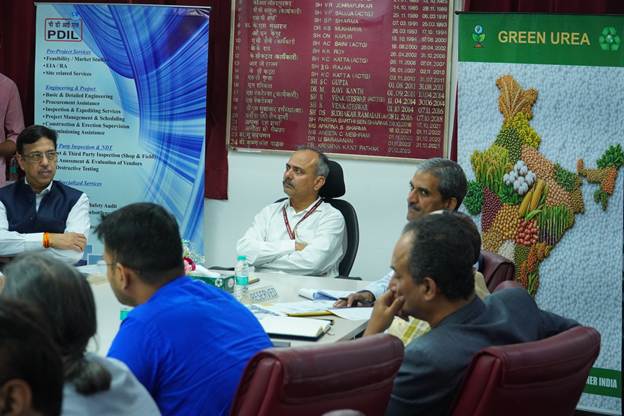
Earlier this week, Invitation for Expression of Interest was issued by the Department of Fertilizers for establishment of Green Urea Plants in India. The Pre-EOI Meeting held at PDIL headquarters Noida provided a great platform for majority of the Stakeholders from the Private as well as Public Sector including NTPC, Solar Energy Corporation of India, Technology Suppliers of Ammonia-Urea, major Indian Fertilizer companies and manufacturers of Electrolyzers, Green Hydrogen & Green Ammonia. The massive turn-up online and off-line from prospective players across the entire value chain is a clear indicator of the keen approach of everyone involved to bring this initiative to reality in near future.
Key Policy and Operational Highlights
1. Coordinated Government Support Across Ministries The discussions highlighted the financial allocations from multiple ministries to make green production economically viable. The macro-level funding commitments include:
• Ministry of New & Renewable Energy (MNRE): ₹19,744 crore to accelerate critical green energy infrastructure and strengthen India’s clean energy ecosystem.
• Department of Fertilizers (DoF): Tasked with creating the institutional and market-parity framework to seamlessly integrate Green Ammonia into the national fertilizer manufacturing chain.
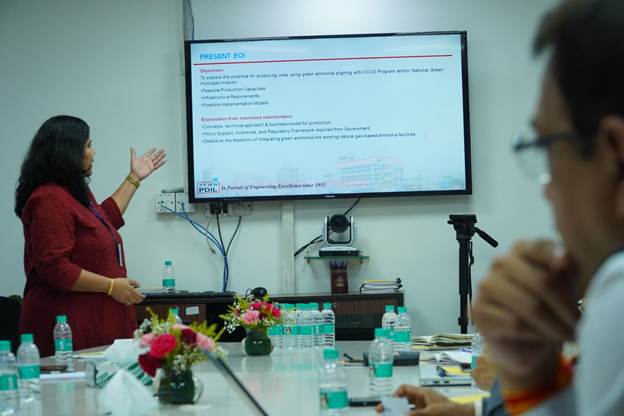
2. Shielding Manufacturers Through a Differential Pricing Mechanism To address cost challenges and protect local fertilizer units, a robust Offtaker-Side Differential Pricing Mechanism was discussed:
- The Challenge: Green Ammonia currently costs more to produce than conventional Grey Ammonia, making Green Urea uncompetitive without support.
- The Solution: The Solar Energy Corporation of India (SECI), has already tendered—for purchasing Green Ammonia from producers forsupplying it to domestic fertilizer companies at standard market-linked Grey Ammonia prices (based on a two-week average of Platts and Argus indices, plus customs duties and local transport costs). A somewhat similar mechanism may be explored for Green Urea as well.
3. Producer-Side Incentives with Tapering Support To encourage private sector participation, a direct financial incentive scheme under the NGHM (Green Ammonia Mode 2A) was detailed. A total procurement target of 7.24 Lakh MT/annum of Green Ammonia has been allocated through a transparent, competitive e-Reverse Auction managed by SECI. Support will be provided across clear project stages:
- Development Stage: For new greenfield projects or those currently under construction.
- Operational Stage: Cash incentives begin from the date of commercial supply.
- Long-term Certainty: Benefits are secured for a 10-year period through a binding definitive agreement (GAPA/GASA), giving developers strong market confidence.
Technical Foundation: The Pudimadaka 150 TPD Pilot Plant
Discussions also focused on technical processes, using the 150 TPD Green Urea pilot plant at Pudimadaka, Andhra Pradesh—developed by NETRA (the R&D wing of NTPC)—as a benchmark. This facility demonstrates the integration of advanced Carbon Capture and Utilization (CCUS) systems with water electrolysis, supporting the use of carbonated fly ash, food-grade materials, and synthetic fuels.
This initiative represents a thoughtful and well-structured push toward carbon-neutral fertilizer production, technological self-reliance, and a greener future for Indian agriculture.
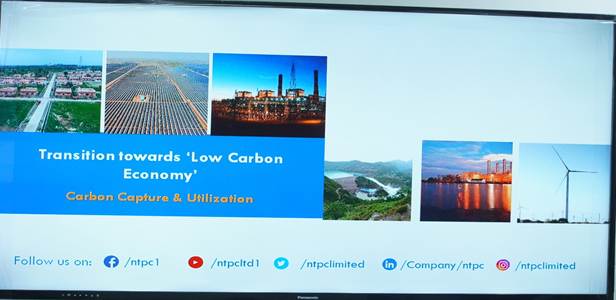
India’s Strategic Roadmap for Green Urea Production
India's Net Zero target by 2070 and the National Green Hydrogen Mission present a unique opportunity to transform domestic urea production. While Green Hydrogen can replace fossil fuels in ammonia production, Green Urea still requires carbon dioxide for synthesis, making an external CO₂ source essential.
Captured CO₂ from thermal power, cement, and steel plants can serve as a sustainable feedstock for urea manufacturing. A world-scale urea plant of 12.7 lakh MT annual capacity requires nearly 10 lakh MT of CO₂ annually. As India continues to import around 1 crore MT of urea annually and many existing plants are over 30 years old, significant new capacity will be required. If developed through the Green Hydrogen route, the fertilizer sector could become one of the country's largest and most assured consumers of captured CO₂.
Integrated projects combining renewable energy, Green Hydrogen, carbon capture, green ammonia, and urea production can strengthen fertilizer and energy security while supporting India's climate goals. Organizations such as NTPC, with expertise in power generation, renewable energy, Green Hydrogen, and fertilizer investments through HURL, are well placed to lead such initiatives. Investors encouraged to develop integrated Green Urea projects by leveraging support under the National Green Hydrogen Mission and the evolving carbon capture framework.
***
Neeraj Kumar Bhatt/Gaurav Pandey/Shatrughna Prasad
(Release ID: 2278167)
Visitor Counter : 4686