Ministry of Tribal Affairs
Bhubaneswar Declaration adopted as National Workshop on Strengthening Tribal Research Institutes concludes
National roadmap unveiled to transform TRIs into centres of excellence in research, innovation, cultural preservation and evidence-based policymaking
Posted On:
08 JUL 2026 5:34PM by PIB Delhi
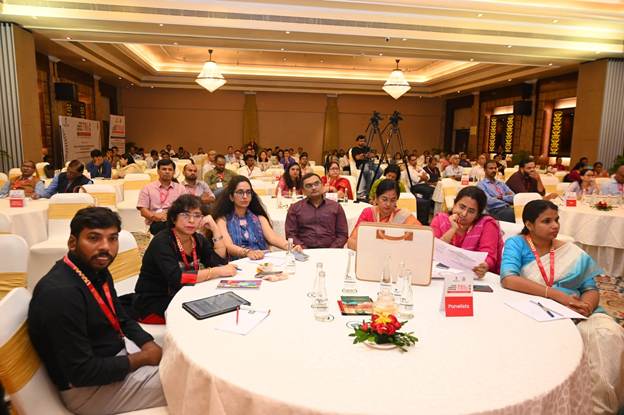
The two-day National Workshop on Strengthening Tribal Research Institutes (TRIs), organised by the Ministry of Tribal Affairs in collaboration with the Government of Odisha, concluded today in Bhubaneswar with the adoption of the Bhubaneswar Declaration, marking an important milestone in advancing the vision of Hon'ble Prime Minister Shri Narendra Modi for Viksit Bharat@2047 through stronger institutions that promote tribal knowledge, research, innovation and evidence-based policymaking. The workshop brought together nearly 200 participants from Tribal Research Institutes, State Tribal Welfare Departments, academia, research institutions, technology organisations, industry, development partners and civil society to deliberate on the future of India's tribal research ecosystem.
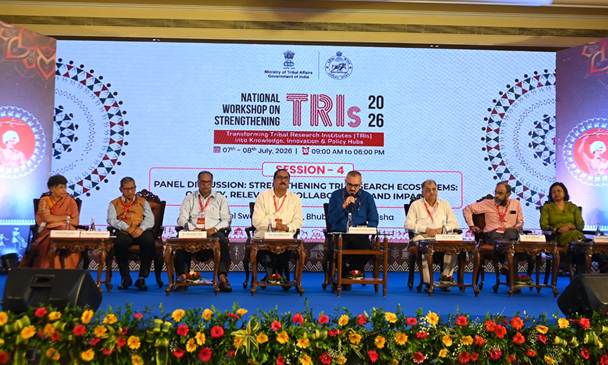
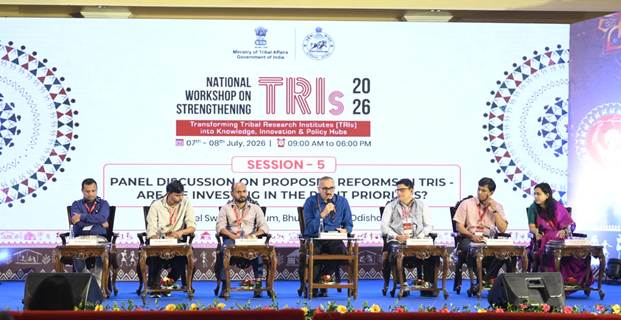
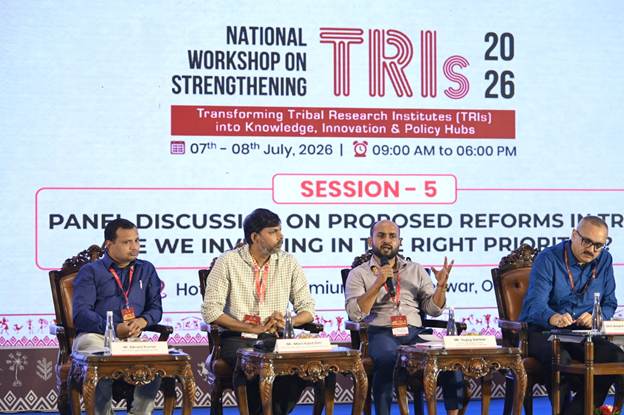
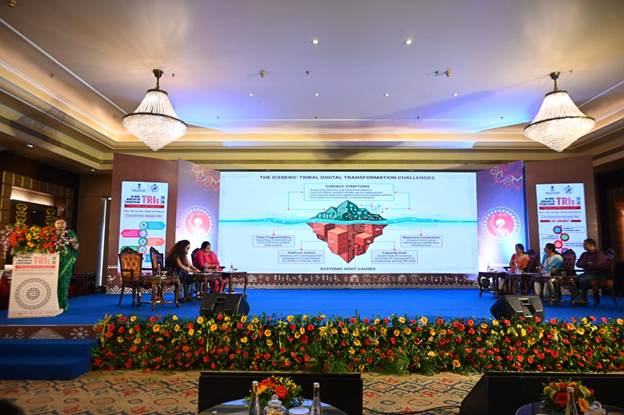
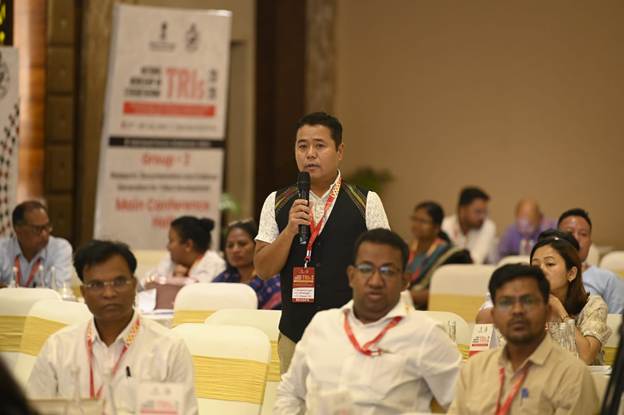
On Day 1, participants took part in four thematic breakout sessions and expert panel discussions on strengthening the TRI ecosystem. The first session focused on transforming TRIs into vibrant Knowledge and Cultural Resource Centres, discussing the preservation of tribal languages, indigenous knowledge systems and cultural heritage through systematic documentation, digital repositories, community participation and stronger institutional partnerships. The second session examined strengthening research for tribal development, including the need for evidence-based policymaking through robust tribal data systems, baseline surveys, research quality standards and stronger collaboration among research institutions. The third session explored the role of technology integration – Artificial Intelligence, Geographic Information Systems (GIS) and innovation ecosystems – in enhancing tribal research, planning, service delivery, monitoring and citizen engagement, envisioning future-ready, technology-enabled TRIs. The fourth session addressed institutional strengthening, governance, human resources and strategic partnerships, emphasising the reforms needed to transform TRIs into professionally managed, sustainable institutions capable of driving research, knowledge management, innovation and policy support.
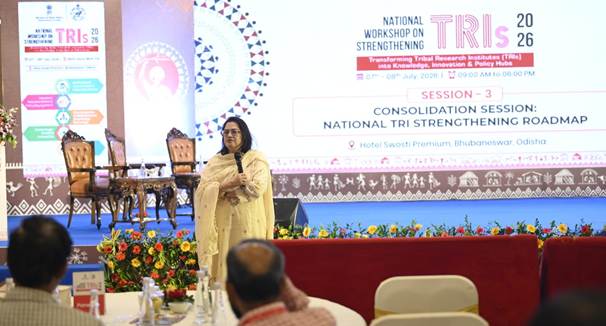
On Day 2, representatives from each working group presented the key outcomes of their Day 1 deliberations, followed by expert observations and extensive discussions with the Ministry of Tribal Affairs to consolidate these recommendations into a shared national roadmap for strengthening TRIs. These recommendations formed the foundation for a comprehensive national roadmap to strengthen Tribal Research Institutes as centres of excellence in research, knowledge generation, cultural preservation, innovation and evidence-based policymaking, aligned with the evolving needs of tribal communities and the vision of inclusive tribal development.
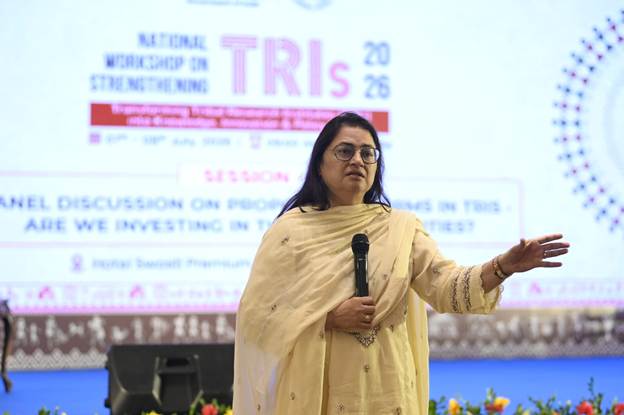
Summing up the deliberations, Smt. Ranjana Chopra, Secretary, Ministry of Tribal Affairs, said, "Tribal Research Institutes are the voices of tribal communities. They must evolve into globally recognised centres of excellence built on high-quality research and rooted in community realities. TRIs need greater institutional and financial autonomy. They must work closely with State Departments, universities, multilateral organisations and other knowledge institutions. Most importantly, they must bridge the gap between research, policy and the people they serve. The Bhubaneswar Declaration emerging from this national workshop is a welcome and strong commitment that will carry forward the momentum of tribal development in the days ahead. This is the way forward to strengthen tribal development and realise the vision of Viksit Bharat@2047."
Throughout the deliberations, participants emphasised the need to strengthen institutional capacities of Tribal Research Institutes through improved governance structures, skilled human resources, enhanced collaboration with academic and technology institutions, standardised research methodologies and stronger knowledge-sharing mechanisms across States. Discussions also underscored the importance of creating a national ecosystem that enables TRIs to serve as repositories of tribal knowledge while providing timely evidence and policy inputs for tribal development programmes.
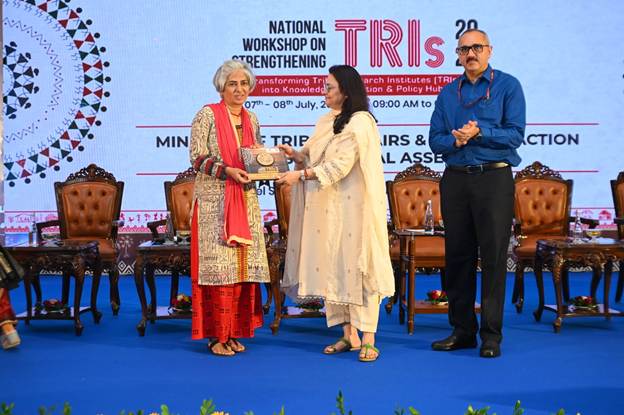
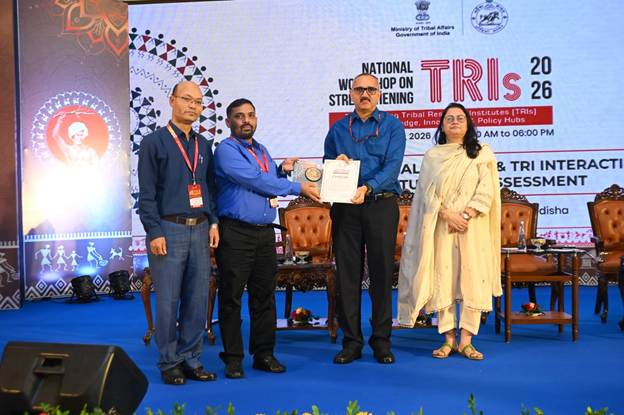
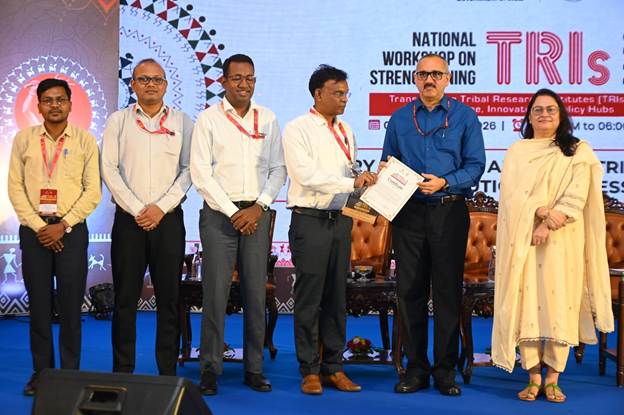
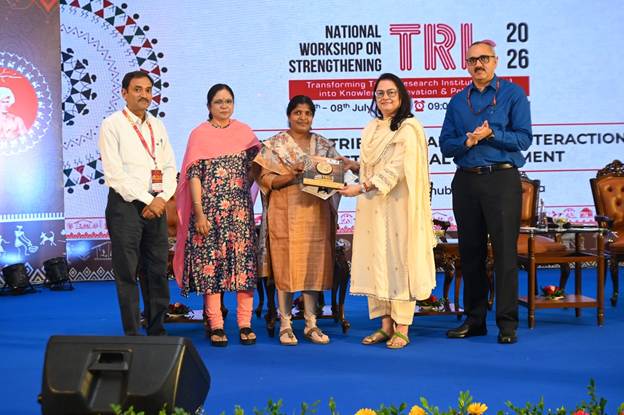
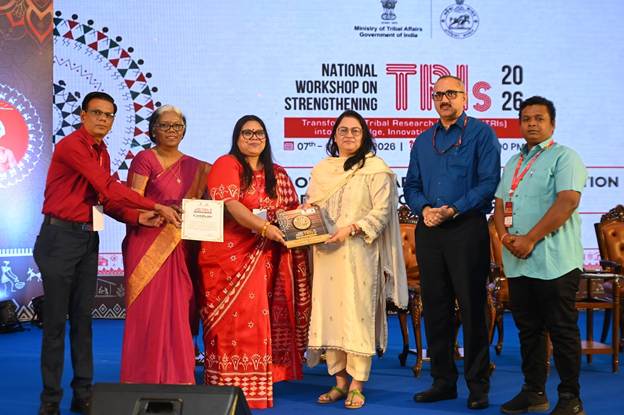
In recognition of exemplary institutional performance, the Ministry of Tribal Affairs also presented Certificates of Appreciation to seven best performing Tribal Research Institutes (TRIs) for their outstanding contributions to tribal research, documentation, knowledge generation and preservation of tribal cultural heritage. The recognition acknowledged the commitment of these institutions towards advancing evidence-based tribal development and promoting excellence across the national TRI ecosystem. The awardees included:
- Tribal Research and Training Institute, Chhattisgarh
- Scheduled Castes and Scheduled Tribes Research and Training Institute, Odisha
- Tribal Research and Cultural Institute, Tripura
- Tribal Research & Training Institute, Maharashtra
- Kerala Institute for Research, Training & Development Studies of Scheduled Castes and Scheduled Tribes (KIRTADS), Kerala
- Tribal Cultural Research and Training Institute, Telangana
- Dr Ramdayal Munda Tribal Welfare Research Institute, Jharkhand
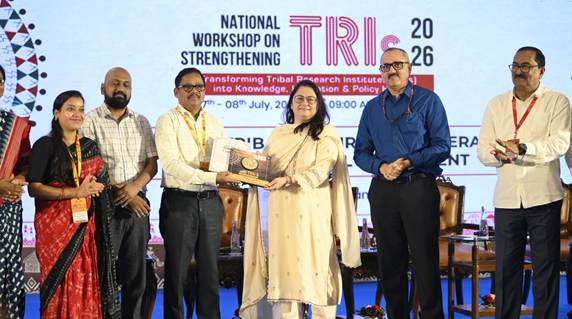
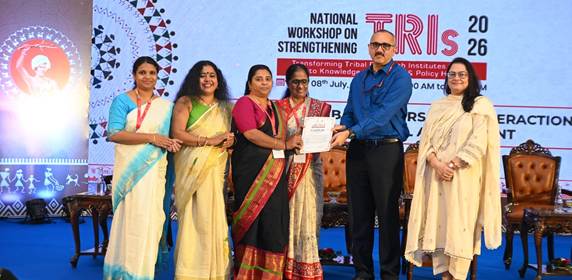
The workshop concluded with the presentation of the consolidated recommendations and the adoption of the Bhubaneswar Declaration, a landmark national framework for strengthening Tribal Research Institutes as centres of excellence in research, knowledge generation and evidence-based policymaking.
In his concluding remarks, Shri Anant Prakash Pandey, Joint Secretary, Ministry of Tribal Affairs, said, "Over the past two days, we have witnessed rich deliberations, meaningful exchange of ideas and a shared commitment to strengthening Tribal Research Institutes. The recommendations emerging from the workshop and the Bhubaneswar Declaration provide a clear roadmap for enhancing institutional capacities, promoting research excellence, embracing technology and fostering greater collaboration. The Ministry remains committed to working with State Governments, Tribal Research Institutes and all stakeholders to translate these recommendations into meaningful outcomes for tribal development."
Reflecting the collective deliberations of the plenary sessions, thematic breakout groups and expert panel discussions, the Declaration sets out a comprehensive agenda for transforming TRIs into vibrant knowledge institutions through institutional reforms, adoption of the Model TRI Framework 2030 (a set of standards for governance, staffing and research quality that States can adopt to modernise their TRIs), formulation of a National TRI Research Agenda for 2027-2032 (a five-year plan setting shared research priorities across States), technology integration, preservation of tribal languages and indigenous knowledge systems, enhanced research standards, performance-based institutional strengthening, strategic partnerships and greater community participation.
The Declaration reaffirms this collective commitment, aiming to build a collaborative, future-ready research ecosystem that preserves India's rich tribal heritage while contributing to evidence-based policymaking and the vision of Viksit Bharat@2047.
THE BHUBANESHWAR DECLARATION
On Strengthening Tribal Research Institutes (TRIs)
Adopted at the National Workshop on Strengthening Tribal Research Institutes, Bhubaneshwar, Odisha, 7–8 July 2026
We, all the representatives of Tribal Research Institutes, and State Tribal Welfare Departments together with representatives of academia, research organizations, technology institutions, non-governmental organizations, international development agencies and private sector partners, assembled at Bhubaneshwar, Odisha, on 7–8 July 2026 for the National Workshop on Strengthening Tribal Research Institutes.
Recognizing the pivotal role of Tribal Research Institutes (TRIs) as principal knowledge and think-tank institutions of the States for tribal development, as essential contributors to the vision of Viksit Bharat, and custodians of tribal cultural heritage and
Having deliberated over two days on strategies to strengthen TRI research ecosystems, institutional capacities, and technology adoption through plenary sessions, expert discussions, and thematic working groups.
Do hereby adopt this Declaration and resolve as follows:
- Develop TRIs as Centres of Excellence to lead specialised research, thematic projects, and high-level knowledge dissemination, while reintroducing Nodal TRI systems to facilitate mentorship and capacity building by established TRIs for newer institutes.
- Mandate community-level need analysis to ensure TRI research and interventions are directly informed by ground-level requirements and establish a TRI Innovation Network to pilot and scale successful local solutions.
- Implement a Result and Ranking Framework for all TRIs via the NTRP portal to foster performance-based growth, accountability, and healthy inter-state competition.
- Develop a Research Dissemination and Utilisation Strategy to translate complex research findings into accessible dashboards, policy briefs, and learning resources for wider policy and public use.
- Finalize the Model TRI Framework 2030, defining essential functions, institutional features, and technology platforms, and encourage each State to benchmark its TRI against this framework with a time-bound institutional improvement plan.
- Formulate a National TRI Research Agenda (2027–2032) to identify and prioritize high-impact thematic areas for tribal research aligned with national development goals and policy requirements, while institutionalizing a Research Standards Framework to ensure high-quality outputs within an outcome-output framework through mandatory peer review, ethics, and data management standards
- Document and preserve tribal indigenous knowledge and art forms, including languages, traditions, music, musical instruments, tribal cuisine, and vanishing arts, through systematic documentation and the active involvement of tribal youth.
- Adopt measures to attract, retain, and continuously build the capacities of specialized researchers, domain experts, and technical professionals within TRIs to ensure institutional excellence.
- Strengthen entrepreneurship, skilling, and livelihoods by institutionalising partnerships with universities, academic institutions, NGOs, technology organisations, and industry to create durable mechanisms for joint initiatives and peer learning.
- Adopt a Shared-Service Model for advanced technology infrastructure, including AI, analytics platforms, and Innovation/Tech Hubs, to avoid duplication of costs and establish a robust central repository for tribal data.
We commit to carrying forward the spirit of this workshop in our respective institutions and jurisdictions, and to working in collaboration with fellow TRIs, academic and research institutions, and civil society organisations to realise the vision of Tribal Research Institutes as vibrant think tanks, cultural custodians and policy-oriented knowledge hubs for tribal development in India.
Adopted at Bhubaneshwar, Odisha, on this 8th day of July 2026.
[This Declaration reflects the collective deliberations of the plenary sessions, the four thematic breakout working groups, and the expert panel discussions held during the Workshop, for onward consideration and formal adoption by the Ministry of Tribal Affairs.]
TRIs are the voices of tribal communities, translating ground-level needs into national policy and ensuring the preservation of indigenous tribal knowledge.
RN/
(Release ID: 2282509)
Visitor Counter : 1546