Ministry of Housing & Urban Affairs
KORBA EMERGES AS NATIONAL MODEL FOR URBAN WATER CONSERVATION UNDER AMRUT 2.0 "CATCH THE RAIN" CAMPAIGN
ISRO Scientific Mapping, Shallow Aquifer Management, and a Landmark ₹111 Crore NTPC Wastewater Partnership Spearhead Historic Groundwater Rejuvenation in Chhattisgarh’s Industrial Hub
Posted On:
23 JUL 2026 12:23PM by PIB Raipur
In a transformative milestone for urban water resilience, Korba district in Chhattisgarh has carved a distinctive national niche for its groundbreaking interventions in water conservation, groundwater recharge, and water body rejuvenation under the Ministry of Housing and Urban Affairs (MoHUA) flagship initiative, "Catch the Rain – Where it Falls, When it Falls" (AMRUT 2.0).
Despite lying along the banks of the Hasdeo River, Korba, nationally renowned for its coal mining and thermal power infrastructure, historically suffered severe seasonal water stress during dry seasons. Recognizing these challenges, Ministry of Housing and Urban Affairs (MoHUA) flagship initiative, "Catch the Rain – Where it Falls, When it Falls" (AMRUT 2.0) was implemented in Korba district of Chhattisgarh.
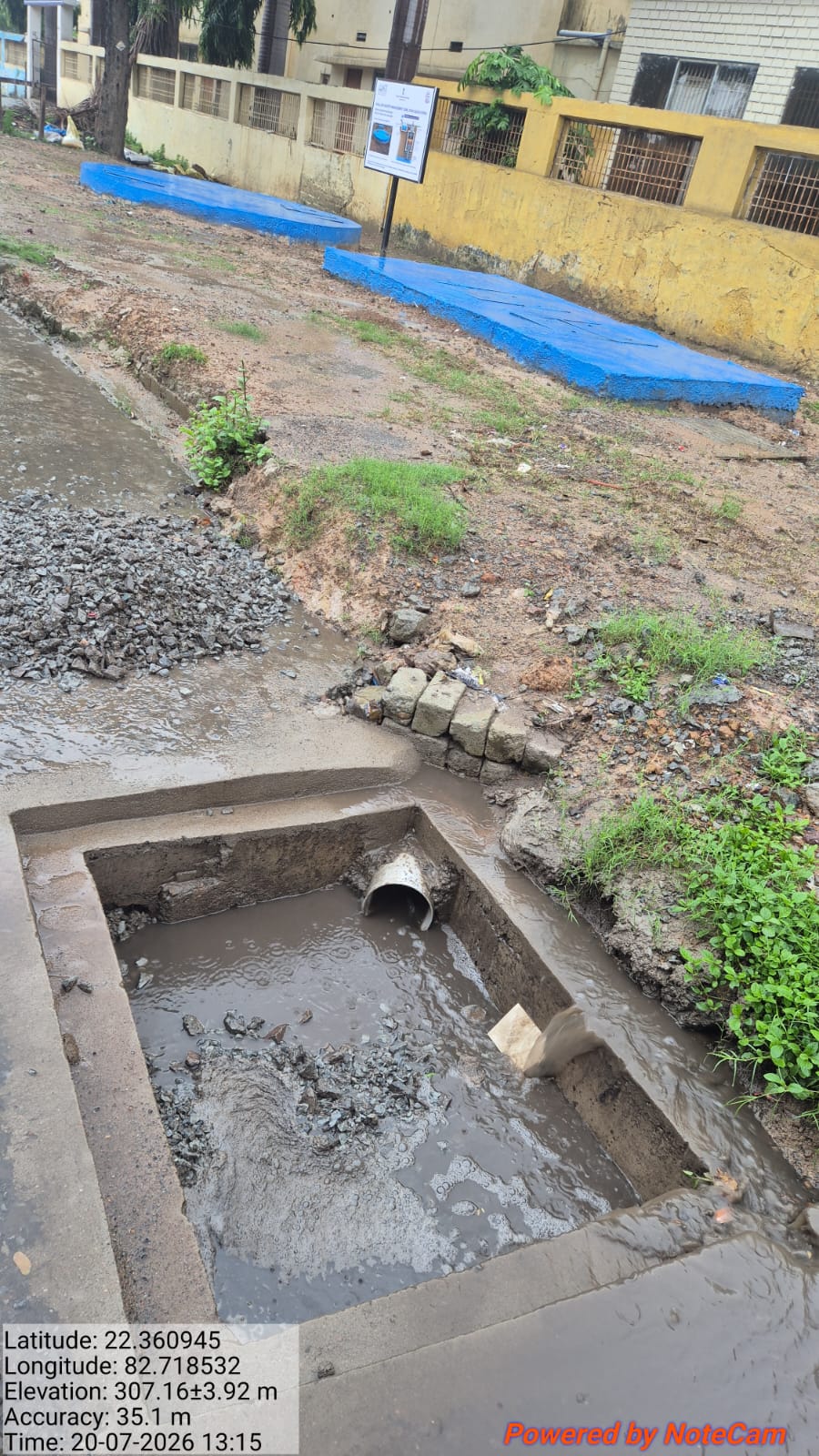
A cornerstone of Korba's success lies in its reliance on high-precision geospatial science. The National Remote Sensing Centre (NRSC) of the Indian Space Research Organisation (ISRO) conducted comprehensive field studies and satellite mapping to pinpoint 10 highly vulnerable points where the Water level was low and but during rainy session water overflows through the drain to the River. In order to rejuvenate the ground water levels, 10 such locations after mapping was equipped with custom-engineered Shallow Aquifer Management (SAM) systems featuring two crucial components:
• Multi-Stage Desiltation Units: Fitted with structured gravel and sand filtration beds to intercept surface runoff, trapping heavy silt, debris, and urban contaminants before water enters the aquifer.
• Direct Injection Recharge Wells: High-capacity injection shafts penetrating underground layers, allowing clean, filtered rainwater to directly replenish depleted aquifers and prevent flash flooding in high-density urban zones.
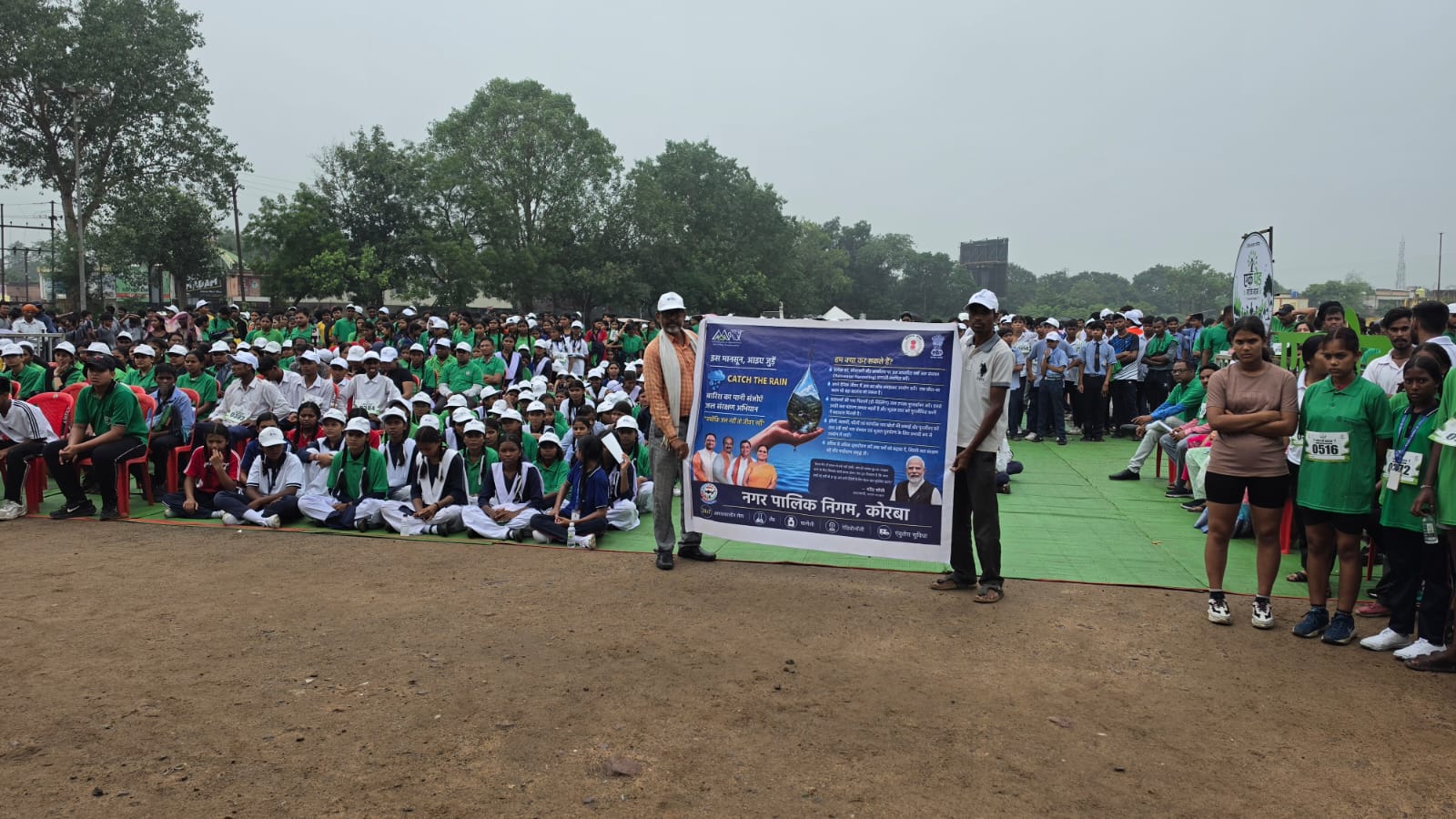
Commenting on the campaign Shri Kunal Dudawat, District Collector said "Under the 'Catch the Rain' campaign and 'Jal Sanchay - Jan Bhagidari' mission, water conservation has been accorded top priority across the district. We have set a target to construct 20,000 water conservation structures this year, and work is progressing on a war footing. Rainwater harvesting has been made mandatory across all government and private premises. By converging major flagship schemes like VB-G-RaM-G and Swachh Bharat Mission, we are ensuring that every drop of rainwater is saved to secure our groundwater and agricultural future."
"With the installation of these 10 Shallow Aquifer Management structures, the impact on Korba's groundwater levels was immediate and remarkable. Whereas earlier the water tables had dropped dramatically and water was available only at 600 meters but with coming of Shallow Aquifer Management (SAM) groundwater levels have surged following "Catch the Rain – Where it Falls, When it Falls" (AMRUT 2.0) of Catch the Rain initiative of the Ministry of Housing and Urban Affairs (MoHUA). Groundwater is now accessible at a depth of just 150 meters in key zones—a monumental shift in urban water security." Informed Shri Ashutosh Pandey, Commissioner, Municipal Corporation Korba
Building on the immediate success of the initial SAM installations, Korba Municipal Corporation has initiated an aggressive scale-up plan:
Rooftop Rainwater Harvesting: Work is actively underway to construct 109 rainwater harvesting plants across public, government, and community buildings.
Defunct Borewell Rejuvenation: The municipality is extending the SAM mechanism to revive 95 abandoned and defunct borewells across the city, converting urban liability into active recharge shafts.
In addition to aquifer recharge, Korba is pioneering a sustainable circular economy model to protect the Hasdeo River ecosystem through the holistic remediation of 11 heavily polluted Nallahs (drainage channels) traversing the city.
Backed by ₹111 Crore funding from NTPC, the Municipal Corporation is implementing secondary and tertiary wastewater treatment facilities, scheduled for completion by 2027. Once operational, the treated high-quality recycled water will be sold back to NTPC at ₹7.5 per liter for industrial processing and cooling—eliminating freshwater draft from local rivers while generating sustainable revenue for the city.
*******
SK/KV/PJ
(Release ID: 2288197)
Visitor Counter : 423