PIB Backgrounder
Centralised Public Grievance Redress and Monitoring System (CPGRAMS)
Posted On:
09 AUG 2026 9:56AM by PIB Delhi
The Centralised Public Grievance Redress and Monitoring System (CPGRAMS) has transformed public grievance redressal in India through digital innovation, institutional reforms and citizen-centric service delivery. Connecting all Central Ministries, Departments, States and Union Territories through a single platform, CPGRAMS enables timely grievance resolution, promotes accountability, and strengthens transparent governance while ensuring that every citizen's voice is heard and addressed.
CPGRAMS: Empowering Citizens Through Responsive Governance
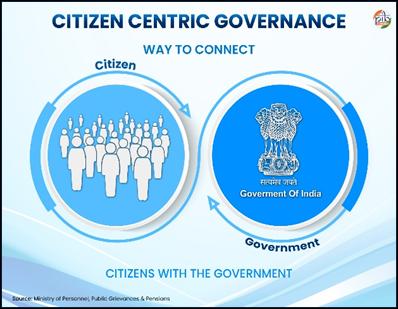
An effective public grievance redressal mechanism is the cornerstone of responsive governance. It gives the citizens a platform to voice concerns about public service delivery while ensuring that government institutions remain accountable, transparent, and accessible.
The Centralised Public Grievance Redress and Monitoring System (CPGRAMS) is the Government’s flagship digital grievance redressal platform. Available to citizens 24x7, CPGRAMS provides a single portal connected to all Central Ministries, Departments, State Governments, and Union Territories.
Citizens can lodge grievances related to public service delivery and track their resolution through a transparent and technology-enabled process.
Over the past decade, CPGRAMS has evolved from a grievance registration portal into a comprehensive governance platform. It leverages digital innovation, AI-driven monitoring and citizen feedback to strengthen and continuously improve public service delivery across the country.
The Evolution of CPGRAMS
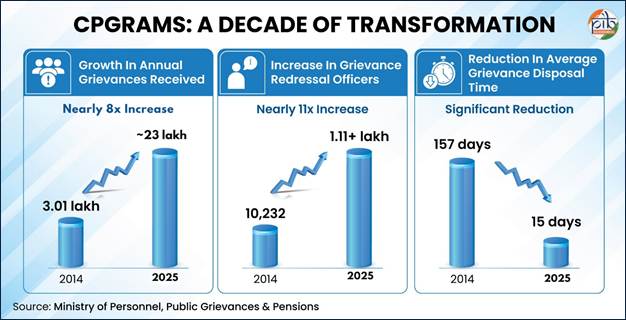
Since 2014, India's public grievance redressal system has witnessed a major transformation. It has evolved from a fragmented and largely manual process into a technology-driven platform focused on efficiency, transparency and citizen satisfaction.
The number of grievances handled annually increased nearly nine-fold, from about 3.01 lakh in 2014 to around 27 lakhs in 2024. This reflects growing public trust.
The grievance redressal network has also expanded significantly. The number of Grievance Redressal Officers rose from 10,232 in 2014 to more than 1.11 lakh by 2025.
These reforms have improved service delivery and reduced delays. The average grievance disposal time in Central Ministries and Departments fell from 157 days in 2014 to just 15 days in 2025.
How CPGRAMS Works
Centralised Public Grievance Redress and Monitoring System (CPGRAMS) functions as a comprehensive digital ecosystem that combines technology, accountability, and citizen participation to ensure effective and accessible grievance redressal.
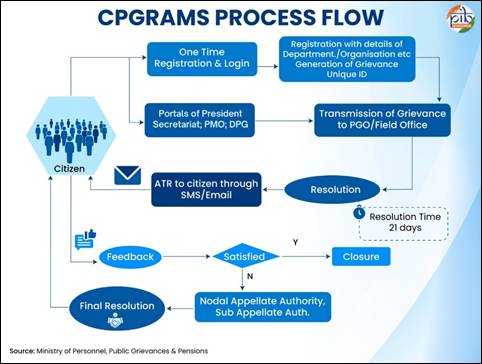
- Registration: Citizens can make a one-time registration and can lodge a complaint online at https://pgportal.gov.in/.They can also lodge complaints via the CPGRAMS mobile app (also integrated with UMANG), or at any of the 5 lakh+ Common Service Centres (CSCs) associated with 2.5 lakh Village Level Entrepreneurs across the country. Offline grievances received by post are digitised and uploaded to the system.
- Auto-Routing and Categorisation: The system facilitates mapping of last mile GRO for auto-routing of complaints to the appropriate authority. The status of the grievance filed in CPGRAMS can be tracked with the grievance unique registration ID provided at the time of registration of the complainant.
- Resolve within 21 Days: Comprehensive Guidelines for Effective Redressal of Public Grievances, issued in August 2024, rationalised the timeline from 30 days to 21 days. It has mandated dedicated grievance cells, root cause analysis, and strengthened escalation mechanisms. The average grievance disposal time in Central Ministries/Departments reduced from 157 days in 2014 to 15 days in 2025.
- Feedback & Appeal: After resolution, a dedicated Feedback Call Centre contacts citizens directly to assess their satisfaction. If unsatisfied, citizens may escalate through an appellate mechanism — with the Nodal Appellate Authority, who must resolve the appeal within 30 days.
The following issues are not taken up for redress:
- RTI Matters
- Court related / Subjudice matters
- Religious matters
- Grievances of Government employees concerning their service matters including disciplinary proceedings etc.
CPGRAMS in Action: Enhancing Road Safety in Gujarat
Mr. Harsh raised a grievance regarding unsafe road conditions, poor maintenance, and lack of safety measures on a busy highway stretch on the Ashapuri Chowkdi bridge in Rajkot, Gujarat. The issue was escalated through CPGRAMS. Upon review, construction activities were streamlined, underpasses were opened for public use, and pending works were expedited. Additionally, safety arrangements such as barricades, reflectors, warning signs, and traffic marshals were strengthened. The grievance was fully addressed within 4 days.
Performance At a Glance
|
Indicator
|
Figure
|
|
Grievances redressed (June 2026)
|
1,99,968
|
|
Consecutive months of 1 lakh+ monthly disposal
|
46 months
|
|
Average disposal time (2026)
|
14 days
|
|
Citizen satisfaction rate (Jan- June 2026)
|
76%
|
|
New user registrations (June 2026)
|
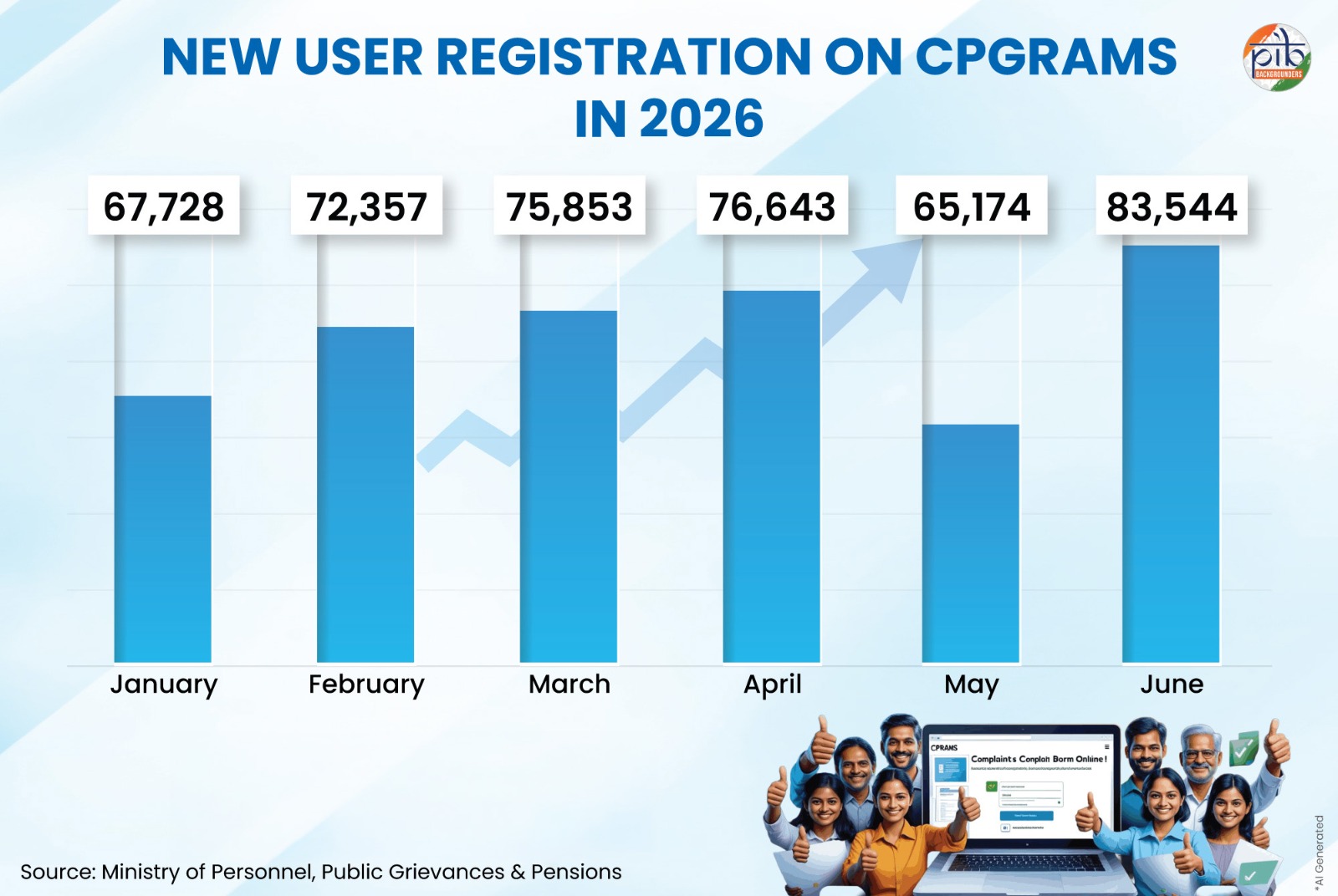
83,544
|
|
Grievance Redressal Officers mapped on CPGRAMS (till June 2026)
|
1,09,125
|
Transforming Public Grievance Redressal: The 10-Step Reform Programme
A major turning point in the evolution of CPGRAMS came with the introduction of the 10-Step Reform Programme in 2022, following a review by the Prime Minister. Since then, continuous monitoring and targeted reforms have strengthened the grievance redressal framework, making it more efficient, accessible and citizen-centric.
The reform framework comprises ten key interventions:
Universalisation of CPGRAMS 7.0
The universalisation of CPGRAMS 7.0 enabled automatic routing of grievances to the appropriate authority, replacing the earlier manual forwarding process. By 2022, all Central Ministries and Departments had been onboarded onto the platform, ensuring faster and more efficient grievance redressal.
Technological Enhancements
The integration of Artificial Intelligence and Machine Learning has strengthened grievance management through real-time analysis, pattern recognition and identification of systemic issues. Advanced dashboards and data analytics support evidence-based decision-making and continuous improvement in public service delivery. By identifying root causes and implementing policy changes, the system ensures efficient grievance redressal and continuous governance improvement.
Language Inclusivity
To make grievance redressal more accessible, CPGRAMS supports submissions in 22 scheduled languages, in addition to English. Integration with BHASHINI enables Grievance Redressal Officers to respond in the language used by the citizen.
Grievance Redressal Assessment and Index (GRAI)
Introduced as a performance benchmarking framework, GRAI evaluates Ministries and Departments on the effectiveness of grievance redressal and promotes greater efficiency, accountability and healthy competition.
Feedback Call Centre
The Feedback Call Centre collects citizen feedback on resolved grievances, helping assess service quality and identify areas for improvement in grievance resolution.
One Nation–One Portal
Integration of State grievance portals and other Government platforms with CPGRAMS has created a unified and streamlined grievance redressal ecosystem across the country.
Inclusivity and Outreach
CPGRAMS has expanded access to grievance redressal services through its integration with Common Service Centres (CSCs), enabling citizens in rural and remote areas to register their grievances.
Training and Capacity Building
Regular training programmes under the Sevottam framework strengthen the capacity of grievance officers and enhance the quality of grievance redressal.
Monitoring and Review
Monthly performance reports, review meetings and continuous engagement with Nodal Grievance Officers and Appellate Authorities ensure transparency, accountability and timely resolution of grievances.
Data Strategy Unit
A dedicated Data Strategy Unit within DARPG leverages advanced analytics to identify trends, support policy improvements and optimise grievance redressal processes.
Samadhan Didi: Democratising Grievance Redressal Through Artificial Intelligence
In a major technological advancement, the Government launched the AI-enabled CPGRAMS voice chatbot, "Samadhan Didi", on 30th May 2026.
The initiative represents a significant step towards democratising public grievance redressal by making the system more accessible and inclusive. Citizens can register grievances simply by speaking in their preferred language, without navigating complex forms or administrative categories.
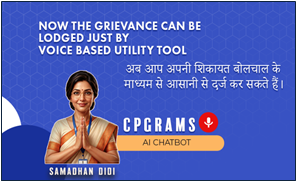
The chatbot integrates advanced Artificial Intelligence with BHASHINI's speech-to-text, text-to-speech, translation, and transliteration capabilities. By analysing the citizen's concern, the system automatically identifies the relevant Ministry, Department, category and sub-category while seeking intelligent follow-up inputs where required.
Beyond the 22 languages currently supported through BHASHINI, efforts are underway to extend support to several other regional and indigenous languages. This ensures that language is no longer a barrier to accessing government services.
Development of NextGen CPGRAMS
DARPG is advancing the Next Generation CPGRAMS initiative, a flagship project aimed at modernising India's public grievance redressal ecosystem through cutting-edge digital technologies. Designed to enhance accessibility, efficiency and transparency, the platform seeks to deliver a more seamless and citizen-centric grievance redressal experience.
Significant progress has already been achieved in the development process. Once operational, NextGen CPGRAMS will incorporate several advanced features, including:
- Voice-enabled grievance registration and chatbot support
- AI-based grievance categorisation and intelligent routing
- Integration of State grievance categories into a unified platform
- Multilingual support across 22 scheduled languages, besides English
- Omni-channel grievance registration through email, social media and mobile applications
- Automated escalation mechanisms for timely grievance resolution
- Accessibility features for persons with disabilities
- Real-time analytics and reporting dashboards
- AI-enabled validation of grievance redressal to assess resolution quality and identify cases involving disposal through transfer or closure without effective resolution
NextGen CPGRAMS is expected to make grievance redressal more accessible, responsive and transparent while strengthening citizen-centric governance.
Strengthening Citizen-Centric Governance
Over the past decade, CPGRAMS has emerged as one of the world's largest digital public grievance redressal platforms. Through sustained reforms, technological innovation and a strong focus on citizen satisfaction, the platform has transformed the way citizens engage with government institutions.
By enabling timely grievance resolution, promoting accountability and continuously improving service delivery through citizen feedback, CPGRAMS has strengthened the foundations of responsive and citizen-centric governance. As India advances towards the vision of Viksit Bharat@2047, CPGRAMS continues to play an important role in ensuring that every citizen's voice is heard and acted upon through an efficient, transparent, and accessible grievance redressal system.
References
Ministry of Personnel, Public Grievances & Pensions:
https://pgportal.gov.in/
DARPG_Monthly_Report_Central_April_2026.pdf
https://www.pib.gov.in/PressReleasePage.aspx?PRID=2266985®=3&lang=1
Click here to see PDF
PIB Research
(Release ID: 2296724)
Visitor Counter : 10946