Ministry of Fisheries, Animal Husbandry & Dairying
Secretary, Department of Fisheries, Interacts with Tilapia Farmers and Value chain Stakeholders in Chhattisgarh; Charts Roadmap for Export-Oriented Cluster Development
Government Adopts Cluster-Based Approach to Enhance Competitiveness through 34 Fisheries Production and Processing Clusters
Chhattisgarh Emerges as the First inland State to Initiate Exports of Value-Added Tilapia products opening new avenues for seafood export diversification
Posted On:
20 AUG 2026 4:08PM by PIB Delhi
Dr. Abhilaksh Likhi, Secretary, Department of Fisheries, Ministry of Fisheries, Animal Husbandry and Dairying (MoFAH&D), Government of India, chaired an interactive meeting in Raipur, Chhattisgarh on 20th August 2026 to review the progress of Tilapia Cluster notified under PMMSY. During the interaction, the Union Secretary interacted with Tilapia fish farmers, entrepreneurs, Exporters and other relevant stakeholders to understand the gaps and challenges faced on ground.
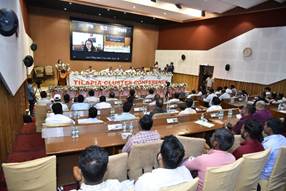
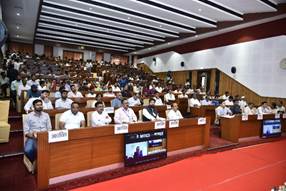
The interaction was held in hybrid mode and witnessed participation from over 1,300 Tilapia fish farmers and value chain stakeholders. The interaction also brought together officials from the Department of Fisheries, GoI, State Fisheries Department, Chhattisgarh, representatives of notified fisheries clusters, scientists from ICAR fisheries institutes, and representatives from NFDB, MPEDA, NABARD, fisheries cooperatives, seafood exporters and other key stakeholders to deliberate on strengthening Tilapia production, processing and export development in the State.
During the interaction, Dr. Abhilaksh Likhi, Secretary, Department of Fisheries, MoFAH&D, appreciated the efforts of fish farmers, entrepreneurs and stakeholders, noting that their contribution has been instrumental in driving the remarkable growth of India’s fisheries sector. He highlighted that India has achieved a record fish production of 198 lakh tonnes and seafood exports worth ₹73,890.46 crore despite global trade disruptions. He noted that investments of nearly ₹900 crore have been made under PMMSY in Chhattisgarh for quality seed, feed and modern aquaculture technologies which has contributed to doubling the State’s fish production to nearly 10 lakh tonnes. Emphasizing the Government’s cluster-based development approach, he stated that the notified fisheries clusters are being supported through end-to-end interventions across production, processing, value addition and market linkages to enhance competitiveness and boost exports. He encouraged the State Government, research institutions, exporters and farmers for close collaboration in addressing value chain gaps, strengthening linkages with ICAR institutes, enhancing capacity building and preparing a dedicated export roadmap for the State. He also urged MPEDA to expand its presences in Chhattisgarh and facilitate market access, export promotion and international exposure for stakeholders.
Following the Meeting the Union secretary visited MM Hatcheries in Mana, Raipur to review initiatives related to genetic improvement in Tilapia and production of high-quality seed for the aquaculture sector and interact with fish farmers. MM Hatchery is a dedicated Tilapia hatchery engaged in quality seed production and the development of genetically improved black strain Tilapia. Through its ongoing genetic improvement programme, the hatchery is enhancing seed quality, productivity and overall farm performance, contributing significantly to the expansion of Tilapia farming.
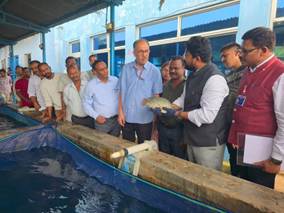
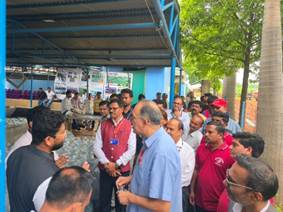
To support these efforts, financial assistance of ₹5 crore has been provided under the Entrepreneurship Model of PMMSY. In addition, the hatchery has received a Performance Grant of ₹35 lakh under PM-MKSSY for employment generation and logistics support, further strengthening its role in developing a robust Tilapia value chain. The hatchery supplies quality Tilapia seed across the country and has played a key role in supporting Tilapia production of nearly 25,000 tonnes in Chhattisgarh.
As a globally traded freshwater species with strong demand in markets across Africa, Europe and Asia, Tilapia offers significant export potential. Chhattisgarh has already initiated Tilapia exports, with 382 tonnes exported to the United States. The Tilapia Production and Processing Cluster is expected to further strengthen the value chain through improved production, processing, quality assurance and market linkages, thereby boosting exports and enhancing farmer incomes.
Dr. Surabhi Rai, Joint Secretary (Marine Fisheries), Department of Fisheries, MoFAH&D, GoI, stated that the 34 fisheries clusters are being developed as growth engines to boost exports. She emphasised the need to strengthen last‑mile infrastructure, promote technology adoption including IoT, biofloc and RAS, improve infrastructure and address low credit absorption by bridging gaps between FIDF, KCC and market linkages.
Deputy Director General (Fisheries Science) ICAR, Dr. J K Jena highlighted the immense potential of Chhattisgarh to emerge as a leading Tilapia hub and quality seed production centre in the country. He emphasized the importance of strengthening biosecurity measures and promoting the use of quality seed to ensure sustainable and disease-free aquaculture development. Noting that fish is among the most affordable and nutritious sources of animal protein, he underscored the critical role of Tilapia farming in enhancing food and nutritional security. He further observed that the State is well positioned to support large-scale Tilapia production and seed supply, creating opportunities for livelihood generation, entrepreneurship and export growth.
During the interaction, farmers highlighted several challenges affecting the growth and competitiveness of Tilapia farming. Key concerns included the availability of quality seed, high production costs arising from water rent charges in areas notified for industrial activities, and the rising cost of electricity required for production-supporting infrastructure. Farmers requested targeted subsidies to reduce input costs and improve profitability. They also emphasized the need for capacity-building programmes, particularly for small and tribal fish farmers, covering modern production practices, export certification requirements, integrated fish farming and international market standards. Stakeholders sought stronger market linkages, development of domestic markets to absorb surplus production, and greater support for exports. Access to institutional credit and working capital was identified as a key constraint, with farmers highlighting cumbersome application processes. Participants further recommended exchange programmes, exposure visits, international collaborations and simplified bank financing mechanisms to facilitate technology adoption, enhance competitiveness and strengthen export readiness.
Representatives from State fisheries department, ICAR institutes, MPEDA and other relevant stakeholders emphasized the need for a Common Facility Centre (CFC) to support processing and value addition, particularly for small-scale farmers. They highlighted that low farm-gate prices reduce profitability and stressed that value-added products can significantly enhance export returns. Stakeholders also proposed integrating circular economy practices for waste utilization and sought technical support from ICAR and NFDB to strengthen sustainability, processing and market linkages within the cluster.
Chief Executive, National Fisheries Development Board, Dr Bijay Kumar Behera, presented on the Next five-year plan for the Tilapia cluster and highlighted the expectations from all value chain stakeholders.
Background
Chhattisgarh is among the States identified by the Department as having potential for Tilapia development, alongside Jharkhand, Tamil Nadu, Odisha, Uttar Pradesh, West Bengal, Maharashtra, Madhya Pradesh, Bihar and Kerala. The State can leverage its freshwater resources and develop scale-based, export-oriented Tilapia production, linked with processing, cold chain, quality assurance and international market requirements. The rapid expansion of inland fisheries and aquaculture presents a significant opportunity to diversify India's seafood export basket. Among emerging export-oriented species, tilapia has gained prominence owing to its growing global demand, adaptability to aquaculture systems and potential for large-scale production.
India exported 32,324 MT of identified freshwater/inland species valued at ₹535.21 crore in FY 2025–26. Tilapia is one of the world’s most widely traded freshwater fish species, with growing global demand for frozen fillets and value-added products. While India exported 22,601 MT of Tilapia worth ₹189.73 crore in FY 2025-26, making it the country’s largest freshwater finfish export by volume, its share in the global market remains modest, highlighting significant potential for export diversification and future growth.
The Tilapia cluster has witnessed investments exceeding ₹9 crore, including more than ₹4 crore through credit support from lending institutions and ₹5 crore under the NFDB Entrepreneurship Model. These interventions are facilitating the development of a robust aquaculture ecosystem by supporting entrepreneurship, improving access to finance, and strengthening value chain infrastructure within the cluster.
*******
JP
(Release ID: 2301530)
Visitor Counter : 1177