Ministry of Education
IIT Jodhpur’s Software Innovation Lab Develops Intelligent Technologies for Healthcare, Education and Infrastructure
From AI-enabled rural healthcare and low-connectivity education to smart infrastructure monitoring, researchers are building software systems designed for real-world deployment and societal impact
प्रविष्टि तिथि:
20 AUG 2026 5:45PM by PIB Jaipur
Artificial Intelligence is rapidly transforming the way technology is designed and used. But the real challenge is no longer simply developing intelligent algorithms—it is building reliable, affordable and scalable systems that can work in the real world and reach the people who need them most.
At the Indian Institute of Technology Jodhpur (IIT Jodhpur), the Software Innovation Lab is addressing this challenge by combining Artificial Intelligence (AI), software architecture, edge computing and the Internet of Things (IoT) to develop technology solutions for healthcare, education, public safety and infrastructure.
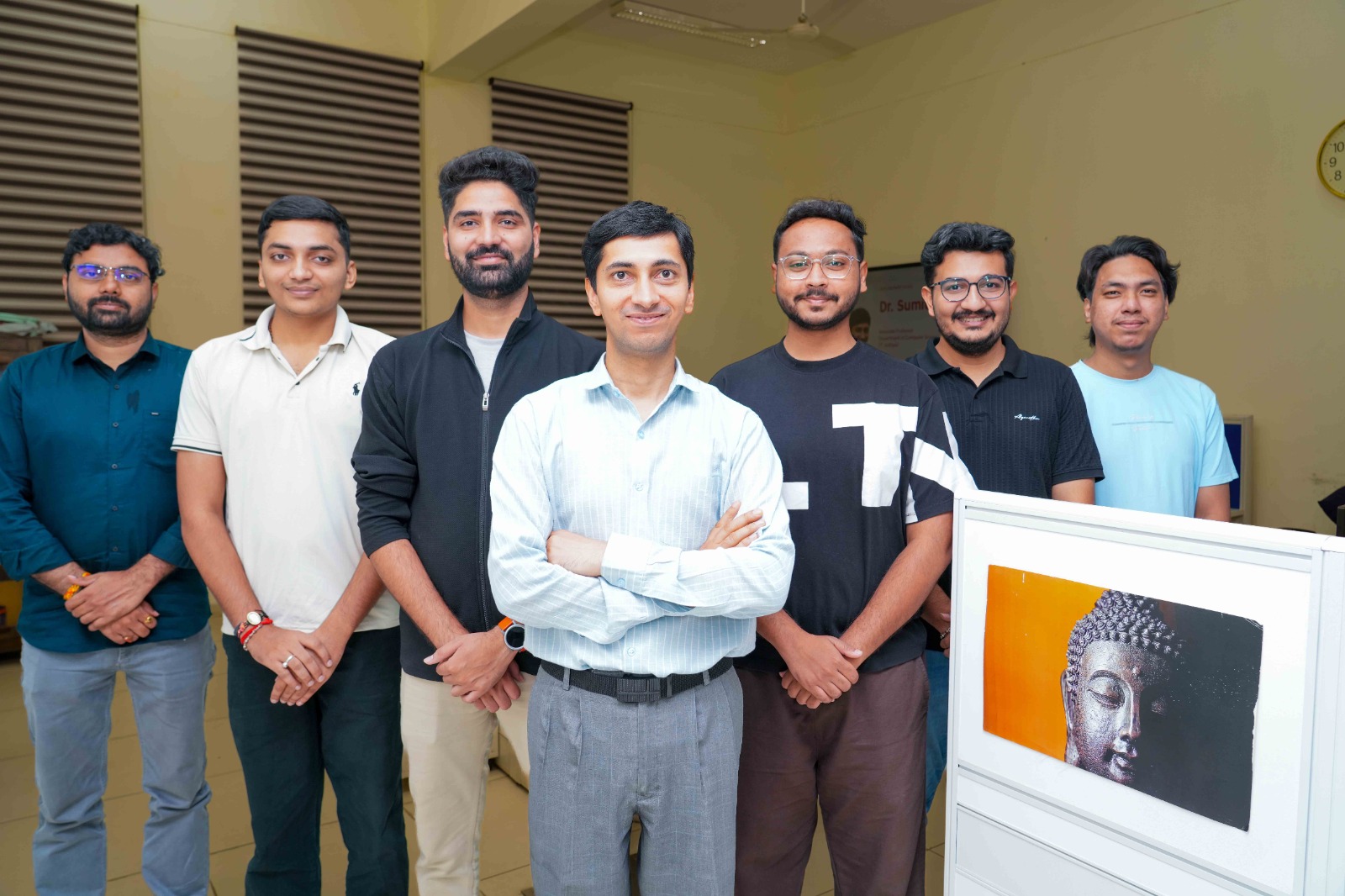
Led by Dr. Sumit Kalra, Associate Professor, Department of Computer Science & Engineering, IIT Jodhpur, the Lab focuses on transforming innovative software concepts into complete systems that are robust, accessible and capable of functioning even in resource-constrained environments.
“The real value of Artificial Intelligence lies not merely in developing intelligent algorithms, but in making that intelligence dependable, accessible and deployable in the real world. Our focus is on engineering complete software systems that can work under practical constraints and create measurable societal impact.”
— Dr. Sumit Kalra, Associate Professor, IIT Jodhpur
Three Research Areas, One Vision: Technology That Serves Society
The Software Innovation Lab’s research is centred around three interconnected areas: Smart Healthcare; Software Architecture and Intelligent Systems; and Artificial Intelligence of Things (AIoT).
AI for Accessible and Affordable Healthcare
Healthcare accessibility remains a significant challenge, particularly in rural and remote regions where specialised medical services and diagnostic facilities may not always be readily available.
The Lab is developing portable diagnostic platforms and augmented intervention systems that integrate medical sensor data, patient records and AI-based analysis. These technologies are being designed to assist healthcare professionals in early diagnosis, patient assessment and continuous monitoring, while enabling medical support to reach underserved communities.
The researchers collaborate with medical institutions and Ayurvedic hospitals to develop solutions based on practical healthcare requirements. The emphasis is not only on technological sophistication, but also on making these systems affordable, reliable and usable in low-resource settings.
By bringing intelligence closer to the patient through portable and software-driven systems, the research has the potential to reduce healthcare costs, minimise inconvenience and support timely medical intervention.
Engineering Reliable AI Systems for Education and Public Safety
The Lab’s second major research area is software architecture and intelligent systems—the engineering foundation that determines whether a software system remains dependable, secure and scalable when deployed at scale.
Researchers study architectural design patterns, quality attributes and system-level tactics to create intelligent applications capable of operating efficiently, including on edge devices with limited computational resources and intermittent internet connectivity.
A significant example is the Teacher-in-the-Loop AI educational system, developed in collaboration with the Commonwealth of Learning. The platform combines AI with human feedback from teachers to provide personalised learning experiences, while being designed for environments where reliable internet connectivity may be limited.
The system has been successfully deployed in five Commonwealth countries—India, Ghana, Zimbabwe, Kenya and Nigeria—demonstrating the Lab’s focus on taking research beyond laboratory environments and into diverse real-world settings.
The Lab also develops software solutions in collaboration with organisations working in policing, healthcare, security and defence, with the objective of making AI-driven systems more reliable, responsible and practically deployable.
AIoT: Connecting Intelligence with the Physical World
The third major research area is Artificial Intelligence of Things (AIoT), where AI is integrated with sensor-driven IoT systems to enable real-time intelligent decision-making.
The Lab’s AIoT research combines sensor technologies, embedded systems, signal processing, communication protocols and machine learning to develop end-to-end solutions across healthcare and engineering.
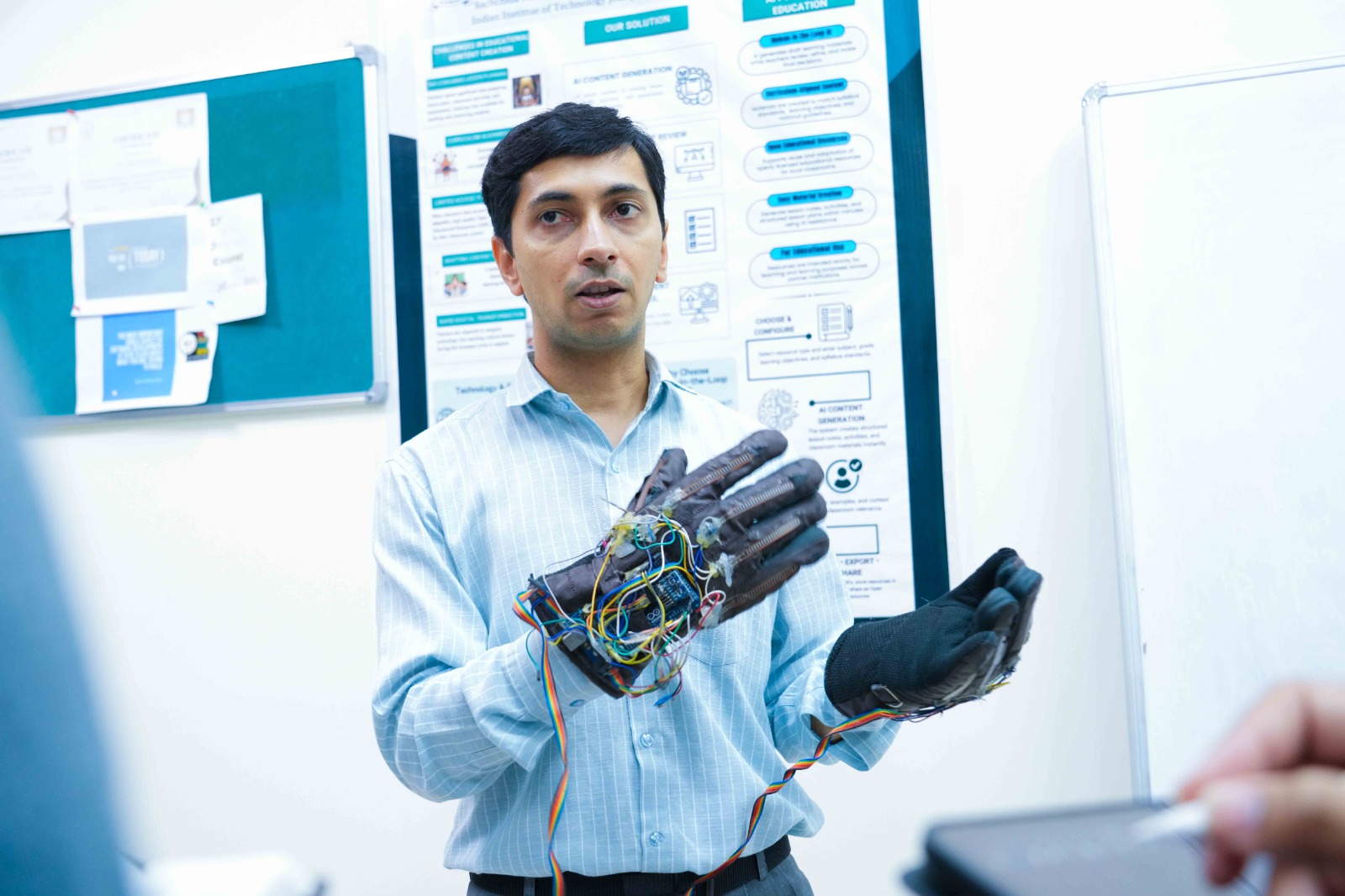
Healthcare applications include voice-based Prakriti prediction, gait analysis using wearable IMU systems and AI-based biomedical signal processing. Such technologies can support early detection, personalised assessment and remote monitoring through non-invasive and cost-effective approaches.
The research also extends to Structural Health Monitoring (SHM), where intelligent sensor networks and AI algorithms are used to assess the health and safety of infrastructure. By identifying early indications of structural deterioration, such systems can support preventive maintenance, enhance public safety and potentially reduce maintenance costs.
A key strength of the Lab is its ability to develop the complete technology pipeline—from sensor data acquisition and communication to signal processing and AI model optimisation—with a focus on real-world deployment rather than purely theoretical performance.
From Research to Real-World Impact
Across all three research domains, the Software Innovation Lab follows a common philosophy: technology should not remain confined to algorithms, prototypes or laboratories; it should be engineered to create tangible societal value.
The Lab’s work demonstrates how software can become an enabling technology for some of society’s most pressing challenges—from improving access to healthcare and education to enhancing public safety and monitoring critical infrastructure.
By bringing together AI, software architecture, edge computing, IoT and domain expertise, IIT Jodhpur researchers are developing intelligent systems that are designed to be reliable, scalable, affordable and accessible.
“Our objective is to bridge the gap between technological innovation and societal needs. Whether it is healthcare in a remote village, education in a low-connectivity region, or intelligent monitoring of critical infrastructure, we want our software systems to be dependable enough to work where they are needed most.”
— Dr. Sumit Kalra
The Software Innovation Lab’s research represents IIT Jodhpur’s broader commitment to advancing technology that is not only innovative, but also inclusive, sustainable and relevant to India’s real-world challenges.
About the Software Innovation Lab, IIT Jodhpur
The Software Innovation Lab at IIT Jodhpur conducts interdisciplinary research at the intersection of software architecture, Artificial Intelligence, edge computing and the Internet of Things. Its work spans smart healthcare, intelligent education systems, public safety, security, AIoT and structural health monitoring, with a strong emphasis on developing reliable and deployable technologies for societal benefit.
00000
(रिलीज़ आईडी: 2301606)
आगंतुक पटल : 9